 Preview
 Send
Send Share
Share
 Details

 Download
 Similars
 X-Ray
X-Ray Diaporama
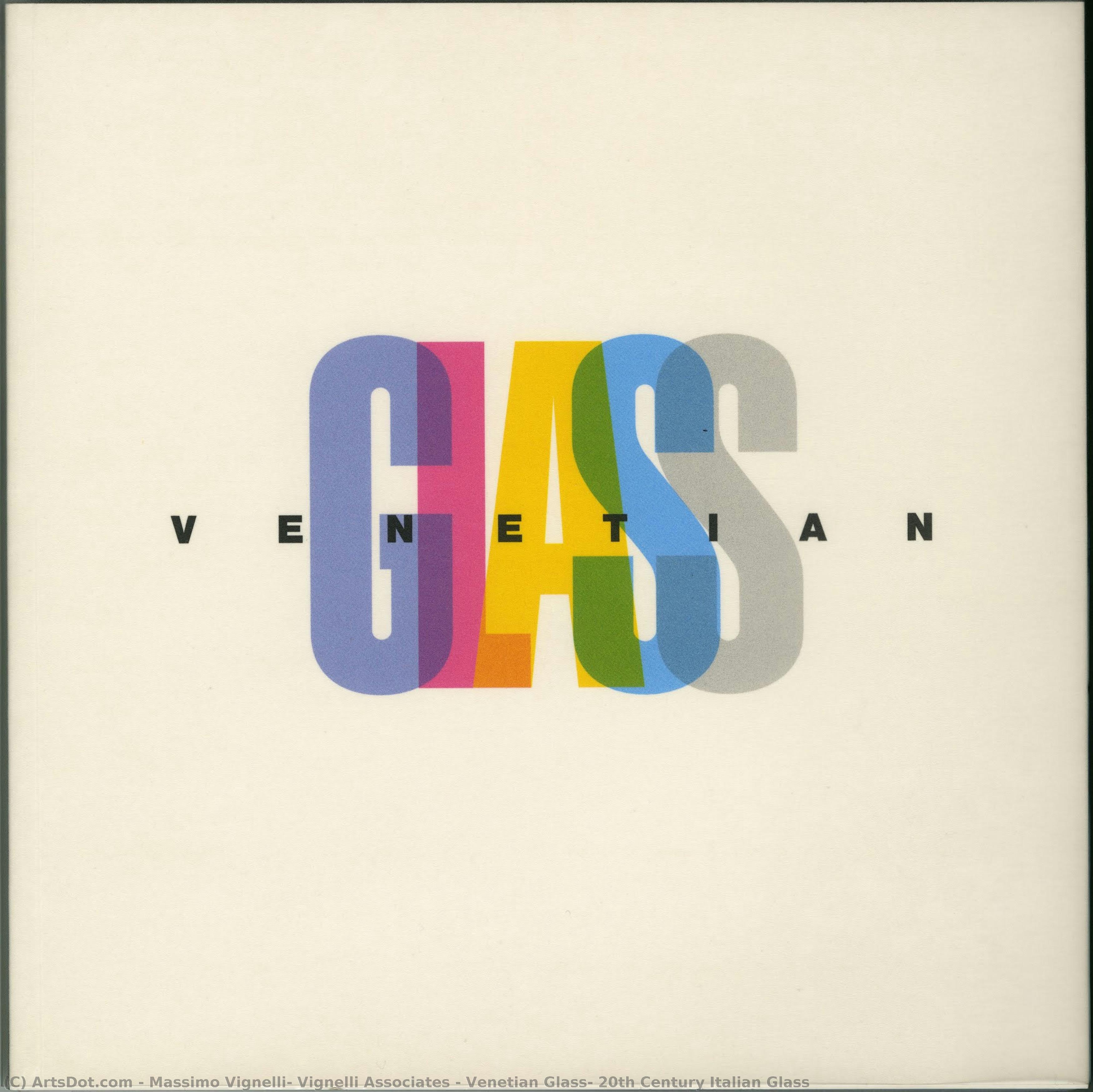
Venetian Glass: 20th Century Italian Glass
 Lithograph
- Modernist Design
 2000
2000- Modern
 25.0 x 25.0 cm
 Vignelli Center for Design Studies
 Read More
Giclée / Art Print
Museum-quality giclée or canvas print with fast production and flexible finish options. ( Buy Hand Made Painting Buy Image)




P118B $10

P118H $10

P118W $10

P438Z $10

P508JH $12

P508YH $12

P805H $10

P805Z $10

P919BZ $10

P919G $10

P919XJ $10

P959ZH $10

P968JZ $12

W106C $8

W218G $10

W218JH $8

W218Y $10

W307PJ $10

W316G $10

W316PJ $8

W316Y $10

W398PJ $8

W4111J $10

W500HY $15

W500JH $15

W692G $12

W849H $8

W940BG $15

W953PJ $8




Pick from our preset sizes that match the artwork's original proportions.

You may enter your own dimensions to fit a specific frame or space. If your selected size does not match the original image's proportions, we will either crop the artwork or extend the image with a mirrored or solid-fill edge. A digital mockup will be sent for your approval before production begins.
Please note that the on-screen preview does not reflect the actual cropping or extension. Only the mockup will accurately show the final composition.
While custom sizes are available, we recommend selecting a dimension from the predefined list to preserve the original proportions.
Worldwide Delivery () in 2 weeks instead of standard 4/5 weeks. (1 September)

Free Worldwide Express Shipping

High-Quality Linen Canvas

Full Shipping Insurance

Customs Tax Refund Guarantee

True Color Matching Guarantee

60-Day Return Policy (Defects Only)

100% Money-Back Guarantee

Bulk Discount Offer
 Glass option is only available in size under 110 CM

Venetian Glass: 20th Century Italian Glass
Giclée / Art Print
Reproduction Size
-


Total Price
$ 63
A Symphony of Light and Typography
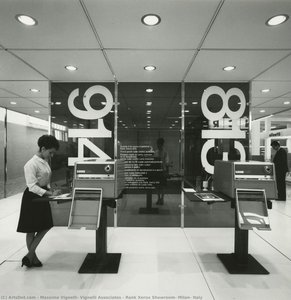
In the realm of modernist design, few works capture the ethereal intersection of industrial precision and artisanal warmth as poignantly as “Venetian Glass: 20th Century Italian Glass.” This captivating piece serves as a luminous window into the soul of mid-century aesthetics, where the boundaries between graphic communication and physical medium dissolve. At first glance, the viewer is greeted by the bold, rhythmic presence of the word “Venetian,” rendered in a kaleidoscope of vibrant hues that dance across a translucent surface. It is not merely a depiction of glass; it is an exploration of how light, color, and typography can coalesce to transform a simple window into a profound sensory experience. The artwork invites us to look through the letters, finding beauty in the way the pigments bleed into the crystalline structure, creating a sense of depth that feels both infinitely layered and strikingly immediate.
The technique behind this visual masterpiece evokes the very essence of its subject matter. Drawing inspiration from the legendary traditions of Italian glassmaking, the piece mimics the breathtaking luminosity of hand-blown glass, where every curve and color shift tells a story of meticulous craftsmanship. The artist utilizes a deliberate juxtaposition of sharp, modernist lettering against the soft, fluid textures of the simulated glass panes. This tension between the structured and the organic creates a mesmerizing visual harmony, making it an ideal centerpiece for those who appreciate the delicate balance of form and function. For the discerning collector or interior designer, this work offers a tactile quality that transcends the flat plane of a painting, bringing a sense of architectural grandeur and light-filled vitality to any sophisticated space.
The Legacy of Modernist Vision
To understand the profound emotional impact of this work, one must look toward the storied lineage of Massimo Vignelli and the era of Italian design excellence. Rooted in the principles of the Vignelli Center for Design Studies, the piece embodies a philosophy where simplicity is not an absence of detail, but rather the ultimate refinement of it. The artwork echoes the historical resurgence of Neorealism, channeling the atmospheric depth found in the cinematic works of Vittorio De Sica and Roberto Rossellini. There is a certain sprezzatura—an effortless grace—in how the colors are placed; they do not shout, but rather sing in a muted yet powerful chorus that honors the heritage of Venetian artistry while remaining firmly planted in the forward-looking spirit of the 20th century.
Beyond its aesthetic allure, “Venetian Glass” acts as a bridge between eras. It connects the rigorous, geometric discipline of the modernist movement with the soulful, tactile traditions of Italian craftsmanship. For an art lover, it represents a moment of clarity and joy; for an interior designer, it provides a sophisticated focal point that can anchor a room with its bold chromatic energy. Owning a high-quality reproduction of this work is more than an acquisition of decor; it is an invitation to inhabit a space defined by intellectual elegance, historical depth, and an unwavering commitment to the beauty of the everyday object.
Related Artworks

![Milano\n\n[cover View, Folded] — Massimo Vignelli, Vignelli Associates, Contemporary Digital Art](/media/artworks/images-thumb/d9/d4/d9d4b14c78e469c5d339069b4321c34b.jpg)

![Fort Worth Art Museum The Italian Film: Neorealism And Beyond Poster And Event Calendar\n\n[front View] — Massimo Vignelli, Vignelli Associates, Contemporary Realism](/media/artworks/images-thumb/9a/f3/9af3622e1fac840c383fbfca8217073b.jpg)
![The White House\n\n[front View] — Massimo Vignelli, Vignelli Associates, Modernist Design](/media/artworks/images-thumb/a8/c8/a8c8083505c92320e67caa42c197cd7d.jpg)
Artist Biography
A Life Dedicated to Form: The World of Massimo Vignelli
Born in Milan, Italy, in 1931, Massimo Vignelli’s journey was one of unwavering dedication to the principles of modernist design. From a young age, he demonstrated an innate understanding of visual communication, beginning his formal training in architecture at the Politecnico di Milano and later continuing at the Università Iuav di Venezia. However, it was an apprenticeship with the esteemed Castiglioni brothers – pioneers in Italian industrial design – that truly ignited his passion for shaping the world through thoughtful creation. This early exposure instilled in him a belief in functionality, simplicity, and the power of elegant solutions to everyday problems. He wasn’t merely designing objects; he was crafting experiences, streamlining interactions, and elevating the mundane into the memorable. This formative period laid the groundwork for a career that would redefine visual culture across continents.From Italy to New York: A Transatlantic Vision
Vignelli's path led him to America in 1966, where he became instrumental in establishing the New York office of Unimark International. This marked a pivotal moment, not only for his career but also for the landscape of American design. Unimark quickly rose to prominence, and Vignelli’s contributions – most notably the enduring logo for American Airlines – solidified his reputation as a master of corporate identity. However, a growing divergence in creative philosophy prompted him to embark on an independent venture. In 1971, alongside his wife and lifelong collaborator, Lella Vignelli, he founded Vignelli Associates. This partnership proved extraordinarily fruitful, becoming synonymous with sophisticated design solutions that spanned graphic design, interior design, product design, and architecture. The firm’s ethos was rooted in a belief that good design should be accessible, timeless, and profoundly useful – principles they consistently championed throughout their careers.Iconic Creations: A Legacy of Clarity
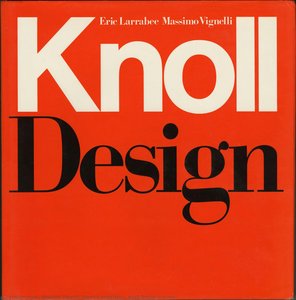
Massimo Vignelli's influence is woven into the fabric of modern life. Perhaps his most recognizable achievement is the redesign of the New York City Subway map in 1972. While initially controversial for its departure from strict geographical accuracy, it was a bold statement in clarity and usability. Vignelli prioritized legibility and intuitive navigation over literal representation, creating a diagrammatic map that continues to guide millions of commuters daily. This project exemplifies his core design philosophy: prioritizing communication above all else. Beyond the subway map, Vignelli Associates left an indelible mark on countless brands and institutions. Their work for Bloomingdale’s – including the iconic brown paper bag with its simple white logo – transformed a shopping experience into a statement of style. They designed furniture for Knoll, packaging for Heller, and corporate identities that became instantly recognizable symbols of quality and innovation. His *Heller Rainbow Dinnerware* stands as a testament to his minimalist aesthetic, showcasing vibrant color within clean geometric forms. The *Tredicesima Triennale di Milano* poster exemplifies his bold use of color and shape, while the *Knoll Design* cover demonstrates his ability to create striking visuals for renowned brands.A Lasting Impact: Beyond Aesthetics
Massimo Vignelli’s impact extends far beyond individual projects; he fundamentally reshaped how we perceive design itself. He was a staunch advocate for typographic discipline, famously advocating for a limited palette of typefaces – believing that true creativity lies not in endless options but in masterful execution with carefully chosen tools. His book, *The Vignelli Canon*, became a manifesto for designers, outlining his principles of clarity, simplicity, and enduring elegance. He wasn’t simply creating visually pleasing objects; he was striving to create order out of chaos, to communicate effectively, and to elevate the human experience through thoughtful design. His work continues to inspire generations of designers, reminding them that true innovation lies in stripping away the unnecessary and focusing on the essential. The Vignelli Center for Design Studies at the Rochester Institute of Technology serves as a lasting tribute to his legacy, preserving an extensive archive of his work and fostering continued exploration of his groundbreaking ideas. He passed away in 2014, but his designs remain powerfully present, shaping our world with their enduring elegance and unwavering commitment to clarity.
massimo vignelli, vignelli associates
1931 - 2014 , Italy
Quick Facts
- Artistic Movement Or Style: Modernism, Minimalism
- Date Of Birth: January 10, 1931
- Date Of Death: May 27, 2014
- Full Name: Massimo Vignelli
- Nationality: Italian
- Notable Artworks:
- Heller Rainbow Dinnerware
- Tredicesima Triennale di Milano
- Knoll Design (cover)
- Place Of Birth: Milan, Italy
Related Articles
Massimo Vignelli: A Legacy of Modernist Clarity in Graphic Design & Visual Communication
Explore the enduring impact of Massimo Vignelli's modernist design philosophy. Discover his iconic works, key principles, and lasting legacy in graphic design & corporate identity. Learn from a true master.

Jacopo Tintoretto's Masterpieces: 25 Paintings That Define Venetian Drama | ArtsDot
Explore 25 breathtaking masterpieces by Jacopo Tintoretto, the Venetian master of drama and light. Discover the stories behind iconic Renaissance paintings & find museum-quality art reproductions to elevate your home decor on ArtsDot.com.

The Golden Light of Innovation: Exploring the Venetian Renaissance Art Movement (1430–1580)
Explore the Golden Age of Venetian art (1430–1580). Discover Giorgione, Titian & Tintoretto's techniques, the 'colorito' revolution, and lasting influence. Expert insights for collectors & enthusiasts.

Jacopo Palma il Giovane: A Venetian Master's Poetic Evolution
Explore the captivating world of Jacopo Palma il Giovane, a pivotal Venetian Renaissance master. Discover his unique style, influenced by Titian & Tintoretto, and learn about key works perfect for discerning collectors.

Pietro Longhi's Venetian Scenes: A Study of Rococo Society & Domestic Life
Explore the captivating world of Pietro Longhi's Venetian scenes! Discover insightful analysis of his Rococo masterpieces & social commentary on 18th-century life. Learn about this 'Venetian Hogarth' and his lasting artistic legacy.
![Heller Rainbow Dinnerware\n\n[front view]](/media/artworks/images-thumb/cd/9c/cd9c3f1015cd05d21f20d796279c84cb.jpg)
![Heller The Rainbow Group\n\n[front view]](/media/artworks/images-thumb/63/ff/63ff27e205bc52fa330b5129aaab17df.jpg)
![Knoll Au Louvre\n\n[front cover]](/media/artworks/images-thumb/2d/58/2d58532dc1c1248432ee69d88c0253d2.jpg)
![Knoll International\n\n[front view]](/media/artworks/images-thumb/3f/ee/3feeb868249b96ea2d449739ed478876.jpg)

![Tredicesima Triennale di Milano\n\n[red on pink]](/media/artworks/images-thumb/d5/7c/d57c0494b16c39484ce82132534f6312.jpg)