 Preview
 Send
Send Share
Share
 Details

 Download
 Similars
 X-Ray
X-Ray Diaporama
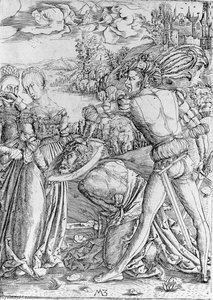
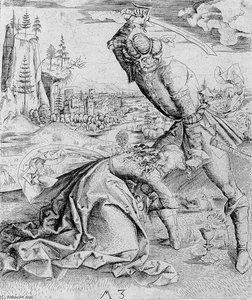
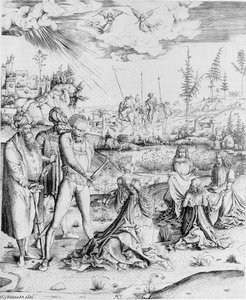
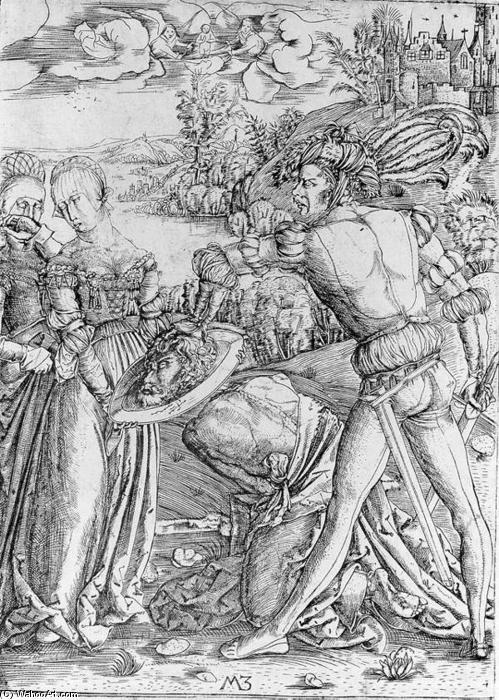
The Beheading of St John the Baptist
 1500
1500 199.0 x 143.0 cm
 Szépmûvészeti Múzeum
 Read More
Giclée / Art Print
Museum-quality giclée or canvas print with fast production and flexible finish options. ( Buy Hand Made Painting Buy Image)




































Pick from our preset sizes that match the artwork's original proportions.

You may enter your own dimensions to fit a specific frame or space. If your selected size does not match the original image's proportions, we will either crop the artwork or extend the image with a mirrored or solid-fill edge. A digital mockup will be sent for your approval before production begins.
Please note that the on-screen preview does not reflect the actual cropping or extension. Only the mockup will accurately show the final composition.
While custom sizes are available, we recommend selecting a dimension from the predefined list to preserve the original proportions.
Worldwide Delivery () in 2 weeks instead of standard 4/5 weeks. (25 August)

Free Worldwide Express Shipping

High-Quality Linen Canvas

Full Shipping Insurance

Customs Tax Refund Guarantee

True Color Matching Guarantee

60-Day Return Policy (Defects Only)

100% Money-Back Guarantee

Bulk Discount Offer
 Glass option is only available in size under 110 CM

The Beheading of St John the Baptist
Giclée / Art Print
Reproduction Size
-


Total Price
$ 63
Related Artworks
Artist Biography
The Enigmatic Legacy of Master MZ
In the vibrant, shifting landscape of the German Renaissance, few figures possess the haunting mystery of Master MZ. Operating primarily in Munich around the turn of the sixteenth century, this enigmatic engraver left behind a body of work that serves as a delicate bridge between the medieval tradition and the burgeoning humanism of the High Renaissance. While his true identity remains shrouded in historical debate—with scholars occasionally linking him to the goldsmith Matthäus Z সুaisinger or even the painter Master MS—his presence in the annals of art history is undeniable. Through his distinctive monogram, "MZ", he etched a visual language into the consciousness of Europe, capturing a moment when the precision of the burin began to mirror the profound complexities of the human experience.
The life of Matthias Müller, as he is often identified, was likely shaped by the intense artistic ferment of Bavaria. Emerging during a period when the monumental influence of Albrecht Dürer was beginning to reshape the German aesthetic, Master MZ found himself in a unique position. He did not merely imitate the masters of Nuremberg; rather, he engaged in a sophisticated dialogue with their innovations. His early training, potentially under the renowned engraver Johann Schäufelein, provided him with a foundational mastery of the burin that allowed him to navigate the delicate balance between religious devotion and secular elegance. His work reflects a period of transition, where the rigid iconography of the past began to soften into more spontaneous, light-filled compositions.
Technique and the Art of the Burin
To gaze upon an original engraving by Master MZ is to witness a masterclass in tonal gradation and spontaneous line work. While some critics of his era noted a certain shakiness in perspective or a lack of anatomical rigor compared to the titan Dürer, such observations often overlook the profound atmospheric quality he achieved. His technique was characterized by a remarkable subtlety; through meticulous burin work, he could evoke the play of light across fabric and the soft shadows of a courtly setting. This focus on light and shadow suggests an artist deeply interested in the emotional resonance of a scene, using the stark contrast of black ink on paper to create depth and drama.
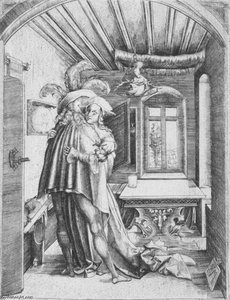
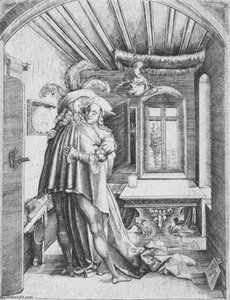
His repertoire was remarkably diverse, split with poetic balance between the sacred and the profane. His religious engravings often focused on the harrowing beauty of martyrdom, such as his depictions of Saint Catherine or Saint Barbara, where the intensity of the subject matter is heightened by his delicate handling of detail. Conversely, his secular works offer a window into the aristocratic splendor of the Bavarian courts. In pieces like The Embrace or his grand depictions of courtly life, one senses a fascination with the social rituals and romantic intimacies of the Renaissance elite. These secular compositions are often celebrated for their original vision, foreshadowing the narrative complexity that would define much of the century to follow.
Historical Significance and Artistic Vision
The historical importance of Master MZ lies not only in his technical skill but in his role as a pioneer of a specific German printmaking identity. He was an artist who thrived in the intersection of tradition and innovation. By utilizing the monogrammatic signature, he participated in the burgeoning culture of artistic branding that allowed printmakers to reach audiences far beyond the borders of Munich. His plates were not merely ephemeral objects but enduring vessels of culture, some surviving for later reprinting and ensuring his visual motifs reached a wide European readership.
Ultimately, the work of Master MZ represents a vital chapter in the evolution of Northern Renaissance art. He captured the spirit of an age caught between the medieval preoccupation with the divine and the modern fascination with the human. His ability to infuse even the most conventional religious subjects with a sense of individual artistic vision ensures his place in the pantheon of great engravers. Though his biography may remain incomplete, his prints continue to speak with a clarity and grace that transcend the centuries, reminding us of the enduring power of the etched line to capture the fleeting beauty of life.
master m z
Germany
Quick Facts
- Artistic Movement Or Style: Renaissance Munich Art
- Artists Or Movements Influenced By This Artist: ['Northern Renaissance']
- Artists Who Influenced This Artist: ['Albrecht Dürer']
- Full Name: Master MZ
- Nationality: German
- Notable Artworks: ['The Embrace']
- Place Of Birth: Germany