 Preview
 Send
Send Share
Share
 Details

 Download
 Similars
 X-Ray
X-Ray Diaporama
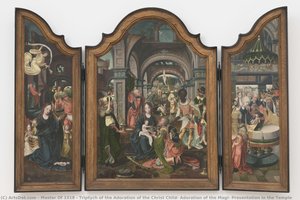
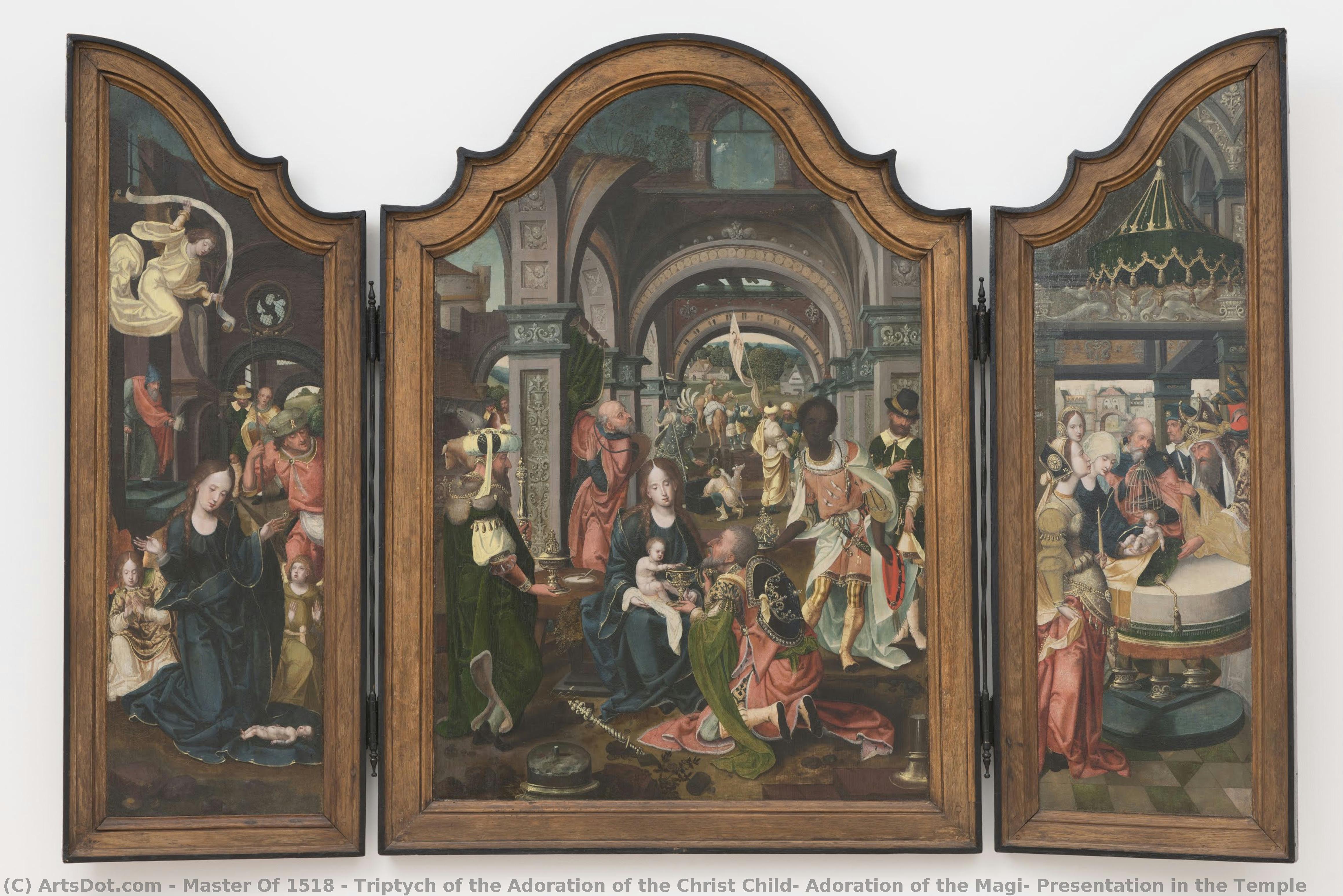
Triptych of the Adoration of the Christ Child; Adoration of the Magi; Presentation in the Temple

 Read More
Hand Made Oil Reproduction
Hand-painted oil on canvas in your size and frame, made to order by our artists. ( Buy Print Buy Image)




































Pick from our preset sizes that match the artwork's original proportions.

You may enter your own dimensions to fit a specific frame or space. If your selected size does not match the original image's proportions, we will either crop the artwork or extend the painting with additional hand-painted elements. A digital mockup will be sent for your approval before production begins.
Please note that the on-screen preview does not reflect the actual cropping or extension. Only the mockup will accurately show the final composition.
While custom sizes are available, we recommend selecting a dimension from the predefined list to preserve the original proportions.
After order, ArtsDot.com team will email client for instructions and provide a mockup preview
Worldwide Delivery () in 3/4 weeks instead of standard 5 weeks. (6 September). No compromise on quality.

Free Worldwide Express Shipping

High-Quality Linen Canvas

Full Shipping Insurance

Customs Tax Refund Guarantee

True Color Matching Guarantee

60-Day Return Policy (Defects Only)

100% Money-Back Guarantee

Bulk Discount Offer
 Glass option is only available in size under 110 CM

Triptych of the Adoration of the Christ Child; Adoration of the Magi; Presentation in the Temple
Reproduction Medium
Reproduction Size
-


Total Price
$ 263
Related Artworks






Artist Biography
The Enigmatic Master of 1518: A Flemish Voice in a Time of Transition
The early 16th century witnessed a flourishing of artistic innovation in the Low Countries, particularly within the bustling city of Antwerp. Amidst this vibrant scene emerged an artist known only as the Master of 1518 – a figure shrouded in mystery yet undeniably impactful. Unlike many Renaissance masters whose lives are well-documented, little is definitively known about the individual behind this evocative name. His identity remains elusive; however, his artistic legacy speaks volumes, revealing a painter deeply embedded within the stylistic currents of Antwerp Mannerism. The attribution to “Master of 1518” itself stems from the date inscribed on the painted wings of a particularly striking triptych: *The Adoration of the Christ Child*, *Adoration of the Magi*, and *Presentation in the Temple*. This work, with its compelling drama and refined detail, became the cornerstone for identifying a group of unsigned paintings sharing similar characteristics.Antwerp Mannerism and Artistic Characteristics
The Master of 1518 belongs to a school of artists who embraced a distinctive aesthetic – Antwerp Mannerism. This style, flourishing between roughly 1510 and 1530, represented a departure from the earlier naturalism of the Northern Renaissance. While retaining meticulous technique, these painters favored elongated figures, elegant poses, and richly saturated colors. A hallmark of their work is the integration of Italian Renaissance ornamentation into traditional medieval architectural settings. The Master’s compositions often feature attenuated forms, striking gestures, and an overall sense of theatricality. His mastery of oil painting techniques allowed for a luminous quality in his works, enhancing the emotional impact of each scene. He wasn't necessarily working on commission; instead, workshops produced ready-made altarpieces with standard religious subjects, catering to ecclesiastical needs without demanding specific iconographic programs. These retables were then widely distributed through Antwerp’s extensive trading networks, reaching as far afield as Germany, Poland, Spain and Portugal.Themes of Faith and Devotion
The Master of 1518 primarily focused on religious subjects, particularly those centered around the life of Christ and the Virgin Mary. *The Adoration of the Magi* exemplifies his approach – a scene brimming with reverence and wonder. The figures surrounding the infant Christ are not simply observers but active participants in a moment of profound spiritual significance. His depictions of *The Presentation in the Temple*, and notably, works referred to as *The Death of the Virgin*, reveal a sensitivity to human emotion alongside a deep-seated piety. These paintings weren’t merely illustrations of biblical narratives; they were intended to evoke contemplation and inspire devotion within the viewer. The artist's ability to convey both grandeur and intimacy is particularly striking, creating scenes that feel simultaneously monumental and deeply personal.Contemporary Influences and Possible Connections
Operating in Antwerp during a period of artistic ferment, the Master of 1518 was undoubtedly influenced by his contemporaries. Artists like Quentin Matsys, Joos van Cleve, and Jan Gossaert were active in the city at the same time, shaping the aesthetic landscape. Some scholars suggest potential connections between the Master of 1518 and Pieter Coecke van Aelst, noting similarities in style and composition. Intriguingly, there’s a theory that the Master might be identified with Jan van Dornicke, Coecke's father-in-law, though concrete evidence remains elusive. The influence of Italian Renaissance art is also apparent in his work, particularly in the decorative elements and architectural motifs he incorporated into his paintings. He skillfully blended these foreign influences with the established traditions of Flemish painting, creating a unique artistic voice.Legacy and Historical Significance
Despite the anonymity surrounding his identity, the Master of 1518 left an indelible mark on the art world. His works are highly valued for their quality, originality, and expressive power. The triptych that bears his name remains a testament to his skill and artistic vision. Today, art historians continue to study and appreciate his paintings, recognizing him as a key figure in the development of Antwerp Mannerism. He represents a fascinating example of an artist whose work transcends personal fame, speaking directly to viewers across centuries through its enduring beauty and spiritual depth. His influence can be seen in the works of later artists who adopted his dramatic style and refined technique, solidifying his place within the rich tapestry of Northern Renaissance art.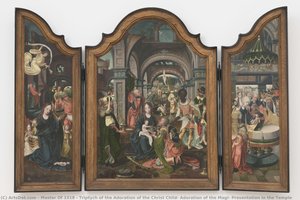
master of 1518
Belgium
Quick Facts
- Artistic Movement Or Style: Antwerp Mannerism
- Artists Or Movements Influenced By This Artist: ['Pieter Coecke van Aelst']
- Full Name: Master of 1518
- Nationality: Flemish
- Notable Artworks:
- Triptych of the Adoration...
- Adoration of the Christ Child
- Death of the Virgin
- Place Of Birth: Antwerp, Belgium