 Preview
 Send
Send Share
Share
 Details

 Download
 Similars
 X-Ray
X-Ray Diaporama
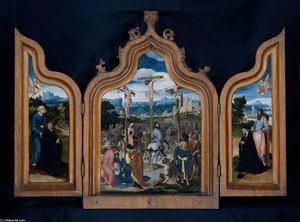
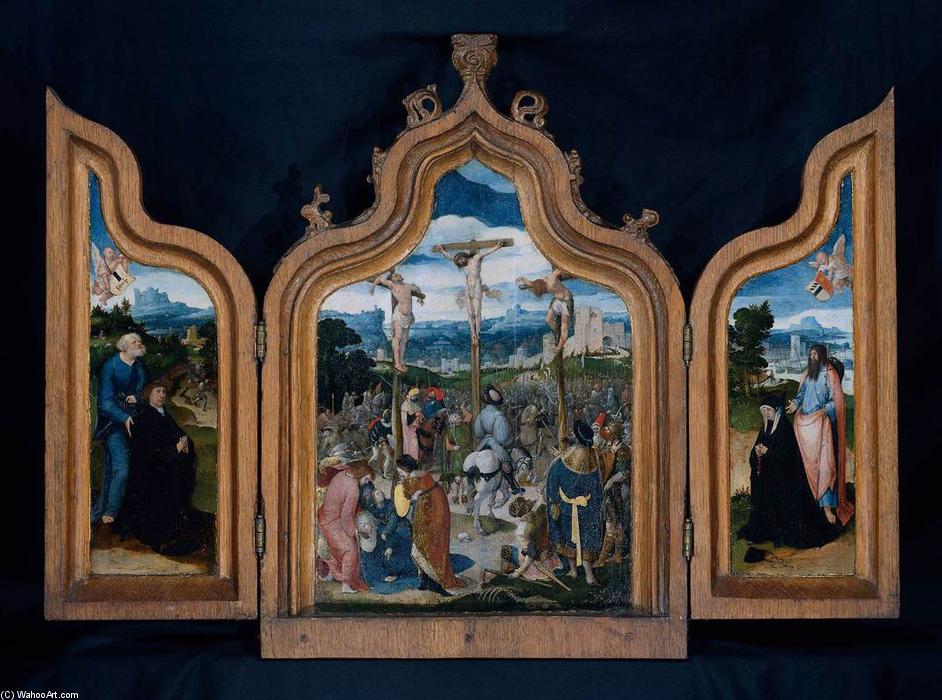
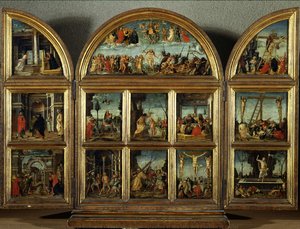
Triptych with Calvary and Patrons
 Oil On Panel
- Northern Renaissance
 1506
1506- Renaissance
 37.0 x 26.0 cm
 Rijksmuseum
 Read More
Hand Made Oil Reproduction
Hand-painted oil on canvas in your size and frame, made to order by our artists. ( Buy Print Buy Image)




P118B $10

P118H $10

P118W $10

P438Z $10

P508JH $12

P508YH $12

P805H $10

P805Z $10

P919BZ $10

P919G $10

P919XJ $10

P959ZH $10

P968JZ $12

W106C $8

W218G $10

W218JH $8

W218Y $10

W307PJ $10

W316G $10

W316PJ $8

W316Y $10

W398PJ $8

W4111J $10

W500HY $15

W500JH $15

W692G $12

W849H $8

W940BG $15

W953PJ $8




Pick from our preset sizes that match the artwork's original proportions.

You may enter your own dimensions to fit a specific frame or space. If your selected size does not match the original image's proportions, we will either crop the artwork or extend the painting with additional hand-painted elements. A digital mockup will be sent for your approval before production begins.
Please note that the on-screen preview does not reflect the actual cropping or extension. Only the mockup will accurately show the final composition.
While custom sizes are available, we recommend selecting a dimension from the predefined list to preserve the original proportions.
After order, ArtsDot.com team will email client for instructions and provide a mockup preview
Worldwide Delivery () in 3/4 weeks instead of standard 5 weeks. (21 August). No compromise on quality.

Free Worldwide Express Shipping

High-Quality Linen Canvas

Full Shipping Insurance

Customs Tax Refund Guarantee

True Color Matching Guarantee

60-Day Return Policy (Defects Only)

100% Money-Back Guarantee

Bulk Discount Offer
 Glass option is only available in size under 110 CM

Triptych with Calvary and Patrons
Reproduction Medium
Reproduction Size
-


Total Price
$ 263
Artwork Description
A Devotional Masterpiece: The Sacred Narrative of Jan Wellens de Cock
In the quiet, contemplative realm of the Northern Renaissance, few forms command as much reverence as the triptych. Triptych with Calvary and Patrons, painted in 1506 by the master Jan Wellens de Cock, serves as a profound window into the spiritual psyche of the sixteenth century. This intricate three-paneled work does not merely depict a scene; it invites the viewer into a sacred ritual of observation and mourning. Through his meticulous application of oil, De Cock captures the harrowing moment of the Crucifixion, weaving together a tapestry of human grief and divine sacrifice that remains as emotionally resonant today as it was five centuries ago.
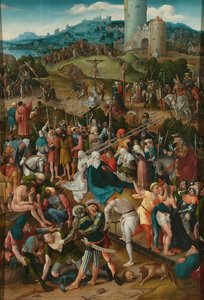
The composition is a triumph of narrative layering, where the central drama of Christ on the cross is surrounded by a sea of witnesses. In the first panel, we encounter a poignant intimacy, with figures gathered closely around the base of the cross, their gazes fixed upward in a mixture of awe and agony. As the eye moves through the secondary panels, the scale of the tragedy expands to include a bustling crowd of onlookers and patrons, creating a sense of communal experience. The artist’s ability to balance the monumental weight of the Crucifixion with the delicate, almost miniature details—such as the subtle presence of horses in the distance and the fleeting movement of birds in the periphery—demonstrates a technical virtuosity that defines the Flemish tradition.
Beyond its surface beauty, the painting is steeped in the rich symbolism characteristic of the era. Every element, from the specific arrangement of the patrons to the atmospheric landscape, serves a theological purpose. The presence of the birds and the distant animals suggests the interconnectedness of all creation in the face of the divine sacrifice. For the collector or the interior designer, this piece offers more than just aesthetic value; it provides a focal point of profound historical depth. The interplay of light and shadow across the textured surfaces creates a sense of movement that breathes life into the static panels, making it an ideal centerpiece for spaces dedicated to reflection, classical elegance, or sophisticated storytelling.
Owning a reproduction of such a significant work allows one to bring the solemnity and grandeur of the Renaissance into a contemporary setting. Whether placed in a curated gallery wall or used as a standalone statement piece in a study, Triptych with Calvary and Patrons evokes a sense of timelessness. It is a work that rewards prolonged study, revealing new layers of emotion and craftsmanship with every glance, making it an indispensable acquisition for those who seek to surround themselves with art that speaks to the eternal human condition.
Related Artworks
Artist Biography
Alessandro di Mariano Filipepi: The Enchanting Botticelli
Sandro Botticelli, born Alessandro di Mariano di Vanni Filipepi around 1445 in Florence, Italy, was a painter whose work profoundly shaped the trajectory of the Italian Renaissance. His life, though tragically short, spanning from approximately 1445 to 1510, witnessed a remarkable evolution in artistic style and a rediscovery of his legacy centuries later. Initially apprenticed to various masters – first Maso Finiguerra, then Fra Filippo Lippi – Botticelli’s early career was marked by the creation of frescoes for Florentine churches and cathedrals, establishing him as a skilled craftsman within the established artistic traditions of the city. His youth was characterized by a restless spirit, a penchant for wit, and a reputation for youthful mischief, traits that perhaps contributed to his early withdrawal from formal schooling – a deviation from the norm at the time.Early Influences and Florentine Apprenticeship
Botticelli’s artistic development was deeply rooted in the late Gothic style prevalent in Florence during his formative years. The influence of Fra Filippo Lippi, particularly his mastery of tempera painting and meticulous attention to detail, is readily apparent in Botticelli's early works. However, he quickly transcended mere imitation, demonstrating a burgeoning sense of composition and an emerging interest in classical motifs – a trend that would become increasingly prominent throughout his career. His apprenticeship with Antonio del Pollaiuolo exposed him to the techniques of oil painting, further expanding his artistic toolkit and allowing for richer color palettes and greater textural possibilities. Crucially, Botticelli’s connections through Lippi afforded him patronage from influential families like the Medici, securing commissions that propelled his career forward.The Zenith of Mythological Vision
The period between 1478 and 1490 represents the apex of Botticelli's artistic achievement. During this time, he produced some of his most celebrated works – paintings steeped in classical mythology and imbued with a unique blend of elegance, grace, and psychological depth. Perhaps his most iconic creations are *The Birth of Venus* and *Primavera*, both housed within the Uffizi Gallery in Florence. *The Birth of Venus* depicts the goddess emerging from a giant scallop shell, while *Primavera* portrays a vibrant allegorical scene celebrating spring, populated by mythological figures such as Venus, Flora, Zephyrus, and Mercury. These works are not merely decorative; they are complex narratives filled with symbolic meaning, reflecting Botticelli’s engagement with humanist philosophy and his fascination with the beauty of the human form. The use of flowing lines, delicate drapery, and a restrained palette contributes to an atmosphere of ethereal serenity, characteristic of his style.Religious Works and the Development of Style
While renowned for his mythological paintings, Botticelli’s output encompassed a wide range of religious subjects throughout his career. He produced numerous depictions of the *Madonna and Child*, often rendered in the elegant round format known as *tondi*. These works demonstrate his technical skill and his ability to convey profound emotion through subtle gestures and expressions. As the 1490s progressed, Botticelli’s style underwent a noticeable shift. His paintings became more personal, imbued with a melancholic quality and a departure from the idealized beauty of his earlier work. This evolution is evident in *The Mystic Nativity*, one of the few works definitively dated to 1501, which showcases a darker palette and a more introspective mood. Some art historians suggest this stylistic change reflects the growing influence of Leonardo da Vinci, whose innovative techniques were beginning to challenge the established conventions of Renaissance painting.Rediscovery and Lasting Legacy
Botticelli’s work largely faded from public consciousness after his death in 1510. For centuries, his paintings were dismissed as mannered or overly sentimental. However, during the late 19th century, a renewed interest in Italian Renaissance art led to a reassessment of Botticelli's oeuvre. The Pre-Raphaelites championed his work, recognizing its lyrical beauty and its evocative power. This rediscovery sparked a profound appreciation for Botticelli’s unique artistic vision, solidifying his place as one of the most important figures of the Early Renaissance. Today, Botticelli’s paintings are celebrated for their exquisite detail, their graceful forms, and their enduring capacity to transport viewers to a world of myth, beauty, and human emotion. His influence continues to resonate in art history, inspiring generations of artists with his innovative approach to composition, color, and symbolism.
jan wellens de cock
1510 - 1570 , Netherlands
Quick Facts
- Artistic Movement Or Style: Early Renaissance
- Artists Or Movements Influenced By This Artist: ['Pre-Raphaelites']
- Artists Who Influenced This Artist: ['Fra Filippo Lippi']
- Date Of Birth: c. 1445
- Date Of Death: 1510
- Full Name: Alessandro di Mariano di Vanni Filipepi
- Nationality: Italian
- Notable Artworks:
- Primavera
- The Birth of Venus
- Adoration of the Magi
- Place Of Birth: Florence, Italy
Related Articles

Demandes Commerciales
APS ofrece reproducciones de bellas artes y encargos personalizados desde 2004. Confían en nosotros corporaciones, hoteles y coleccionistas selectos para obras de arte de calidad museística, servicio discreto y soluciones artísticas completas. ¡Póngase en contacto con nosotros para obtener un presupuesto personalizado!

Goya's Masterpieces: Explore 25 Iconic Paintings & Art Prints | ArtsDot
Delve into the world of Francisco Goya with ArtsDot. Explore 25 iconic paintings – from 'The Third of May' to his haunting Black Paintings. Discover the stories, techniques & emotions behind these Spanish masterpieces. Find museum-quality art reproductions for your home at ArtsDot.com!

A riguardo di noi
Découvrez notre histoire ! Nous apportons l'art de classe mondiale dans votre vie grâce à une sélection experte, des créations personnalisées et des aperçus gratuits. Approuvé par les particuliers et les entreprises depuis 2000.
Pieter de Hooch: Illuminating Dutch Domestic Life & Golden Age Charm
Explore the captivating world of Pieter de Hooch, a master of Dutch Golden Age painting. Discover his innovative use of light, intimate domestic scenes, and lasting influence on art history. Learn more at ArtsDot.

Theo van Doesburg: Pioneering De Stijl & the Evolution of Neo-Plasticism
Explore the revolutionary De Stijl movement & Neo-Plasticism with our expert guide. Discover Piet Mondrian, Theo van Doesburg, and the lasting impact of this influential art style. Learn about collecting & investing in De Stijl masterpieces.