 Preview
 Send
Send Share
Share
 Details

 Download
 Similars
 X-Ray
X-Ray Diaporama
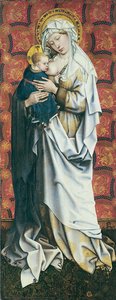
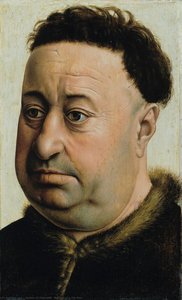
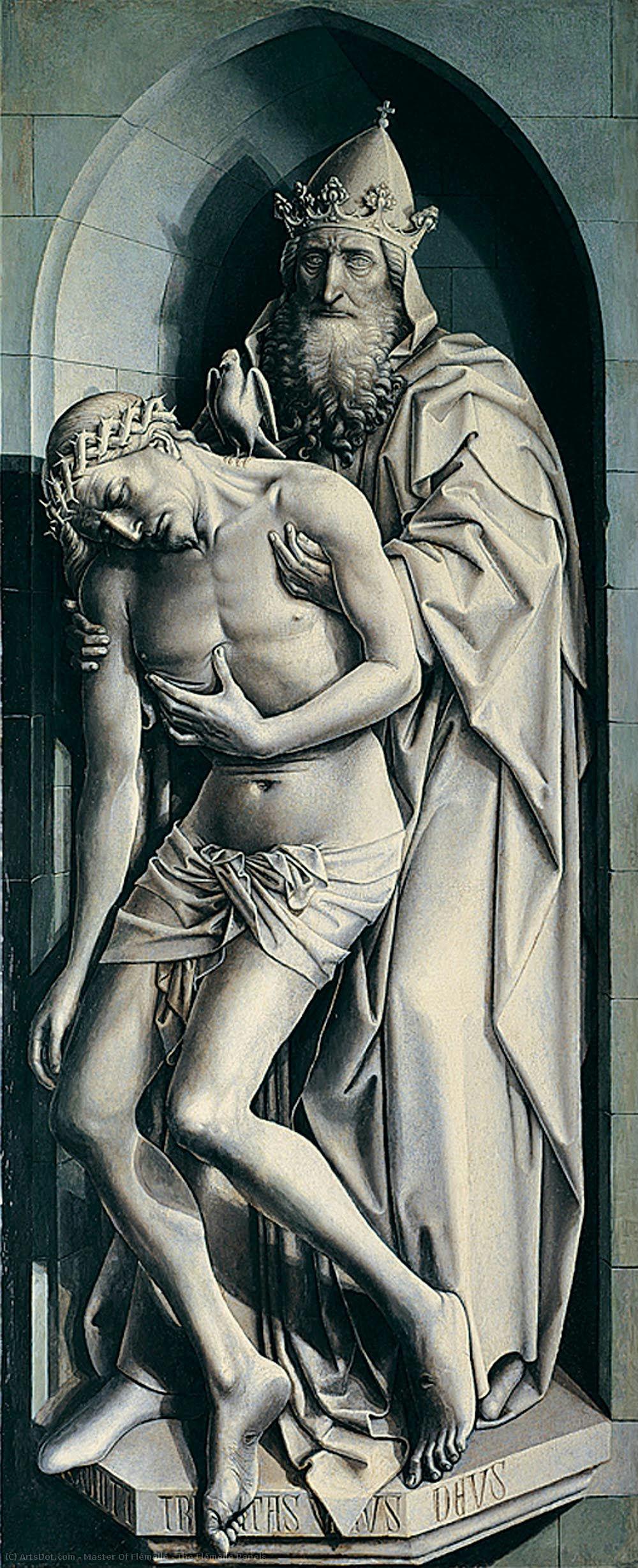
The Flémalle Panels
 Acrylic On Canvas
- WallArt
- International Gothic Style
 1430
1430 61.0 x 148.0 cm
 Städel Museum
 Read More
Giclée / Art Print
Museum-quality giclée or canvas print with fast production and flexible finish options. ( Buy Hand Made Painting Buy Image)




P118B $10

P118H $10

P118W $10

P438Z $10

P508JH $12

P508YH $12

P805H $10

P805Z $10

P919BZ $10

P919G $10

P919XJ $10

P959ZH $10

P968JZ $12

W106C $8

W218G $10

W218JH $8

W218Y $10

W307PJ $10

W316G $10

W316PJ $8

W316Y $10

W398PJ $8

W4111J $10

W500HY $15

W500JH $15

W692G $12

W849H $8

W940BG $15

W953PJ $8




Pick from our preset sizes that match the artwork's original proportions.

You may enter your own dimensions to fit a specific frame or space. If your selected size does not match the original image's proportions, we will either crop the artwork or extend the image with a mirrored or solid-fill edge. A digital mockup will be sent for your approval before production begins.
Please note that the on-screen preview does not reflect the actual cropping or extension. Only the mockup will accurately show the final composition.
While custom sizes are available, we recommend selecting a dimension from the predefined list to preserve the original proportions.
Worldwide Delivery () in 2 weeks instead of standard 4/5 weeks. (2 September)

Free Worldwide Express Shipping

High-Quality Linen Canvas

Full Shipping Insurance

Customs Tax Refund Guarantee

True Color Matching Guarantee

60-Day Return Policy (Defects Only)

100% Money-Back Guarantee

Bulk Discount Offer
 Glass option is only available in size under 110 CM

The Flémalle Panels
Giclée / Art Print
Reproduction Size
-


Total Price
$ 63
A Window into Flemish Care: Examining Robert Campin’s “The Flémalle Panels”
Robert Campin, known affectionately as the Master of Flémalle, stands as a pivotal figure in the burgeoning artistic landscape of early Netherlandish painting—a movement that would soon blossom into the grandeur of Mannerism and ultimately pave the way for Romantic idealism. Born around 1375 in Tournai, Belgium, Campin’s formative years coincided with a period of profound societal transformation driven by papal indulgences and burgeoning urban centers like Bruges, establishing him as an artist deeply attuned to the spirit of his time. While overshadowed by contemporaries like Jan van Eyck and Rogier van der Weyden—artists who achieved unparalleled fame during their lifetimes—Campin’s oeuvre possesses a quiet intensity and remarkable psychological depth that continues to captivate scholars and collectors alike. His legacy resides not merely in technical prowess but in an unwavering commitment to portraying human emotion with startling realism, anticipating many of the stylistic innovations that would characterize subsequent artistic movements.Stylistic Innovation: Beyond Gothic Ornamentation
Campin’s work decisively moved away from the elaborate ornamentation characteristic of late Gothic art, embracing a more restrained aesthetic informed by observation and meticulous detail. Unlike his predecessors who often employed stylized drapery and flattened perspectives to convey religious narratives, Campin meticulously rendered textures—the folds of fabric, the sheen of polished wood—creating an illusion of palpable physicality. This approach aligns seamlessly with the emerging humanist sensibilities of the fifteenth century, where artists increasingly sought to depict human figures as accurately as possible, reflecting their inner lives alongside outward appearances. The influence of Gentile da Fabriano’s Adoration of the Magi is undeniable; Campin adopted techniques like sfumato—a subtle blending of tones—to soften contours and imbue his scenes with an ethereal glow, a hallmark of the International Gothic style.The Merode Altarpiece: A Study in Domestic Tranquility
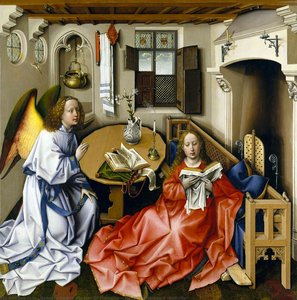
Campin’s most celebrated masterpiece, the Merode Altarpiece commissioned by Pieter van Artevelde, exemplifies this stylistic shift and offers invaluable insight into Campin's artistic vision. This monumental panel depicts a domestic interior—a Madonna and Child flanked by Saint John the Baptist and an angel—presented with remarkable naturalism. The figures are positioned within a richly furnished room bathed in diffused light, creating a sense of serene intimacy that contrasts sharply with the grandeur of many other religious paintings of the era. Campin’s masterful use of oil paint—a relatively new medium at the time—allowed him to achieve unprecedented levels of luminosity and tonal gradation, capturing subtle nuances of emotion and gesture. The careful depiction of everyday objects—a wooden chest, a textile draped over a chair—further reinforces the painting's grounding in observable reality.Symbolism Embedded in Everyday Life
Beyond its technical brilliance, “The Flémalle Panels” is laden with symbolic significance reflecting medieval Christian beliefs and humanist ideals. The positioning of Saint John the Baptist—kneeling at the Madonna’s feet—represents humility and devotion, mirroring the Virgin Mary's role as exemplar of piety. The angel’s gaze directs towards the infant Jesus, symbolizing divine grace and protection. Furthermore, the inclusion of domestic furnishings speaks to the importance of family life and earthly existence alongside spiritual contemplation. Campin subtly conveys a profound meditation on faith, compassion, and the beauty inherent in the simplest human interactions—themes that resonate powerfully across centuries.Emotional Resonance: A Portrait of Gentle Concern
Perhaps most striking is the palpable emotion conveyed by Campin’s figures. The tender embrace between Mary and John exudes warmth and affection, capturing a moment of profound connection amidst familial devotion. The downward gaze of both figures—towards an unseen object—suggests contemplation and vulnerability. Campin's ability to portray psychological realism distinguishes him from many of his contemporaries, establishing him as one of the earliest masters of expressive portraiture. “The Flémalle Panels” remains a testament to Campin’s artistic genius—a captivating glimpse into a world where faith and human compassion intertwined seamlessly, leaving an indelible mark on the history of art.Related Artworks
Artist Biography
The Shadowed Canvas: Exploring the Life and Art of Jean-Baptiste Mongeau
Jean-Baptiste Mongeau, a name perhaps less familiar than his contemporaries in the burgeoning Romantic movement, nevertheless carved out a unique and profoundly evocative space within French art during the late 18th and early 19th centuries. Born in Lyon in 1778, Mongeau’s life was inextricably linked to the tumultuous social and political shifts of his time – the rise of revolutionary fervor, the Napoleonic era, and the subsequent restoration. While he never achieved widespread fame during his lifetime, a closer examination of his work reveals a deeply sensitive artist grappling with themes of memory, loss, and the ephemeral nature of beauty, anticipating many of the concerns that would define later Symbolist painters. Mongeau’s early life offered little indication of the artistic path he would ultimately pursue. His father was a silk merchant, a practical profession in the heart of Lyon's textile industry. However, young Jean-Baptiste displayed an unusual aptitude for drawing and painting from a remarkably young age, initially sketching designs for his family’s business and later capturing the vibrant scenes of the city’s bustling markets and canals. He received informal instruction from a local artisan, mastering the fundamentals of oil paint and composition before embarking on a period of self-directed study, fueled by an intense curiosity about the world around him. Crucially, he was exposed to the works of Jacques-Louis David, whose Neoclassical style initially exerted a strong influence – evidenced in his early portraits and historical scenes, characterized by precise detail and idealized forms. A pivotal moment in Mongeau’s artistic development occurred during his time serving as an artillery officer in Napoleon's campaigns. The horrors he witnessed on the battlefield—the carnage, the suffering, and the sheer waste of human life—profoundly impacted him. This experience marked a dramatic shift away from the polished formality of Neoclassicism and towards a more introspective and emotionally charged style. He began to explore darker subjects – landscapes imbued with melancholy, portraits reflecting inner turmoil, and allegorical scenes that hinted at the fragility of existence. His palette darkened considerably, favoring somber blues, greens, and browns, punctuated by flashes of intense color used sparingly to heighten emotional impact. The influence of Romanticism, particularly the emphasis on subjective experience and the sublime, became increasingly apparent. Mongeau’s artistic style is often described as “atmospheric realism.” He wasn't interested in simply replicating reality; instead, he sought to capture its essence—its mood, its feeling. His landscapes are particularly notable for their evocative use of light and shadow, creating a sense of depth and mystery. He frequently depicted scenes of twilight or dawn, using diffused light to suggest the passage of time and the inevitability of decay. His portraits, in contrast to the idealized representations common at the time, were characterized by an unsettling honesty—a willingness to portray the subject’s vulnerabilities and anxieties. He employed a loose brushstroke technique, layering colors to create a hazy, dreamlike quality that further enhanced the sense of emotional resonance. A key element of his work is the use of *grisaille*, a monochrome painting technique, often used in underpaintings to establish form and tone before adding color. Among Mongeau’s most celebrated works are “The Fallen Soldier” (1808), a haunting depiction of a lone figure slumped amidst the wreckage of battle, and "Memory's Embrace" (1815), an allegorical painting that explores the themes of loss and remembrance. “The Fallen Soldier,” in particular, is considered a seminal work of Romantic art in France, capturing not just the physical devastation of war but also the profound psychological trauma it inflicted. It’s notable for its lack of explicit gore; instead, Mongeau focuses on the soldier's posture, his face etched with despair, and the desolate landscape surrounding him—a powerful indictment of conflict without resorting to sensationalism. His later works often featured recurring motifs – wilting flowers, decaying fruit, and solitary figures gazing into the distance—all symbols of mortality and the transience of beauty. Despite a relatively modest output during his lifetime, Mongeau’s influence on subsequent generations of French artists is undeniable. His emphasis on emotional expression, his exploration of dark themes, and his innovative use of light and color foreshadowed many of the developments that would characterize the Symbolist movement. His work was largely overlooked until the late 20th century when a renewed interest in Romanticism led to a reassessment of his artistic legacy. Today, Jean-Baptiste Mongeau is recognized as a significant, if often misunderstood, figure in French art history—an artist who dared to confront the darker aspects of human experience and capture their essence on canvas with remarkable sensitivity and power.Key Works
- The Fallen Soldier (1808): A poignant depiction of a fallen soldier, embodying the horrors of war and the psychological toll it exacts.
- Memory’s Embrace (1815): An allegorical painting exploring themes of loss, remembrance, and the fleeting nature of beauty.
- Twilight on the Rhône (c. 1810): A landscape capturing the melancholic beauty of a twilight scene along the river.
- Portrait of Madame Dubois (1805): A strikingly honest portrait revealing the subject’s inner anxieties and vulnerabilities.
master of flémalle
1444 , Belgium
Related Articles
Robert Campin: Pioneering Realism & Spiritual Depth in Early Netherlandish Painting
Explore the revolutionary work of Robert Campin, a pioneer of Early Netherlandish painting. Discover his naturalistic style, religious symbolism in masterpieces like the Mérode Altarpiece, and lasting influence on art history.

The Enduring Legacy of Oil on Canvas: Technique, History & Aesthetic Impact
Explore the rich history & techniques of oil painting – from Renaissance masters to Impressionism. Discover pigments, layering methods, and why this timeless medium endures. Expert insights for artists & art enthusiasts.

Oil on Canvas: A Historical & Technical Exploration of a Timeless Artistic Medium
Explore the rich history & enduring techniques of oil painting on canvas. Discover the science behind its longevity, conservation practices, and contemporary relevance. Expert insights for art enthusiasts.

The Enduring Power of Painting: A Historical & Contemporary Exploration of Form and Emotion
Explore the rich history & enduring techniques of oil painting with ArtsDot. Discover masterpieces, learn about art collecting, and find authentic handmade reproductions crafted by skilled artists.

The Enduring Legacy of Oil on Canvas: Technique, History & Contemporary Practice
Explore the rich history & enduring techniques of oil painting on canvas. Discover the science behind its longevity, conservation practices, and contemporary relevance. Expert insights for art enthusiasts.