 Preview
 Send
Send Share
Share
 Details

 Download
 Similars
 X-Ray
X-Ray Diaporama
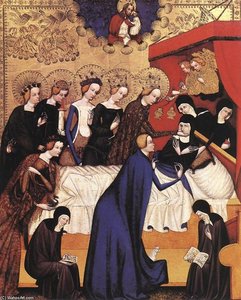
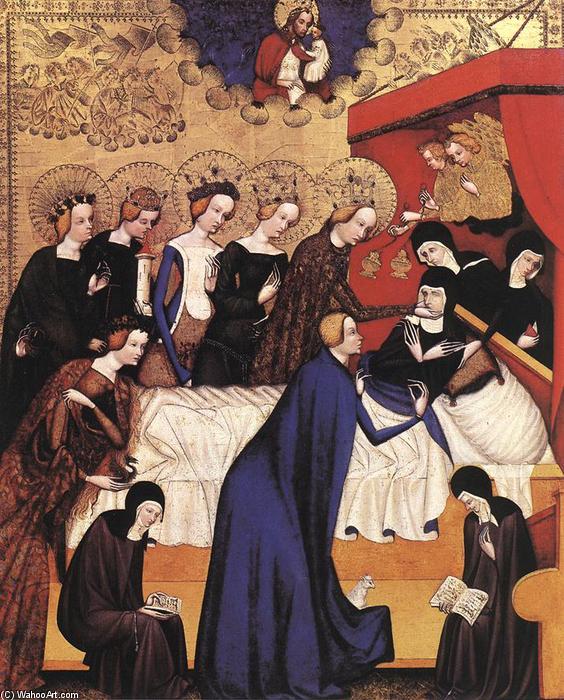
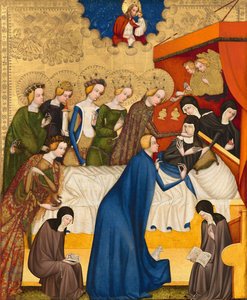
The Death of St. Clare
 Acrylic On Canvas
- WallArt
- International Gothic
 1410
1410 66.0 x 53.0 cm
 National Gallery of Art
 Read More
Giclée / Art Print
Museum-quality giclée or canvas print with fast production and flexible finish options. ( Buy Hand Made Painting Buy Image)




P118B $10

P118H $10

P118W $10

P438Z $10

P508JH $12

P508YH $12

P805H $10

P805Z $10

P919BZ $10

P919G $10

P919XJ $10

P959ZH $10

P968JZ $12

W106C $8

W218G $10

W218JH $8

W218Y $10

W307PJ $10

W316G $10

W316PJ $8

W316Y $10

W398PJ $8

W4111J $10

W500HY $15

W500JH $15

W692G $12

W849H $8

W940BG $15

W953PJ $8




Pick from our preset sizes that match the artwork's original proportions.

You may enter your own dimensions to fit a specific frame or space. If your selected size does not match the original image's proportions, we will either crop the artwork or extend the image with a mirrored or solid-fill edge. A digital mockup will be sent for your approval before production begins.
Please note that the on-screen preview does not reflect the actual cropping or extension. Only the mockup will accurately show the final composition.
While custom sizes are available, we recommend selecting a dimension from the predefined list to preserve the original proportions.
Worldwide Delivery () in 2 weeks instead of standard 4/5 weeks. (1 September)

Free Worldwide Express Shipping

High-Quality Linen Canvas

Full Shipping Insurance

Customs Tax Refund Guarantee

True Color Matching Guarantee

60-Day Return Policy (Defects Only)

100% Money-Back Guarantee

Bulk Discount Offer
 Glass option is only available in size under 110 CM

The Death of St. Clare
Giclée / Art Print
Reproduction Size
-


Total Price
$ 63
The Enigmatic Master of Heiligenkreuz: A Portrait of a Lost Renaissance
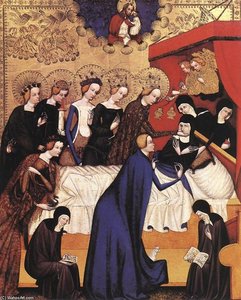
The identity of the “Master of Heiligenkreuz” remains one of art history’s most enduring mysteries, a captivating puzzle that has occupied scholars for over a century. This Austrian painter, active primarily during the first half of the 15th century, produced a remarkable body of work characterized by dramatic religious scenes—particularly depictions of St. Clare’s death and Annunciations—that showcase a unique blend of Gothic and International Gothic styles. While his precise origins remain elusive, tracing the evolution of his art offers a fascinating glimpse into the artistic landscape of early Renaissance Central Europe. The earliest known works attributed to the Master are diptychs – two-panel paintings – discovered at the Cistercian Abbey of Heiligenkreuz in southeastern Austria. These pieces, dating from around 1400-1410, immediately established his distinctive style: elongated figures with delicate hands rendered in meticulous detail, reflecting the influence of Burgundian art and signaling a decisive move away from the more austere conventions of Gothic painting. The Abbot’s careful patronage ensured that these groundbreaking artworks were preserved for posterity, allowing us to appreciate their artistic merit today. Composition and Symbolism The painting depicts a poignant scene of St. Clare’s death, surrounded by mournful nuns and angelic figures. The use of tempera on wood panels was a common technique during the medieval period, and the artist has skillfully employed it to create a rich tapestry of colors and textures. The gold leaf accents add a sense of divine light and holiness to the scene, symbolizing purity and spiritual ascension—elements central to Christian iconography of the time. The composition is characterized by a profound intimacy and emotional depth, with the figures’ expressions conveying a powerful narrative about faith, sorrow, and acceptance. Artistic Significance The Death of St. Clare is a significant work of medieval art, offering insights into the artistic and devotional practices of the era. Its masterful execution—the subtle gradations of color, the expressive drapery folds—demonstrates the Master’s command of his craft and reflects the broader trends toward naturalism that were emerging in European painting during this period. The artist's meticulous attention to detail elevates the scene beyond mere representation, transforming it into a vehicle for conveying spiritual contemplation. Further Research:- Useful Links: The Death of St. Clare by MASTER of Heiligenkreuz – This monumental work, housed in the National Gallery of Art in Washington, D.C., exemplifies the artist’s signature style and provides invaluable insight into the artistic sensibilities of the early fifteenth century.
- Additional Resources: Explore similar artworks by Ugolino Di Nerio (Ugolino Di Nerio's Moses) and Pietro Lorenzetti (Pietro Lorenzetti's Crucifix), masterpieces that share stylistic affinities with The Death of St. Clare.
- Handmade Reproductions: Admire the beauty and authenticity of handcrafted oil paintings reproductions of these iconic artworks on ArtsDot.com – a testament to artistic legacy and enduring inspiration.
Related Artworks
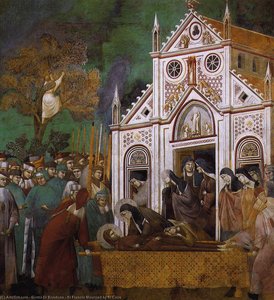
![Legend Of St Francis - [23] - St Francis Mourned By St Clare — Giotto Di Bondone, Gothic](/media/artworks/images-thumb/17/1c/171c284c41dc3ef8bca83e51c1e1e531.jpg)

Artist Biography
The Enigmatic Master of Heiligenkreuz: A Portrait of a Lost Renaissance
The identity of the “Master of Heiligenkreuz” remains one of art history’s most enduring mysteries, a captivating puzzle that has occupied scholars for over a century. This Austrian painter, active primarily during the first half of the 15th century, produced a remarkable body of work characterized by dramatic religious scenes—particularly depictions of St. Clare’s death and Annunciations—that showcase a unique blend of Gothic and International Gothic styles. While his precise origins remain elusive, tracing the evolution of his art offers a fascinating glimpse into the artistic landscape of early Renaissance Central Europe.
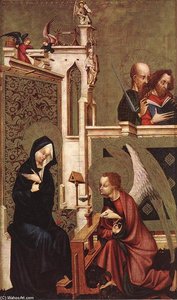
The earliest known works attributed to the Master are diptychs – two-panel paintings – discovered at the Cistercian Abbey of Heiligenkreuz in southeastern Austria. These pieces, dating from around 1400-1410, immediately established his distinctive style: elongated figures with delicate hands and faces, a penchant for rich color palettes, and an expressive use of light and shadow. The left panel depicts the Annunciation, showcasing the Virgin Mary receiving the news of her divine conception, while the reverse portrays the Madonna and Child – a tender scene brimming with serenity. The right panel presents the Mystical Marriage of Saint Catherine, alongside Saint Dorothy, demonstrating a masterful command of detail and emotional depth.
What immediately sets the Master’s work apart is its synthesis of influences. While firmly rooted in the Gothic tradition—evident in his meticulous rendering of drapery and architectural details—he also absorbed elements from the International Gothic style, which was gaining prominence across Europe at the time. This fusion resulted in a highly individualistic aesthetic, characterized by an almost unsettling realism combined with a profound sense of spirituality. The figures possess a certain elongated quality, reminiscent of Northern European art, yet their expressions are imbued with a palpable emotional intensity rarely seen in contemporary works.
Several theories have been proposed regarding the Master’s origins and artistic influences. Initially, scholars suggested a French connection, pointing to similarities with Franco-Burgundian goldsmithing techniques evident in his use of gold leaf and decorative elements. Later investigations explored potential links to Prague, citing stylistic parallels with panel painting workshops active at the Bohemian court. The debate continues, fueled by the scarcity of documentary evidence and the fragmentary nature of the surviving corpus. It’s possible that the Master was an itinerant artist, traveling between different courts and absorbing influences from various artistic centers.
Despite the lack of definitive answers about his identity, the Master of Heiligenkreuz's legacy is undeniable. His paintings are prized for their emotional intensity, technical skill, and unique stylistic synthesis. They represent a crucial link in the development of early Renaissance art in Austria, bridging the gap between the late Gothic period and the burgeoning realism of the High Renaissance. Works like “The Death of St. Clare,” currently housed at the National Gallery of Washington D.C., exemplify his ability to convey profound religious themes with remarkable sensitivity and dramatic power. The enduring mystery surrounding his life and origins only adds to the allure of this enigmatic artist, ensuring that the Master of Heiligenkreuz will continue to fascinate art historians for generations to come.
Key Works & Characteristics
- The Death of St. Clare (c. 1400-1410): National Gallery of Art, Washington D.C. – A cornerstone of the Master’s oeuvre, showcasing his dramatic use of light and shadow to convey a sense of profound sorrow and spiritual transcendence.
- Annunciation (c. 1400-1410): Cistercian Abbey of Heiligenkreuz – Demonstrates the artist's mastery of composition and detail, capturing the moment of divine revelation with remarkable precision.
- Mystical Marriage of Saint Catherine (c. 1400-1410): Cistercian Abbey of Heiligenkreuz – Highlights the Master’s ability to imbue religious figures with a sense of human emotion and vulnerability.
- Diptychs:** The majority of the Master's known works are diptychs, reflecting the prevalent format for devotional paintings during this period.
Stylistic Influences & Techniques
The Master’s style is a complex synthesis of influences. He drew heavily from the Gothic tradition, evident in his meticulous attention to detail, particularly in the rendering of drapery and architectural elements. However, he also incorporated elements of the International Gothic style, characterized by elongated figures, delicate hands, and an expressive use of color. His technique involved layering thin glazes of paint to achieve luminous effects and creating a sense of depth through careful modeling of forms. The use of gold leaf was particularly prominent, adding richness and splendor to his works.
Historical Context & Legacy
The Master of Heiligenkreuz operated during a period of significant artistic and cultural change in Central Europe. The rise of the Renaissance coincided with the decline of feudalism and the emergence of new urban centers. His work reflects this dynamic environment, blending traditional religious iconography with innovative stylistic approaches. Despite the lack of definitive biographical information, his paintings are considered to be among the most important examples of early Renaissance art in Austria, offering valuable insights into the artistic development of the region. The enduring mystery surrounding his identity only serves to heighten the fascination with this enigmatic and profoundly talented artist.
master of heiligenkreuz
Austria
Quick Facts
- Artistic Movement Or Style: International Gothic
- Artists Or Movements Influenced By This Artist: ['French and German artists']
- Artists Who Influenced This Artist:
- Franco-Burgundian goldsmiths
- Prague panel painters
- Date Of Birth: c. 1395-1430
- Full Name: Master of Heiligenkreuz
- Nationality: Austrian
- Notable Artworks:
- The Death of St. Clare
- Annunciation
- Mystical Marriage of Saint Catherine
- Place Of Birth: Heiligenkreuz, Austria
Related Articles
Illuminating Surfaces: A Comprehensive Exploration of Tempera on Panel Painting Techniques & Historical Significance
Explore the rich history & techniques of tempera painting! Discover Renaissance masters like Botticelli & Fra Angelico, conservation insights, and the enduring legacy of this captivating art form. Learn more now!
High Medieval Art: 10 Masterpieces That Shaped an Era | ArtsDot
Journey through High Medieval Art! Explore 10 iconic masterpieces – from Giotto's frescoes to stunning Gothic cathedrals. Discover the stories behind these timeless paintings, sculptures & illuminated manuscripts. Find museum-quality art reproductions at ArtsDot.com.
Illuminating History: A Comprehensive Exploration of Tempera Painting Techniques & Artistic Legacy
Explore the rich history & techniques of tempera painting! Discover Renaissance masters like Botticelli & Fra Angelico, conservation insights, and the enduring legacy of this captivating art form.

El Greco's Masterpieces: Explore 25 Iconic Paintings & Spiritual Visions | ArtsDot
Journey through El Greco's 25 most iconic paintings! Explore the spiritual depth & dramatic beauty of this Spanish Renaissance master. Discover art history, techniques & find museum-quality reproductions for your home at ArtsDot.com.

Late Medieval Masterpieces: 10 Artworks That Defined an Era | ArtsDot
Journey through 10 defining Late Medieval masterpieces – from Giotto's frescoes to Jan van Eyck’s realism. Explore the stories, techniques & vibrant colors of Gothic art. Find museum-quality reproductions and elevate your home decor with ArtsDot.com! Discover all masterpieces on ArtsDot.com