 Preview
 Send
Send Share
Share
 Details

 Download
 Similars
 X-Ray
X-Ray Diaporama
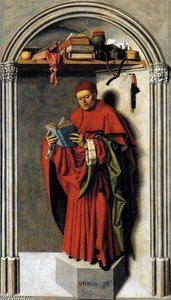
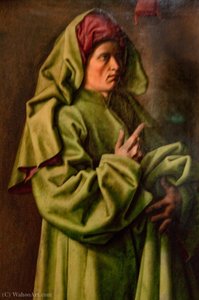
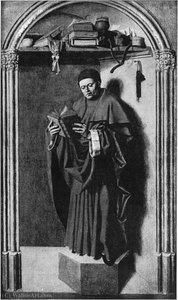
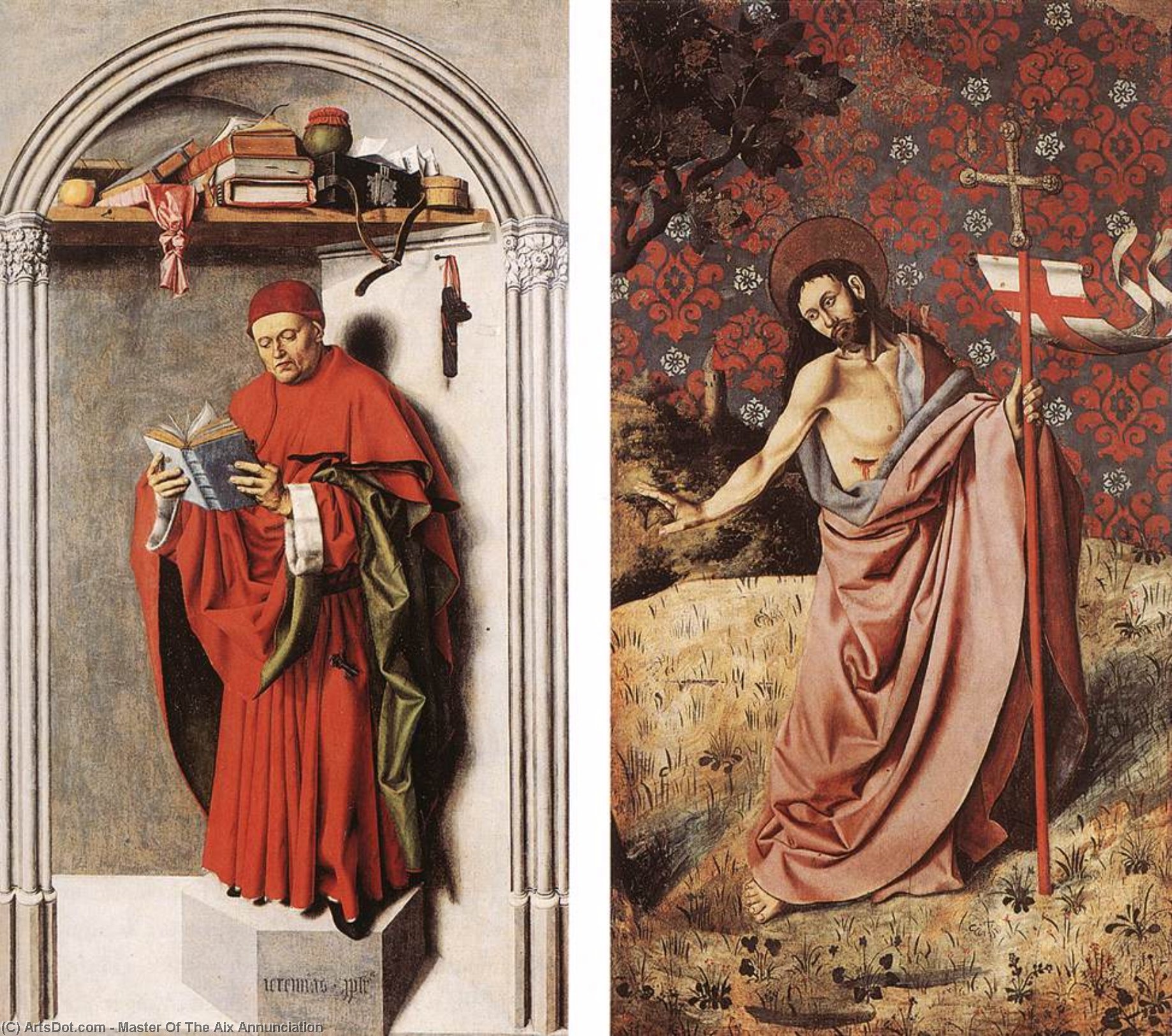
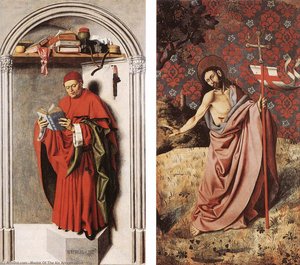
Prophet Jeremiah and Christ
 Early Netherlandish
 1443
1443 152.0 x 86.0 cm
 Musées Royaux des Beaux-Arts
 Read More
Giclée / Art Print
Museum-quality giclée or canvas print with fast production and flexible finish options. ( Buy Hand Made Painting Buy Image)




































Pick from our preset sizes that match the artwork's original proportions.

You may enter your own dimensions to fit a specific frame or space. If your selected size does not match the original image's proportions, we will either crop the artwork or extend the image with a mirrored or solid-fill edge. A digital mockup will be sent for your approval before production begins.
Please note that the on-screen preview does not reflect the actual cropping or extension. Only the mockup will accurately show the final composition.
While custom sizes are available, we recommend selecting a dimension from the predefined list to preserve the original proportions.
Worldwide Delivery () in 2 weeks instead of standard 4/5 weeks. (20 August)

Free Worldwide Express Shipping

High-Quality Linen Canvas

Full Shipping Insurance

Customs Tax Refund Guarantee

True Color Matching Guarantee

60-Day Return Policy (Defects Only)

100% Money-Back Guarantee

Bulk Discount Offer
 Glass option is only available in size under 110 CM

Prophet Jeremiah and Christ
Giclée / Art Print
Reproduction Size
-


Total Price
$ 63
Related Artworks
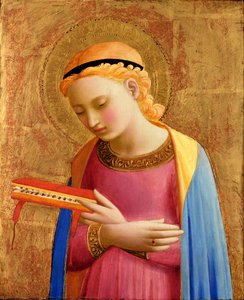
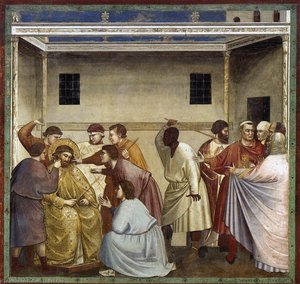
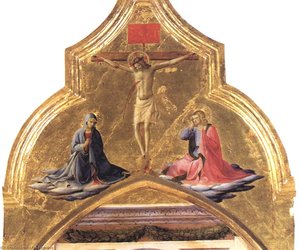
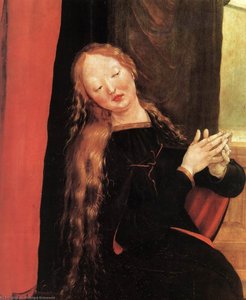
Artist Biography
Master of the Aix Annunciation: A Serene Vision of Faith
The Master of the Aix Annunciation, whose true identity remains shrouded in mystery despite scholarly efforts, stands as a pivotal figure within the burgeoning artistic landscape of Early Netherlandish painting. Active primarily during the mid-15th century, this artist’s oeuvre—characterized by its profound stillness and meticulous attention to detail—captures the essence of devotional art during a period marked by fervent piety and burgeoning humanist thought.
Born in Leuven (Louvain), Belgium – likely around 1430 – the Master emerged from the prestigious Sint Janskathedraal workshop, where he honed his skills alongside luminaries like Rogier van der Weyden and Hans Memling. This formative environment instilled within him a deep appreciation for Flemish artistic traditions, notably the mastery of oil paint and the incorporation of symbolic imagery rooted in Christian iconography.
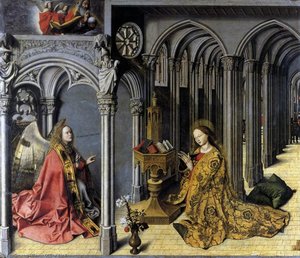
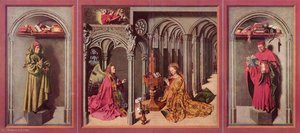
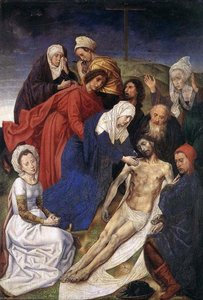
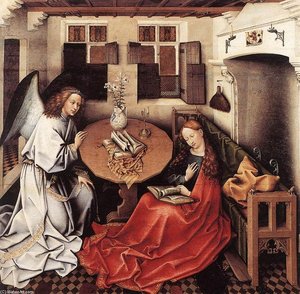
- Notable Works: The Aix Annunciation is arguably his most celebrated masterpiece, housed in Sainte-Marie-Madeleine Museum. It exemplifies the artist’s signature style—a luminous depiction of Mary receiving the divine messenger Gabriel, rendered with breathtaking realism and imbued with subtle emotional nuance. Another significant piece is “The Lamentation,” showcasing a masterful portrayal of grief and sorrow, reflecting the artistic sensibilities prevalent during his time.
- Technique: The Master’s technique distinguishes itself through an unparalleled command of oil paint—a relatively new medium at the time—allowing for unprecedented tonal gradations and textural richness. His meticulous layering of pigments creates a palpable sense of depth and luminosity, mirroring the spiritual aspiration inherent in his subjects.
- Influences: While firmly grounded in Flemish artistic conventions, the Master’s work demonstrates an awareness of broader European trends, particularly those emanating from Italy. The influence of Giotto di Bondone—whose frescoes at Padua served as a catalyst for stylistic innovation—can be discerned in the artist's compositional choices and expressive gestures.
Despite the scarcity of biographical information, scholars believe that he traveled extensively throughout Europe, absorbing artistic ideas and honing his craft wherever he went. His output spanned illuminated manuscripts, altar panels, and devotional paintings—each testament to his unwavering commitment to conveying spiritual truths with exquisite beauty.
The Master’s legacy extends far beyond the individual artworks attributed to him. He helped establish a distinct aesthetic within Early Netherlandish painting, shaping the visual vocabulary of subsequent generations of artists. His serene depictions of biblical narratives continue to inspire contemplation and reverence today, cementing his place as one of the foremost masters of his era.
- Historical Significance: The Aix Annunciation stands as a cornerstone of Gothic Revival art, demonstrating the enduring power of religious imagery to communicate profound spiritual concepts. It exemplifies the artistic fervor of the Renaissance and its impact on European culture.
Further research into his life and work promises to illuminate new facets of this enigmatic artist’s contribution to Western art history.
Quick Facts
- Artistic Movement Or Style: Early Netherlandish Art
- Artists Or Movements Influenced By This Artist: ['Flemish Primitives']
- Artists Who Influenced This Artist: ['Jan van Eyck']
- Full Name: Master of the Aix Annunciation
- Nationality: Dutch
- Notable Artworks:
- Annunciation
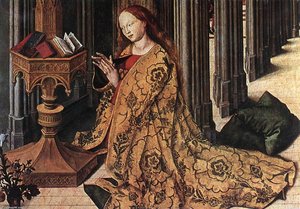
- The Annunciation (detail)
Related Articles

Fra Angelico's Masterpieces: 25 Renaissance Paintings for Your Home | ArtsDot
Explore 25 breathtaking masterpieces by Fra Angelico, a Renaissance master. Discover the stories behind his iconic frescoes, Annunciations & religious art. Find museum-quality reproductions and elevate your home decor with ArtsDot.com.

Early Netherlandish Masters: 10 Paintings That Revolutionized Art & Decor
Journey into the world of Early Netherlandish painting! Explore 10 masterpieces by Jan van Eyck, Rogier van der Weyden & more. Discover stunning detail, symbolism & Renaissance art for your home decor. Find museum-quality reproductions on ArtsDot.com
Illuminating Realism: Early Netherlandish Painting (15th-16th Centuries)
Explore the captivating world of Early Netherlandish painting! Discover Jan van Eyck, Hans Memling & more. Uncover symbolism, techniques & the legacy of these Flemish masters. A comprehensive guide for art enthusiasts.
Illuminating Realism: Early Netherlandish Painting (15th-16th Centuries)
Explore the captivating world of Early Netherlandish painting (15th-16th centuries). Discover Jan van Eyck, Hans Memling & more. Uncover revolutionary techniques and hidden symbolism in this definitive guide.
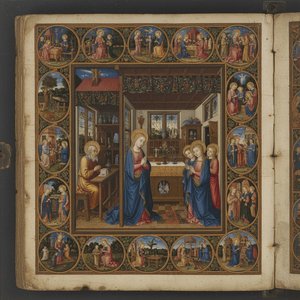
Robert Campin: Pioneering Realism & Spiritual Depth in Early Netherlandish Painting
Explore the revolutionary work of Robert Campin, a pioneer of Early Netherlandish painting. Discover his naturalistic style, religious symbolism in masterpieces like the Mérode Altarpiece, and lasting influence on art history.