 Preview
 Send
Send Share
Share
 Details

 Download
 Similars
 X-Ray
X-Ray Diaporama
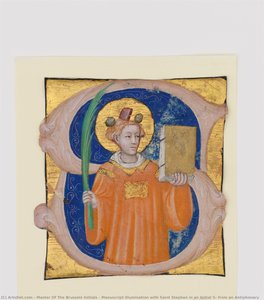
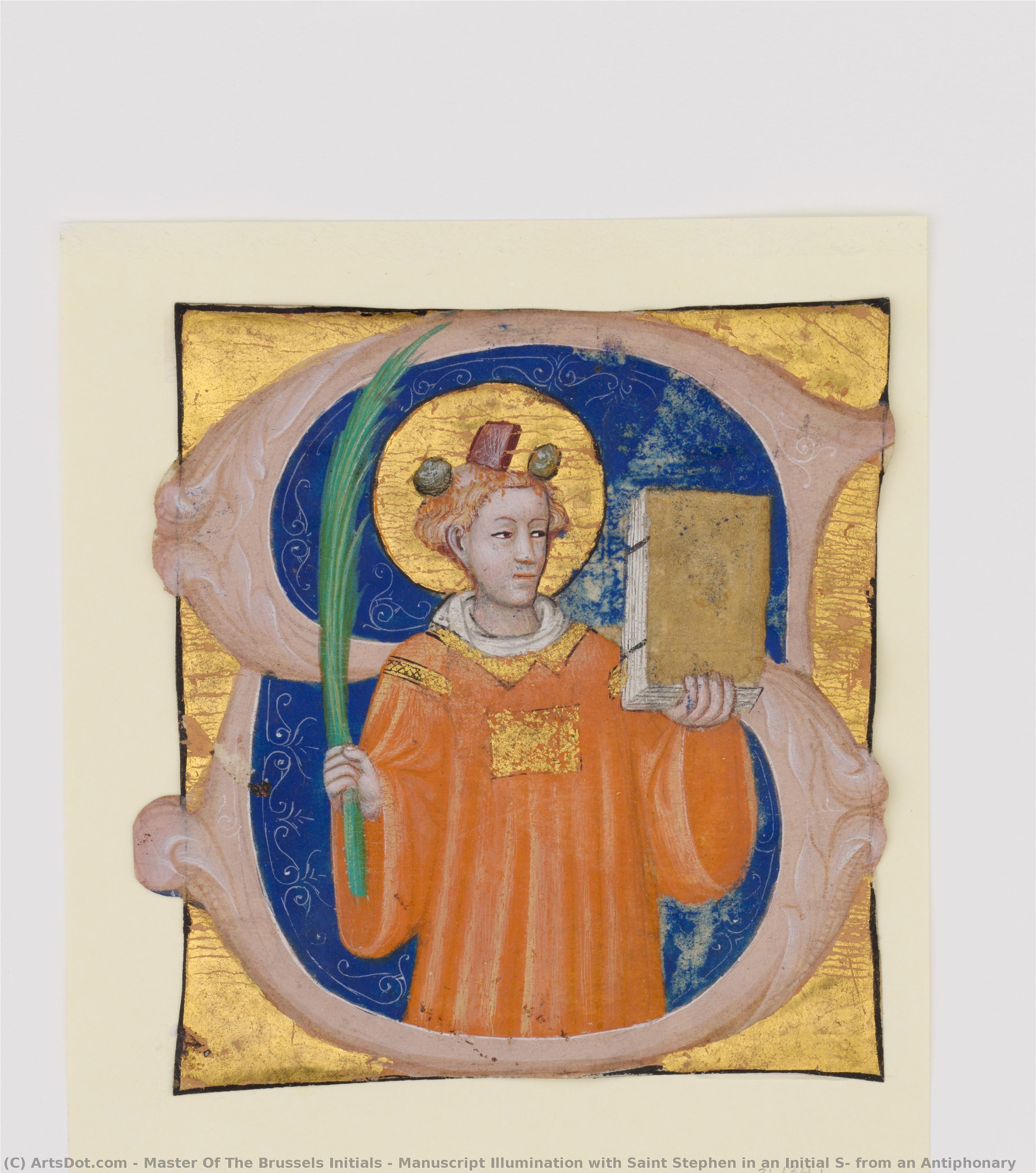
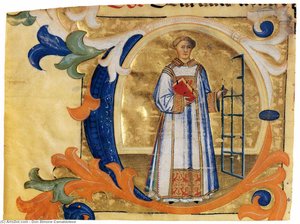
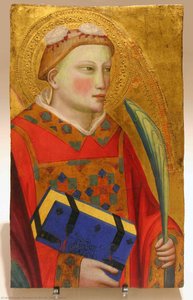
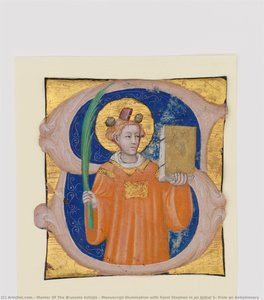
Manuscript Illumination with Saint Stephen in an Initial S, from an Antiphonary
 1410
1410 13.0 x 13.0 cm
 Read More
Hand Made Oil Reproduction
Hand-painted oil on canvas in your size and frame, made to order by our artists. ( Buy Print Buy Image)




































Pick from our preset sizes that match the artwork's original proportions.

You may enter your own dimensions to fit a specific frame or space. If your selected size does not match the original image's proportions, we will either crop the artwork or extend the painting with additional hand-painted elements. A digital mockup will be sent for your approval before production begins.
Please note that the on-screen preview does not reflect the actual cropping or extension. Only the mockup will accurately show the final composition.
While custom sizes are available, we recommend selecting a dimension from the predefined list to preserve the original proportions.
After order, ArtsDot.com team will email client for instructions and provide a mockup preview
Worldwide Delivery () in 3/4 weeks instead of standard 5 weeks. (28 August). No compromise on quality.

Free Worldwide Express Shipping

High-Quality Linen Canvas

Full Shipping Insurance

Customs Tax Refund Guarantee

True Color Matching Guarantee

60-Day Return Policy (Defects Only)

100% Money-Back Guarantee

Bulk Discount Offer
 Glass option is only available in size under 110 CM

Manuscript Illumination with Saint Stephen in an Initial S, from an Antiphonary
Reproduction Medium
Reproduction Size
-


Total Price
$ 263
Related Artworks






Artist Biography
The Enigma of the Brussels Initials: A Symphony of Gothic Light
In the hallowed, quiet corners of medieval scriptoriums, where the scent of vellum and gold leaf once lingered, there existed a hand so masterful that it helped redefine the visual language of Europe. The artist known to history as the Master of the Brussels Initials remains one of the most captivating enigmas of the late fourteenth and early fifteenth centuries. While his true name is lost to the mists of time—often whispered in scholarly circles as Zebo da Firenze, though this identification remains a subject of spirited debate—his presence is felt through the luminous vitality of his illuminations. Emerging from the rich artistic traditions of Bologna around 1389, this mysterious creator brought a unique, Mediterranean warmth to the sophisticated workshops of Paris, acting as a vital bridge between the classical sensibilities of Italy and the burgeoning elegance of the French International Gothic style.
The life of this master was likely shaped by the rigorous training found in the Italian Trecento tradition. It is believed that an early apprenticeship in Bologna provided him with a foundation of meticulous precision and a profound understanding of color depth. When he transitioned to the vibrant manuscript culture of Paris, he did not merely adopt the local style; he transformed it. By infusing French Gothic aesthetics with Italianate naturalism, he helped orchestrate a stylistic revolution. His work moved away from the rigid, symbolic flatness of earlier eras toward a more breathing, atmospheric reality, where light seemed to dance across the page and figures possessed a newfound, gentle weight.
A Legacy Written in Gold and Ultramarine
The true magnitude of the Master’s achievement is most breathtakingly realized in his contributions to the Hours of Charles the Noble. Commissioned by King Charles III of Navarre, this magnificent book of hours serves as a testament to a period when art was an instrument of both devotion and royal prestige. Within these pages, the Master led an international team of illustrators, directing a visual narrative that remains unparalleled in its splendor. His hand is most evident in the monumental panels and the exquisite historiated initials that give him his name—small, self-contained worlds where sacred stories unfold amidst a lush, burgeoning landscape.
To gaze upon his work is to witness a fascination with the natural world that was remarkably ahead of its time. His borders are not merely decorative; they are living ecosystems. One might find:
- Exquisitely rendered wildlife, such as deer and rabbits, captured with an almost scientific accuracy that breathes life into the margins.
- Intricate floral arrangements that showcase a delicate mastery of botanical form.
- A vibrant, luminous palette, characterized by the heavy use of expensive ultramarine blue, which lends a celestial depth to his skies and drapery.
Beyond the sheer beauty of his subjects, the Master’s technical innovation provided a glimpse into the future of European painting. He experimented with light and shadow in ways that prefigured the more advanced techniques of the Renaissance. There is a subtle, soft quality to his transitions—a precursor to sfumato—that allows his figures to emerge from the background not as flat icons, but as entities existing within a tangible, atmospheric space. Through this delicate balance of Italian structural clarity and French decorative grace, the Master of the Brussels Initials secured his place as a pioneer of Gothic splendor, leaving behind a legacy that continues to enchant the modern eye with its timeless, radiant soul.
master of the brussels initials
1389 - 1420 , Italy
Quick Facts
- Artistic Movement Or Style: International Gothic
- Artists Or Movements Influenced By This Artist: ['The Limbourg Brothers']
- Artists Who Influenced This Artist:
- Otto Pächt
- Millard Meiss
- G. Evelyn Hutchinson
- Date Of Birth: Bologna, Italy (1389)
- Date Of Death: 1420
- Full Name: Master of the Brussels Initials
- Nationality: Italian
- Notable Artworks: ['Hours of Charles the Noble']
- Place Of Birth: Bologna