 Preview
 Send
Send Share
Share
 Details

 Download
 Similars
 X-Ray
X-Ray Diaporama
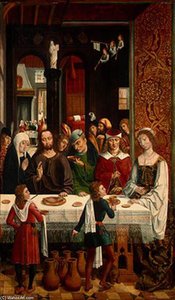
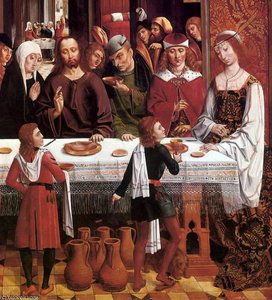
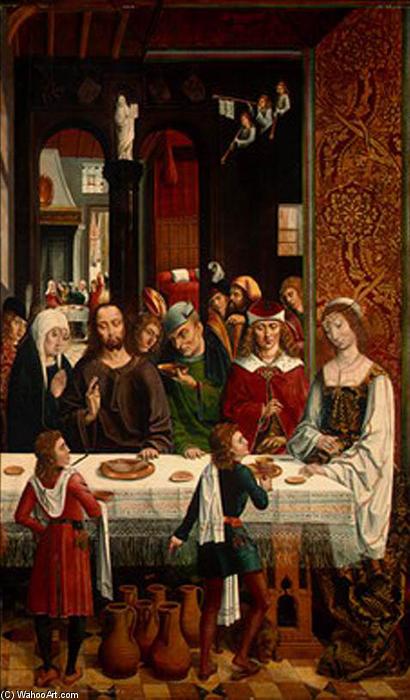
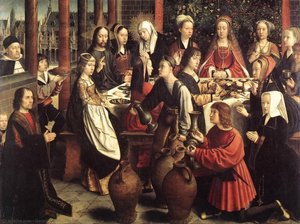
The Marriage at Cana
 137.0 x 93.0 cm
 National Gallery of Art
 Read More
Hand Made Oil Reproduction
Hand-painted oil on canvas in your size and frame, made to order by our artists. ( Buy Print Buy Image)




































Pick from our preset sizes that match the artwork's original proportions.

You may enter your own dimensions to fit a specific frame or space. If your selected size does not match the original image's proportions, we will either crop the artwork or extend the painting with additional hand-painted elements. A digital mockup will be sent for your approval before production begins.
Please note that the on-screen preview does not reflect the actual cropping or extension. Only the mockup will accurately show the final composition.
While custom sizes are available, we recommend selecting a dimension from the predefined list to preserve the original proportions.
After order, ArtsDot.com team will email client for instructions and provide a mockup preview
Worldwide Delivery () in 3/4 weeks instead of standard 5 weeks. (25 August). No compromise on quality.

Free Worldwide Express Shipping

High-Quality Linen Canvas

Full Shipping Insurance

Customs Tax Refund Guarantee

True Color Matching Guarantee

60-Day Return Policy (Defects Only)

100% Money-Back Guarantee

Bulk Discount Offer
 Glass option is only available in size under 110 CM

The Marriage at Cana
Reproduction Medium
Reproduction Size
-


Total Price
$ 263
Related Artworks

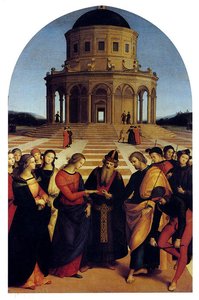
![Scrovegni - [11] - Marriage Of The Virgin — Giotto Di Bondone, Proto-renaissance](/media/artworks/images-thumb/09/93/0993bcf27eb6693be09506b28bfe6988.jpg)

Artist Biography
A Shadow in the Golden Age
The identity of the Master of the Catholic Kings remains one of the most captivating enigmas in the annals of Spanish art history. Operating during the twilight of the 15th century, specifically between approximately 1485 and 1500, this painter existed more as a stylistic force than a documented individual. While his birthdate and death remain lost to time, his presence is felt through the monumental scale of his contributions to Spain’s Golden Age. He earned his moniker from his profound connection to the most powerful figures of his era: Queen Isabella I of Castile and King Ferdinand II of Aragon. Through his brush, the political ambitions of the Catholic Monarchs were transformed into sacred visual narratives, weaving together the divine right of kings with the fervent piety of a unifying nation.
To study his work is to witness a pivotal moment in European art, where the medieval world began to yield to the burgeoning light of the Renaissance. His oeuvre is characterized by a remarkable ability to bridge disparate worlds, blending the meticulous, almost tactile realism of the Flemish masters with the emerging structural ideals of the Italian Renaissance. This synthesis created a unique aesthetic—a style that felt both intimately human and cosmically significant, capturing the spiritual gravity required for the great altarpieces of the period.
The Art of the Retablo: Faith and Majesty
At the heart of this artist's legacy lies the retablo, the grand, multi-paneled altarpieces that served as the spiritual and visual focal points of Spanish churches. These were not merely decorations but complex theological instruments designed to instruct the faithful and glorify the crown. The Master’s mastery of this format allowed him to execute sprawling, dramatic compositions that commanded the attention of all who entered a cathedral. His work on the Retablo of the Reyes Católicos stands as a testament to his ability to handle large-scale narratives with both technical precision and emotional depth.
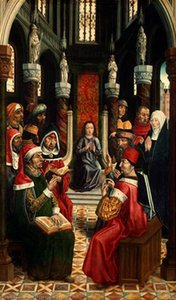
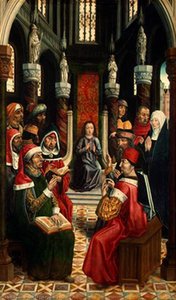
His technique often utilized oil and tempera on panel, a medium that permitted an extraordinary level of detail. One can observe the delicate interplay of light upon heavy drapery, the luminous quality of skin tones, and the intricate textures of royal garments. In masterpieces such as Christ Among the Doctors, commissioned between 1495 and 1497, the artist demonstrates a profound command over composition, using the arrangement of figures to guide the viewer’s eye through a landscape of religious devotion. His ability to imbue sacred scenes with a sense of courtly dignity helped establish a visual language for the Spanish monarchy that would influence generations of painters.
Legacy and Artistic Influence
Though his personal biography is fragmentary, the stylistic footprint of the Master of the Catholic Kings is indelible. He was a pioneer of what historians often identify as the Hispano-Flemish style, a movement that defined the visual identity of Spain during its most transformative century. By integrating the Northern European obsession with naturalism—seen in the expressive folds of fabric and meticulous botanical details—with the burgeoning Renaissance interest in volume and space, he helped create an art form that was uniquely Spanish.
The significance of his work extends far beyond the altarpieces themselves. He contributed to a cultural era where art served as the primary medium for political legitimacy and religious unification. His influence can be traced through the evolution of Spanish painting, paving the way for later masters who would further refine the balance between realism and spiritual symbolism. Today, his surviving works, housed in prestigious institutions like the Museo del Prado, continue to serve as windows into a vanished world—a time when the stroke of a brush could help forge the very soul of a kingdom.
Quick Facts
- Artistic Movement Or Style: Spanish Renaissance
- Nationality: Spanish
- Notable Artworks:
- The Marriage at Cana
- Christ among the Doctors
- The Virgin of the Catholic Monarchs
- Place Of Birth: Spain