 Preview
 Send
Send Share
Share
 Details

 Download
 Similars
 X-Ray
X-Ray Diaporama
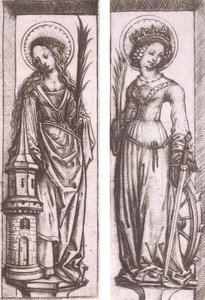
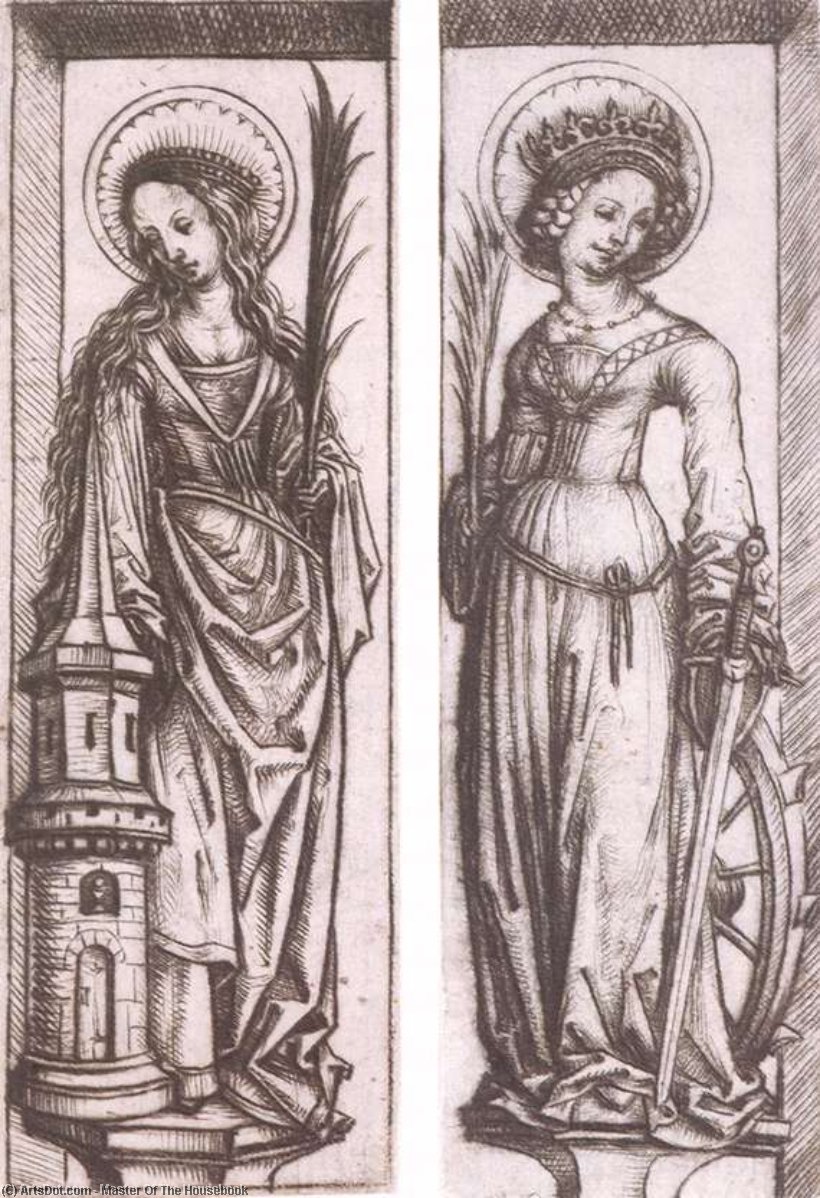
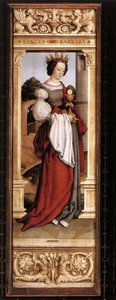
St Barbara, St Catherine
 Late Medieval / Early Renaissance
 1485
1485 120.0 x 40.0 cm
 Rijksmuseum
 Read More
Giclée / Art Print
Museum-quality giclée or canvas print with fast production and flexible finish options. ( Buy Hand Made Painting Buy Image)




































Pick from our preset sizes that match the artwork's original proportions.

You may enter your own dimensions to fit a specific frame or space. If your selected size does not match the original image's proportions, we will either crop the artwork or extend the image with a mirrored or solid-fill edge. A digital mockup will be sent for your approval before production begins.
Please note that the on-screen preview does not reflect the actual cropping or extension. Only the mockup will accurately show the final composition.
While custom sizes are available, we recommend selecting a dimension from the predefined list to preserve the original proportions.
Worldwide Delivery () in 2 weeks instead of standard 4/5 weeks. (22 August)

Free Worldwide Express Shipping

High-Quality Linen Canvas

Full Shipping Insurance

Customs Tax Refund Guarantee

True Color Matching Guarantee

60-Day Return Policy (Defects Only)

100% Money-Back Guarantee

Bulk Discount Offer
 Glass option is only available in size under 110 CM

St Barbara, St Catherine
Giclée / Art Print
Reproduction Size
-


Total Price
$ 63
Related Artworks
![Legend Of St Francis - [23] - St Francis Mourned By St Clare — Giotto Di Bondone, Gothic](/media/artworks/images-thumb/17/1c/171c284c41dc3ef8bca83e51c1e1e531.jpg)
Artist Biography
The Enigmatic Master of the Housebook: A Renaissance Pioneer
The identity of the “Master of the Housebook” remains one of art history’s most enduring mysteries, a captivating puzzle that has occupied scholars for over a century. This anonymous artist, active in South Germany during the late 15th and early 16th centuries, stands as a pivotal figure bridging the gap between the Late Gothic and Early Renaissance periods. His legacy isn't defined by grand monuments or universally recognized masterpieces, but rather by a remarkable collection of prints – ninety-one works that offer an unprecedented glimpse into the daily life, social customs, and artistic sensibilities of his time. The core of his fame rests upon the “Housebook of Wolfegg Castle,” a lavishly illustrated manuscript commissioned by the Waldburg-Wolfegg noble family, which provides both the subject matter and the visual vocabulary for his prints.
The Housebook itself is a treasure trove of information. It’s not merely a chronicle of courtly life; it's a practical manual encompassing household management, weaponry instruction (including detailed depictions of siege engines), mining techniques, recipes, astrological observations, and even moral tales – all rendered in vibrant watercolor illustrations. The artist’s skill is immediately apparent: he masterfully blended meticulous detail with a remarkable sense of dynamism and human interest. The scenes are not idealized or allegorical; they depict ordinary people engaged in everyday activities—farmers tending their fields, servants preparing meals, huntsmen pursuing game, and noblemen enjoying leisure pursuits. This focus on secular subjects was remarkably progressive for the era, marking a departure from the predominantly religious themes that dominated much of medieval art.
The Art of Drypoint: A Revolutionary Technique
What truly distinguishes the Master of the Housebook is his pioneering use of drypoint engraving – a technique he essentially invented. Unlike traditional engraving, which relies on incising lines into metal with sharp tools, drypoint involves scratching an image directly onto a copper plate using a needle or stylus. This creates a burr—a raised ridge along the line—that catches ink and produces a velvety, soft tonal effect. The result is a print that possesses a unique richness and immediacy, capturing subtle gradations of light and shadow with unparalleled sensitivity. The limited number of impressions possible with drypoint – typically only ten to twenty – further enhances the rarity and value of his prints.
This technique was revolutionary for its time, offering an unprecedented level of detail and tonal variation. It allowed the artist to create images that were remarkably lifelike and expressive, capturing not just the appearance but also the texture and atmosphere of the subjects depicted. The influence of this innovation can be seen in the work of later engravers, most notably Albrecht Dürer, who adopted drypoint as a key component of his artistic practice.
Notable Works and Recurring Themes
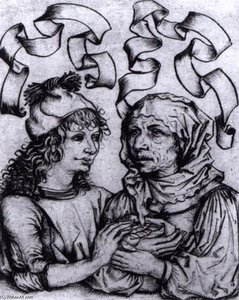
Among the Master’s numerous prints, several stand out for their technical brilliance and expressive power. “The Lovers” (also known as the Gotha Lovers), depicting a young couple embracing under a canopy of scrolls, is arguably his most famous work. The painting captures an intimate moment of affection with remarkable realism and tenderness. Other notable works include depictions of hunting scenes, household activities, and portraits of noble figures. Recurring themes in his oeuvre include domesticity, leisure, and the celebration of human life – subjects that reflect the artist’s interest in portraying the everyday experiences of his patrons.
The “Pair of Peasants Fighting” is another significant work, showcasing the artist's ability to capture movement and emotion. The dynamic composition and expressive faces of the combatants demonstrate a keen understanding of human psychology. Similarly, the “Foolish Old Man and the Young Girl” offers a poignant commentary on social inequality and the folly of age-based prejudice.
The Identity Debate: Erhard Reuwich and Beyond
For decades, art historians have debated the identity of the Master of the Housebook. The most enduring theory – championed by Arthur Mayger Hind – identifies him as Erhard Reuwich, a Utrecht-based engraver and printer who is believed to have created the panoramic view of Venice in 1483/84 for Jean de Berry’s itinerary. This identification rests on stylistic similarities between Reuwich's woodcuts and the engravings attributed to the Master, as well as evidence suggesting that Reuwich worked for the Waldburg-Wolfegg family. However, this attribution remains controversial, with some scholars arguing that the stylistic differences are too significant to ignore.
Despite ongoing debate, the “Master of the Housebook” continues to fascinate art historians and collectors alike. His prints represent a remarkable achievement in printmaking—a testament to his technical skill, artistic vision, and profound understanding of human nature. The mystery surrounding his identity only adds to the allure of this enigmatic Renaissance pioneer.
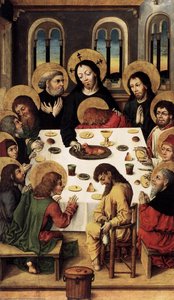
Quick Facts
- Artistic Movement Or Style: Early Netherlandish
- Artists Or Movements Influenced By This Artist: ['Albrecht Dürer']
- Artists Who Influenced This Artist:
- Masaccio
- Martin Schongauer
- Full Name: Master of the Housebook
- Nationality: German
- Notable Artworks:
- The Lovers
- Two Peasants Fighting
- Virgin in the Clouds
- Place Of Birth: South Germany
Related Articles

Giclée Prints: Archival Quality & Aesthetic Nuances for the Discerning Collector
Explore the world of giclée prints with ArtsDot. Learn about archival quality, aesthetic nuances & investment potential. Expert guidance for discerning art collectors seeking museum-quality reproductions and lasting value.

The Enduring Legacy of Fine Art Prints: Technique, History & Aesthetic Impact
Explore the rich history & techniques of fine art prints. Discover investment potential, assess authenticity, and learn how to preserve your collection with expert guidance. Trusted insights for discerning collectors.
High Medieval Art: 10 Masterpieces That Shaped an Era | ArtsDot
Journey through High Medieval Art! Explore 10 iconic masterpieces – from Giotto's frescoes to stunning Gothic cathedrals. Discover the stories behind these timeless paintings, sculptures & illuminated manuscripts. Find museum-quality art reproductions at ArtsDot.com.
The Enduring Legacy of Printmaking: Techniques, Themes & Artistic Innovation Across Centuries
Explore the rich history of printmaking with ArtsDot. Discover techniques from intaglio to lithography, learn about collecting valuable prints & find museum-quality reproductions. Expert insights for art enthusiasts and collectors.

Echoes of Time: Exploring the Enduring Appeal & Historical Context of Vintage Art Prints
Explore the captivating world of vintage art prints! Discover their history, collecting tips & enduring appeal. Expert insights on chromolithography and building a legacy collection with ArtsDot.