

 Preview
 Send
Send Share
Share
 Details

 Download
 Similars
 X-Ray
X-Ray Diaporama
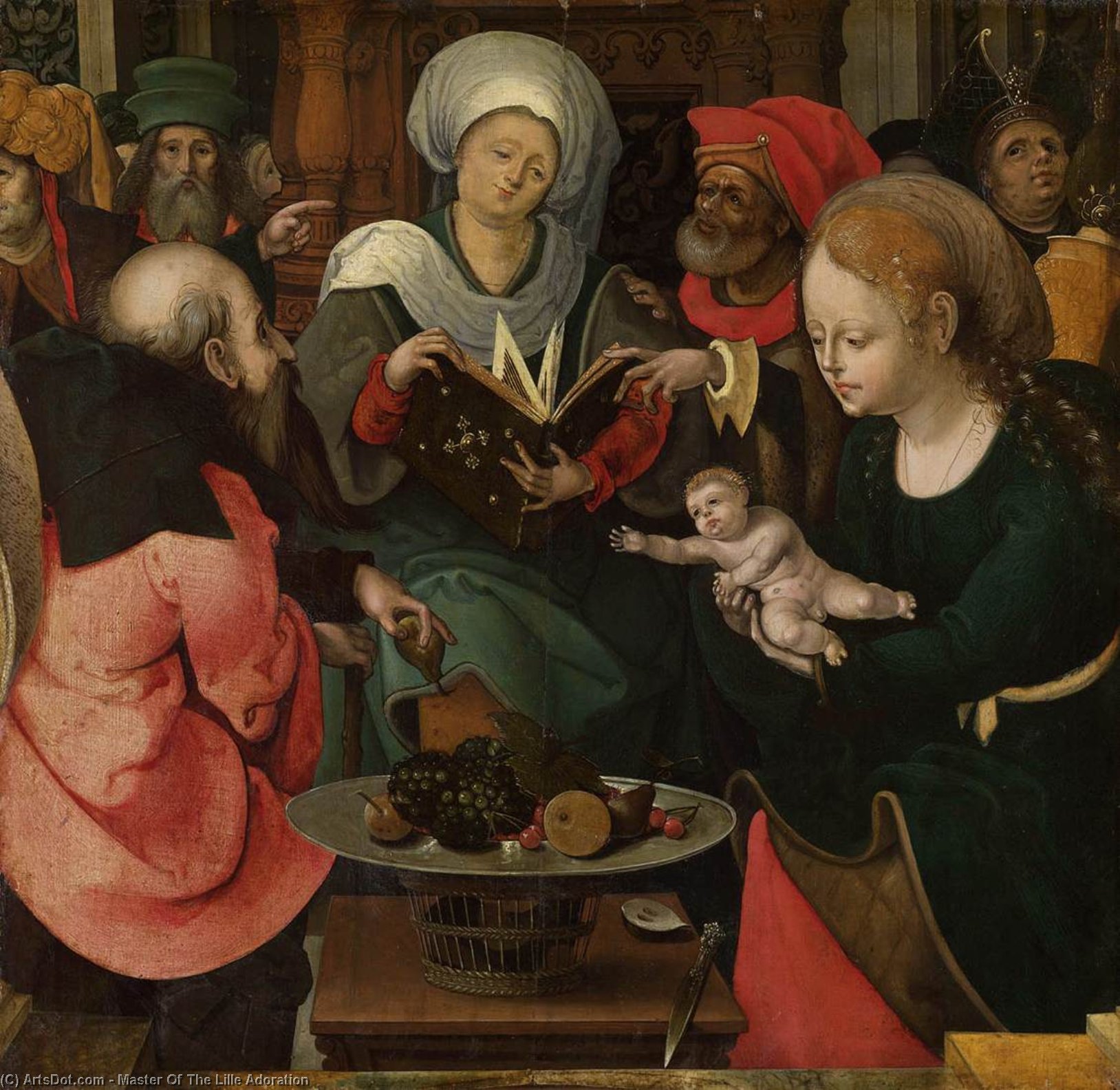
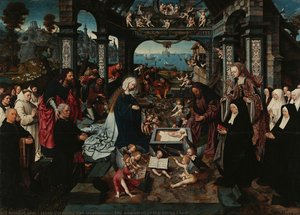
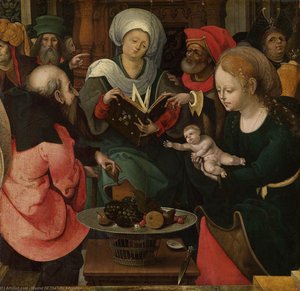
The Holy Kinship


 Read More
Purchase a high-resolution, enhanced digital image, far superior to the online preview.
Each file is meticulously prepared by our in-house specialists using advanced tools and expert manual retouching. We ensure every image has exceptional clarity, precise color accuracy, and fine detail.
The final file is delivered via email within 72 hours, optimized for immediate use in professional, editorial, and print environments. This is the same quality trusted by top-tier design studios, publishers, and galleries.
Digital Image
Download a high-resolution file for personal display, printing, and creative projects. ( Buy Print Buy Hand Made Painting)
Included in Every Digital Image Order
Expert Digital Delivery, Guaranteed
When you choose ArtsDot.com, you're not just getting an image - you're receiving a professionally enhanced digital artwork, crafted with precision and backed by a satisfaction guarantee. Here's everything that comes with your order, automatically:

Fast Email Delivery
Your high-resolution digital image file will be emailed to you within 72 hours of ordering - ready for immediate use.

AI-Enhanced Digital File
Your artwork is professionally optimized using advanced AI tools and manual editing, ensuring maximum detail, clarity, and color accuracy.

Free Lifetime Re-Delivery
Accidentally deleted or lost your file? No worries - we'll resend it to you anytime, free of charge.

No Import Fees - Ever
Enjoy your artwork instantly with zero customs, duties, or delivery fees - digital downloads are always tax-free.

Color Accuracy Guarantee
We ensure your digital image reflects the original colors as closely as possible using professional tools and color management.

60-Day Satisfaction Guarantee
If you're not satisfied with your digital image, we'll revise it or refund 100% within 60 days - no questions asked.

100% Money-Back Guarantee
Not satisfied? Get a full refund within 60 days of receiving your digital file - no questions asked.

Bulk Order Discounts
Buy 3 images, save 10% - Buy 5, save 15% - Buy 10+, save 20%. Great for creative projects, galleries, and agencies.
Collectible Description
A Sacred Gathering: The Intimacy of The Holy Kinship
In the quiet, flickering light of a sixteenth-century devotion, The Holy Kinship emerges as a profound testament to familial sanctity and spiritual communion. Painted around 1520 by the enigmatic Master of the Lille Adoration, this masterpiece invites the viewer into a tender, domestic moment that transcends the boundaries of time. The scene unfolds around a communal table, where the weight of religious significance is balanced by the warmth of human connection. A woman cradles an infant with a grace that suggests both maternal tenderness and divine importance, while nearby, another figure holds a book—a silent symbol of the sacred word permeating their daily lives. There is a palpable sense of a shared meal, a ritualistic gathering where even the simple presence of a knife on the table serves as a reminder of the earthly reality intertwined with the celestial.
The atmosphere of the painting is one of huslam and reverence, reminiscent of a quiet corner within a cathedral or a private chapel. The composition draws the eye through a rhythmic arrangement of figures, leading the observer from the periphery toward the heart of the gathering. This sense of movement is anchored by the artist's ability to capture the subtle interplay of light and shadow, casting a soft glow upon the faces of the assembly. For the discerning collector or interior designer, this work offers more than mere decoration; it provides a focal point of contemplative depth, capable of anchoring a room with its historical gravity and serene emotional resonance.
Mastery of the Netherlandish Tradition
The technique employed by the Master of the Enigmatic Lille Adoration reflects the pinnacle of early Netherlandish refinement. Characterized by an arresting elegance, the artist utilizes fine, precise brushwork to render the textures of fabric, the softness of skin, and the subtle glint of objects upon the table. This meticulous attention to detail is a hallmark of the Antwerp school, where the influence of masters like Vellert can be detected in the careful layering of pigments to create depth and luminosity. The artist’s ability to depart from broader trends in favor of a more intimate, nuanced style allows the painting to breathe with a life of its own.
Every element within the frame is imbued with symbolic weight. The gathering itself—the "Holy Kinship"—represents the interconnectedness of the sacred lineage, suggesting that the divine is found within the bonds of family and community. The presence of the book and the ritualistic arrangement of food act as metaphors for spiritual nourishment and the preservation of faith through generations. To possess a high-quality reproduction of this work is to bring a piece of this profound symbolism into a modern space, offering an enduring connection to the rich tapestry of Renaissance devotion.
An Inspiration for the Modern Collector
For those seeking to curate an environment of sophistication and soul, The Holy Kinship serves as an unparalleled inspiration. Its palette, though grounded in the earthy tones of the period, possesses a luminous quality that adapts beautifully to various interior aesthetics, from classical European estates to contemporary, minimalist galleries. The painting does not merely occupy space; it commands it through its narrative complexity and emotional accessibility.
Integrating such a piece into a collection allows for a dialogue between the past and the present. It invites guests to linger, to observe, and to reflect upon the themes of unity and peace that the artist so masterfully captured centuries ago. Whether used as a centerpiece in a formal dining room or as a quiet companion in a study, this reproduction stands as a tribute to the timeless beauty of the Northern Renaissance, offering a window into a world where every gesture is sacred and every moment is an act of worship.
Related Artworks


Artist Biography
The Enigmatic Master of the Lille Adoration: A Renaissance Echo in Northern France
The identity of the “Master of the Lille Adoration” remains one of art history’s most enduring mysteries, a captivating puzzle piece within the vibrant tapestry of 16th-century Netherlandish painting. Emerging from the shadows around 1510 and active until approximately 1530, this artist—a figure largely absent from contemporary records—left behind a remarkably consistent body of work centered on scenes of adoration, particularly the “Adoration of the Shepherds,” which currently graces the prestigious Palais des Beaux-Arts de Lille. His style, characterized by an arresting elegance and a subtle yet profound departure from prevailing trends, has captivated scholars for decades, prompting intense debate about his origins, influences, and place within the broader artistic landscape.
Early investigations into the Master’s work were largely shaped by the pioneering research of Max Jakob Friedländer in his seminal 1915 study, “Die Antwerpener Manieristen.” Friedländer identified a group of five paintings—the Lille Adoration, the Rotterdam triptych, a Holy Kinship in Kremsmünster, and an Ecce Homo triptych in Brussels—as being executed by the same hand. This hypothesis, initially widely accepted, posited that these works represented the early output of Dirck Vellert, the renowned Antwerp stained-glass maker and painter who was also deeply involved in the production of numerous paintings during this period. Vellert’s distinctive style – characterized by elongated figures posed in affected, twisting postures, colorful ornate costumes, fluttering drapery, Italianate architecture decorated with grotesque ornament, and crowded groups of figures – provided a compelling framework for understanding the Master's artistic lineage. However, closer examination revealed subtle yet significant divergences between the Master’s paintings and those attributed to Vellert, leading scholars like Ellen Konowitz to propose that they represented an independent artistic personality.
Konowitz’s meticulous research in the 1990s ultimately established the “new personality” as a distinct figure who emerged from Antwerp around 1510. She identified key stylistic differences—a predilection for depicting tensely gesturing hands, often with palms turned outward and the fingers splayed; a fascination with grotesque, contorted heads; and a preference for a low viewpoint – that set him apart from Vellert’s oeuvre. Furthermore, Konowitz uncovered evidence suggesting that the Master's work was influenced by the innovative techniques of Jan Gossaert, another prominent Antwerp Mannerist. The discovery of a “Jerome” panel in Germany, attributed to the Master and sold at auction in 2014, provided further support for this evolving understanding of his artistic development.
The Distinctive Style: A Synthesis of Mannerism and Early Renaissance
The Master’s paintings are immediately recognizable by their unique synthesis of Mannerist and early Renaissance elements. He inherited the Mannerists' penchant for elongated figures, dramatic poses, and opulent costumes—a hallmark of Antwerp painting during this period. However, unlike his contemporaries, he infused these stylistic choices with a heightened sense of naturalism and emotional depth. His figures possess a palpable physicality, their gestures conveying a profound sense of movement and feeling. The use of color is equally striking, employing rich, saturated hues to create vibrant and luminous compositions.
A key characteristic of the Master’s work is his masterful manipulation of perspective. He frequently employs a low viewpoint, placing the viewer within the scene as if participating in the events unfolding before them. This technique creates a sense of immediacy and intimacy, drawing the viewer into the narrative. Furthermore, he incorporates subtle elements of trompe-l'œil—illusory details that create the impression of three-dimensionality—to enhance the realism of his compositions. The “Adoration of the Shepherds” in Lille, for example, features a meticulously rendered shepherd’s foot projecting over a ledge, a detail that subtly disrupts the illusionistic space and invites the viewer to contemplate the painting's artistic construction.
Key Works: A Portrait of a Developing Artist
Several paintings attributed to the Master offer compelling insights into his evolving style and artistic concerns. The “Holy Family with Coats of Arms” in the Musée du Louvre, Paris, exemplifies his early work, showcasing a delicate balance between Mannerist elegance and Renaissance realism. The “Adoration of the Shepherds” at the Palais des Beaux-Arts de Lille remains arguably his most celebrated masterpiece, renowned for its dynamic composition, vibrant colors, and emotionally charged figures. The “Holy Kinship” in Kremsmünster, a closely related version of the Louvre panel, further demonstrates his mastery of spatial illusion and dramatic storytelling.
The “Jerome” panels—a single-figure portrait of Saint Jerome and a complementary depiction of the Trinity—represent a significant addition to the Master’s oeuvre. These works, discovered in Germany and attributed to him through meticulous stylistic analysis, provide valuable clues about his artistic interests and techniques. They also highlight the complex network of artistic exchange that characterized 16th-century Europe.
Historical Significance and Legacy
Despite the enduring mystery surrounding his identity, the Master of the Lille Adoration holds a significant place in art history as a pivotal figure within the Antwerp Mannerist movement. His work represents a crucial transitional phase between the late Gothic style and the rise of Renaissance painting in Northern Europe. He demonstrated an ability to synthesize diverse artistic influences—including those of Dirck Vellert, Jan Gossaert, and Italianate models—into a uniquely personal and expressive style.
His paintings continue to fascinate art historians and viewers alike, offering a glimpse into the creative spirit of a talented but elusive artist. The “Adoration of the Shepherds” in Lille remains a testament to his artistic vision, a vibrant celebration of faith, family, and the enduring power of human emotion—a legacy that continues to resonate centuries after its creation.
Quick Facts
- Artistic Movement Or Style: Antwerp Mannerism
- Artists Or Movements Influenced By This Artist: ['']
- Artists Who Influenced This Artist: ['Dirck Vellert']
- Full Name: Master of the Lille Adoration
- Nationality: Early Netherlandish
- Notable Artworks:
- Adoration of Shepherds
- Holy Kinship
- The Holy Family
- Place Of Birth: Antwerp

