 Preview
 Send
Send Share
Share
 Details

 Download
 Similars
 X-Ray
X-Ray Diaporama
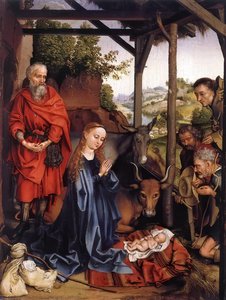
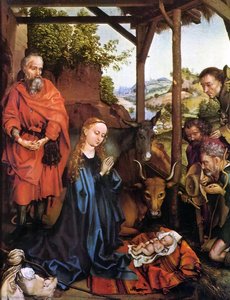
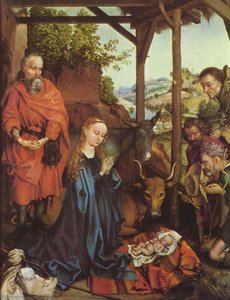
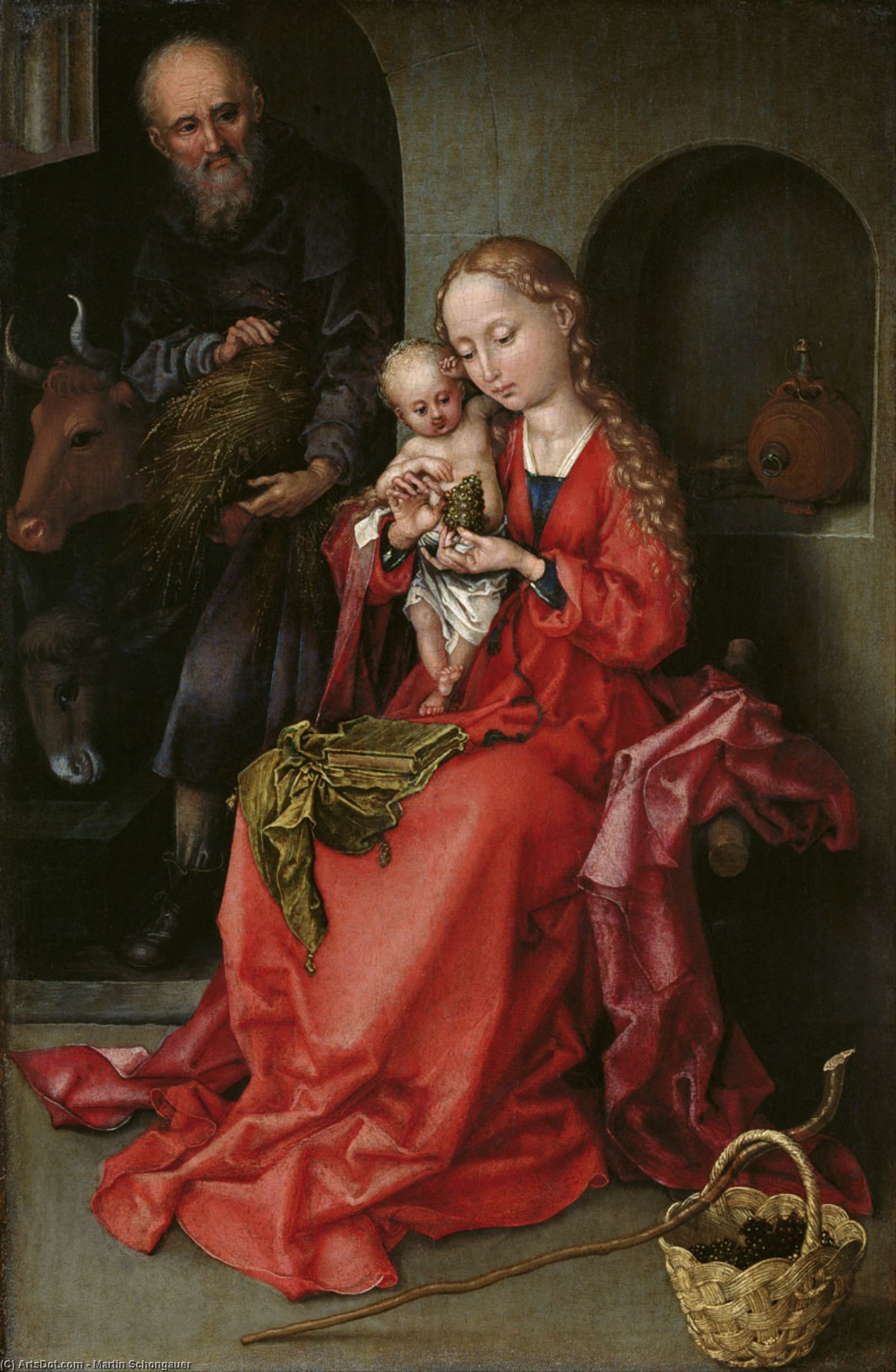
The Holy Family
 Oil On Canvas
- WallArt
- Early Netherlandish
 1475
1475 26.0 x 17.0 cm
 Kunsthistorisches Museum
 Read More
Hand Made Oil Reproduction
Hand-painted oil on canvas in your size and frame, made to order by our artists. ( Buy Print Buy Image)




P118B $10

P118H $10

P118W $10

P438Z $10

P508JH $12

P508YH $12

P805H $10

P805Z $10

P919BZ $10

P919G $10

P919XJ $10

P959ZH $10

P968JZ $12

W106C $8

W218G $10

W218JH $8

W218Y $10

W307PJ $10

W316G $10

W316PJ $8

W316Y $10

W398PJ $8

W4111J $10

W500HY $15

W500JH $15

W692G $12

W849H $8

W940BG $15

W953PJ $8




Pick from our preset sizes that match the artwork's original proportions.

You may enter your own dimensions to fit a specific frame or space. If your selected size does not match the original image's proportions, we will either crop the artwork or extend the painting with additional hand-painted elements. A digital mockup will be sent for your approval before production begins.
Please note that the on-screen preview does not reflect the actual cropping or extension. Only the mockup will accurately show the final composition.
While custom sizes are available, we recommend selecting a dimension from the predefined list to preserve the original proportions.
After order, ArtsDot.com team will email client for instructions and provide a mockup preview
Worldwide Delivery () in 3/4 weeks instead of standard 5 weeks. (16 August). No compromise on quality.

Free Worldwide Express Shipping

High-Quality Linen Canvas

Full Shipping Insurance

Customs Tax Refund Guarantee

True Color Matching Guarantee

60-Day Return Policy (Defects Only)

100% Money-Back Guarantee

Bulk Discount Offer
 Glass option is only available in size under 110 CM

The Holy Family
Reproduction Medium
Reproduction Size
-


Total Price
$ 313
Artwork Description
Martin Schongauer’s ‘The Holy Family’: A Window into Gothic Reverie
Martin Schongauer (1450 – 1491), a luminary of the Northern Renaissance, stands as an unparalleled master of engraving and painting—a testament to meticulous detail and profound artistic vision. His oeuvre embodies the spirit of his era, reflecting both the stylistic innovations of Early Netherlandish art and the burgeoning humanist ideals that were reshaping European thought. Among Schongauer’s celebrated works is ‘The Holy Family,’ a captivating oil painting completed around 1475, which resides within the Kunsthistorisches Museum in Vienna—a piece destined to resonate deeply with anyone attuned to the beauty of artistic heritage.A Synthesis of Gothic Tradition and Renaissance Precision
‘The Holy Family’ exemplifies Schongauer's distinctive approach: a harmonious blend of Gothic sensibilities and emerging Renaissance techniques. Influenced by Rogier van der Weyden, Schongauer adopted the Netherlandish preoccupation with realism—a commitment to capturing human form and texture with astonishing accuracy—yet tempered it with a pyramidal composition characteristic of Renaissance art. This deliberate structuring guides the viewer’s gaze upwards towards Mary, symbolizing piety and divine grace, establishing a visual hierarchy that underscores the importance of spiritual contemplation. The careful delineation of lines defines the figures' contours and architectural elements alike, creating an illusionistic space that feels both believable and emotionally resonant.Detailed Technique: Layers of Glaze and Texture
Schongauer’s mastery lies in his masterful application of oil paint—a technique demanding patience and precision. He employed a layered glazing process, applying thin washes of pigment upon successive layers to build up color depth and luminosity. This painstaking method allowed him to achieve remarkable textural effects, particularly evident in the drapery folds and skin tones—details that convey an unparalleled sense of materiality. The rough surface of the panel itself contributes to this tactile experience, mirroring the artistic impulse to represent the world as faithfully as possible. Observe how Schongauer captures the subtle nuances of light and shadow, enhancing the three-dimensionality of the scene and imbuing it with a palpable atmosphere.Symbolism Embedded in Humble Detail
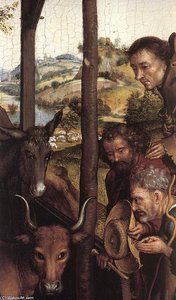
Beyond its formal beauty, ‘The Holy Family’ is rich in symbolic significance—elements carefully chosen to communicate profound theological ideas. The depiction of Mary cradling Jesus embodies maternal devotion and divine incarnation. Joseph's gesture presents a bundle of straw – a poignant reminder of the manger scene and symbolizing humility and sacrificial love. Furthermore, the inclusion of a cow serves as an emblem of pastoral simplicity and symbolizes God’s provision for humanity. These subtle visual cues invite contemplation on themes of faith, family, and redemption—themes central to Christian belief and powerfully conveyed through Schongauer's artistic prowess.Emotional Resonance: A Portrait of Devotion
‘The Holy Family’ transcends mere representation; it aspires to evoke emotion—to transport the viewer into a realm of spiritual serenity. The subdued color palette – dominated by reds, browns, and muted golds – fosters a sense of solemnity and reverence. Schongauer's meticulous attention to detail captures not only physical likeness but also psychological nuance, conveying the tenderness and compassion inherent in familial bonds. Viewing this artwork is akin to stepping into a sacred space—a testament to Schongauer’s ability to transform pigment and canvas into an enduring expression of faith and artistic excellence.Related Artworks

Artist Biography
Martin Schongauer: Life and Legacy
Early Life and Training
Martin Schongauer, born around 1450 in Colmar, Alsace (now France), was a pivotal figure in the development of printmaking during the Northern Renaissance. He came from a family of artisans; his father, Caspar Schongauer, was a goldsmith who had moved to Colmar from Augsburg, Germany, around 1440. This familial background significantly influenced Martin’s early artistic training, as goldsmithing provided a strong foundation in precise detail and metalworking techniques – skills directly transferable to engraving.
Education and Artistic Development
In 1465, Schongauer briefly attended the University of Leipzig, but he soon abandoned academic pursuits to dedicate himself fully to art. He initially trained as a painter under Caspar Isenmann, a local master influenced by Early Netherlandish painting, particularly the work of Rogier van der Weyden. This early exposure to Netherlandish realism and attention to detail would become hallmarks of Schongauer’s own style.
Artistic Style and Influences
Schongauer's artistic style is characterized by a clear, organized Gothic aesthetic blended with the emerging influences of the Northern Renaissance. He notably lacked direct Italian influence, instead drawing inspiration from German and Early Netherlandish traditions. His work demonstrates meticulous detail, expressive figures, and a sophisticated understanding of composition.
- Key Characteristics: Precise engraving, realistic depictions, dramatic narratives, Gothic structure
- Influences: Rogier van der Weyden, Caspar Isenmann, German Gothic traditions
Major Achievements and Works
Schongauer is best known for his 116 engravings, each identified by his monogram. These prints were widely disseminated throughout Europe, significantly impacting the development of printmaking techniques and artistic styles. His engravings often depicted religious scenes, portraits, and allegorical subjects.
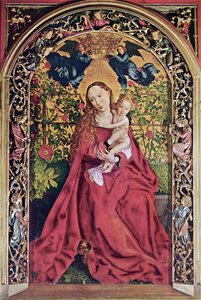
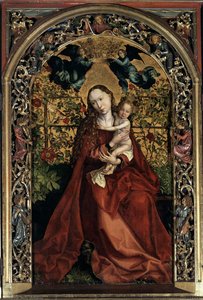
- Madonna of the Rose Bower (1473): A significant painting showcasing his skill in depicting delicate details and emotional depth.
- Engravings: Including *The Temptation of Saint Anthony*, *The Adoration of the Shepherds*, and numerous others, demonstrating his mastery of the engraving technique.
Historical Significance and Legacy
Martin Schongauer’s impact on the art world was substantial. He was one of the first German artists to achieve international recognition as an engraver. His prints were highly sought after and widely copied, spreading his artistic style across Europe. It is even documented that Michelangelo himself studied and copied one of Schongauer's engravings – *The Trial of Saint Anthony* – demonstrating the high regard in which Schongauer was held by later masters.
Schongauer’s work bridged the gap between Gothic art and the Renaissance, paving the way for artists like Albrecht Dürer. His innovative use of engraving techniques and his commitment to artistic detail left an enduring legacy on the history of printmaking and Northern European art.
Death
Martin Schongauer died in Breisach on February 2, 1491, leaving behind a remarkable body of work that continues to be celebrated for its artistic merit and historical significance.
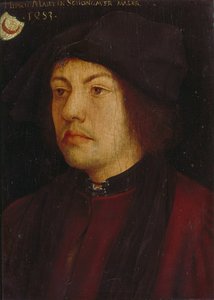
Martin Schongauer
1450 - 1491 , Germany
Quick Facts
- Birth Date: c. 1450–1453
- Birth Place: Colmar, Alsace
- Death Date: 2 February 1491
- Influenced:
- Michelangelo
- Albrecht Dürer
- Influenced By:
- Rogier van der Weyden
- Caspar Isenmann
- Movement:
- Gothic art
- Northern Renaissance
- Name: Martin Schongauer
- Nationality: German
- Notable Works:
- Madonna of the Rose Bower
- Engravings (116)
Related Articles

Oil on Canvas: A Historical & Technical Exploration of a Timeless Artistic Medium
Explore the rich history & enduring techniques of oil painting on canvas. Discover the science behind its longevity, conservation practices, and contemporary relevance. Expert insights for art enthusiasts.

The Enduring Legacy of Oil on Canvas: Technique, History & Aesthetic Impact
Explore the rich history & techniques of oil painting – from Renaissance masters to Impressionism. Discover pigments, layering methods, and why this timeless medium endures. Expert insights for artists & art enthusiasts.

The Enduring Power of Painting: A Historical & Contemporary Exploration of Form and Emotion
Explore the rich history & enduring techniques of oil painting with ArtsDot. Discover masterpieces, learn about art collecting, and find authentic handmade reproductions crafted by skilled artists.

The Enduring Legacy of Oil on Canvas: Technique, History & Contemporary Practice
Explore the rich history & enduring techniques of oil painting on canvas. Discover the science behind its longevity, conservation practices, and contemporary relevance. Expert insights for art enthusiasts.
Capturing Kinship: Commission Affordable Oil Portraits as Enduring Family Legacies
Transform cherished photos into timeless oil portraits with ArtsDot. Commission a hand-painted family masterpiece that preserves your legacy for generations. Affordable, expert artistry & 100% satisfaction guaranteed.