 Preview
 Send
Send Share
Share
 Details

 Download
 Similars
 X-Ray
X-Ray Diaporama
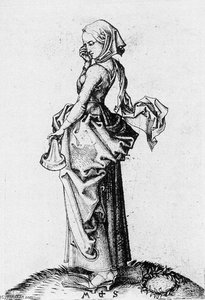
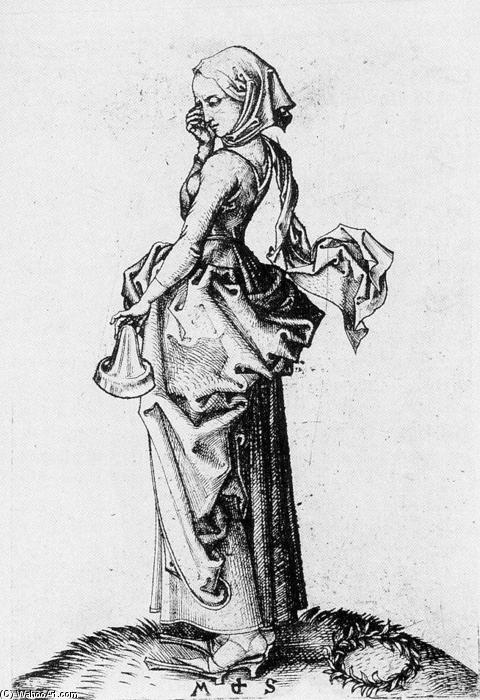
The Fifth Foolish Virgin
 Engraving
- Other
- Northern Renaissance
 116.0 x 83.0 cm
 Szépmûvészeti Múzeum
 Read More
Hand Made Oil Reproduction
Hand-painted oil on canvas in your size and frame, made to order by our artists. ( Buy Print Buy Image)




P118B S$10

P118H S$10

P118W S$10

P438Z S$10

P508JH S$12

P508YH S$12

P805H S$10

P805Z S$10

P919BZ S$10

P919G S$10

P919XJ S$10

P959ZH S$10

P968JZ S$12

W106C S$8

W218G S$10

W218JH S$8

W218Y S$10

W307PJ S$10

W316G S$10

W316PJ S$8

W316Y S$10

W398PJ S$8

W4111J S$10

W500HY S$15

W500JH S$15

W692G S$12

W849H S$8

W940BG S$15

W953PJ S$8




Pick from our preset sizes that match the artwork's original proportions.

You may enter your own dimensions to fit a specific frame or space. If your selected size does not match the original image's proportions, we will either crop the artwork or extend the painting with additional hand-painted elements. A digital mockup will be sent for your approval before production begins.
Please note that the on-screen preview does not reflect the actual cropping or extension. Only the mockup will accurately show the final composition.
While custom sizes are available, we recommend selecting a dimension from the predefined list to preserve the original proportions.
After order, ArtsDot.com team will email client for instructions and provide a mockup preview
Worldwide Delivery () in 3/4 weeks instead of standard 5 weeks. (16 August). No compromise on quality.

Free Worldwide Express Shipping

High-Quality Linen Canvas

Full Shipping Insurance

Customs Tax Refund Guarantee

True Color Matching Guarantee

60-Day Return Policy (Defects Only)

100% Money-Back Guarantee

Bulk Discount Offer
 Glass option is only available in size under 110 CM

The Fifth Foolish Virgin
Reproduction Medium
Reproduction Size
-


Total Price
S$ 340
Artwork Description
Martin Schongauer’s ‘The Fifth Foolish Virgin’: A Masterpiece of Northern Renaissance Detail
Martin Schongauer’s “The Fifth Foolish Virgin,” created around 1483, stands as a testament to the artistic prowess of the Northern Renaissance and exemplifies the meticulous observation of detail characteristic of the period. Produced during a time of profound intellectual and artistic ferment—fueled by humanist ideals and influenced by Italian Renaissance innovations—Schongauer’s engraving transcends mere representation; it delves into symbolic depth and invites contemplation on themes of faith, preparedness, and judgment.
- Subject Matter: The print depicts a biblical parable concerning the wise virgins who diligently prepared oil lamps for Christ's return, contrasting sharply with the foolish virgins who neglected their duty. This narrative serves as an allegory for spiritual vigilance and underscores the importance of readiness for divine providence.
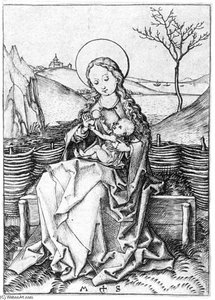
- Style & Technique: Schongauer’s work embodies the Northern Renaissance style—renowned for its realism and expressive quality—primarily achieved through engraving on paper. The artist skillfully employed a burin tool to carve intricate lines into a copper plate, transferring these lines onto paper with ink pressure. This technique allowed for exceptional precision and tonal variation, capturing subtle nuances of light and shadow.
- Composition: The composition centers around a solitary female figure positioned slightly off-center within a minimalist background—a deliberate choice that draws the viewer’s eye to her contemplative posture. A small bird or twig occupies the lower portion of the image, providing a grounding element and subtly reinforcing the theme of humility.
- Color Palette & Line Work: The engraving utilizes exclusively shades of gray and white, reflecting the limitations imposed by printmaking but maximizing the impact of tonal gradation. Fine lines dominate the artwork’s visual vocabulary—cross-hatching is extensively employed to sculpt textures within drapery folds and hair strands—creating a palpable sense of depth and dimensionality.
- Historical Context & Symbolism: Schongauer's engraving emerged from a broader artistic landscape shaped by humanist scholarship and the rediscovery of classical ideals. The image’s symbolism speaks powerfully to Christian theology, portraying the wise virgins as beacons of piety and highlighting the consequences of spiritual negligence. Its enduring appeal lies in its ability to convey profound moral truths through understated visual language.
The engraving's remarkable detail—evident in the delicate rendering of facial features and drapery folds—demonstrates Schongauer’s mastery of artistic technique and elevates “The Fifth Foolish Virgin” beyond a simple depiction of biblical narrative. It is a work that continues to inspire admiration for its beauty, precision, and enduring relevance.
Additional Resources:
- The Fifth Foolish Virgin - Staedel Museum
- The Fifth Foolish Virgin - Minneapolis Institute of Art
- The Fifth Foolish Virgin - Digital Collection - Staedel Museum
- The Fifth Foolish Virgin - WikiArt
Related Artworks
Artist Biography
Martin Schongauer: Life and Legacy
Early Life and Training
Martin Schongauer, born around 1450 in Colmar, Alsace (now France), was a pivotal figure in the development of printmaking during the Northern Renaissance. He came from a family of artisans; his father, Caspar Schongauer, was a goldsmith who had moved to Colmar from Augsburg, Germany, around 1440. This familial background significantly influenced Martin’s early artistic training, as goldsmithing provided a strong foundation in precise detail and metalworking techniques – skills directly transferable to engraving.
Education and Artistic Development
In 1465, Schongauer briefly attended the University of Leipzig, but he soon abandoned academic pursuits to dedicate himself fully to art. He initially trained as a painter under Caspar Isenmann, a local master influenced by Early Netherlandish painting, particularly the work of Rogier van der Weyden. This early exposure to Netherlandish realism and attention to detail would become hallmarks of Schongauer’s own style.
Artistic Style and Influences
Schongauer's artistic style is characterized by a clear, organized Gothic aesthetic blended with the emerging influences of the Northern Renaissance. He notably lacked direct Italian influence, instead drawing inspiration from German and Early Netherlandish traditions. His work demonstrates meticulous detail, expressive figures, and a sophisticated understanding of composition.
- Key Characteristics: Precise engraving, realistic depictions, dramatic narratives, Gothic structure
- Influences: Rogier van der Weyden, Caspar Isenmann, German Gothic traditions
Major Achievements and Works
Schongauer is best known for his 116 engravings, each identified by his monogram. These prints were widely disseminated throughout Europe, significantly impacting the development of printmaking techniques and artistic styles. His engravings often depicted religious scenes, portraits, and allegorical subjects.
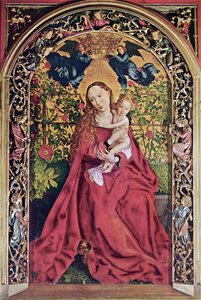
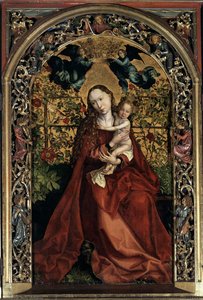
- Madonna of the Rose Bower (1473): A significant painting showcasing his skill in depicting delicate details and emotional depth.
- Engravings: Including *The Temptation of Saint Anthony*, *The Adoration of the Shepherds*, and numerous others, demonstrating his mastery of the engraving technique.
Historical Significance and Legacy
Martin Schongauer’s impact on the art world was substantial. He was one of the first German artists to achieve international recognition as an engraver. His prints were highly sought after and widely copied, spreading his artistic style across Europe. It is even documented that Michelangelo himself studied and copied one of Schongauer's engravings – *The Trial of Saint Anthony* – demonstrating the high regard in which Schongauer was held by later masters.
Schongauer’s work bridged the gap between Gothic art and the Renaissance, paving the way for artists like Albrecht Dürer. His innovative use of engraving techniques and his commitment to artistic detail left an enduring legacy on the history of printmaking and Northern European art.
Death
Martin Schongauer died in Breisach on February 2, 1491, leaving behind a remarkable body of work that continues to be celebrated for its artistic merit and historical significance.
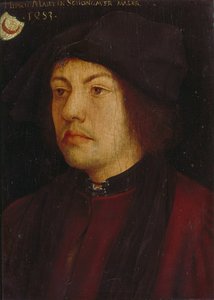
Martin Schongauer
1450 - 1491 , Germany
Quick Facts
- Birth Date: c. 1450–1453
- Birth Place: Colmar, Alsace
- Death Date: 2 February 1491
- Influenced:
- Michelangelo
- Albrecht Dürer
- Influenced By:
- Rogier van der Weyden
- Caspar Isenmann
- Movement:
- Gothic art
- Northern Renaissance
- Name: Martin Schongauer
- Nationality: German
- Notable Works:
- Madonna of the Rose Bower
- Engravings (116)
Related Articles
The Northern Awakening: Artistic Innovation & Cultural Transformation in the German Renaissance
Explore the artistic innovation of the German Renaissance! Discover Dürer, the Danube School & Reformation art. Learn about techniques, materials & lasting influence. Find museum-quality reproductions at ArtsDot.
Sacred Narratives on Canvas: Exploring Biblical Art Across Centuries
Explore the rich history of biblical art from Giotto to the Renaissance masters. Discover symbolism, techniques & enduring legacies with ArtsDot – your source for museum-quality reproductions and expert art insights.
Illuminating Faith: Biblical Scenes & Their Enduring Legacy in Art History
Explore the profound history of biblical art! Discover Renaissance masterpieces by Giotto & more. Uncover symbolism, artistic techniques, and lasting influence. Expert insights at ArtsDot.
Unveiling Hidden Meanings: Allegory in Western Art History
Explore the rich history of allegory in Western art! Discover hidden meanings in masterpieces from Giotto to Bosch & beyond. Expert insights for collectors and enthusiasts at ArtsDot.
Albrecht Altdorfer: Innovation, Spirituality & the Northern Renaissance Landscape
Explore the groundbreaking art of Albrecht Altdorfer, a pioneer of the Northern Renaissance's Danube School. Discover his innovative landscapes, spiritual symbolism & lasting influence on German painting.