 Preview
 Send
Send Share
Share
 Details

 Download
 Similars
 X-Ray
X-Ray Diaporama
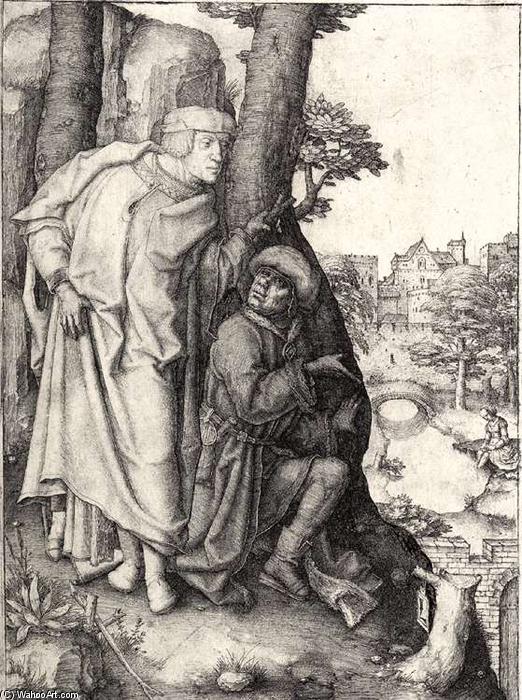
Susanna and the Elders
 Engraving
- Northern Renaissance
 1508
1508 197.0 x 144.0 cm
 Rijksmuseum
 Read More
Hand Made Oil Reproduction
Hand-painted oil on canvas in your size and frame, made to order by our artists. ( Buy Print Buy Image)




P118B $10

P118H $10

P118W $10

P438Z $10

P508JH $12

P508YH $12

P805H $10

P805Z $10

P919BZ $10

P919G $10

P919XJ $10

P959ZH $10

P968JZ $12

W106C $8

W218G $10

W218JH $8

W218Y $10

W307PJ $10

W316G $10

W316PJ $8

W316Y $10

W398PJ $8

W4111J $10

W500HY $15

W500JH $15

W692G $12

W849H $8

W940BG $15

W953PJ $8




Pick from our preset sizes that match the artwork's original proportions.

You may enter your own dimensions to fit a specific frame or space. If your selected size does not match the original image's proportions, we will either crop the artwork or extend the painting with additional hand-painted elements. A digital mockup will be sent for your approval before production begins.
Please note that the on-screen preview does not reflect the actual cropping or extension. Only the mockup will accurately show the final composition.
While custom sizes are available, we recommend selecting a dimension from the predefined list to preserve the original proportions.
After order, ArtsDot.com team will email client for instructions and provide a mockup preview
Worldwide Delivery () in 3/4 weeks instead of standard 5 weeks. (17 August). No compromise on quality.

Free Worldwide Express Shipping

High-Quality Linen Canvas

Full Shipping Insurance

Customs Tax Refund Guarantee

True Color Matching Guarantee

60-Day Return Policy (Defects Only)

100% Money-Back Guarantee

Bulk Discount Offer
 Glass option is only available in size under 110 CM

Susanna and the Elders
Reproduction Medium
Reproduction Size
-


Total Price
$ 263
Artwork Description
Susanna and the Elders: A Renaissance Masterpiece of Intrigue and Divine Justice
Lucas van Leyden’s engraving, “Susanna and the Elders,” dating from 1508, is more than just a biblical narrative; it's a meticulously crafted exploration of deception, virtue, and divine retribution. Created during the flourishing of Northern Renaissance art, this work stands as a testament to Lucas’s exceptional skill in both engraving and composition – a medium he mastered with remarkable speed and innovation. The scene unfolds within a carefully constructed architectural setting, transporting the viewer into a world of restrained elegance and subtle drama, characteristic of the Leiden workshop where van Leyden honed his craft under the tutelage of Cornelis Engelbrechtsz.
At the heart of the composition is Susanna, depicted from behind as she bathes in a secluded garden. Her posture – slightly bent over a basin, her hair elegantly arranged – speaks to both vulnerability and quiet dignity. The Elders, two imposing figures clad in flowing robes, observe her with an intensity that borders on predatory. Their positioning—leaning forward, their hands poised near the wall—suggests a calculated surveillance, hinting at the clandestine nature of their deceitful intentions. The use of light and shadow is masterful; it draws attention to Susanna’s form while simultaneously shrouding the Elders in a veil of ambiguity, leaving the viewer to question their motives.
Technique and Style: A Northern Renaissance Vision
Van Leyden's engraving showcases his remarkable technical prowess. The intricate detail—from the folds of the drapery to the texture of the stone wall—demands close scrutiny, revealing a level of precision rarely seen in contemporary prints. The artist’s use of hatching and cross-hatching creates a rich tonal range, imbuing the scene with depth and atmosphere. This technique, combined with his understanding of perspective, lends an astonishing sense of realism to the composition. The work is executed on laid paper, a common choice for engravings during this period, providing a slightly textured surface that enhances the visual impact.
Stylistically, “Susanna and the Elders” reflects the influence of Italian Renaissance art, particularly the works of Albrecht Dürer and Jan Gossaert. The emphasis on human anatomy, the dramatic lighting, and the carefully orchestrated composition are all hallmarks of this artistic movement. However, van Leyden retains a distinctly Northern sensibility, evident in his restrained palette and his focus on narrative clarity. The scene is not merely decorative; it’s a carefully constructed moral allegory.
Symbolism and Narrative: A Tale of Deception and Redemption
The story depicted—drawn from the Book of Daniel—is one of ancient virtue tested by temptation and ultimately vindicated by divine justice. Susanna, a young woman of impeccable reputation, is falsely accused of adultery by two corrupt Elders who are driven by lust. The engraving captures the pivotal moment when Daniel intervenes, exposing their lies and saving Susanna from certain death. The mirror in the background serves as a potent symbol—reflecting not only Susanna’s image but also the vanity and deceit that characterize the Elders.
Beyond the immediate narrative, “Susanna and the Elders” can be interpreted as an allegory of broader themes: the dangers of false accusations, the importance of truthfulness, and the triumph of virtue over vice. The scene resonates with a timeless moral message, inviting viewers to contemplate the complexities of human nature and the consequences of our actions.
Emotional Impact and Legacy: A Timeless Masterpiece
Despite its historical context, “Susanna and the Elders” continues to hold a powerful emotional resonance. The engraving’s dramatic composition, coupled with its subtle psychological insights, evokes a sense of suspense and intrigue. The vulnerability of Susanna, juxtaposed with the calculated malice of the Elders, creates a compelling narrative tension that draws the viewer into the scene. This work is not simply an illustration of a biblical story; it's a profound meditation on human morality and the enduring struggle between good and evil.
Lucas van Leyden’s “Susanna and the Elders” stands as a cornerstone of Northern Renaissance art, demonstrating his exceptional technical skill, artistic vision, and ability to imbue a seemingly straightforward biblical narrative with layers of symbolic meaning. Reproductions of this masterpiece offer a unique opportunity to experience the artistry and intellectual depth of one of the era’s most accomplished engravers.
Related Artworks
Artist Biography
early life and training
lucas van leyden, a dutch painter and printmaker, was born in 1494 in leiden, netherlands. he was the son of huygh jacobsz, a painter, and began his artistic training under his father's guidance. later, he joined the workshop of cornelis engelbrechtsz in 1508, where he refined his skills.artistic development
lucas van leyden was among the first dutch exponents of genre painting and a highly accomplished engraver. his early work, characterized by half-length figures (c. 1506-1512), showcases his precocious originality. as he matured, his landscapes developed, and he became skilled in engraving at a remarkably young age. the earliest known print by him, mohammed and the murdered monk (1508), demonstrates his mastery of the medium.notable works and style
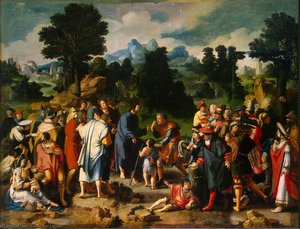
seventeen paintings surely attributed to lucas van leyden survive, including:- the healing of the blind man of jericho, a masterpiece showcasing multiple figures against wooded landscapes.
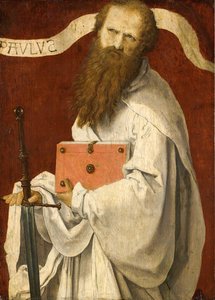
- saint paul, attr. leyden, exemplifying his engraving prowess.
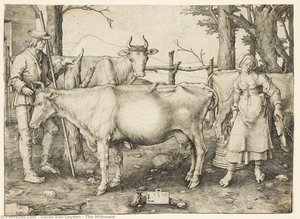
- the milkmaid (engraving, 1510), highlighting his early skill in the medium.
museum collections and online presence
lucas van leyden's works can be found in various museums, including the van gogh museum (netherlands), which houses an extensive collection of his engravings and paintings. online platforms like ArtsDot.com offer a comprehensive selection of his works, allowing art enthusiasts to explore his oeuvre in detail.legacy
lucas van leyden's contributions to dutch genre painting and engraving are undeniable. his innovative style and technical skill have made him a celebrated figure in the art world. as a pioneer of dutch art, his legacy continues to inspire artists and art lovers alike.- view lucas van leyden's artworks on ArtsDot.com
- explore the van gogh museum (netherlands) collection online
- discover more about dutch art and its pioneers on ArtsDot.com's blog
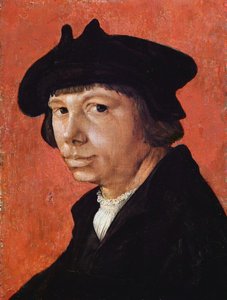
Lucas van Leyden
1494 - 1533 , Netherlands
Quick Facts
- Artistic Movement Or Style: Early Netherlandish Renaissance
- Artists Or Movements Influenced By This Artist: ['German Renaissance']
- Artists Who Influenced This Artist: ['Albrecht Dürer']
- Date Of Birth: Leiden, Netherlands (1494)
- Date Of Death: 1533
- Full Name: Lucas Hugensz van Leyden
- Nationality: Dutch
- Notable Artworks:
- The Healing of the Blind Man of Jericho
- Saint Paul
- The Milkmaid
- Place Of Birth: Leiden
Related Articles
Van Gogh's Masterpieces: Explore 25 Iconic Paintings & Art for Your Home
Journey through Vincent van Gogh's 25 most iconic paintings! Explore 'Starry Night', 'Sunflowers,' and more—discover the stories, techniques & emotions behind these Post-Impressionist masterpieces. Find museum-quality art reproductions for your home at ArtsDot.com.
Lucas van Leyden: Innovation & Intimacy in Early Netherlandish Printmaking
Explore the groundbreaking prints of Lucas van Leyden, a Dutch master bridging Gothic detail & Renaissance innovation. Discover his rare works, investment potential, and legacy for discerning collectors.
Engraving's Golden Age: 10 Masterpieces That Redefined Art | ArtsDot
Journey through art history with our Top 10 Legendary Engravings! Explore masterpieces by Dürer, Rembrandt & Goya. Discover the stories behind these iconic prints and find museum-quality reproductions for your home at ArtsDot.com.

Rembrandt's Masterpieces: Explore 25 Iconic Paintings & Prints | ArtsDot
Journey through Rembrandt van Rijn's 25 most iconic paintings & etchings. Explore Dutch Golden Age masterpieces, dramatic chiaroscuro, and timeless portraits. Find museum-quality art reproductions to elevate your home decor on ArtsDot.com.

Early Netherlandish Masters: 10 Paintings That Revolutionized Art & Decor
Journey into the world of Early Netherlandish painting! Explore 10 masterpieces by Jan van Eyck, Rogier van der Weyden & more. Discover stunning detail, symbolism & Renaissance art for your home decor. Find museum-quality reproductions on ArtsDot.com