 Preview
 Send
Send Share
Share
 Details

 Download
 Similars
 X-Ray
X-Ray Diaporama
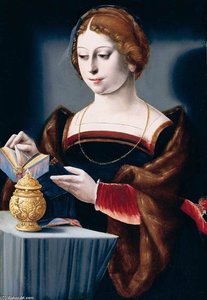
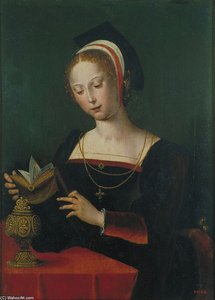
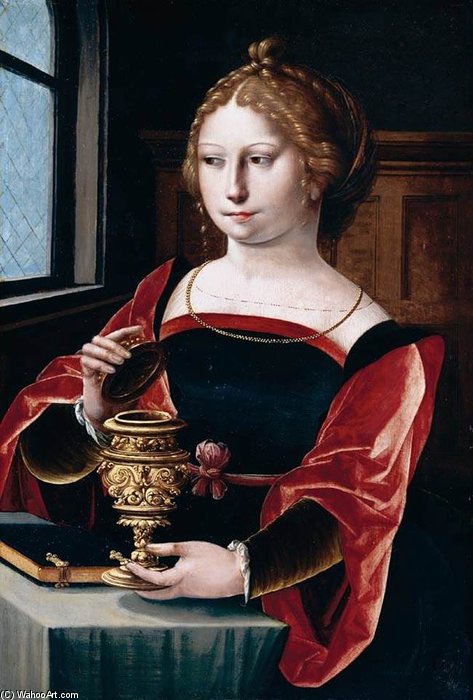
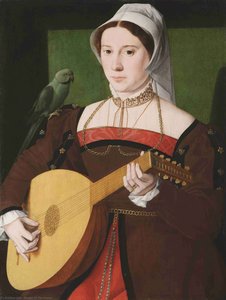
Mary Magdalen
 Read More
Hand Made Oil Reproduction
Hand-painted oil on canvas in your size and frame, made to order by our artists. ( Buy Print Buy Image)




































Pick from our preset sizes that match the artwork's original proportions.

You may enter your own dimensions to fit a specific frame or space. If your selected size does not match the original image's proportions, we will either crop the artwork or extend the painting with additional hand-painted elements. A digital mockup will be sent for your approval before production begins.
Please note that the on-screen preview does not reflect the actual cropping or extension. Only the mockup will accurately show the final composition.
While custom sizes are available, we recommend selecting a dimension from the predefined list to preserve the original proportions.
After order, ArtsDot.com team will email client for instructions and provide a mockup preview
Worldwide Delivery () in 3/4 weeks instead of standard 5 weeks. (17 August). No compromise on quality.

Free Worldwide Express Shipping

High-Quality Linen Canvas

Full Shipping Insurance

Customs Tax Refund Guarantee

True Color Matching Guarantee

60-Day Return Policy (Defects Only)

100% Money-Back Guarantee

Bulk Discount Offer
 Glass option is only available in size under 110 CM

Mary Magdalen
Reproduction Medium
Reproduction Size
-


Total Price
$ 263
Related Artworks
Artist Biography
A Mysterious Hand: Unveiling the Master of the Parrot
The early sixteenth century in Antwerp was a crucible of artistic innovation, a period where Flemish painting blossomed into new forms, absorbing influences from Italy while retaining its distinctive Northern character. Within this vibrant milieu emerged an anonymous figure known as the “Master of the Parrot,” a painter whose identity remains shrouded in mystery yet whose works possess a captivating charm and reveal a fascinating glimpse into the devotional life of the burgeoning merchant class. Unlike many Renaissance masters celebrated by name, our knowledge of this artist is pieced together through stylistic analysis and the recurring motifs within their oeuvre—most notably, the presence of exotic parrots gracing scenes of the Virgin and Child.Origins and Historical Context
The story of the Master of the Parrot begins not with a birthdate or apprenticeship record, but with Max Friedländer, the renowned scholar of Flemish painting, in 1948. He observed a group of approximately fifteen paintings sharing remarkable similarities—a delicate rendering of faces, elegant figures with elongated fingers, and, crucially, the frequent inclusion of parrots as symbolic elements. This led him to posit the existence of an unknown artist, christened “Der Meister mit dem Papagei.” Subsequent research expanded the attributed body of work to around one hundred paintings, though modern scholarship suggests these were likely produced by a workshop rather than a single hand. The timeframe for their activity is generally placed between 1520 and 1540, firmly situating them within the High Renaissance period in Antwerp. This was an era of increasing prosperity for the city, fueled by trade with Spain and Portugal, creating a demand for smaller-scale devotional paintings suitable for private homes—a market perfectly catered to by the Master of the Parrot’s style. The workshop likely operated in Antwerp itself, though some scholars suggest a possible base in nearby Bruges.Style and Influences: A Blend of Flemish Tradition and Italianate Grace
The Master of the Parrot's paintings are characterized by their refined elegance and gentle piety. Figures possess an elongated quality, with delicate features and graceful poses that reflect the influence of contemporary Mannerist aesthetics. The artist demonstrates a mastery of oil painting techniques, achieving subtle gradations of light and shadow and rendering textures with remarkable precision—from the soft folds of drapery to the lustrous sheen of jewels. However, this elegance is not solely derived from Italian sources. A distinctly Flemish sensibility remains present in the meticulous detail and realistic depiction of everyday objects. Key influences include artists like Pieter Coecke van Aelst, whose workshop likely served as a formative training ground for members of the Master’s circle. The Romanist painters active in the region—Joos van Cleve, Ambrosius Benson, and Jan Gossaert—also left their mark, particularly in the compositions of the Holy Family and the sculptural quality of the figures. The artist's palette is typically rich and harmonious, employing a range of warm tones to create an atmosphere of serene devotion.Symbolism: The Enigmatic Parrot
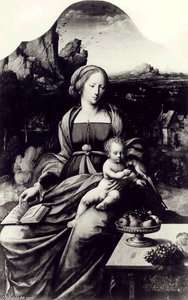
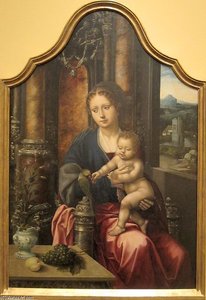
The most striking feature of the Master of the Parrot’s work—and the source of their name—is the recurring presence of parrots in scenes depicting the Virgin Mary and the Christ Child. While seemingly whimsical, the inclusion of these exotic birds is laden with symbolism. In Renaissance iconography, parrots were often associated with fidelity and constancy, representing the unwavering devotion of Mary to her son. Their ability to mimic human speech was also interpreted as a symbol of Christ’s divine word. Furthermore, as rare and expensive imports from distant lands, parrots signified wealth and status—reflecting the affluence of the paintings' intended audience. Beyond the parrot itself, other symbolic elements frequently appear in the Master’s work: closed gardens representing Mary’s purity, fruit symbolizing abundance and fertility, and carefully chosen flowers with specific religious connotations. These details contribute to a rich tapestry of meaning that elevates the paintings beyond mere depictions of biblical scenes.Major Achievements and Legacy
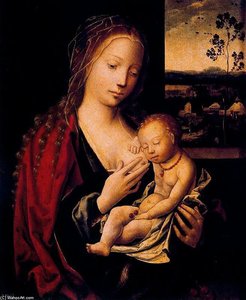
While no single masterpiece definitively defines the Master of the Parrot's oeuvre, several works stand out as exemplary examples of their style and skill. The “Madonna and Child with a Parrot” in the San Diego Museum of Art is often considered the quintessential work, showcasing the artist’s delicate rendering of figures, harmonious color palette, and symbolic use of the parrot motif. “La Virgen Dando El Pecho Al Niño Jesus,” another compelling example, demonstrates their ability to convey tenderness and intimacy within a devotional context.- Refined elegance in figure depiction.
- Masterful oil painting technique with subtle light and shadow.
- Symbolic use of the parrot motif representing fidelity and wealth.
- Harmonious color palettes creating serene devotional atmospheres.
master of the parrot
1520 - 1540 , Netherlands
Quick Facts
- Artistic Movement Or Style: Proto-Renaissance
- Artists Or Movements Influenced By This Artist: ['Early Flemish painters']
- Artists Who Influenced This Artist: ['Pieter Coecke van Aelst']
- Date Of Birth: c. 1520-1540
- Full Name: Master of the Parrot
- Nationality: Flemish
- Notable Artworks:
- Virgin and Child Feeding Parrot
- Madonna with a Parrot
- Holy Family
- Place Of Birth: Antwerp, Netherlands