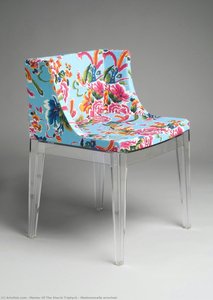
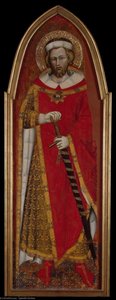
![Saint Catherine [right Wing Exterior] — Master Of The Starck Triptych](/media/artworks/images-full/e8/a4/e8a475a203eb13fb4737fdcb44a0f7d1.jpg)
 Preview
 Send
Send Share
Share
 Details

 Download
 Similars
 X-Ray
X-Ray Diaporama
Saint Catherine [right wing exterior]
 1490
1490 66.0 x 24.0 cm
 Read More
Hand Made Oil Reproduction
Hand-painted oil on canvas in your size and frame, made to order by our artists. ( Buy Print Buy Image)




































Pick from our preset sizes that match the artwork's original proportions.

You may enter your own dimensions to fit a specific frame or space. If your selected size does not match the original image's proportions, we will either crop the artwork or extend the painting with additional hand-painted elements. A digital mockup will be sent for your approval before production begins.
Please note that the on-screen preview does not reflect the actual cropping or extension. Only the mockup will accurately show the final composition.
While custom sizes are available, we recommend selecting a dimension from the predefined list to preserve the original proportions.
After order, ArtsDot.com team will email client for instructions and provide a mockup preview
Worldwide Delivery () in 3/4 weeks instead of standard 5 weeks. (22 August). No compromise on quality.

Free Worldwide Express Shipping

High-Quality Linen Canvas

Full Shipping Insurance

Customs Tax Refund Guarantee

True Color Matching Guarantee

60-Day Return Policy (Defects Only)

100% Money-Back Guarantee

Bulk Discount Offer
 Glass option is only available in size under 110 CM

Saint Catherine [right wing exterior]
Reproduction Medium
Reproduction Size
-


Total Price
$ 263
Related Artworks






Artist Biography
The Enigmatic Master of the Starck Triptych
The identity of the artist responsible for the celebrated Starck Triptych remains one of Nuremberg’s most enduring artistic mysteries. Active around 1480-1495, this unnamed craftsman operated within a vibrant artistic milieu characterized by collaboration and stylistic convergence—a hallmark of the burgeoning Renaissance in Germany. His contribution to this monumental panel painting commissioned by Georg Starck, a prominent Nuremberg patrician, cemented his place as a pivotal figure in late Gothic and early Renaissance art production.A Collaboration Under Wraps
The Starck Triptych’s fame stems not solely from its opulent depiction of Saint Barbara—a serene Madonna flanked by saints—but crucially from its association with the titans of Nuremberg painting: Hans Pleydenwurff and Michael Wolgemut. While definitive attribution remains elusive, scholarly consensus suggests that the Master of the Starck Triptych was deeply influenced by their distinctive styles. Pleydenwurff’s meticulous attention to detail and masterful use of color palettes—particularly evident in his depictions of drapery—clearly permeated the artist's approach, mirroring Wolgemut’s innovative compositional techniques and expressive rendering of human figures. This collaborative spirit reflects a broader trend within Nuremberg at the time, where artists routinely engaged in shared projects, fostering artistic dynamism and elevating the quality of art produced.Technique and Style: Echoes of Tradition
Stylistically, the Master's work aligns closely with the prevailing aesthetic sensibilities of the period. Employing tempera paint on panel—a technique favored for religious iconography—he skillfully executed intricate drapery folds and luminous glazing effects characteristic of Gothic painting traditions. However, he simultaneously embraced elements indicative of Renaissance innovation, notably a heightened realism in portraying facial expressions and anatomical accuracy. The subtle interplay between established conventions and emerging stylistic trends underscores the artist’s adaptability and his position at the crossroads of artistic evolution.The Starck Triptych: A Testament to Patronage
The commission itself speaks volumes about Nuremberg's cultural landscape during this era. Georg Starck, a wealthy banker and influential member of the patrician class, sought to adorn his chapel with a masterpiece that would convey piety and prestige. The resulting triptych exemplifies the grandeur and sophistication demanded by aristocratic patrons—a testament to Nuremberg’s flourishing economy and its commitment to artistic excellence. Its enduring beauty continues to captivate viewers today, serving as a tangible reminder of Nuremberg's artistic heritage.Legacy and Historical Significance
Despite the lack of biographical information, the Master of the Starck Triptych’s contribution to Nuremberg art history is undeniable. His involvement in this landmark project alongside Pleydenwurff and Wolgemut solidified his reputation as a skilled painter operating within a crucible of artistic innovation. Furthermore, the triptych stands as an exemplar of late Gothic-Renaissance synthesis—a visual embodiment of the transformative cultural currents reshaping Europe during the fifteenth century. Its continued study ensures that the legacy of this enigmatic artist persists, enriching our understanding of Nuremberg’s artistic achievements and its role in shaping the broader trajectory of European art.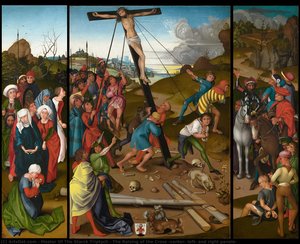
master of the starck triptych
Germany
Quick Facts
- Artistic Movement Or Style: Nuremberg Renaissance
- Artists Or Movements Influenced By This Artist: ['German Renaissance']
- Artists Who Influenced This Artist:
- Hans Pleydenwurff
- Michael Wolgemut
- Full Name: Master of the Starck Triptych
- Nationality: German
- Notable Artworks:
- Mademoiselle armchair
- The Raising of the Cross
- Saint Barbara
- Place Of Birth: Germany
![The Raising of the Cross [center, left, and right panels]](/media/artworks/images-thumb/4b/5e/4b5e054f7f9d085a1d921eb712bfbaa9.jpg)
![Saint Barbara [left wing exterior]](/media/artworks/images-thumb/ce/65/ce65841bb74c9e33512fca52eafc6eb9.jpg)
![Saint Catherine [right wing exterior]](/media/artworks/images-thumb/c2/75/c2758da1a79513c0443456eced037e8f.jpg)