 Preview
 Send
Send Share
Share
 Details

 Download
 Similars
 X-Ray
X-Ray Diaporama
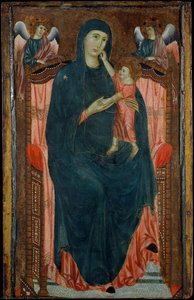
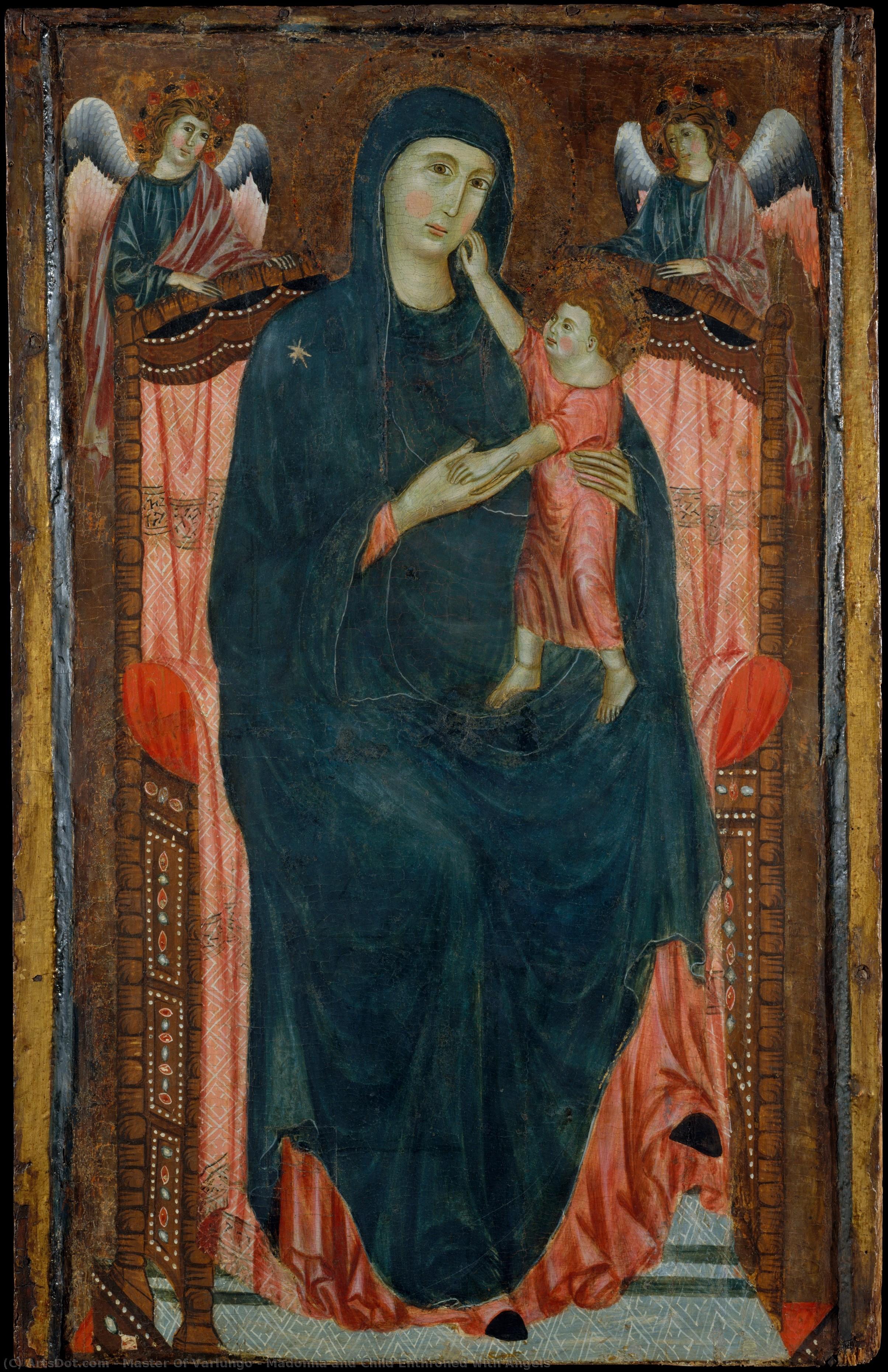
Madonna and Child Enthroned with Angels
 130.0 x 83.0 cm
 Read More
Giclée / Art Print
Museum-quality giclée or canvas print with fast production and flexible finish options. ( Buy Hand Made Painting Buy Image)




































Pick from our preset sizes that match the artwork's original proportions.

You may enter your own dimensions to fit a specific frame or space. If your selected size does not match the original image's proportions, we will either crop the artwork or extend the image with a mirrored or solid-fill edge. A digital mockup will be sent for your approval before production begins.
Please note that the on-screen preview does not reflect the actual cropping or extension. Only the mockup will accurately show the final composition.
While custom sizes are available, we recommend selecting a dimension from the predefined list to preserve the original proportions.
Worldwide Delivery () in 2 weeks instead of standard 4/5 weeks. (27 August)

Free Worldwide Express Shipping

High-Quality Linen Canvas

Full Shipping Insurance

Customs Tax Refund Guarantee

True Color Matching Guarantee

60-Day Return Policy (Defects Only)

100% Money-Back Guarantee

Bulk Discount Offer
 Glass option is only available in size under 110 CM

Madonna and Child Enthroned with Angels
Giclée / Art Print
Reproduction Size
-


Total Price
$ 63
Related Artworks








Artist Biography
A Shadowy Figure of Florentine Gothic: The Master of Varlungo
The thirteenth century in Florence was a crucible of artistic innovation, witnessing the slow but inexorable shift from the stylized Byzantine tradition towards a more naturalistic and emotionally resonant style that would define the Renaissance. Within this dynamic period worked an artist known only as the Master of Varlungo – a name derived not from personal recognition, but from his most significant surviving work: a fragmented *Madonna and Child* located in the church of San Pietro a Varlungo. Little is definitively known about this painter’s life; no documents bear his name, leaving him shrouded in mystery. Historians place his activity between approximately 1285 and 1310, a relatively brief but impactful period within the burgeoning artistic landscape of Tuscany. He remains an elusive figure, yet his paintings offer compelling insights into the transitional phase of Italian art, bridging the gap between Cimabue’s formality and Giotto’s revolutionary realism.Influences and Early Development
The Master of Varlungo clearly operated within the orbit of Cimabue, one of the last great masters of the Byzantine style. Roberto Longhi, a prominent art historian, identified him as a principal pupil of Cimabue in 1948, a designation that has largely held despite ongoing scholarly debate. The influence is readily apparent in the artist’s early works – characterized by elegant linearity, refined gold backgrounds, and a hierarchical composition typical of Byzantine iconography. However, even within these stylistic constraints, hints of a developing individuality emerge. His figures possess a nascent sense of volume, and a subtle attempt at modeling suggests an awareness of contemporary trends moving beyond pure flatness. The drapery, while still possessing the characteristic folds of Byzantine art, begins to exhibit a more naturalistic fall, hinting at a growing interest in representing fabric as it would appear in reality. It’s believed he was also influenced by Duccio di Buoninsegna, whose work introduced a greater degree of emotionality and narrative detail into Sienese painting.The Madonna and Child at San Pietro a Varlungo
The *Madonna and Child* in San Pietro a Varlungo is the cornerstone of his attributed oeuvre, and from which he derives his name. Though fragmentary – much of the original panel has been lost – it provides invaluable evidence of his artistic approach. The painting showcases a delicate balance between Byzantine tradition and emerging Gothic sensibilities. The Virgin Mary is depicted with regal dignity, her face possessing a serene beauty characteristic of Cimabue’s style. However, the Child exhibits a more playful demeanor, gesturing as if to distract his mother from “melancholy,” as described by Hans Belting. This subtle interaction introduces a human element rarely seen in earlier Byzantine representations. The use of silver ground enhances the luminosity of the composition, while the refined details and elegant brushwork demonstrate the artist’s technical skill. The work is not merely a devotional image; it's a testament to the evolving artistic language of Florence, reflecting a growing desire to connect with viewers on an emotional level.Later Works and Artistic Legacy
Beyond the Varlungo *Madonna and Child*, several other panels have been attributed to the Master based on stylistic similarities. A particularly noteworthy example is the *Madonna and Child Enthroned with Angels* housed in the Metropolitan Museum of Art in New York. This panel further demonstrates his developing skill in rendering volume and spatial relationships, though it remains relatively conservative compared to the groundbreaking innovations of Giotto. His work often features a populist character, suggesting an appeal to a broader audience beyond the elite patrons typically associated with high art. The artist’s legacy is not one of radical transformation, but rather of subtle refinement and skillful adaptation. He played a crucial role in transmitting the Byzantine tradition into the Gothic era, paving the way for the revolutionary changes that Giotto would soon usher in.Historical Significance
The Master of Varlungo occupies a unique position within the history of Italian art. He represents a critical link between two distinct artistic styles – the formality of Byzantium and the burgeoning naturalism of the Renaissance. While overshadowed by more celebrated contemporaries like Cimabue and Giotto, his work provides invaluable insights into the transitional phase of Florentine painting. He embodies the spirit of an era grappling with new ideas and techniques, striving to balance tradition with innovation. His paintings are not merely beautiful objects; they are windows into a pivotal moment in art history – a time when artists began to redefine the relationship between image, faith, and human experience. The enduring appeal of his *Madonna and Child* lies not only in its aesthetic qualities but also in its ability to evoke a sense of quiet devotion and timeless beauty, reminding us of the power of art to transcend cultural boundaries and connect with viewers across centuries.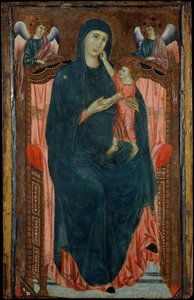
Master of Varlungo
1285 - 1310 , Italy
Quick Facts
- Artistic Movement Or Style: Gothic
- Artists Who Influenced This Artist:
- Cimabue
- Giotto
- Date Of Birth: Florence, Italy (1285)
- Date Of Death: 1310
- Full Name: master of varlungo
- Nationality: Italian
- Notable Artworks: ['Madonna and Child Enthroned with Angels']
- Place Of Birth: Florence