 Preview
 Send
Send Share
Share
 Details

 Download
 Similars
 X-Ray
X-Ray Diaporama
Historia Anglorum, Chronica majora, Part III
 Oil On Paper
- Medieval Gothic Manuscript Style
 1250
1250- High Medieval
 36.0 x 24.0 cm
 British Library
 Read More
Hand Made Oil Reproduction
Hand-painted oil on canvas in your size and frame, made to order by our artists. ( Buy Print Buy Image)




P118B $10

P118H $10

P118W $10

P438Z $10

P508JH $12

P508YH $12

P805H $10

P805Z $10

P919BZ $10

P919G $10

P919XJ $10

P959ZH $10

P968JZ $12

W106C $8

W218G $10

W218JH $8

W218Y $10

W307PJ $10

W316G $10

W316PJ $8

W316Y $10

W398PJ $8

W4111J $10

W500HY $15

W500JH $15

W692G $12

W849H $8

W940BG $15

W953PJ $8




Pick from our preset sizes that match the artwork's original proportions.

You may enter your own dimensions to fit a specific frame or space. If your selected size does not match the original image's proportions, we will either crop the artwork or extend the painting with additional hand-painted elements. A digital mockup will be sent for your approval before production begins.
Please note that the on-screen preview does not reflect the actual cropping or extension. Only the mockup will accurately show the final composition.
While custom sizes are available, we recommend selecting a dimension from the predefined list to preserve the original proportions.
After order, ArtsDot.com team will email client for instructions and provide a mockup preview
Worldwide Delivery () in 3/4 weeks instead of standard 5 weeks. (22 August). No compromise on quality.

Free Worldwide Express Shipping

High-Quality Linen Canvas

Full Shipping Insurance

Customs Tax Refund Guarantee

True Color Matching Guarantee

60-Day Return Policy (Defects Only)

100% Money-Back Guarantee

Bulk Discount Offer
 Glass option is only available in size under 110 CM

Historia Anglorum, Chronica majora, Part III
Reproduction Medium
Reproduction Size
-


Total Price
$ 263
Artwork Description
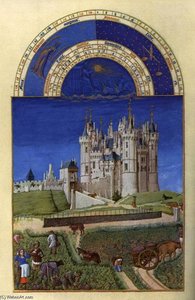
A Glimpse into Medieval Grandeur: The Historia Anglorum
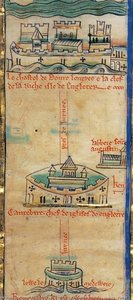
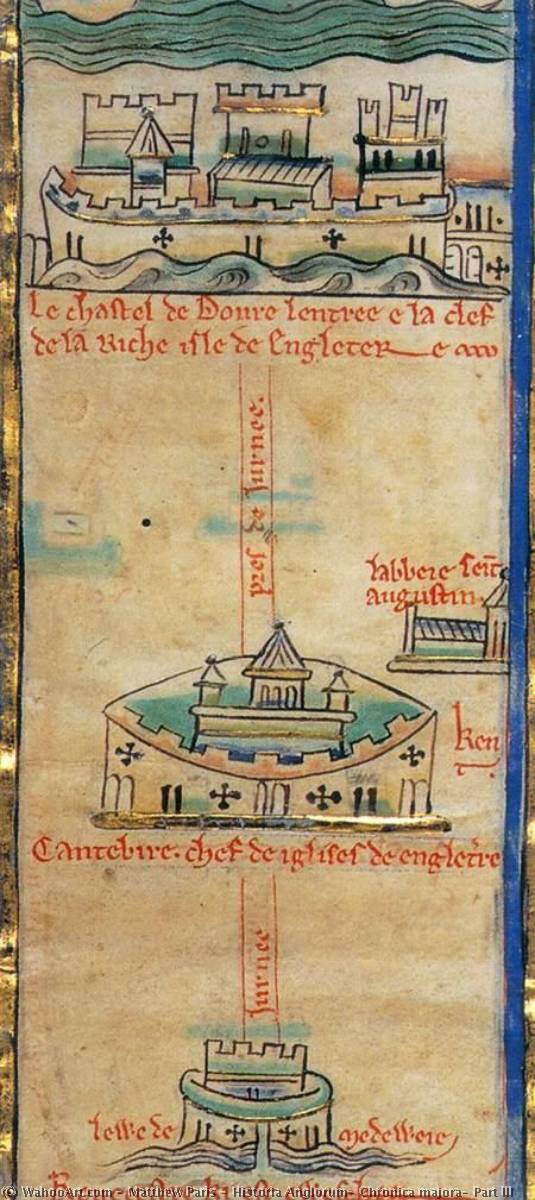
To stand before a depiction such as the Historia Anglorum, Chronica majora, Part III is to step across the threshold of eight centuries and into the vibrant, meticulously documented world of thirteenth-century England. This remarkable manuscript page, attributed to the genius of Matthew Paris, transcends mere illustration; it is a profound historical document rendered with breathtaking artistic fervor. The scene unfolds as a panoramic vision of civic life, dominated by the imposing silhouette of a castle rising majestically against the backdrop of an established cityscape. One can almost hear the echoes of market cries and the distant clang of blacksmiths echoing through these painted streets.
Mastery in Parchment: Technique and Detail
The technique employed here speaks volumes about the dedication of its creator. Executed upon parchment, the surface itself lends an inherent richness and permanence to the artwork. Matthew Paris’s hand is evident in every stroke—the careful rendering of architectural details, the varied textures suggested on the stone walls, and the delicate folds of the garments worn by the populace. The artist possessed an unparalleled ability to capture depth within a relatively confined space, giving the viewer the illusion of looking through a portal into a bustling medieval thoroughfare. Observe the moat surrounding the central fortress; it is not merely decorative but speaks to the strategic importance and defensive might inherent in the era’s grand structures.
The Tapestry of Medieval Life and Symbolism
More than just stone and mortar, this piece is a rich tapestry woven with human experience. The figures populating the scene—the merchants, the citizens moving through the square, perhaps even minor nobility passing by—are imbued with a sense of purpose that grounds the grand architecture in relatable daily life. Symbolically, the castle itself represents power, stability, and the enduring structure of society during a time of immense political flux. The inclusion of churches and towers anchors the scene within the spiritual framework that governed medieval existence. It is a visual sermon on civilization itself.
Bringing History Home: Decorating with Antiquity
For the modern collector or designer, this reproduction offers an unparalleled opportunity to infuse a space with intellectual depth and historical gravitas. Imagine this vibrant scene gracing a gallery wall or serving as a focal point in a library designed for contemplation. Owning a high-quality rendition of the Historia Anglorum is not simply acquiring art; it is curating a narrative—a conversation piece that speaks eloquently of human endeavor, architectural evolution, and the enduring romance of history. It promises to transform any room into a scholarly sanctuary.
Related Artworks
Artist Biography
The Illuminated Chronicler of St Albans
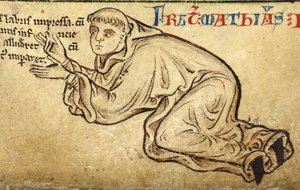
To step into the world of Matthew Paris is to traverse a threshold of eight centuries, entering a vibrant and meticulously documented era of thirteenth-century England. A Benedictine monk at the renowned St Albans Abbey, Paris was far more than a mere silent observer of history; he was its most vivid architect. Known in Latin as Matthæus Parisiensis, he occupied a unique position in the medieval landscape, blending the disciplined life of a monk with the expressive soul of an artist and the sharp eye of a historian. While the precise details of his early years remain shrouded in the mists of the Middle Ages, scholars believe he was born around 1200, perhaps hailing from a family of aristocratic connections that granted him the social standing necessary to navigate both monastic cloisters and royal courts.
His life’s work was defined by a profound sense of duty to the truth and an unparalleled talent for visual storytelling. In 1236, he inherited the monumental task of serving as the official recorder of events, succeeding his predecessor, Roger of Wendover. This responsibility led to the creation of the Chronica Majora, a cornerstone of medieval historiography. Through this work, Paris did not merely record dates and names; he breathed life into the political turbulence of his age. His writing was famously personal, often weaving his own opinions and eyewitness accounts—drawn from letters, records, and direct conversations with figures such as King Henry III—into a rich, narrative tapestry that transformed dry annals into a living history.
A Master of Pen and Parchment
Beyond the written word, Paris distinguished himself through a singular artistic technique that set him apart from his contemporaries. He was a master draftsman, specializing in what are often called "tinted drawings." Unlike the heavy, gilded illuminations common in many monastic scriptoria, Paris’s style frequently utilized delicate pen work paired with soft watercolor washes. This method allowed for a sense of fluidity and movement that captured the bustling energy of medieval life with remarkable clarity. His ability to render architectural grandeur—such as the imposing silhouettes of castles and the intricate textures of stone walls—alongside the human element of merchants and citizens, demonstrates a sophisticated understanding of composition and depth.
The artistry of Matthew Paris was not confined to mere decoration; it was an essential component of his historical mission. His illustrations served as visual companions to his text, providing a panoramic vision of civic life and the strategic landscapes of his time. Whether he was mapping territories as a skilled cartographer or depicting the solemnity of religious figures like the Virgin and Christ Child, his hand was characterized by a meticulous attention to detail. The use of parchment provided an inherent richness to his work, a permanence that has allowed his visions of 13th-century England to endure long after the ink had dried.
Legacy and Historical Significance
The historical significance of Matthew Paris lies in his dual role as both a witness and a creator. He was a bridge between the oral traditions of the past and the documented history of the future. His manuscripts, such as the famous Dublin manuscript (MS Add. 4768), reveal a fascinating glimpse into the cultural practices of the era, including the lending of precious texts to aristocratic households, which helped spread his unique artistic signature across the realm.
Today, we remember Matthew Paris not just as a monk, but as a pioneer of visual journalism. His contributions can be summarized through several enduring legacies:
- The Chronica Majora: A monumental historical achievement that remains a primary source for understanding mid-13th century Europe.
- Artistic Innovation: The development of the "tinted drawing" technique, which brought a new level of accessibility and expressive movement to manuscript illumination.
- Cartographic Precision: His work as a cartographer provided vital visual records of the political and geographical landscapes of his age.
- Historical Subjectivity: By incorporating personal observations and eyewitness accounts, he moved historical writing away from detached chronicles toward a more human-centric narrative.
In the quiet halls of St Albans, Matthew Paris found a way to make the fleeting moments of his century immortal. Through his pen and his brush, the echoes of market cries, the clang of blacksmiths, and the political intrigues of kings continue to resonate, inviting us to witness the medieval world through the eyes of its most gifted chronicler.
Matthew Paris
1200 - 1259
Quick Facts
- Artistic Movement Or Style: Medieval Art
- Artists Or Movements Influenced By This Artist: ['St Albans Abbey']
- Artists Who Influenced This Artist: ['Roger of Wendover']
- Date Of Birth: c.1200
- Date Of Death: 1259
- Full Name: Matthew Paris
- Nationality: English
- Notable Artworks:
- Historia Anglorum
- Book of Additions
- Place Of Birth: England
Related Articles
High Medieval Art: 10 Masterpieces That Shaped an Era | ArtsDot
Journey through High Medieval Art! Explore 10 iconic masterpieces – from Giotto's frescoes to stunning Gothic cathedrals. Discover the stories behind these timeless paintings, sculptures & illuminated manuscripts. Find museum-quality art reproductions at ArtsDot.com.

Late Medieval Masterpieces: 10 Artworks That Defined an Era | ArtsDot
Journey through 10 defining Late Medieval masterpieces – from Giotto's frescoes to Jan van Eyck’s realism. Explore the stories, techniques & vibrant colors of Gothic art. Find museum-quality reproductions and elevate your home decor with ArtsDot.com! Discover all masterpieces on ArtsDot.com
Early Medieval Art: 10 Masterpieces That Shaped a New World | ArtsDot
Journey through 10 stunning Early Medieval masterpieces – from the Book of Kells to Carolingian mosaics. Explore art history, symbolism & find museum-quality reproductions for your home at ArtsDot.com. Discover all masterpieces online!
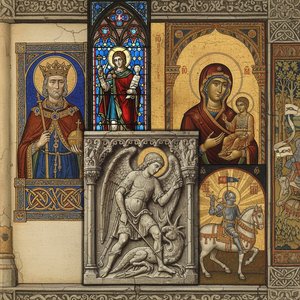
Illuminating Faith & Power: A Journey Through Medieval Art (c. 500 – c. 1500)
Explore the rich history of Medieval Art (c. 500 – c. 1500) with ArtsDot. Discover Byzantine mosaics, Gothic cathedrals & Renaissance masterpieces. Expert insights & museum-quality reproductions.
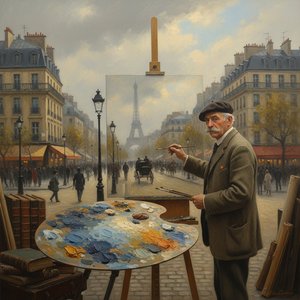
Édouard Cortès: Capturing Parisian Life – A Comprehensive Study of the 'Painter of Paris'
Explore the captivating world of Édouard Cortès, 'The Painter of Paris'. Discover his iconic street scenes, unique style & lasting legacy. Expert insights for collectors and art enthusiasts.