 Preview
 Send
Send Share
Share
 Details

 Download
 Similars
 X-Ray
X-Ray Diaporama
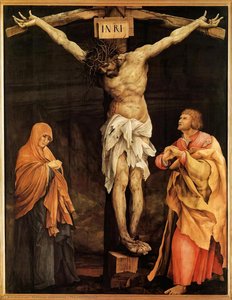
The Crucifixion (detail)


 Read More
Hand Made Oil Reproduction
Hand-painted oil on canvas in your size and frame, made to order by our artists. ( Buy Print Buy Image)




P118B $10

P118H $10

P118W $10

P438Z $10

P508JH $12

P508YH $12

P805H $10

P805Z $10

P919BZ $10

P919G $10

P919XJ $10

P959ZH $10

P968JZ $12

W106C $8

W218G $10

W218JH $8

W218Y $10

W307PJ $10

W316G $10

W316PJ $8

W316Y $10

W398PJ $8

W4111J $10

W500HY $15

W500JH $15

W692G $12

W849H $8

W940BG $15

W953PJ $8




Pick from our preset sizes that match the artwork's original proportions.

You may enter your own dimensions to fit a specific frame or space. If your selected size does not match the original image's proportions, we will either crop the artwork or extend the painting with additional hand-painted elements. A digital mockup will be sent for your approval before production begins.
Please note that the on-screen preview does not reflect the actual cropping or extension. Only the mockup will accurately show the final composition.
While custom sizes are available, we recommend selecting a dimension from the predefined list to preserve the original proportions.
After order, ArtsDot.com team will email client for instructions and provide a mockup preview
Worldwide Delivery () in 3/4 weeks instead of standard 5 weeks. (17 August). No compromise on quality.

Free Worldwide Express Shipping

High-Quality Linen Canvas

Full Shipping Insurance

Customs Tax Refund Guarantee

True Color Matching Guarantee

60-Day Return Policy (Defects Only)

100% Money-Back Guarantee

Bulk Discount Offer
 Glass option is only available in size under 110 CM

The Crucifixion (detail)
Reproduction Medium
Reproduction Size
-


Total Price
$ 263
Artwork Description
A Moment of Profound Sorrow: Unveiling the Detail from Grünewald’s Isenheim Altarpiece
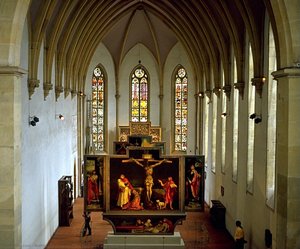
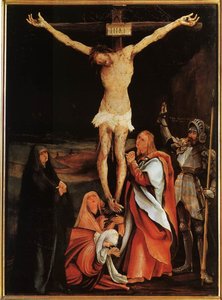
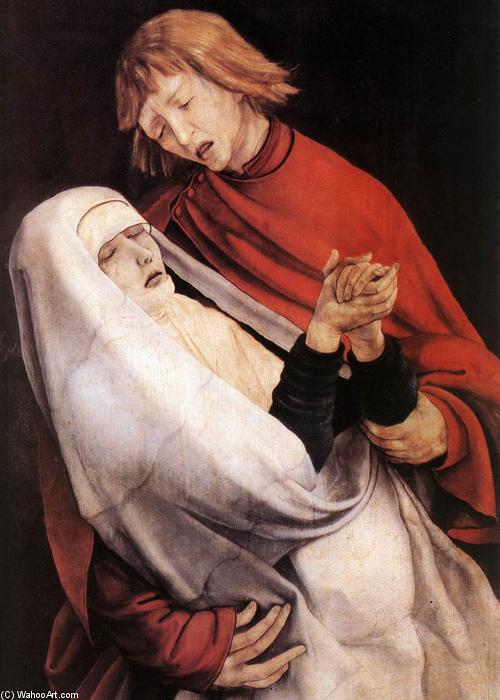
Matthias Grünewald's "The Crucifixion" – specifically this arresting detail from the larger Isenheim Altarpiece – isn’t merely a depiction of a biblical scene; it’s an immersion into raw, visceral emotion. Painted in 1515 during the tumultuous High Renaissance, this fragment transcends its historical context to speak directly to the viewer's core, offering a glimpse into profound grief and spiritual contemplation. The painting resides within the Isenheim Altarpiece, commissioned for the monastery of St. Anthony in Alsace, France – a space dedicated to treating patients suffering from ergotism (St. Anthony’s Fire), a debilitating disease characterized by hallucinations and intense physical pain. This specific detail, therefore, wasn't intended as a detached historical illustration but rather as a potent visual aid for those enduring unimaginable suffering.
Northern Renaissance Realism and the Language of Emotion
Grünewald’s style is a masterful synthesis of Northern European realism and deeply expressive emotion, a hallmark of his era. He eschews the idealized forms favored by Italian Renaissance artists, instead opting for a brutally honest portrayal of human suffering. The figures are rendered with an almost sculptural quality – their musculature taut with strain, their faces etched with anguish. Notice the meticulous detail in the rendering of fabric, the subtle variations in skin tone, and the way light catches on the folds of clothing. This commitment to realism isn’t simply about accurate representation; it serves to amplify the emotional impact of the scene. The use of chiaroscuro – dramatic contrasts between light and shadow – further intensifies this effect, drawing our attention to the central figures and creating a sense of claustrophobia and despair.
Decoding the Figures: A Study in Grief and Compassion
The focal point of this detail is undoubtedly the two individuals dominating the composition. On the left, we see a figure draped in a white head covering reminiscent of a nun’s habit – often interpreted as Mary Magdalene or another disciple overwhelmed by sorrow. Her closed eyes and downturned face convey an almost unbearable grief, while her posture suggests a deep, silent mourning. To her right stands a male figure clad in a vibrant red robe, possibly representing a bishop or other religious leader. His tilted head and outstretched hand suggest a gesture of comfort and shared empathy – a poignant attempt to alleviate the suffering of his companion. The interaction between these two figures is not one of triumphant faith but rather of shared humanity in the face of unimaginable pain. The simplicity of their gestures speaks volumes, conveying a universal experience of loss and compassion.
Historical Context and Spiritual Significance
Created during a period marked by religious fervor and profound spiritual questioning, Grünewald’s “The Crucifixion” reflects the anxieties and hopes of his time. The Isenheim Altarpiece itself was designed to offer solace and guidance to patients afflicted with ergotism – a disease that often induced hallucinations and intense emotional distress. The altarpiece's imagery, including this detail, served as a visual reminder of Christ’s suffering and sacrifice, offering a pathway to redemption and hope amidst unimaginable hardship. The starkness of the scene, devoid of extraneous ornamentation, underscores its spiritual power – it is a direct confrontation with mortality and an invitation to contemplate the mysteries of faith.
A Timeless Masterpiece: Reproductions for Reflection
Today, reproductions of this powerful image continue to resonate deeply. Whether adorning a private study or gracing a public space, Grünewald’s “The Crucifixion” offers a profound opportunity for reflection on themes of suffering, compassion, and the enduring power of faith. High-quality hand-painted reproductions capture the artist's masterful technique and emotional intensity, allowing viewers to experience the full force of this timeless masterpiece.
Related Artworks
Artist Biography
Matthias Grünewald: Life and Legacy
Early Life and Artistic Beginnings
Matthias Grünewald, born Mathis Gothart Neithardt around 1470-1475 in Würzburg, Germany, was a pivotal figure of the German Renaissance. Despite living during a period increasingly influenced by Italian Renaissance ideals, Grünewald remained deeply rooted in the artistic traditions of late medieval Central Europe. Details about his early life are scarce, but it’s known he received training as an artist, likely within local workshops.
Artistic Development and Influences
Grünewald's artistic development was shaped by the prevailing Northern European traditions of realism, emotional intensity, and detailed observation. His work shows influences from artists like Albrecht Dürer and Martin Schongauer, but he forged a unique path characterized by dramatic expression and vivid color. He wasn’t directly involved with the humanist circles prevalent in Italy; instead, his art served primarily religious purposes, reflecting the spiritual anxieties of his time.
Major Works and Artistic Style
- The Isenheim Altarpiece (1512-1516): This masterpiece, housed at the Musée d'Unterlinden in Colmar, is considered Grünewald’s magnum opus. It depicts scenes from the life of Christ with harrowing realism, particularly focusing on suffering and redemption.
- The Crucifixion (c. 1502-1503): An early work demonstrating his developing style, showcasing intense emotion and anatomical detail.
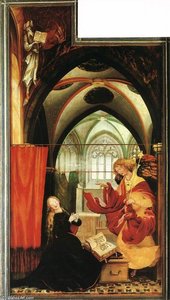
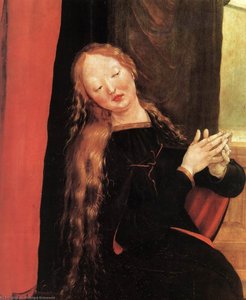
- Virgin of the Annunciation (1512-14): A study for the Isenheim Altarpiece, revealing his meticulous planning process.
- Moses (1511): A drawing highlighting Grünewald’s skill in capturing expressive figures and dramatic poses.
Grünewald's style is distinguished by:
- Dramatic Composition: He employed dynamic arrangements to heighten emotional impact.
- Vivid Color Palette: His use of intense, often contrasting colors created a powerful visual experience.
- Realistic Depiction of Suffering: Grünewald didn’t shy away from portraying the physical and emotional pain associated with religious narratives.
- Expressive Figures: His figures are imbued with strong emotions and psychological depth.
Historical Significance and Legacy
Grünewald's work stands as a testament to the enduring power of medieval artistic traditions in Germany during the Renaissance. He bridged the gap between the late Gothic style and the emerging Renaissance, creating a unique visual language that resonated with his contemporaries. His influence can be seen in later German artists who continued to explore themes of religious fervor and emotional intensity. While largely forgotten for centuries after his death in 1528, Grünewald experienced a revival in the 19th century, and today he is recognized as one of the most important painters of the German Renaissance. His art continues to captivate viewers with its raw emotion, technical brilliance, and profound spiritual depth.
Further Exploration
Discover more about Matthias Grünewald’s life and works at: ArtsDot
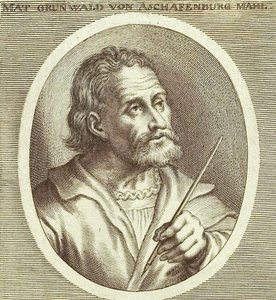
matthias grünewald
1480 - 1528 , Germany
Quick Facts
- Birth Date: c. 1470–1475
- Birth Place: Würzburg, Germany
- Death Date: 1528
- Movement: German Renaissance, Late Medieval
- Name: Matthias Grünewald
- Nationality: German
- Notable Works: Isenheim Altarpiece, The Crucifixion
Related Articles
Matthias Grünewald: Devotion, Distortion & Spiritual Turmoil in Renaissance Art
Explore the profound religious art of Matthias Grünewald, master of the Isenheim Altarpiece. Discover his unique expressionism, symbolism & lasting impact on Renaissance painting. A guide for collectors and enthusiasts.
The Northern Renaissance: A Flourishing of Realism, Religious Reform & Artistic Innovation
Explore the Northern Renaissance! Discover Jan van Eyck's innovations, religious shifts, & key artists of this influential period. Expert analysis and insights into Early Netherlandish painting at ArtsDot.
Illuminating Belief: A Visual Exploration of Faith Across Artistic Movements & Historical Contexts
Explore the rich history of faith through art! Discover Renaissance masterpieces, iconic artists & religious symbolism with expert analysis from ArtsDot. Perfect for collectors and enthusiasts.
Northern Renaissance Masters: 10 Artworks That Shaped History |
Journey through the Northern Renaissance! Explore 10 iconic paintings by Jan van Eyck, Dürer & Bosch. Discover their stories, techniques & lasting impact. Find museum-quality art reproductions & elevate your home decor on .
Sacred Narratives on Canvas: Exploring Religious Painting Through History
Explore the rich history of religious painting with ArtsDot.com! Discover iconic artworks, symbolism & techniques from antiquity to the Renaissance. Enhance your art appreciation today.