 Preview
 Send
Send Share
Share
 Details

 Download
 Similars
 X-Ray
X-Ray Diaporama
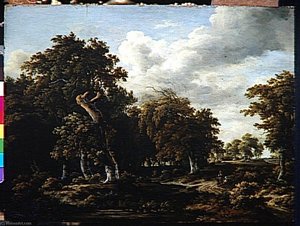
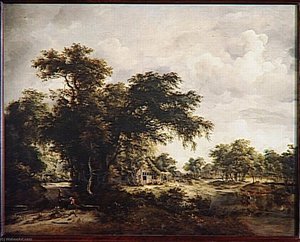
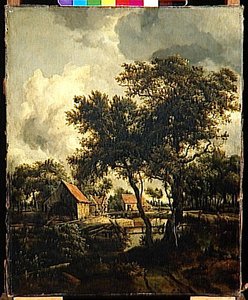
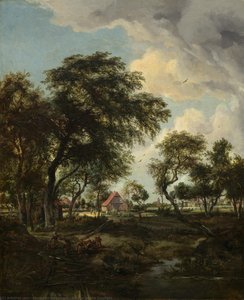
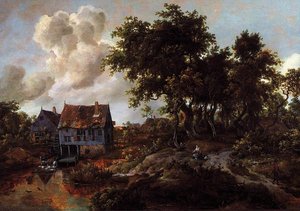
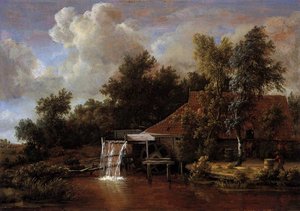
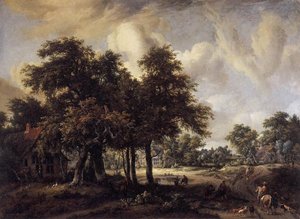
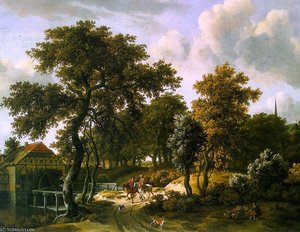
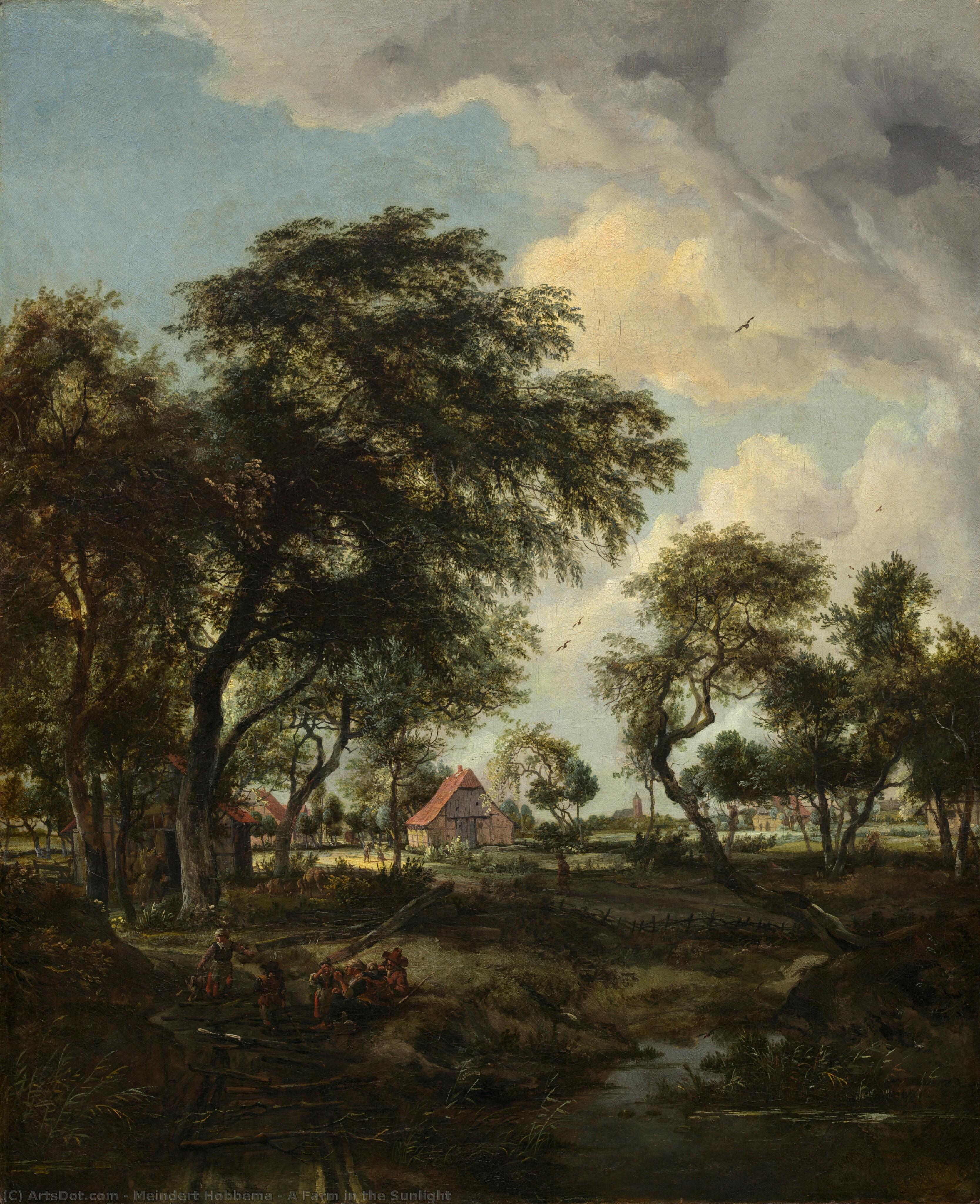
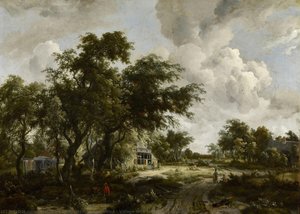
A Farm in the Sunlight
 1668
1668 82.0 x 66.0 cm
 Read More
Hand Made Oil Reproduction
Hand-painted oil on canvas in your size and frame, made to order by our artists. ( Buy Print Buy Image)




































Pick from our preset sizes that match the artwork's original proportions.

You may enter your own dimensions to fit a specific frame or space. If your selected size does not match the original image's proportions, we will either crop the artwork or extend the painting with additional hand-painted elements. A digital mockup will be sent for your approval before production begins.
Please note that the on-screen preview does not reflect the actual cropping or extension. Only the mockup will accurately show the final composition.
While custom sizes are available, we recommend selecting a dimension from the predefined list to preserve the original proportions.
After order, ArtsDot.com team will email client for instructions and provide a mockup preview
Worldwide Delivery () in 3/4 weeks instead of standard 5 weeks. (17 August). No compromise on quality.

Free Worldwide Express Shipping

High-Quality Linen Canvas

Full Shipping Insurance

Customs Tax Refund Guarantee

True Color Matching Guarantee

60-Day Return Policy (Defects Only)

100% Money-Back Guarantee

Bulk Discount Offer
 Glass option is only available in size under 110 CM

A Farm in the Sunlight
Reproduction Medium
Reproduction Size
-


Total Price
$ 263
Artwork Description
Related Artworks
Artist Biography
The Quiet Master of Dutch Landscape
Meindert Lubbertszoon Hobbema remains a figure shrouded in relative obscurity compared to his contemporaries like Rembrandt and Vermeer, yet he stands as one of the most distinctive voices within the Golden Age of Dutch art. His landscapes—characterized by an exquisite level of detail and imbued with a palpable sense of atmosphere—capture the serene beauty of rural Holland with remarkable precision. While biographical documentation remains somewhat elusive, scholars have pieced together a portrait of an artist deeply rooted in his era, profoundly influenced by the masters of his time and committed to capturing the subtle nuances of light, texture, and the natural world. Born in Amsterdam around 1638, Hobbema’s early life was shaped by the vibrant artistic energy of the Dutch Golden Age. He entered the professional sphere through a formal apprenticeship under Jacob van Ruysdael beginning approximately 1657. This formative period was essential, as it allowed him to absorb Ruysdael's masterful technique for rendering landscapes with luminous color palettes and meticulous observation. Through this lineage, Hobbema inherited a tradition of storytelling through scenery, where the placement of a tree or the bend of a path served to guide the viewer’s eye through a carefully composed natural drama.Evolution of Style and Technique
The partnership with Ruysdael was far more than a mere educational period; it fostered an intellectual and stylistic exchange that propelled Hobbema’s artistic evolution. While his early works often mirrored the river scenes and compositions of his mentor, Hobbema gradually developed a distinctive vision marked by a heightened sensitivity to light and color. By around 1662, the influence of Ruysdael had solidified into a style that was uniquely his own—one characterized by a preference for muted tones, textured brushstrokes, and an unwavering focus on capturing the natural world as it appeared to the eye. His mature works are celebrated for their ability to capture the subtle interplay of sunlight filtering through dense foliage and the way light dances across woodland paths. Unlike the more dramatic or stormy landscapes found in other Dutch traditions, Hobbema’s oeuvre often leans toward a peaceful, structured realism. He possessed an unparalleled ability to render:- The intricate textures of bark and moss on ancient trees.
- The atmospheric depth created by receding woodland vistas.
- The quiet, rhythmic movement of sunlight through leafy canopies.
- The humble beauty of rural roads, canals, and rustic buildings.
Legacy and Historical Significance
Hobbema’s contribution to the Dutch landscape tradition lies in his ability to elevate the mundane aspects of the countryside into subjects of profound contemplative beauty. His paintings do not merely document the topography of 17th-century Holland; they evoke a sense of stillness and permanence. Through his mastery of light and composition, he transformed simple wooded scenes into complex studies of nature's quiet grandeur. Though he may not have achieved the global celebrity of the era's portraitists, his historical significance is cemented by his role in perfecting the landscape genre. His work serves as a vital link in the evolution of Dutch realism, providing a window into a period where the mastery of light and the observation of nature became the ultimate expressions of artistic truth. Today, his paintings remain cherished for their ability to transport the viewer to a tranquil, sun-dappled world that feels both intimately real and timelessly poetic.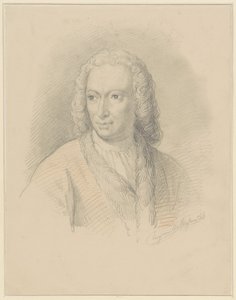
Meindert Hobbema
1638 - 1709 , Netherlands
Quick Facts
- Artistic Movement Or Style: Golden Age Dutch Landscape Art
- Artists Or Movements Influenced By This Artist: Rembrandt
- Artists Who Influenced This Artist: Jacob van Ruysdael
- Date Of Birth: Amsterdam, Netherlands (1638)
- Date Of Death: December 1709
- Full Name: Meindert Lubbertszoon Hobbema
- Nationality: Dutch
- Notable Artworks:
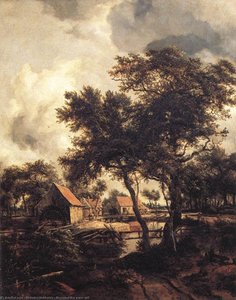
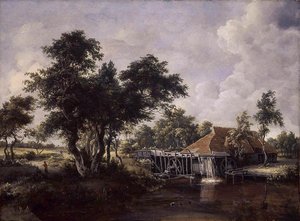
- A Watermill 1
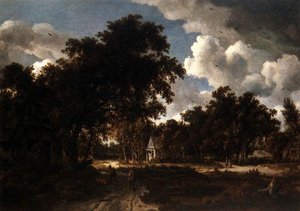
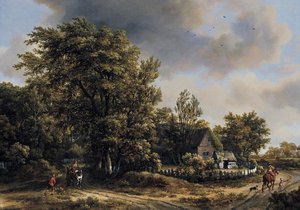
- Wooded Landscape with Cottages
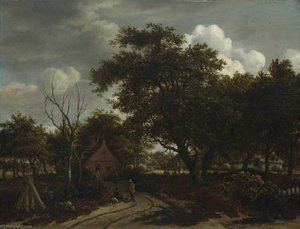
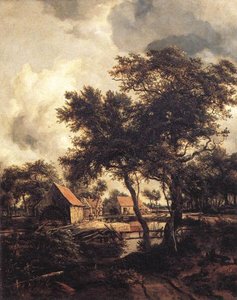
- Cottages in a Wood
- Place Of Birth: Amsterdam