 Preview
 Send
Send Share
Share
 Details

 Download
 Similars
 X-Ray
X-Ray Diaporama
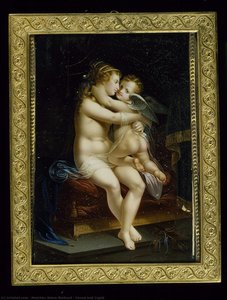
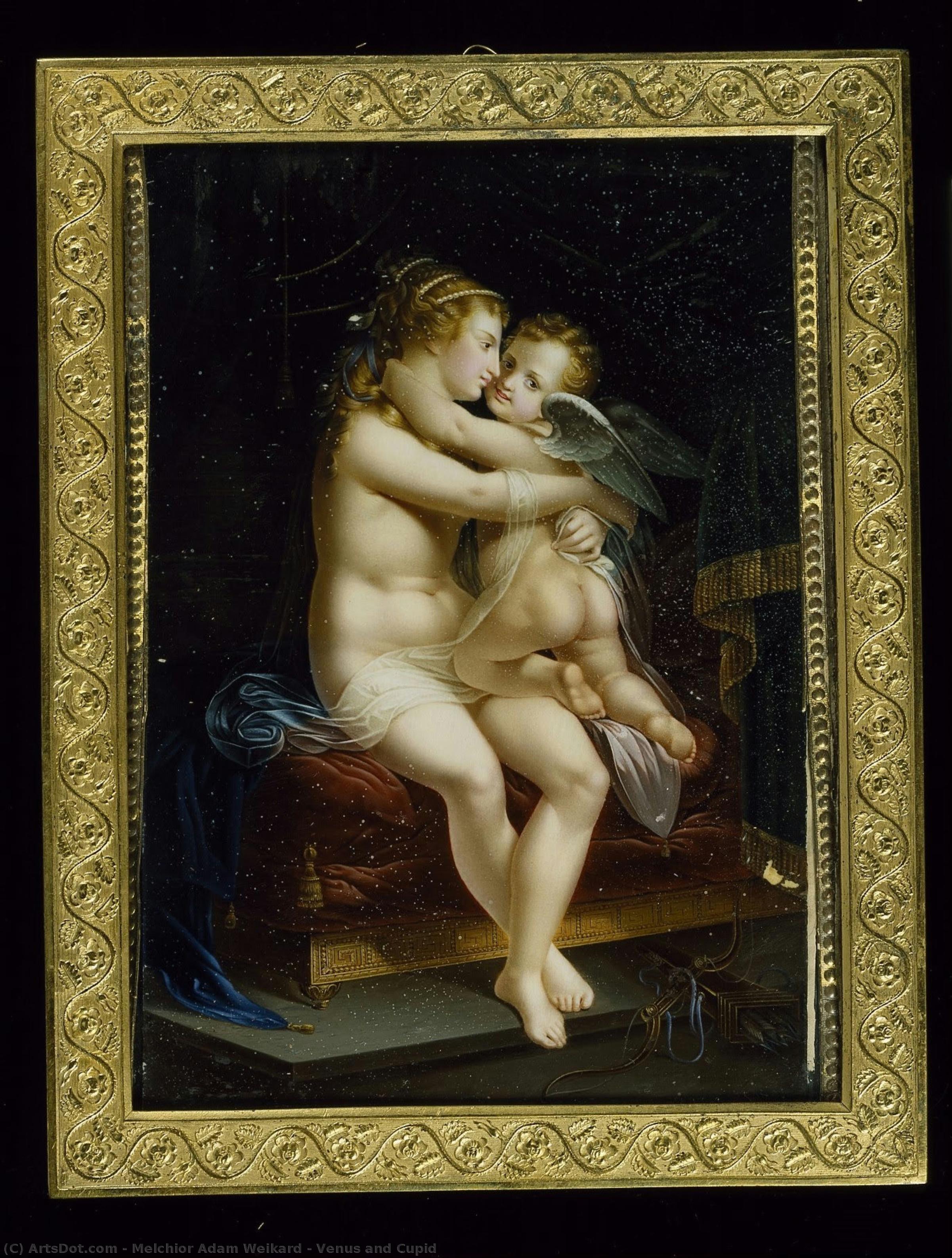
Venus and Cupid
 Rococo
 Early Modern
 20.0 x 25.0 cm
 Palazzo Madama
 Read More
Hand Made Oil Reproduction
Hand-painted oil on canvas in your size and frame, made to order by our artists. ( Buy Print Buy Image)




P118B $10

P118H $10

P118W $10

P438Z $10

P508JH $12

P508YH $12

P805H $10

P805Z $10

P919BZ $10

P919G $10

P919XJ $10

P959ZH $10

P968JZ $12

W106C $8

W218G $10

W218JH $8

W218Y $10

W307PJ $10

W316G $10

W316PJ $8

W316Y $10

W398PJ $8

W4111J $10

W500HY $15

W500JH $15

W692G $12

W849H $8

W940BG $15

W953PJ $8




Pick from our preset sizes that match the artwork's original proportions.

You may enter your own dimensions to fit a specific frame or space. If your selected size does not match the original image's proportions, we will either crop the artwork or extend the painting with additional hand-painted elements. A digital mockup will be sent for your approval before production begins.
Please note that the on-screen preview does not reflect the actual cropping or extension. Only the mockup will accurately show the final composition.
While custom sizes are available, we recommend selecting a dimension from the predefined list to preserve the original proportions.
After order, ArtsDot.com team will email client for instructions and provide a mockup preview
Worldwide Delivery () in 3/4 weeks instead of standard 5 weeks. (1 September). No compromise on quality.

Free Worldwide Express Shipping

High-Quality Linen Canvas

Full Shipping Insurance

Customs Tax Refund Guarantee

True Color Matching Guarantee

60-Day Return Policy (Defects Only)

100% Money-Back Guarantee

Bulk Discount Offer
 Glass option is only available in size under 110 CM

Venus and Cupid
Reproduction Medium
Reproduction Size
-


Total Price
$ 263
Related Artworks
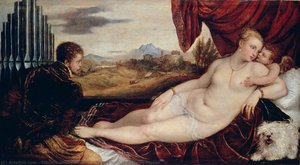
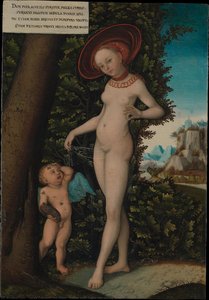
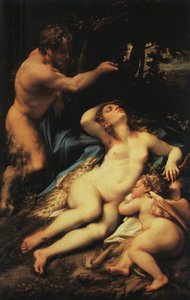
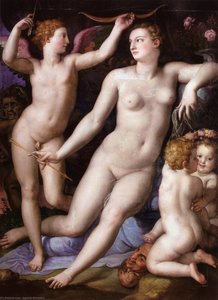
Artist Biography
Thomas Jones (1742 – 1803): A Welsh Landscape Pioneer
Born in the heart of Radnor Forest on September 26, 1742, Thomas Jones emerged from a family deeply rooted in Welsh history and land ownership. His early life, shaped by the rural landscape of Pencerrig near Builth, provided the foundational inspiration for his enduring legacy as one of Wales’s most significant landscape painters. Initially destined for the clergy – a path dictated by his family’s lineage – Jones’s true calling lay in capturing the beauty and drama of his native hills and valleys. This shift, spurred by the death of his uncle, marked a pivotal moment, leading him away from theological studies and towards the vibrant world of art.
Jones's artistic journey began with formal training at Christ College School in Brecon and later at Jesus College, Oxford, where he initially pursued classical studies. However, it was his enrollment in William Shipley’s drawing school in London that truly ignited his passion for landscape painting. Under the tutelage of Henry Pars and, crucially, Richard Wilson – a master of tonal harmony and atmospheric perspective – Jones honed his skills, rapidly developing a distinctive style characterized by its subtle color palettes, meticulous detail, and evocative portrayal of Welsh light. His early successes, including awards from the Society of Arts for both figure drawing and landscape painting in 1764 and 1768, firmly established him as a rising talent within the London art scene.
A Journey to Italy and Artistic Maturation
In 1766, Jones embarked on a transformative journey to Italy, a period of intense artistic exploration and development. He settled in Rome, immersing himself in the works of Italian masters like Zuccarelli, whose dramatic lighting and dynamic compositions profoundly influenced his own style. His time in Naples further broadened his artistic horizons, exposing him to diverse landscapes and techniques. This sojourn wasn’t merely a vacation; it was a deliberate pursuit of technical refinement and a deeper understanding of the principles of landscape painting. He cultivated a network of influential friends – including Towne, John Smith, Edward Pars, and Day – who enriched his intellectual and artistic life.
Upon his return to England in 1783, Jones’s style underwent a subtle shift. While retaining elements of Wilson's tonal approach, he increasingly incorporated the bolder brushwork and dramatic lighting characteristic of Zuccarelli. This period saw him producing works that were both admired and occasionally criticized for their imitation of established masters. Despite these critiques, his dedication to capturing the essence of Welsh scenery remained unwavering.
Themes and Style
Jones’s paintings are deeply rooted in the landscape of Wales, particularly the rugged beauty of Radnor Forest and the surrounding valleys. He wasn't simply depicting scenes; he was conveying a sense of place – the dampness of the air, the shifting light, the textures of stone and foliage. His compositions often feature dramatic cloud formations, rolling hills, and meandering streams, all rendered with remarkable precision and sensitivity. Jones’s use of color is particularly noteworthy, employing subtle gradations to create a sense of depth and atmosphere. He skillfully captured the ephemeral qualities of light and shadow, imbuing his landscapes with a palpable sense of mood and emotion.
Legacy and Recognition
Throughout his career, Jones exhibited extensively at both the Royal Academy and the Society of Artists’ exhibitions, showcasing over ten paintings between 1764 and 1798. His works gained recognition through engravings and are now found in public and private collections across Wales and beyond. He was elected high sheriff of Radnorshire in 1791 and a magistrate for the county in 1792, demonstrating his commitment to his community. Jones died peacefully at Pencerrig in May 1803, leaving behind a significant body of work that continues to be celebrated as a cornerstone of Welsh landscape painting. His legacy is further preserved through scholarly research – including Megan Ellis’s biography, A. P. Oppé's *Memoirs*, R. C. B. Oliver’s family history, and contemporary accounts like Richard Veasey’s recent monograph. His work can also be accessed online via the National Museum Wales website and ArtUK.
Related Artists
- Richard Cosway: A contemporary miniaturist and portrait painter who influenced Jones's approach to capturing light and atmosphere.
- Richard Wilson: A pivotal figure in Jones’s artistic development, whose tonal style served as a foundational influence.
- Zuccarelli: An Italian landscape painter whose dramatic lighting and dynamic compositions shaped Jones's later work.
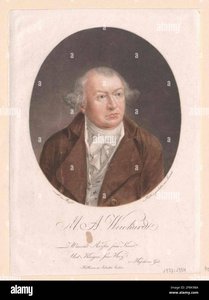
melchior adam weikard
1742 - 1803 , Germany
Quick Facts
- Artistic Movement Or Style: Landscape painting
- Artists Or Movements Influenced By This Artist: ['None specified']
- Artists Who Influenced This Artist:
- Richard Wilson
- Zuccarelli
- Date Of Birth: 26 September 1742
- Date Of Death: May 1803
- Full Name: Thomas Jones
- Nationality: Welsh
- Notable Artworks:
- Autobiographical Diary
- Various landscapes
- Place Of Birth: Trevonen, Radnorshire
Related Articles
Neo-Classicism's Greatest Hits: 10 Masterpieces for Your Home |
Journey through Neo-Classicism's finest! Explore 10 iconic masterpieces by David, Ingres & Canova. Discover art history, techniques & timeless beauty – perfect for inspiring your home decor. Find museum-quality reproductions at
The Enduring Legacy of Classicism: Principles, Evolution & Influence in Western Art
Explore the enduring legacy of Classicism in Western art! Discover its historical context, key principles, iconic masterpieces & lasting influence. Learn about Renaissance and Neoclassical movements with ArtsDot.
Echoes of Olympus: Mythological Narratives in Western Art Through the Ages
Explore the captivating history of mythological narratives in Western art! From ancient Greece to modern masterpieces, discover iconic artworks & symbolism. Expert analysis and high-quality reproductions at ArtsDot.
Timeless Resonance: Exploring Classic Vibe in Art – A Historical & Aesthetic Analysis
Explore the rich history & enduring aesthetic of Classicism art! Discover key movements, iconic artists like Raphael & David, and its lasting influence on Western art. Deepen your appreciation today.
Botticelli's Masterpieces: Explore 25 Iconic Renaissance Paintings | ArtsDot
Journey through Botticelli's world with 25 iconic Renaissance paintings. Explore 'Birth of Venus,' 'Primavera,' and more—stories, techniques & timeless beauty. Find museum-quality art reproductions for your home at ArtsDot.com.