 Preview
 Send
Send Share
Share
 Details

 Download
 Similars
 X-Ray
X-Ray Diaporama
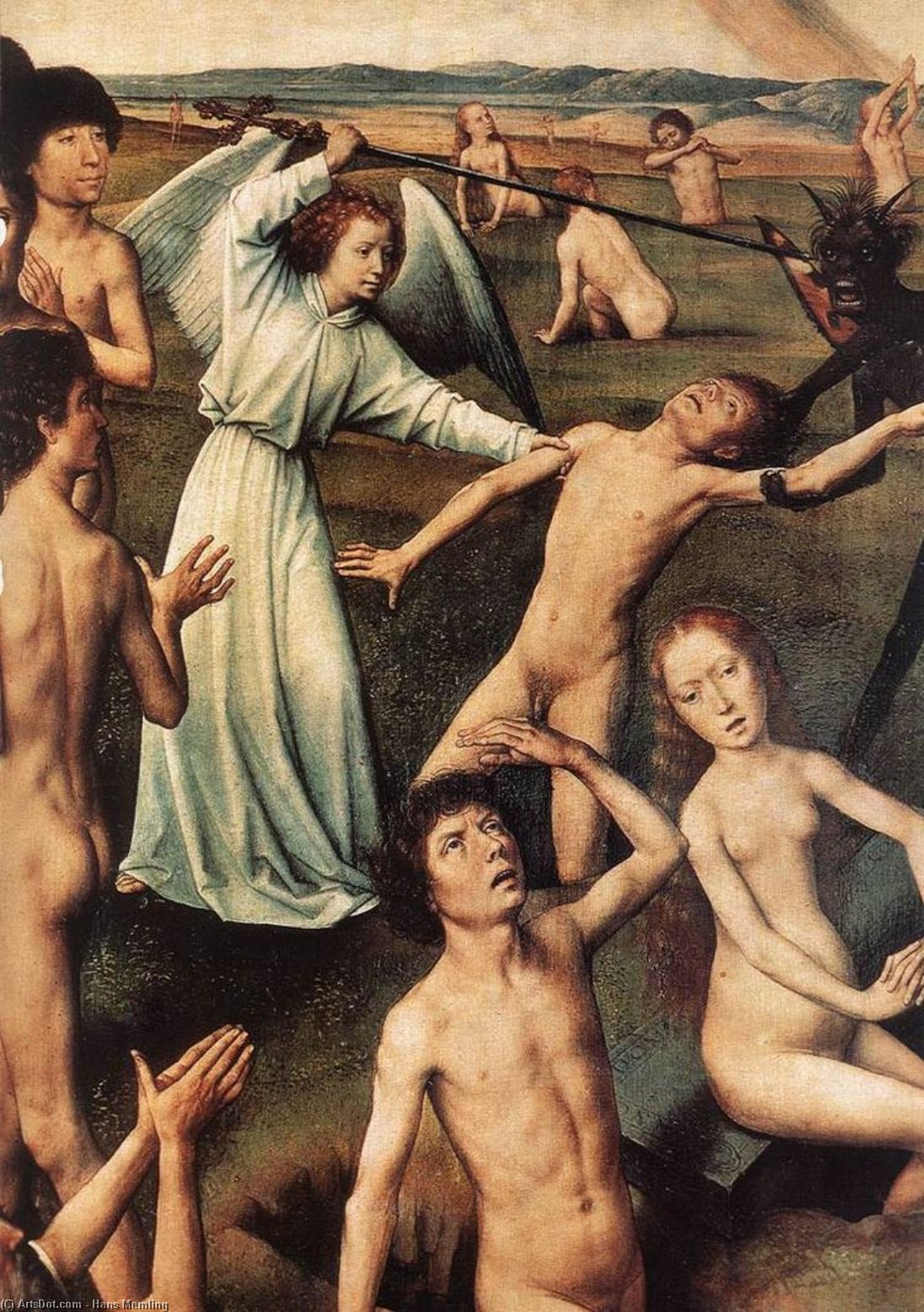
Last Judgment Triptych (detail) (22)


 Read More
Giclée / Art Print
Museum-quality giclée or canvas print with fast production and flexible finish options. ( Buy Hand Made Painting Buy Image)




P118B $10

P118H $10

P118W $10

P438Z $10

P508JH $12

P508YH $12

P805H $10

P805Z $10

P919BZ $10

P919G $10

P919XJ $10

P959ZH $10

P968JZ $12

W106C $8

W218G $10

W218JH $8

W218Y $10

W307PJ $10

W316G $10

W316PJ $8

W316Y $10

W398PJ $8

W4111J $10

W500HY $15

W500JH $15

W692G $12

W849H $8

W940BG $15

W953PJ $8




Pick from our preset sizes that match the artwork's original proportions.

You may enter your own dimensions to fit a specific frame or space. If your selected size does not match the original image's proportions, we will either crop the artwork or extend the image with a mirrored or solid-fill edge. A digital mockup will be sent for your approval before production begins.
Please note that the on-screen preview does not reflect the actual cropping or extension. Only the mockup will accurately show the final composition.
While custom sizes are available, we recommend selecting a dimension from the predefined list to preserve the original proportions.
Worldwide Delivery () in 2 weeks instead of standard 4/5 weeks. (17 August)

Free Worldwide Express Shipping

High-Quality Linen Canvas

Full Shipping Insurance

Customs Tax Refund Guarantee

True Color Matching Guarantee

60-Day Return Policy (Defects Only)

100% Money-Back Guarantee

Bulk Discount Offer
 Glass option is only available in size under 110 CM

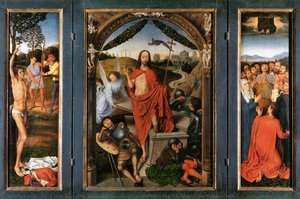
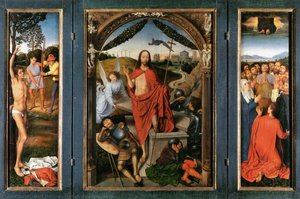
Last Judgment Triptych (detail) (22)
Giclée / Art Print
Reproduction Size
-


Total Price
$ 63
Collectible Description
A Celestial Symphony of Judgment and Grace
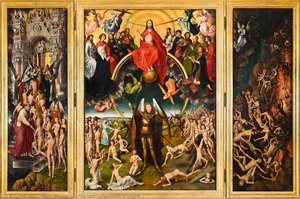
In the quiet, hallowed halls of art history, few works command the soul with such profound intensity as Hans Memling’s Last Judgment Triptych. This monumental masterpiece, emerging from the golden age of Early Netherlandish painting around 1467, is far more than a mere religious icon; it is a breathtaking window into the medieval psyche, where the boundaries between the earthly and the divine dissolve. As one gazes upon this detail, the viewer is immediately swept into a cosmic drama of unparalleled scale. The composition vibrates with a palpable tension, capturing that singular, breathless moment when the scales of justice are poised, and the eternal fate of humanity hangs in the balance. It is a scene where light and shadow do not merely exist but perform a sacred dance, guiding the eye through a landscape of both terrifying torment and celestial serenity.
The artistry of Memling is defined by an almost supernatural precision, a hallmark of the Bruges masters that continues to captivate collectors and connoisseurs today. Utilizing the sophisticated medium of oil on panel, Memling achieved a luminous depth that seems to radiate from within the wood itself. Through the meticulous application of translucent glazes, he layered pigment to create textures so rich they invite the touch—the heavy, sculptural folds of liturgical drapery, the cold gleam of angelic armor, and the soft, ethereal glow surrounding the divine figures. This technique allows for a level of realism that transcends mere imitation; it imbues every element with a spiritual weight, making the swords held by archangels feel dangerously real and the scales of St. Michael appear heavy with the gravity of human sin.
The Interplay of Devotion and Humanism
To understand this triptych is to understand the vibrant pulse of Renaissance Bruges, a city where commerce and piety were inextricably linked. Commissioned during an era of burgeoning humanist thought, the work reflects the sophisticated patronage of figures like Johann IV Fugger and Angelo Tani. Memling masterfully bridges the gap between the rigid, symbolic traditions of the Middle Ages and the new, observational spirit of the Renaissance. While the subject matter is deeply rooted in the apocalyptic visions of the Book of Revelation, the execution is grounded in a profound respect for the natural world. Every detail—from the subtle nuances of light hitting a shield to the individualized expressions of the figures—serves to make the theological abstractness of the Last Judgment feel intimately personal and immediate.
Symbolism flows through the work like a silent prayer. The central axis, anchored by the figure of Christ, acts as the fulcrum of existence, while the surrounding angels serve as both guardians and executors of divine will. The presence of swords, shields, and scales provides a rhythmic visual language of protection and retribution. For the interior designer or art enthusiast, this piece offers a profound emotional resonance; it is a work that demands contemplation. Whether placed in a grand library or a quiet sanctuary, a high-quality reproduction of this detail brings with it an atmosphere of timelessness and intellectual depth. It is not merely a decoration, but an invitation to reflect on the enduring human struggle between our highest aspirations and our deepest vulnerabilities, rendered in a style that remains as breathtaking today as it was in the fifteenth century.
Related Artworks

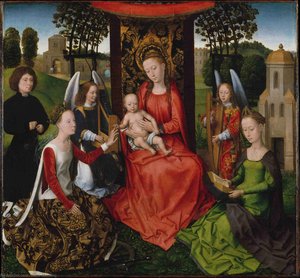
Artist Biography
Hans Memling: The Bruges Master of Detail and Patronage
Hans Memling (c. 1430 – August 11, 1494), born in Seligenstadt, Germany, stands as a pivotal figure in Early Netherlandish painting—a movement characterized by exquisite realism, meticulous observation of nature, and profound spiritual contemplation. Though his formative years were spent primarily within the Rhineland’s artistic milieu, Memling's trajectory ultimately led him to Bruges, Belgium, where he established himself as one of the foremost artists of his time and cultivated a prolific workshop that disseminated his distinctive style across Europe.- Early Life & Apprenticeship: Precise biographical details surrounding Memling’s birth remain elusive, yet scholarly consensus suggests he emerged from Mainz around 1430. His artistic education commenced under the tutelage of Rogier van der Weyden, a titan of Flemish painting whose mastery of oil paint and sculptural modeling profoundly shaped Memling's technique. This apprenticeship instilled in him an unwavering dedication to detail—a hallmark that would define his oeuvre.
- Bruges & The Workshop: By 1465, Memling secured citizenship in Bruges, a burgeoning commercial hub and artistic epicenter. Recognizing the potential for collaborative creativity, he founded a workshop staffed by numerous assistants, fostering an environment of innovation and stylistic consistency. This workshop became renowned for producing stunning reproductions of masterpieces—a testament to Memling’s skill as both artist and pedagogue.
A Style Defined by Precision & Patronage
Memling's artistic style is instantly recognizable: characterized by luminous color palettes, delicately rendered drapery folds, and an astonishing level of anatomical accuracy. He meticulously studied human anatomy—drawing inspiration from classical sculpture—to achieve unparalleled realism in his portraits and religious scenes alike. Unlike many contemporaries who favored expressive brushstrokes, Memling prioritized meticulous observation and painstaking execution, resulting in images imbued with serene beauty and profound spiritual depth.- Religious Commissions: Memling’s reputation soared thanks to lucrative commissions from wealthy patrons—primarily clergymen and aristocratic families—who sought depictions of saints and biblical narratives that resonated with piety and prestige. Notable examples include “The Last Judgment” at St John's Hospital in Bruges, a monumental fresco showcasing Memling’s masterful compositional skills and dramatic use of color.
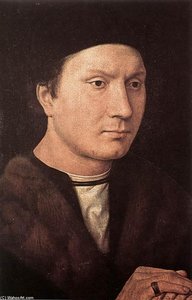
- Portraiture: Memling excelled as a portraitist, capturing the likenesses of prominent figures with remarkable sensitivity and psychological insight. His portraits—such as “Portrait of a Man with an Arrow”—demonstrate his ability to convey character through subtle gestures and facial expressions—a skill that cemented his place among the greatest artists of his era.
Influence & Legacy
Memling’s artistic legacy extends far beyond his own lifetime. His workshop produced a vast array of paintings—many bearing stylistic similarities to his original works—that propagated Memling's distinctive aesthetic across Flanders and beyond. Furthermore, Memling’s meticulous technique served as an inspiration for subsequent generations of artists—particularly Quentin Massys, who established the Antwerp School—solidifying Memling’s position as a cornerstone of Flemish Renaissance art.Rediscovery & Enduring Popularity
Memling's artistic achievements were largely forgotten until the 19th century when scholars rediscovered his paintings and championed his genius. Today, Memling’s works—particularly “The Last Judgment”—continue to captivate audiences worldwide, serving as enduring symbols of artistic excellence and spiritual contemplation. His meticulous attention to detail and profound understanding of human psychology remain remarkably relevant in our contemporary appreciation of art history.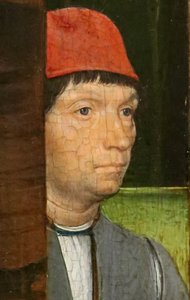
memling, hans
Germany
Quick Facts
- Artistic Movement Or Style: Early Netherlandish Painting
- Artists Or Movements Influenced By This Artist: ['Flemish Primitive']
- Artists Who Influenced This Artist: ['Rogier van der Weyden']
- Date Of Birth: c. 1430
- Date Of Death: 11 august 1494
- Full Name: Hans Memling
- Nationality: German-Flemish
- Notable Artworks:
- St Johns Hospital
- The Last Judgement
- Scenes from the Passion
- Place Of Birth: Seligenstadt, Germany
Related Articles
Illuminating Realism: Early Netherlandish Painting (15th-16th Centuries)
Explore the captivating world of Early Netherlandish painting! Discover Jan van Eyck, Hans Memling & more. Uncover symbolism, techniques & the legacy of these Flemish masters. A comprehensive guide for art enthusiasts.
Illuminating Realism: Early Netherlandish Painting (15th-16th Centuries)
Explore the captivating world of Early Netherlandish painting (15th-16th centuries). Discover Jan van Eyck, Hans Memling & more. Uncover revolutionary techniques and hidden symbolism in this definitive guide.
Early Netherlandish Masters: 10 Paintings That Revolutionized Art & Decor
Journey into the world of Early Netherlandish painting! Explore 10 masterpieces by Jan van Eyck, Rogier van der Weyden & more. Discover stunning detail, symbolism & Renaissance art for your home decor. Find museum-quality reproductions on ArtsDot.com
Early Netherlandish Masters: 10 Paintings That Revolutionized Art & Decor
Journey into the Early Netherlandish Renaissance! Explore 10 iconic paintings by Jan van Eyck, Rogier van der Weyden & more. Discover stunning detail, symbolism, and oil painting techniques. Find museum-quality art reproductions for your home at ArtsDot.com.
Illuminating Realism: A Comprehensive Exploration of the Early Netherlandish Renaissance Movement
Explore the captivating world of Early Netherlandish painting! Discover Jan van Eyck & other Flemish masters, their revolutionary techniques, hidden symbolism, and lasting legacy. A comprehensive guide for art enthusiasts.