 Preview
 Send
Send Share
Share
 Details

 Download
 Similars
 X-Ray
X-Ray Diaporama
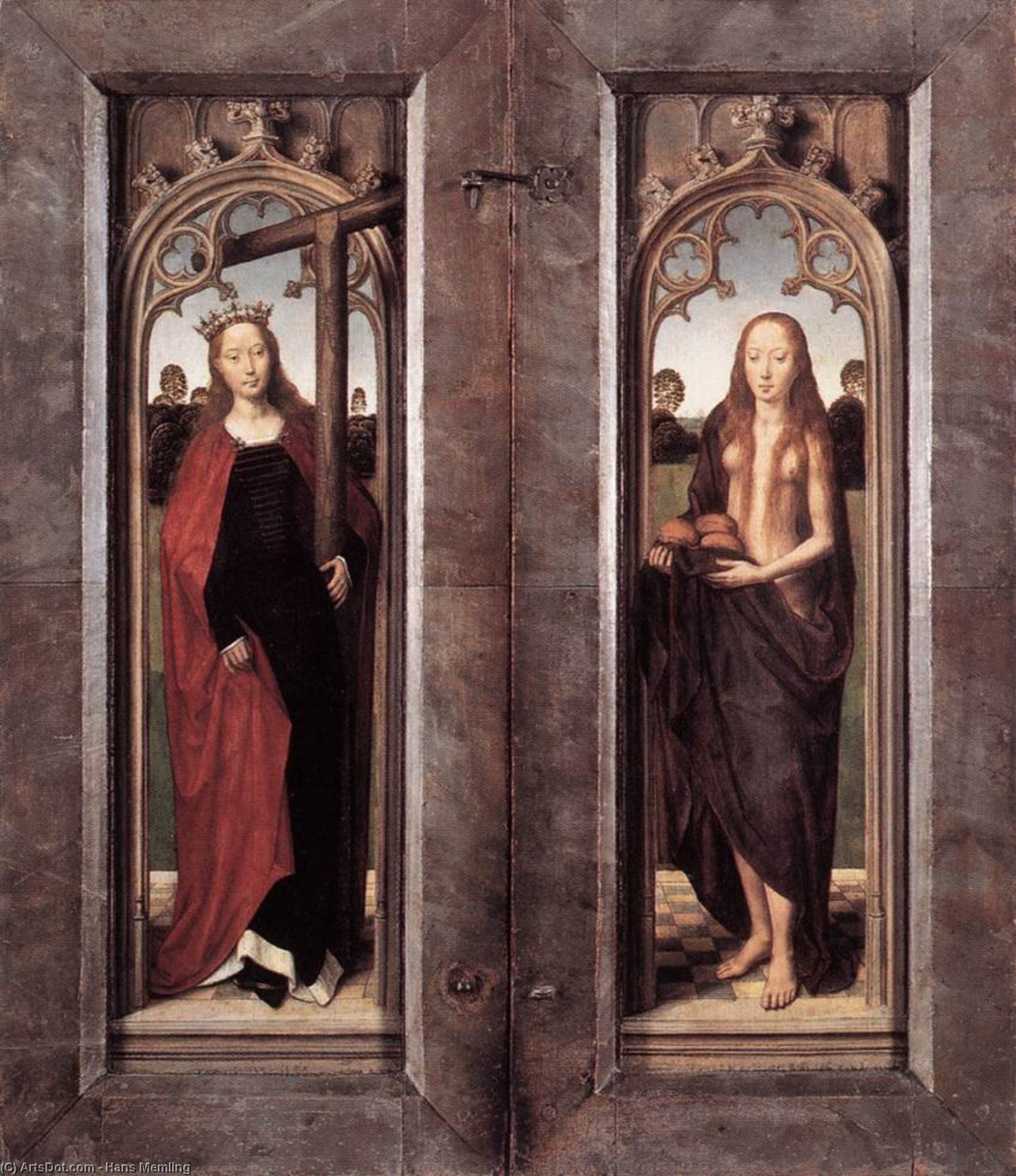
Triptych of Adriaan Reins (closed)
 Oil On Canvas
- WallArt
 1480
1480 45.0 x 15.0 cm
 Memling Museum - Sint Jans Hospital
 Read More
Giclée / Art Print
Museum-quality giclée or canvas print with fast production and flexible finish options. ( Buy Hand Made Painting Buy Image)




P118B $10

P118H $10

P118W $10

P438Z $10

P508JH $12

P508YH $12

P805H $10

P805Z $10

P919BZ $10

P919G $10

P919XJ $10

P959ZH $10

P968JZ $12

W106C $8

W218G $10

W218JH $8

W218Y $10

W307PJ $10

W316G $10

W316PJ $8

W316Y $10

W398PJ $8

W4111J $10

W500HY $15

W500JH $15

W692G $12

W849H $8

W940BG $15

W953PJ $8




Pick from our preset sizes that match the artwork's original proportions.

You may enter your own dimensions to fit a specific frame or space. If your selected size does not match the original image's proportions, we will either crop the artwork or extend the image with a mirrored or solid-fill edge. A digital mockup will be sent for your approval before production begins.
Please note that the on-screen preview does not reflect the actual cropping or extension. Only the mockup will accurately show the final composition.
While custom sizes are available, we recommend selecting a dimension from the predefined list to preserve the original proportions.
Worldwide Delivery () in 2 weeks instead of standard 4/5 weeks. (17 August)

Free Worldwide Express Shipping

High-Quality Linen Canvas

Full Shipping Insurance

Customs Tax Refund Guarantee

True Color Matching Guarantee

60-Day Return Policy (Defects Only)

100% Money-Back Guarantee

Bulk Discount Offer
 Glass option is only available in size under 110 CM

Triptych of Adriaan Reins (closed)
Giclée / Art Print
Reproduction Size
-


Total Price
$ 63
Collectible Description
Triptych of Adriaan Reins – A Window into Bruges’ Soul
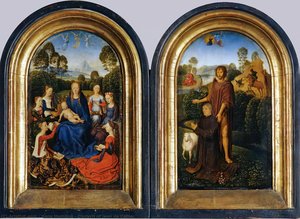
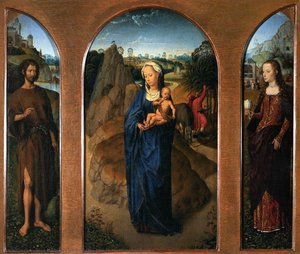
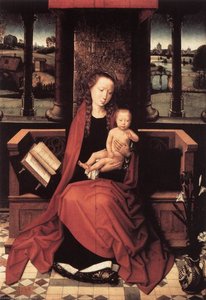
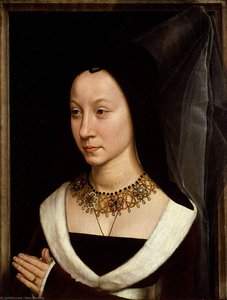
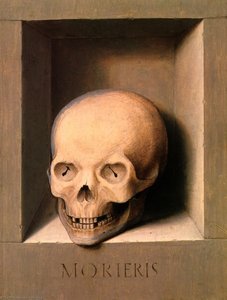
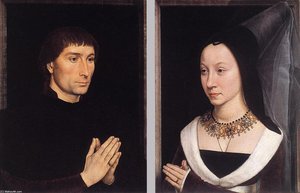
This exquisite hand-painted reproduction captures Hans Memling's masterful depiction of "Triptych of Adriaan Reins," a poignant scene frozen in time from 1480. Measuring 45 x 15 cm, this intimate work offers a compelling glimpse into the artistic sensibilities and spiritual concerns of the Early Netherlandish period. The painting’s subject – two women contemplating each other through a carved doorway – immediately draws the viewer into a world of quiet contemplation and subtle narrative.
- The Figures: The composition centers around two strikingly beautiful women, their long hair cascading down their backs in a testament to the prevailing fashion of the era. One, clad in a vibrant red dress, holds an unseen object – perhaps a token of affection or a symbol of status – adding an element of mystery to her pose. Her counterpart, dressed in somber black, mirrors her gaze, creating a dynamic interplay between the two figures.
- Architectural Detail: Memling’s meticulous attention to detail is immediately apparent in the architectural elements. The doorways themselves are adorned with intricately carved arches, suggesting a connection to religious spaces and highlighting the importance of transition – both physical and spiritual. The backdrop of trees hints at an outdoor setting, grounding the scene within a natural world.
- Technical Brilliance: Executed with Memling’s signature oil-based technique, this reproduction faithfully recreates the artist's remarkable ability to render textures—the smooth fabric of the dresses, the weathered wood of the doors, and the delicate foliage of the trees—with astonishing realism. The subtle gradations of light and shadow contribute significantly to the work’s three-dimensional quality.
Hans Memling: Bridging Rhineland and Bruges
Hans Memling (c. 1430 – August 11, 1494), born in Seligenstadt, Germany, represents a cornerstone of Early Netherlandish painting. His journey began within the artistic traditions of the Rhineland, profoundly influenced by masters like Rogier van der Weyden. However, it was his relocation to Bruges, Belgium, that truly cemented his legacy. Bruges, at the time, was a thriving center for art and commerce, attracting artists from across Europe, and Memling quickly established himself as one of its most celebrated figures.
Memling’s workshop became renowned for producing works characterized by their refined detail, naturalistic depictions, and underlying spiritual depth. He skillfully blended Flemish realism with Italian Renaissance influences, creating a style that was both deeply rooted in tradition and remarkably innovative. His patronage extended beyond simply executing commissions; he actively fostered artistic talent, shaping the course of painting within the Low Countries.
Symbolism and Context: A Window into 15th-Century Bruges
The "Triptych of Adriaan Reins" reflects the prevailing concerns of its time. The presence of two women suggests themes of courtship, companionship, or perhaps a private conversation. Doors frequently symbolized transitions – between life and death, earthly and spiritual realms – reflecting the deeply religious worldview of the period. Bruges itself was a wealthy trading hub, and Memling’s work likely commissioned by a merchant family or a member of the clergy, highlighting the importance of wealth and piety in 15th-century society.
The scene's quiet intimacy invites viewers to contemplate the complexities of human relationships and the search for meaning. The careful composition and meticulous execution demonstrate Memling’s commitment to portraying not just physical appearances but also the inner lives of his subjects, a hallmark of Early Netherlandish painting.
Emotional Impact & Artistic Value
This reproduction offers more than simply a beautiful image; it provides an opportunity to connect with one of the most significant artists of the Renaissance. The work’s serene atmosphere and evocative details invite contemplation and reflection. Perfect for adorning walls in living rooms, studies, or art galleries, this piece will undoubtedly become a focal point, sparking conversation and admiration. Its hand-painted quality ensures an unparalleled level of detail and authenticity, making it a treasured addition to any collection.
Related Artworks
Artist Biography
Hans Memling: The Bruges Master of Detail and Patronage
Hans Memling (c. 1430 – August 11, 1494), born in Seligenstadt, Germany, stands as a pivotal figure in Early Netherlandish painting—a movement characterized by exquisite realism, meticulous observation of nature, and profound spiritual contemplation. Though his formative years were spent primarily within the Rhineland’s artistic milieu, Memling's trajectory ultimately led him to Bruges, Belgium, where he established himself as one of the foremost artists of his time and cultivated a prolific workshop that disseminated his distinctive style across Europe.- Early Life & Apprenticeship: Precise biographical details surrounding Memling’s birth remain elusive, yet scholarly consensus suggests he emerged from Mainz around 1430. His artistic education commenced under the tutelage of Rogier van der Weyden, a titan of Flemish painting whose mastery of oil paint and sculptural modeling profoundly shaped Memling's technique. This apprenticeship instilled in him an unwavering dedication to detail—a hallmark that would define his oeuvre.
- Bruges & The Workshop: By 1465, Memling secured citizenship in Bruges, a burgeoning commercial hub and artistic epicenter. Recognizing the potential for collaborative creativity, he founded a workshop staffed by numerous assistants, fostering an environment of innovation and stylistic consistency. This workshop became renowned for producing stunning reproductions of masterpieces—a testament to Memling’s skill as both artist and pedagogue.
A Style Defined by Precision & Patronage
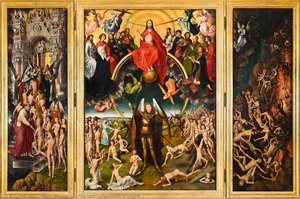
Memling's artistic style is instantly recognizable: characterized by luminous color palettes, delicately rendered drapery folds, and an astonishing level of anatomical accuracy. He meticulously studied human anatomy—drawing inspiration from classical sculpture—to achieve unparalleled realism in his portraits and religious scenes alike. Unlike many contemporaries who favored expressive brushstrokes, Memling prioritized meticulous observation and painstaking execution, resulting in images imbued with serene beauty and profound spiritual depth.- Religious Commissions: Memling’s reputation soared thanks to lucrative commissions from wealthy patrons—primarily clergymen and aristocratic families—who sought depictions of saints and biblical narratives that resonated with piety and prestige. Notable examples include “The Last Judgment” at St John's Hospital in Bruges, a monumental fresco showcasing Memling’s masterful compositional skills and dramatic use of color.
- Portraiture: Memling excelled as a portraitist, capturing the likenesses of prominent figures with remarkable sensitivity and psychological insight. His portraits—such as “Portrait of a Man with an Arrow”—demonstrate his ability to convey character through subtle gestures and facial expressions—a skill that cemented his place among the greatest artists of his era.
Influence & Legacy
Memling’s artistic legacy extends far beyond his own lifetime. His workshop produced a vast array of paintings—many bearing stylistic similarities to his original works—that propagated Memling's distinctive aesthetic across Flanders and beyond. Furthermore, Memling’s meticulous technique served as an inspiration for subsequent generations of artists—particularly Quentin Massys, who established the Antwerp School—solidifying Memling’s position as a cornerstone of Flemish Renaissance art.Rediscovery & Enduring Popularity
Memling's artistic achievements were largely forgotten until the 19th century when scholars rediscovered his paintings and championed his genius. Today, Memling’s works—particularly “The Last Judgment”—continue to captivate audiences worldwide, serving as enduring symbols of artistic excellence and spiritual contemplation. His meticulous attention to detail and profound understanding of human psychology remain remarkably relevant in our contemporary appreciation of art history.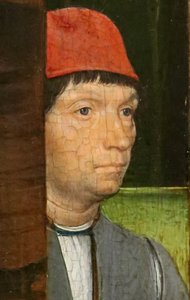
memling, hans
Germany
Quick Facts
- Artistic Movement Or Style: Early Netherlandish Painting
- Artists Or Movements Influenced By This Artist: ['Flemish Primitive']
- Artists Who Influenced This Artist: ['Rogier van der Weyden']
- Date Of Birth: c. 1430
- Date Of Death: 11 august 1494
- Full Name: Hans Memling
- Nationality: German-Flemish
- Notable Artworks:
- St Johns Hospital
- The Last Judgement
- Scenes from the Passion
- Place Of Birth: Seligenstadt, Germany
Related Articles

Giclée Prints: Archival Quality & Aesthetic Nuances for the Discerning Collector
Explore the world of giclée prints with ArtsDot. Learn about archival quality, aesthetic nuances & investment potential. Expert guidance for discerning art collectors seeking museum-quality reproductions and lasting value.

Dark Masterpieces: 10 Iconic Paintings Dominated by Black Tones |
Explore 10 iconic paintings dominated by black tones, from Rembrandt’s chiaroscuro to Goya's dark expressions. Discover the stories behind these masterpieces & find museum-quality art reproductions for your home at .

The Enduring Legacy of Fine Art Prints: Technique, History & Aesthetic Impact
Explore the rich history & techniques of fine art prints. Discover investment potential, assess authenticity, and learn how to preserve your collection with expert guidance. Trusted insights for discerning collectors.

Crimson Threads of Narrative: Exploring Symbolism & Representation in Artworks Featuring the Red Dress
Explore the rich symbolism of the red dress in art history! From ancient power displays to iconic portraits like Cézanne’s 'Madame Cezanne', discover the cultural and artistic significance behind this captivating color. Expert analysis & insights.

Echoes of Time: Exploring the Enduring Appeal & Historical Context of Vintage Art Prints
Explore the captivating world of vintage art prints! Discover their history, collecting tips & enduring appeal. Expert insights on chromolithography and building a legacy collection with ArtsDot.