

 Preview
 Send
Send Share
Share
 Details

 Download
 Similars
 X-Ray
X-Ray Diaporama
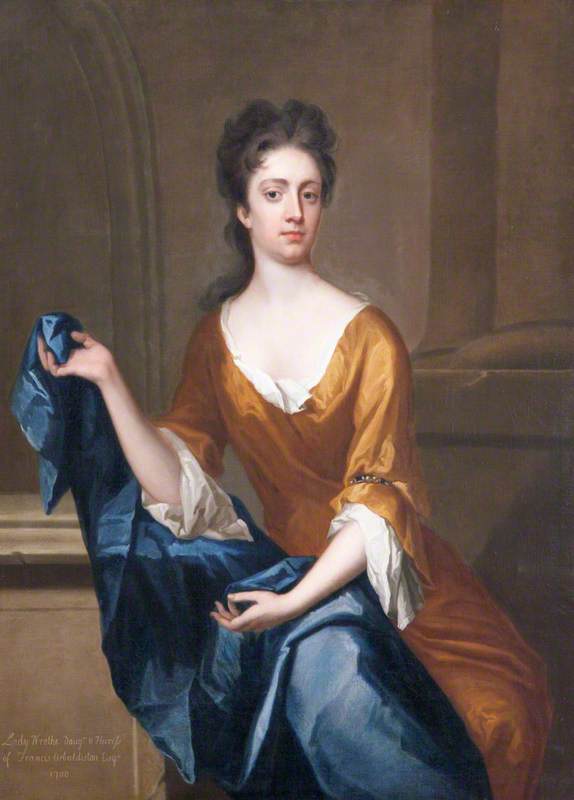
Mary Osbaldeston (1678–before 1721), Lady Wroth
 Oil On Canvas
- WallArt
- Baroque
 1710
1710- Renaissance
 127.0 x 102.0 cm
 National Trust
 Read More
Purchase a high-resolution, enhanced digital image, far superior to the online preview.
Each file is meticulously prepared by our in-house specialists using advanced tools and expert manual retouching. We ensure every image has exceptional clarity, precise color accuracy, and fine detail.
The final file is delivered via email within 72 hours, optimized for immediate use in professional, editorial, and print environments. This is the same quality trusted by top-tier design studios, publishers, and galleries.
Digital Image
Download a high-resolution file for personal display, printing, and creative projects. ( Buy Print Buy Hand Made Painting)
Included in Every Digital Image Order
Expert Digital Delivery, Guaranteed
When you choose ArtsDot.com, you're not just getting an image - you're receiving a professionally enhanced digital artwork, crafted with precision and backed by a satisfaction guarantee. Here's everything that comes with your order, automatically:

Fast Email Delivery
Your high-resolution digital image file will be emailed to you within 72 hours of ordering - ready for immediate use.

AI-Enhanced Digital File
Your artwork is professionally optimized using advanced AI tools and manual editing, ensuring maximum detail, clarity, and color accuracy.

Free Lifetime Re-Delivery
Accidentally deleted or lost your file? No worries - we'll resend it to you anytime, free of charge.

No Import Fees - Ever
Enjoy your artwork instantly with zero customs, duties, or delivery fees - digital downloads are always tax-free.

Color Accuracy Guarantee
We ensure your digital image reflects the original colors as closely as possible using professional tools and color management.

60-Day Satisfaction Guarantee
If you're not satisfied with your digital image, we'll revise it or refund 100% within 60 days - no questions asked.

100% Money-Back Guarantee
Not satisfied? Get a full refund within 60 days of receiving your digital file - no questions asked.

Bulk Order Discounts
Buy 3 images, save 10% - Buy 5, save 15% - Buy 10+, save 20%. Great for creative projects, galleries, and agencies.
Collectible Description
A Portrait of Quiet Power: Mary Osbaldeston, Lady Wroth
Michael Dahl’s “Mary Osbaldeston, Lady Wroth” is more than simply a likeness; it's a carefully constructed tableau of status, grace, and subtle introspection. Painted in the heart of 1710, this oil-on-canvas portrait offers a rare glimpse into the life of a woman navigating the complexities of aristocratic society in England – a woman whose story, though partially obscured by time, resonates with an enduring elegance.
The painting immediately draws the eye to its subject’s poised demeanor. Lady Wroth, seated within what appears to be a richly appointed interior (though details are deliberately softened), possesses an air of quiet contemplation. Her gaze is direct yet not confrontational, inviting the viewer into her world while simultaneously maintaining a dignified reserve. Dahl masterfully captures this duality – a sense of both openness and contained strength. The composition itself reinforces this impression; the pyramidal arrangement of her figure lends stability and balance, mirroring the social standing she represents.
The Baroque Influence: Style and Technique
Dahl’s work firmly resides within the tradition of English Baroque painting, heavily influenced by the grand style cultivated in Italy during the preceding century. The rich color palette – dominated by warm ochres, golds, and deep blues – immediately establishes a luxurious atmosphere. Dahl's brushwork is remarkably detailed, particularly evident in the rendering of her elaborate dress and the intricate folds of her hair. Note the subtle gradations of light and shadow, skillfully employed to create volume and depth; this masterful use of chiaroscuro—a hallmark of Baroque painting—lifts the figure from the background and imbues it with a palpable presence.
The artist’s technique is characterized by a meticulous attention to detail. The fabric of her gown appears almost tactile, its textures rendered with painstaking precision. Similarly, the delicate sheen of her skin and the wisps of hair are captured with remarkable realism. This level of technical skill speaks volumes about Dahl's training and his dedication to portraying his subject with utmost accuracy and beauty.
A Window into a World: Historical Context
To fully appreciate “Mary Osbaldeston, Lady Wroth,” it’s crucial to understand the social context in which it was created. The early 18th century was a period of considerable political and social upheaval in England, following the end of the Stuart dynasty. Portraiture during this era served not only as a means of commemorating individuals but also as a powerful tool for asserting status and demonstrating wealth. Commissioning a portrait was an investment—a visible declaration of one’s position within the hierarchy.
Lady Wroth herself was a significant figure in her own right, a woman of considerable intellect and influence. She was the daughter of Francis Osbaldeston and the wife of Sir Thomas Wroth (later Sir Thomas Wroth of Loughton Hall). Her life was marked by both privilege and hardship – including financial difficulties following her husband’s death. The portrait, therefore, offers a glimpse into the world of an aristocratic woman navigating the challenges and complexities of her time.
Symbolism and Emotional Resonance
Beyond its technical brilliance and historical context, “Mary Osbaldeston, Lady Wroth” is rich in symbolic meaning. The draped cloth that partially obscures her figure can be interpreted as a reference to modesty or perhaps an allusion to the domestic sphere – a subtle nod to her role as wife and hostess. Her hand resting gracefully across her lap suggests composure and self-control.
Ultimately, the painting evokes a sense of quiet dignity and understated elegance. It’s not a flamboyant display of wealth or power but rather a carefully considered portrait that reveals the inner strength and resilience of its subject. “Mary Osbaldeston, Lady Wroth” remains a testament to Michael Dahl's skill as a painter and his ability to capture the essence of human character with remarkable sensitivity.
Related Artworks




Artist Biography
A Life Bridging Worlds: The Artistic Journey of Michael Dahl
Michael Dahl, a name resonating with the elegance and refinement of 18th-century portraiture, was a Swedish artist who indelibly marked his presence on the English art scene. Born in Stockholm around 1659 – sources vary slightly between 1658 and 1659 – Dahl’s trajectory wasn't one confined by national borders but rather defined by an ambitious pursuit of artistic mastery that led him across Europe and ultimately established him as a leading portraitist in England. His story is one of familial sacrifice, rigorous training, religious conversion born of opportunity, and the skillful navigation of diverse cultural landscapes. The dedication of his mother, Catarina Dahl, to nurturing his talent laid the foundation for a career that would see him paint royalty, nobility, and leave behind a legacy of exquisite paintings celebrated for their aristocratic grace.From Swedish Foundations to Italian Influences
Dahl’s artistic education began in Sweden under Martin Hannibal in 1674, who had been brought from Italy by David Klöcker Ehrenstrahl to establish a portrait academy. This initial training provided him with foundational skills before he transitioned to study directly with Ehrenstrahl himself, indicating his promise as a student. However, Dahl’s ambition extended beyond the Swedish capital. In 1682, he embarked on an extensive educational journey across Europe, armed with a passport that allowed travel and a thirst for artistic knowledge. His arrival in London proved pivotal; he came under the tutelage of Robert White, a skilled engraver and painter, assisting him with engraving projects – including a portrait of King Charles XI of Sweden. This experience was crucial, providing practical skills and an introduction to the English art world. Yet, it was his encounter with Godfrey Kneller that truly shaped his understanding of the market. Kneller imparted not only technical expertise but also the pragmatism required to cater to public demand – a stark contrast to Ehrenstrahl’s more court-focused approach. Dahl's travels continued to Paris and then Rome, where a significant turning point occurred.Rome, Conversion, and Patronage
The exiled Queen Christina of Sweden played a transformative role in Dahl’s career during his time in Rome. Recognizing the importance of access to influential circles and papal patronage, Dahl converted to Roman Catholicism at her urging. This decision opened doors that would otherwise have remained closed, allowing him to paint portraits of the Queen herself and present his work to Pope Innocent XI, who bestowed upon him a gold medal – a testament to his burgeoning talent. The conversion, while perhaps strategically motivated, underscores Dahl’s willingness to adapt and navigate complex social and religious landscapes in pursuit of artistic advancement. It was in Rome that he honed his skills further, absorbing the Baroque aesthetic that would become characteristic of his mature work.A Master of English Portraiture
Upon returning to England, Michael Dahl swiftly established himself as a highly sought-after portraitist. He became renowned for his elegant and refined style, capturing not merely the likeness but also the status and personality of his aristocratic sitters. His portraits are distinguished by rich colors, meticulous attention to detail in textures, and an overall sense of grandeur. He painted numerous prominent figures, including Queen Anne, Prince George of Denmark, and a constellation of members from the English nobility. Notable works include striking portraits of Sir William Carew, John Churchill (1st Duke of Marlborough), and Sir Robert Walpole. Perhaps one of his most impressive achievements is the triple portrait of the 2nd Earl of Burlington, the 1st Duke of Kingston upon Hull, and the 3rd Baron Berkeley of Stratton – a masterful display of his skill in group portraiture, showcasing his ability to balance individual characterization with compositional harmony.Legacy and Historical Significance
Dahl’s artistic style was a compelling synthesis of Swedish, Italian, and English influences. He absorbed the technical foundations from Hannibal and Ehrenstrahl, learned market savvy from Kneller, and benefited immensely from the patronage system he encountered in Rome. His work embodies the Baroque aesthetic prevalent during his time but infused with a uniquely refined sensibility. He influenced subsequent generations of portrait painters with his elegant style and technical proficiency, leaving an enduring mark on English portraiture. Beyond his artistic contributions, Michael Dahl’s success as a Swedish artist flourishing primarily in England highlights the international nature of artistic exchange during the Baroque period. He skillfully navigated different cultural contexts, establishing himself as a leading portraitist whose legacy continues to be admired today. His portraits offer invaluable insights into the lives and appearances of the English aristocracy during the early 18th century, serving as both historical documents and enduring works of art.
Michael Dahl
1658 - 1743 , Sweden
Quick Facts
- Artistic Movement Or Style: Baroque
- Artists Or Movements Influenced By This Artist: 18th-century portraiture
- Artists Who Influenced This Artist:
- Martin Hannibal
- David Ehrenstrahl
- Godfrey Kneller
- Date Of Birth: 1659
- Date Of Death: 1743
- Full Name: Michael Dahl
- Nationality: Swedish
- Notable Artworks:
- Portrait of Queen Anne
- Sir William Carew
- John Churchill portrait
- Place Of Birth: Stockholm, Sweden

