 Preview
 Send
Send Share
Share
 Details

 Download
 Similars
 X-Ray
X-Ray Diaporama
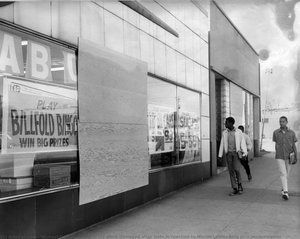
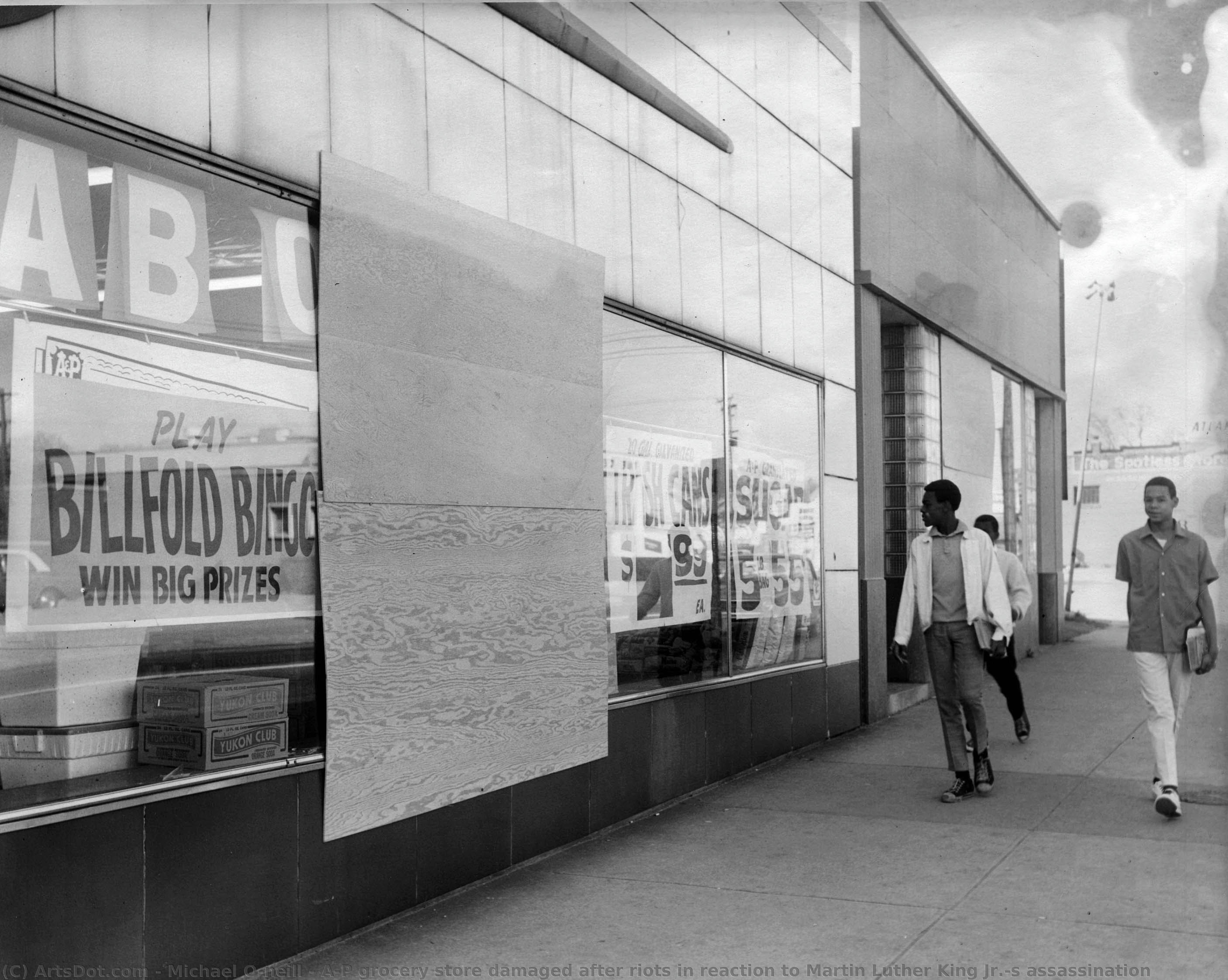
A&P grocery store damaged after riots in reaction to Martin Luther King Jr.’s assassination


 Read More
Giclée / Art Print
Museum-quality giclée or canvas print with fast production and flexible finish options. ( Buy Hand Made Painting Buy Image)




P118B $10

P118H $10

P118W $10

P438Z $10

P508JH $12

P508YH $12

P805H $10

P805Z $10

P919BZ $10

P919G $10

P919XJ $10

P959ZH $10

P968JZ $12

W106C $8

W218G $10

W218JH $8

W218Y $10

W307PJ $10

W316G $10

W316PJ $8

W316Y $10

W398PJ $8

W4111J $10

W500HY $15

W500JH $15

W692G $12

W849H $8

W940BG $15

W953PJ $8




Pick from our preset sizes that match the artwork's original proportions.

You may enter your own dimensions to fit a specific frame or space. If your selected size does not match the original image's proportions, we will either crop the artwork or extend the image with a mirrored or solid-fill edge. A digital mockup will be sent for your approval before production begins.
Please note that the on-screen preview does not reflect the actual cropping or extension. Only the mockup will accurately show the final composition.
While custom sizes are available, we recommend selecting a dimension from the predefined list to preserve the original proportions.
Worldwide Delivery () in 2 weeks instead of standard 4/5 weeks. (23 August)

Free Worldwide Express Shipping

High-Quality Linen Canvas

Full Shipping Insurance

Customs Tax Refund Guarantee

True Color Matching Guarantee

60-Day Return Policy (Defects Only)

100% Money-Back Guarantee

Bulk Discount Offer
 Glass option is only available in size under 110 CM

A&P grocery store damaged after riots in reaction to Martin Luther King Jr.’s assassination
Giclée / Art Print
Reproduction Size
-


Total Price
$ 63
Related Artworks
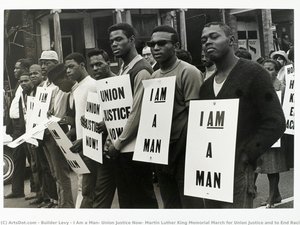
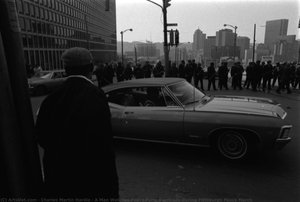
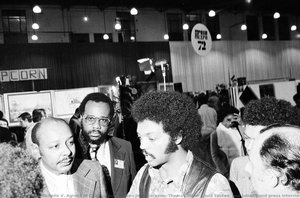
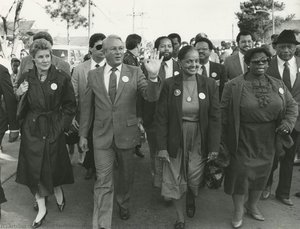
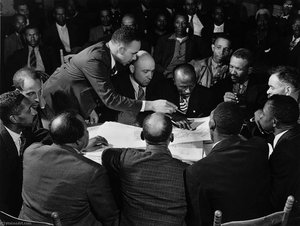
Artist Biography
Michael O’Neill: Witnessing History Through a Lens
Born in Montgomery, Alabama, in 1951, Michael O'Neill’s photographic journey is inextricably linked to pivotal moments of American social and political upheaval. While often recognized for his work as an actor – particularly his recurring role as a seasoned law enforcement officer in the acclaimed television series *The West Wing* – it is through his documentary photography that O’Neill truly commands attention, offering stark and deeply affecting glimpses into events that shaped a nation.
O'Neill’s early life instilled within him a keen awareness of social justice issues. Growing up in Alabama during the Civil Rights era undoubtedly informed his artistic sensibilities. He attended Capitol Heights Junior High and Robert E. Lee High School, graduating in 1969, where he excelled in basketball and was elected class beau – experiences that likely contributed to his ability to connect with diverse subjects and capture authentic human emotion. His time at Auburn University provided further grounding, culminating in a degree in 1974 and membership in the Lambda Chi Alpha fraternity. However, it wasn’t until later in life that O'Neill fully embraced photography as his primary medium, dedicating himself to documenting significant historical events.
The Power of Witnessing: Civil Rights and Beyond
O’Neill’s most enduring work centers on the tumultuous period surrounding Martin Luther King Jr.’s assassination. His photographs from the riots that followed – particularly a haunting image of an A&P grocery store ravaged by fire – are not merely documentation; they are visceral testaments to the raw emotion and profound disruption caused by this tragedy. These images, often rendered in stark black and white, possess a brutal honesty, conveying the chaos and despair with remarkable clarity. The photograph featured on ArtsDot.com’s website, “A&P grocery store damaged after riots in reaction to Martin Luther King Jr.’s assassination,” is a prime example of this – it's not just a picture; it’s an experience.
Beyond the immediate aftermath of King’s death, O’Neill has consistently sought out and documented other moments of social unrest. His work during the 1968 Democratic National Convention in Chicago captured the energy and tension of that era, offering a powerful counterpoint to official narratives. He has also photographed protests against the Vietnam War, documenting the anti-war movement with sensitivity and precision. This dedication to capturing these critical moments speaks to O’Neill's commitment to bearing witness – to preserving history through the lens of his camera.
A Documentary Style Rooted in Observation
O’Neill’s photographic style is characterized by a deliberate restraint, prioritizing observation over manipulation. He avoids staged compositions and intrusive framing, instead allowing events to unfold naturally before his lens. This approach lends his work an undeniable authenticity, creating a sense of immediacy that draws the viewer directly into the scene. His use of black and white photography further enhances this effect, stripping away distractions and focusing attention on form, texture, and emotion.
Influenced by the documentary photographers of the mid-20th century – figures like Robert Frank and Dorothea Lange – O'Neill’s work shares a commitment to social realism. However, he possesses a distinct visual voice, characterized by a quiet intensity and an ability to capture fleeting moments of human connection amidst scenes of chaos. His images are not simply records of events; they are carefully considered narratives, inviting viewers to contemplate the complexities of history and the enduring struggle for justice.
Legacy and Historical Significance
Michael O’Neill's photographs represent more than just historical documentation; they are powerful reminders of a turbulent era in American history. His work serves as a vital resource for understanding the social, political, and emotional landscape of the late 1960s and early 1970s. By consistently documenting moments of protest and unrest, O'Neill has created a significant body of work that continues to resonate with audiences today.
His commitment to capturing these pivotal events underscores his belief in the importance of visual storytelling as a means of preserving memory and fostering dialogue about social justice issues. As an actor known for portraying authority figures, O’Neill's shift to photography offers a fascinating contrast – he moves from embodying established power structures to documenting the struggles of those challenging them. His legacy lies not only in his photographs but also in their ability to provoke reflection and inspire action.

michael o'neill
1951 - , United States of America
Quick Facts
- Artistic Movement Or Style: Documentary photography
- Date Of Birth: May 29, 1951
- Full Name: Michael O'Neill
- Nationality: American
- Notable Artworks: ['A&P grocery store riots']
- Place Of Birth: Montgomery, USA
Related Articles
Beyond the Lens: Photography's Enduring Influence on Modern & Contemporary Art
Explore photography's pivotal role in shaping modern & contemporary art. Discover key movements, influential artists like Stieglitz, and expert collecting advice from ArtsDot.
Pictorialism: A Search for Artistic Photography's Soul – Aesthetics, Techniques & Legacy
Explore the captivating world of Pictorialism – a pivotal movement that transformed photography into fine art. Discover key artists like Stieglitz & Käsebier, techniques, and collecting tips from experts.
Documentary Photography's Defining Moments: 10 Masterpieces for Your Home |
Explore 10 defining documentary photography masterpieces – from Dorothea Lange to Robert Capa. Discover powerful stories, iconic images & timeless art for your home. Museum-quality prints at .

Monochrome Visions: Exploring the Aesthetic & Historical Significance of Black & White Photography
Explore the rich history & artistic power of black and white photography. From early techniques to iconic masters like Ansel Adams, discover why monochrome continues to captivate art lovers today. Expert insights for collectors.
Witnessing History Through Lens & Light: Documentary Photography's Enduring Legacy
Explore the powerful history of documentary photography – from its origins to contemporary masters like Gordon Parks & W. Eugene Smith. Discover how this art form shapes our understanding of society and witness pivotal moments in time.