

 Preview
 Send
Send Share
Share
 Details

 Download
 Similars
 X-Ray
X-Ray Diaporama
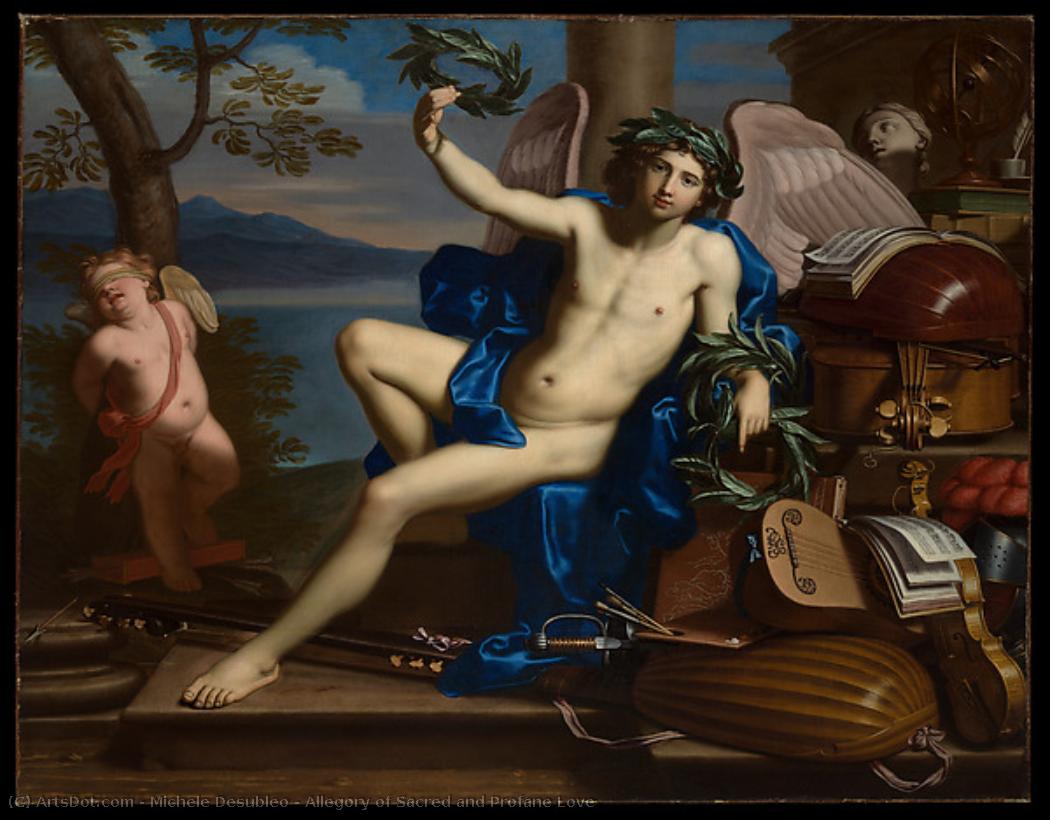
Allegory of Sacred and Profane Love
 Oil On Canvas
- WallArt
- Baroque Art
 1665
1665 150.0 x 194.0 cm
 Metropolitan Museum of Art
 Read More
Purchase a high-resolution, enhanced digital image, far superior to the online preview.
Each file is meticulously prepared by our in-house specialists using advanced tools and expert manual retouching. We ensure every image has exceptional clarity, precise color accuracy, and fine detail.
The final file is delivered via email within 72 hours, optimized for immediate use in professional, editorial, and print environments. This is the same quality trusted by top-tier design studios, publishers, and galleries.
Digital Image
Download a high-resolution file for personal display, printing, and creative projects. ( Buy Print Buy Hand Made Painting)
Included in Every Digital Image Order
Expert Digital Delivery, Guaranteed
When you choose ArtsDot.com, you're not just getting an image - you're receiving a professionally enhanced digital artwork, crafted with precision and backed by a satisfaction guarantee. Here's everything that comes with your order, automatically:

Fast Email Delivery
Your high-resolution digital image file will be emailed to you within 72 hours of ordering - ready for immediate use.

AI-Enhanced Digital File
Your artwork is professionally optimized using advanced AI tools and manual editing, ensuring maximum detail, clarity, and color accuracy.

Free Lifetime Re-Delivery
Accidentally deleted or lost your file? No worries - we'll resend it to you anytime, free of charge.

No Import Fees - Ever
Enjoy your artwork instantly with zero customs, duties, or delivery fees - digital downloads are always tax-free.

Color Accuracy Guarantee
We ensure your digital image reflects the original colors as closely as possible using professional tools and color management.

60-Day Satisfaction Guarantee
If you're not satisfied with your digital image, we'll revise it or refund 100% within 60 days - no questions asked.

100% Money-Back Guarantee
Not satisfied? Get a full refund within 60 days of receiving your digital file - no questions asked.

Bulk Order Discounts
Buy 3 images, save 10% - Buy 5, save 15% - Buy 10+, save 20%. Great for creative projects, galleries, and agencies.
Collectible Description
Allegory of Sacred and Profane Love – A Renaissance Dialogue Between Virtue and Pleasure
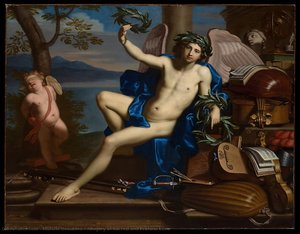
Michele Desubleo’s “Allegory of Sacred and Profane Love,” completed in 1665–75, stands as a testament to the flourishing Baroque aesthetic within Italy—specifically Genoa—and represents a masterful synthesis of artistic influences. Trained initially alongside Nicolas Régnier in Flanders under Abraham Janssens van Nuyssen, Desubleo swiftly absorbed Reni’s sensual approach to human anatomy and drapery, mirroring his celebrated “Sacred and Profane Love” housed at Palazzo Spinola. However, unlike many contemporaries focused solely on idealized beauty, Desubleo elevates this sensual element with a meticulously crafted still life—a deliberate counterpoint designed to resonate with the humanist ideals prevalent during his time.Composition and Technique: A Harmonious Balance
The painting’s visual dynamism is immediately apparent. Cupid, rendered in exquisite detail by Desubleo, occupies center stage on a simple bench amidst a mountainous backdrop – a compositional choice that emphasizes both intimacy and grandeur simultaneously. His outstretched hand cradles a blossoming flower—a traditional symbol of beauty and fertility—representing the allure of divine love. Yet, surrounding him is an array of objects imbued with significance: musical instruments (violins, cellos), painter’s palette fragments, sculptural elements, and armor pieces. These aren't merely decorative additions; they speak to a broader philosophical argument – the careful balance between earthly desires and moral virtue championed by Renaissance humanists. Desubleo employs oil paint on canvas with remarkable precision, layering textures and hues to achieve an astonishing level of realism while maintaining a luminous quality characteristic of Reni’s style. The artist's meticulous attention to detail is palpable throughout the composition.Symbolism: Decoding Layers of Meaning
The inclusion of musical instruments underscores the importance of intellect and artistic expression in achieving spiritual enlightenment—a core tenet of humanist thought. Similarly, the sculptor’s fragments symbolize contemplation and striving for perfection, mirroring the pursuit of moral excellence. The armor represents defense against temptation and embodies fortitude – virtues essential for navigating the complexities of human experience. Cupid's flower symbolizes divine love, while simultaneously hinting at the ephemeral nature of earthly beauty. These symbols intertwine to create a complex tapestry of ideas that invites viewers to contemplate the relationship between passion and reason.Historical Context: Renaissance Humanism Meets Baroque Sensuality
“Allegory of Sacred and Profane Love” emerged during a period marked by intellectual ferment—the High Renaissance’s legacy continuing to inspire artists like Desubleo as they navigated the stylistic conventions of the Baroque era. Guido Reni's influence is undeniable, fostering an aesthetic that prioritized emotional intensity alongside anatomical accuracy. The painting reflects the humanist preoccupation with reconciling faith and reason – a dialogue central to the cultural landscape of Genoa and Italy during Desubleo’s lifetime. It serves as a poignant reminder that true beauty resides not merely in sensual pleasure but also in moral virtue—a timeless message conveyed through masterful artistic execution.Emotional Impact: A Momentary Pause for Reflection
Ultimately, “Allegory of Sacred and Profane Love” compels contemplation. The serene Cupid juxtaposed with the assertive instruments and armor invites viewers to consider the multifaceted nature of human existence. Desubleo’s achievement is not simply a depiction of mythological figures; it's an invitation to engage in a profound philosophical inquiry—a beautifully rendered meditation on the pursuit of harmony between passion and virtue that continues to resonate with audiences today.Related Artworks





Artist Biography
The Flemish Visionary of the Italian Baroque
In the grand, dramatic tapestry of the seventeenth century, few threads are as intriguing as that of Michele Desubleo. A painter who bridged the gap between the meticulous traditions of Flanders and the emotive splendor of Italy, Desubleo embodied the very essence of the Baroque era. Born around 1601 or 1602 in Maubeuge, within the Spanish Netherlands, his early life was rooted in a landscape of profound artistic discipline. It is believed that he honed his foundational skills in the workshop of Abraham Janssens van Nuyssen, working alongside his stepbrother, the celebrated Nicolas Régnier. This Flemish upbringing provided him with a rigorous command of texture, light, and anatomical precision—tools that would later allow him to navigate the complex emotional landscapes of the Italian masters.
The trajectory of Desublean art changed irrevocably when he migrated toward the sun-drenched centers of Italian creativity. Arriving in Rome around 1625, he found himself immersed in a city where the echoes of the Renaissance were being transformed into the theatrical intensity of the Baroque. It was here that his talent met its most profound catalyst: the workshop of Guido Reni. Under Reni’s tutelage, Desubleo moved beyond mere technical proficiency to embrace an idealized beauty and a sophisticated use of chiaroscuro. This period of intense study allowed him to synthesize the robust, tactile qualities of his Northern heritage with the graceful, lyrical compositions characteristic of the Bolognese school.
A Journey Through Light and Devotion
As Desubleo’s career progressed, his presence moved across the Italian peninsula like a shadow cast by flickering candlelight, leaving behind works in Venice, Florence, Bologna, and Genoa. His ability to adapt to different regional aesthetics made him a versatile force in the art market of the 1600s. In the Veneto region, he spent much of the 1650s, while his later years saw him establishing a significant legacy in Parma. His work often functioned as a bridge between the sacred and the secular, capable of conveying both the divine ecstasy of a saint and the complex allegories of human virtue.
The technical mastery evident in his most famous compositions reveals a deep understanding of dramatic tension. Consider the following hallmarks of his mature style:
- Dramatic Chiaroscuro: The masterful use of extreme light and shadow to sculpt figures and create a sense of three-dimensional presence.
- Anatomical Grace: A lingering influence from Reni, seen in the fluid, muscular, yet idealized depiction of the human form.
- Narrative Intensity: An ability to capture pivotal biblical or mythological moments, such as the triumph in David with the Head of Goliath, through expressive gestures and rich textures.
- Allegorical Depth: The capacity to weave complex philosophical themes into single canvases, most notably seen in his explorations of Sacred and Profane Love.
Legacy and Historical Significance
Though history occasionally obscures the names of those who worked within the shadows of giants like Reni or Régnier, Desubleo’s contribution remains vital to our understanding of the Baroque's international character. He was not merely a student of Italian trends but an active participant in their evolution, bringing a Northern sensibility to the Mediterranean palette. His later works in Parma, including monumental altarpieces for the cathedral, stand as testaments to his enduring devotion to religious iconography and his ability to inspire awe in the faithful.
When he passed away in Parma in 1676, he left behind a body of work that serves as a historical record of an era defined by movement, emotion, and light. To study Michele Desubleo is to witness the beautiful collision of two worlds—the disciplined precision of Flanders meeting the soaring, dramatic spirit of Italy—resulting in a visual language that continues to captivate the modern eye.
michele desubleo
1602 - 1676
Quick Facts
- Artistic Movement Or Style: Baroque
- Artists Or Movements Influenced By This Artist: ['Renaissance']
- Artists Who Influenced This Artist: ['Guido Reni']
- Date Of Birth: 1602
- Date Of Death: 1676
- Full Name: Michele Desubleo
- Nationality: Flemish
- Notable Artworks:
- David with Goliath
- Allegory of Sacred and Profane Love
- Place Of Birth: Maubege

