 Preview
 Send
Send Share
Share
 Details

 Download
 Similars
 X-Ray
X-Ray Diaporama
Allegory of Sacred and Profane Love
 Oil On Canvas
- WallArt
- Baroque Art
 1665
1665 150.0 x 194.0 cm
 Metropolitan Museum of Art
 Read More
Hand Made Oil Reproduction
Hand-painted oil on canvas in your size and frame, made to order by our artists. ( Buy Print Buy Image)




P118B $10

P118H $10

P118W $10

P438Z $10

P508JH $12

P508YH $12

P805H $10

P805Z $10

P919BZ $10

P919G $10

P919XJ $10

P959ZH $10

P968JZ $12

W106C $8

W218G $10

W218JH $8

W218Y $10

W307PJ $10

W316G $10

W316PJ $8

W316Y $10

W398PJ $8

W4111J $10

W500HY $15

W500JH $15

W692G $12

W849H $8

W940BG $15

W953PJ $8




Pick from our preset sizes that match the artwork's original proportions.

You may enter your own dimensions to fit a specific frame or space. If your selected size does not match the original image's proportions, we will either crop the artwork or extend the painting with additional hand-painted elements. A digital mockup will be sent for your approval before production begins.
Please note that the on-screen preview does not reflect the actual cropping or extension. Only the mockup will accurately show the final composition.
While custom sizes are available, we recommend selecting a dimension from the predefined list to preserve the original proportions.
After order, ArtsDot.com team will email client for instructions and provide a mockup preview
Worldwide Delivery () in 3/4 weeks instead of standard 5 weeks. (16 August). No compromise on quality.

Free Worldwide Express Shipping

High-Quality Linen Canvas

Full Shipping Insurance

Customs Tax Refund Guarantee

True Color Matching Guarantee

60-Day Return Policy (Defects Only)

100% Money-Back Guarantee

Bulk Discount Offer
 Glass option is only available in size under 110 CM

Allegory of Sacred and Profane Love
Reproduction Medium
Reproduction Size
-


Total Price
$ 263
Artwork Description
Allegory of Sacred and Profane Love – A Renaissance Dialogue Between Virtue and Pleasure
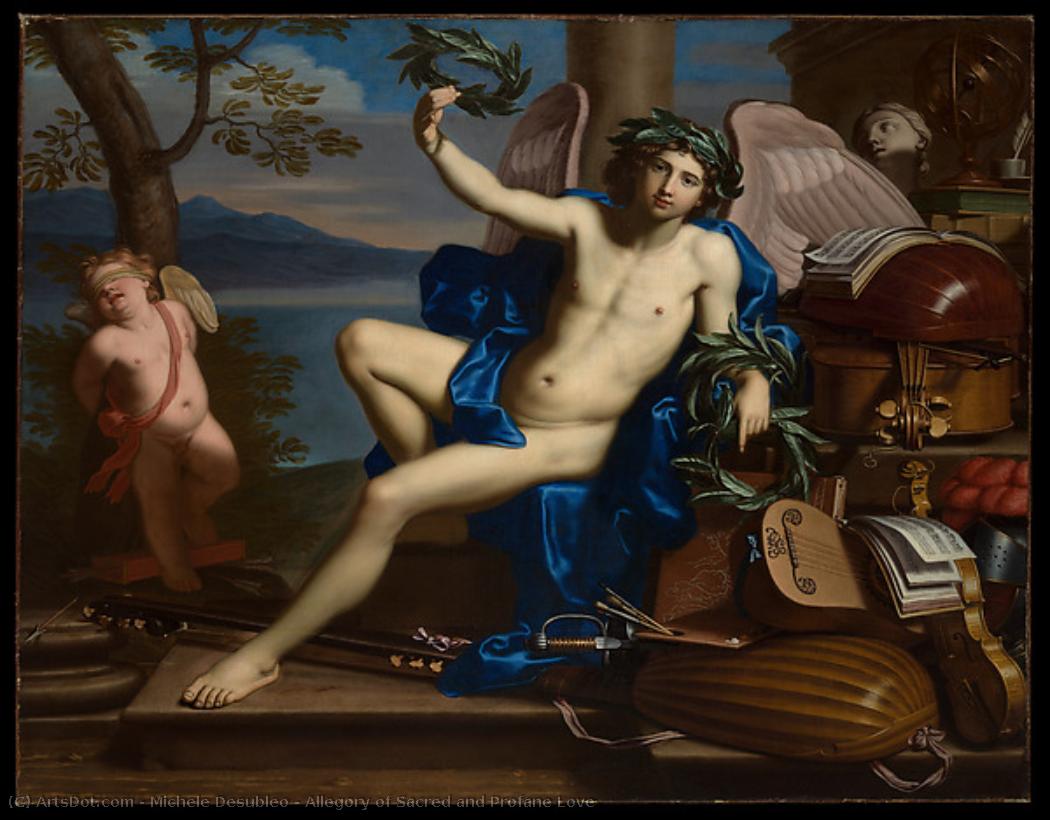
Michele Desubleo’s “Allegory of Sacred and Profane Love,” completed in 1665–75, stands as a testament to the flourishing Baroque aesthetic within Italy—specifically Genoa—and represents a masterful synthesis of artistic influences. Trained initially alongside Nicolas Régnier in Flanders under Abraham Janssens van Nuyssen, Desubleo swiftly absorbed Reni’s sensual approach to human anatomy and drapery, mirroring his celebrated “Sacred and Profane Love” housed at Palazzo Spinola. However, unlike many contemporaries focused solely on idealized beauty, Desubleo elevates this sensual element with a meticulously crafted still life—a deliberate counterpoint designed to resonate with the humanist ideals prevalent during his time.Composition and Technique: A Harmonious Balance
The painting’s visual dynamism is immediately apparent. Cupid, rendered in exquisite detail by Desubleo, occupies center stage on a simple bench amidst a mountainous backdrop – a compositional choice that emphasizes both intimacy and grandeur simultaneously. His outstretched hand cradles a blossoming flower—a traditional symbol of beauty and fertility—representing the allure of divine love. Yet, surrounding him is an array of objects imbued with significance: musical instruments (violins, cellos), painter’s palette fragments, sculptural elements, and armor pieces. These aren't merely decorative additions; they speak to a broader philosophical argument – the careful balance between earthly desires and moral virtue championed by Renaissance humanists. Desubleo employs oil paint on canvas with remarkable precision, layering textures and hues to achieve an astonishing level of realism while maintaining a luminous quality characteristic of Reni’s style. The artist's meticulous attention to detail is palpable throughout the composition.Symbolism: Decoding Layers of Meaning
The inclusion of musical instruments underscores the importance of intellect and artistic expression in achieving spiritual enlightenment—a core tenet of humanist thought. Similarly, the sculptor’s fragments symbolize contemplation and striving for perfection, mirroring the pursuit of moral excellence. The armor represents defense against temptation and embodies fortitude – virtues essential for navigating the complexities of human experience. Cupid's flower symbolizes divine love, while simultaneously hinting at the ephemeral nature of earthly beauty. These symbols intertwine to create a complex tapestry of ideas that invites viewers to contemplate the relationship between passion and reason.Historical Context: Renaissance Humanism Meets Baroque Sensuality
“Allegory of Sacred and Profane Love” emerged during a period marked by intellectual ferment—the High Renaissance’s legacy continuing to inspire artists like Desubleo as they navigated the stylistic conventions of the Baroque era. Guido Reni's influence is undeniable, fostering an aesthetic that prioritized emotional intensity alongside anatomical accuracy. The painting reflects the humanist preoccupation with reconciling faith and reason – a dialogue central to the cultural landscape of Genoa and Italy during Desubleo’s lifetime. It serves as a poignant reminder that true beauty resides not merely in sensual pleasure but also in moral virtue—a timeless message conveyed through masterful artistic execution.Emotional Impact: A Momentary Pause for Reflection
Ultimately, “Allegory of Sacred and Profane Love” compels contemplation. The serene Cupid juxtaposed with the assertive instruments and armor invites viewers to consider the multifaceted nature of human existence. Desubleo’s achievement is not simply a depiction of mythological figures; it's an invitation to engage in a profound philosophical inquiry—a beautifully rendered meditation on the pursuit of harmony between passion and virtue that continues to resonate with audiences today.Related Artworks
Artist Biography
Michele Desubleo: A Flemish Baroque Visionary
Michele Desubleo (1602–1676) stands as a pivotal figure in the artistic landscape of 17th-century Italy, embodying the grandeur and dramatic intensity characteristic of the Baroque period. Born in Maubege, then part of the Spanish Netherlands—modern-day Belgium—Desubleo’s formative years were spent honing his craft within the vibrant workshop of Abraham Janssens van Nuyssen in Flanders, alongside his stepbrother Nicolas Renier. This collaborative environment instilled a foundational understanding of Flemish artistic traditions and techniques that would profoundly shape his subsequent endeavors. Recognizing the burgeoning artistic dynamism of Rome, Desubleo relocated to the city around 1625, immersing himself in the epicenter of Baroque creativity and establishing connections with influential artists like Guido Reni.Early Influences and Artistic Training
Guido Reni’s workshop served as a crucible for Desubleo's artistic development, fostering an appreciation for idealized beauty and masterful composition—principles deeply rooted in Renaissance ideals yet skillfully adapted to the Baroque aesthetic. The influence of Reni extended beyond mere stylistic imitation; it instilled a belief in conveying profound emotion through carefully crafted imagery. Collaborations with fellow artists such as Simone Cantarini and Boulanger solidified Desubleo’s position within the Bolognese artistic milieu, where he absorbed the expressive fervor of Mannerism while simultaneously embracing Baroque innovations. This period witnessed him mastering techniques like chiaroscuro—the dramatic interplay of light and shadow—a hallmark of Baroque painting that would become a defining feature of his oeuvre.Notable Works and Artistic Style
Desubleo’s artistic output spanned across Italy, leaving an indelible mark on Venetian churches and Florentine palaces alike. His monumental altarpiece depicting the Madonna and Saints for Parma Cathedral exemplifies his mastery of scale and emotional depth—a testament to his ability to capture spiritual grandeur. Equally impressive is his canvas portraying Sacred Love triumphing over Profane Love, a complex allegorical depiction reflecting humanist ideals prevalent during his time. However, Desubleo’s most celebrated achievement remains “David with Goliath,” completed in 1630. This dramatic portrayal of biblical heroism showcases meticulous anatomical detail and masterful use of chiaroscuro to convey the palpable tension between youthful courage and formidable opposition—a masterpiece that encapsulates the Baroque fascination for dynamism and psychological realism.Legacy and Historical Significance
Michele Desubleo’s contribution to Baroque art extends beyond individual paintings; he represents a crucial link between Renaissance humanism and Baroque expressive fervor. His work embodies the spirit of the era, prioritizing emotional impact alongside technical virtuosity—a legacy that continues to inspire artists today. He stands as a testament to the enduring power of artistic innovation and the ability to translate philosophical concepts into visually arresting narratives. Desubleo’s influence can be discerned in subsequent generations of painters who embraced his stylistic approach and pursued similar goals of conveying profound emotion through meticulously crafted imagery, securing his place as one of the foremost Baroque artists of his time.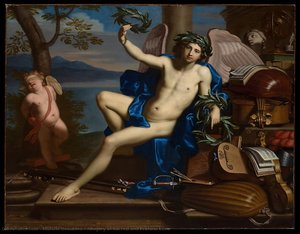
michele desubleo
1602 - 1676
Quick Facts
- Artistic Movement Or Style: Baroque
- Artists Or Movements Influenced By This Artist: ['Renaissance']
- Artists Who Influenced This Artist: ['Guido Reni']
- Date Of Birth: 1602
- Date Of Death: 1676
- Full Name: Michele Desubleo
- Nationality: Flemish
- Notable Artworks:
- David with Goliath
- Allegory of Sacred and Profane Love
- Place Of Birth: Maubege
Related Articles

Baroque Drama: Bringing Opulence & Emotion into Contemporary Interiors
Explore the opulent world of Baroque interior design! Discover key elements, modern applications & how to bring dramatic elegance into your home with 's authentic reproductions.

The Visceral Stage: Exploring Dramatic Narratives & Emotional Intensity in Baroque Art
Explore the dramatic world of Baroque art! Discover iconic masters like Caravaggio & Rembrandt, their techniques, and the movement's lasting impact. Expert insights for collectors & enthusiasts at ArtsDot.

The Dramatic Flourish: Exploring the Baroque Movement's Enduring Legacy in Art History
Explore the dramatic world of Baroque art! Discover iconic artists like Caravaggio & Rubens, defining techniques, and its lasting impact on art history. Expert insights for collectors & enthusiasts at ArtsDot.

Baroque Masterpieces: 10 Paintings That Defined an Era |
Journey through the drama & grandeur of Baroque art! Explore 10 masterpieces by Caravaggio, Rembrandt, Rubens & more. Discover stunning oil paintings, rich colors & timeless stories. Find museum-quality reproductions at .
Baroque Classicism: Reconciling Drama & Order in 17th-Century Art
Explore the captivating world of Baroque Classicism! Discover its history, key artists like Caravaggio & Rubens, and defining characteristics. Expert insights & high-quality reproductions at ArtsDot.