 Preview
 Send
Send Share
Share
 Details

 Download
 Similars
 X-Ray
X-Ray Diaporama
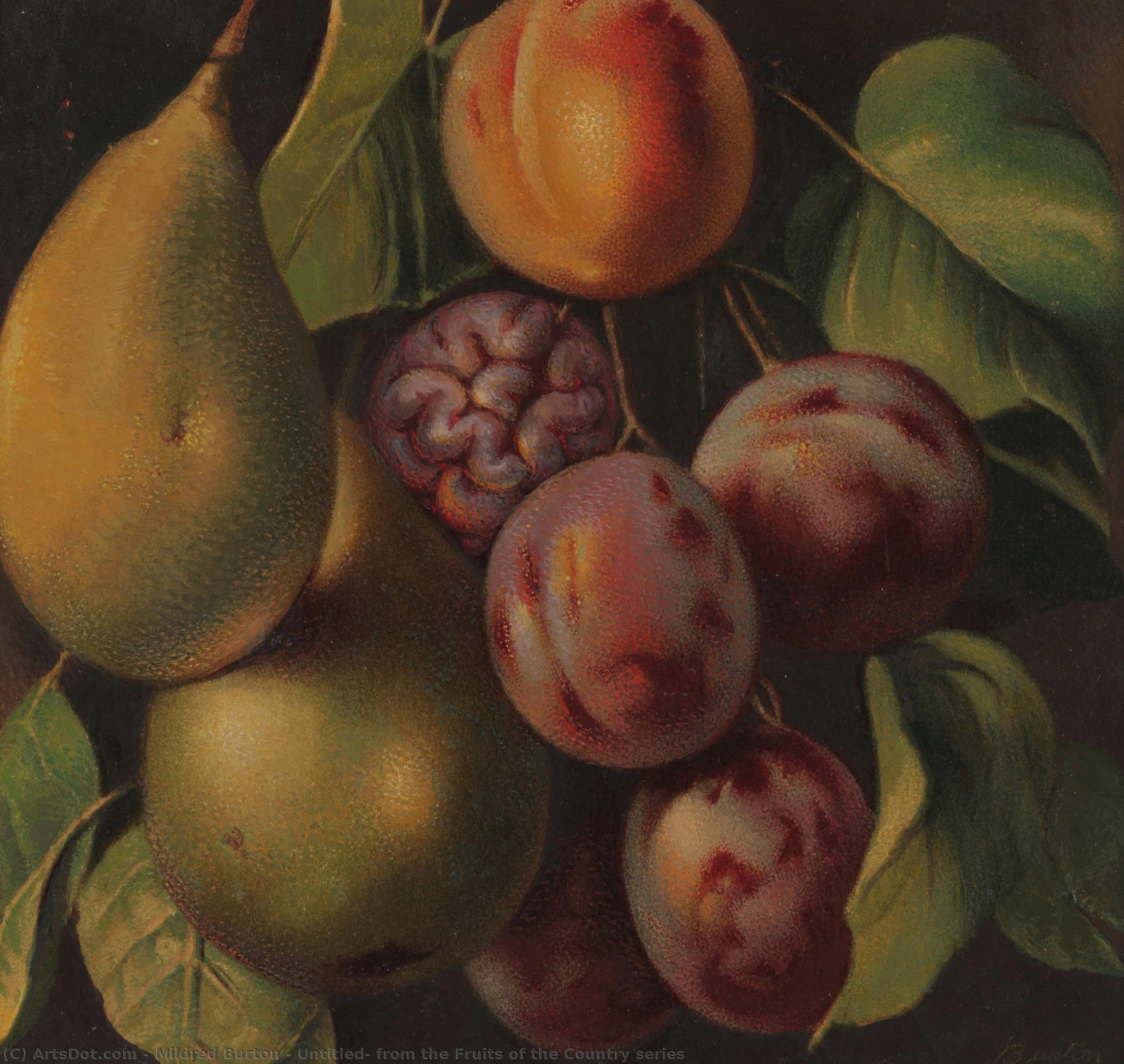
Untitled, from the Fruits of the Country series
 Contemporary Realism
 1975
1975 19.0 x 20.0 cm
 Read More
Giclée / Art Print
Museum-quality giclée or canvas print with fast production and flexible finish options. ( Buy Hand Made Painting Buy Image)




































Pick from our preset sizes that match the artwork's original proportions.

You may enter your own dimensions to fit a specific frame or space. If your selected size does not match the original image's proportions, we will either crop the artwork or extend the image with a mirrored or solid-fill edge. A digital mockup will be sent for your approval before production begins.
Please note that the on-screen preview does not reflect the actual cropping or extension. Only the mockup will accurately show the final composition.
While custom sizes are available, we recommend selecting a dimension from the predefined list to preserve the original proportions.
Worldwide Delivery () in 2 weeks instead of standard 4/5 weeks. (6 September)

Free Worldwide Express Shipping

High-Quality Linen Canvas

Full Shipping Insurance

Customs Tax Refund Guarantee

True Color Matching Guarantee

60-Day Return Policy (Defects Only)

100% Money-Back Guarantee

Bulk Discount Offer
 Glass option is only available in size under 110 CM

Untitled, from the Fruits of the Country series
Giclée / Art Print
Reproduction Size
-


Total Price
$ 63
Related Artworks
Artist Biography
Arthur Hughes (1832–1915): A Pre-Raphaelite Visionary
Born in London amidst the burgeoning artistic landscape of 1832, Arthur Hughes was a figure whose career spanned decades and witnessed profound shifts within the British art world. Initially trained at Archbishop Tenison’s Grammar School and later at the prestigious School of Design, Somerset House, his early work demonstrated technical proficiency under the tutelage of Alfred Stevens. However, it wasn't until 1847, upon winning an art studentship at the Royal Academy Schools, that Hughes truly began to forge a distinctive path – one deeply intertwined with the burgeoning Pre-Raphaelite Brotherhood.
Hughes’s artistic journey took a pivotal turn in 1850 when he encountered the Pre-Raphaelite movement. Inspired by the group's emphasis on truth to nature, detailed observation, and a rejection of academic conventions, he embraced their ideals, finding kinship with figures like William Holman Hunt, D.G. Rossetti, and Ford Madox Brown. This conversion is reflected in his most celebrated works from the 1850s – pieces such as *Ophelia* (Manchester City Art Gallery) and *April Love*, a tender depiction of young lovers amidst a blossoming orchard (Tate Gallery). These paintings showcase a remarkable ability to capture emotion and atmosphere, hallmarks of the Pre-Raphaelite style.
Beyond his painting, Hughes established himself as a prolific illustrator, a profession that consumed much of his later career. His work for publications like *Thomas Hughes’s Household Tales*, *George Macdonald’s Fairy Tales*, and *Christina Rossetti’s Poems* demonstrated his versatility and ability to translate literary narratives into visually compelling images. He skillfully employed vibrant colors and intricate details, often drawing inspiration from medieval art and folklore – a characteristic that resonated strongly with the Pre-Raphaelite aesthetic.
The Influence of Ruskin and the Broader Artistic Context
Hughes’s artistic development was profoundly shaped by the writings of John Ruskin, whose theories on beauty, morality, and the importance of direct observation exerted a powerful influence on the Pre-Raphaelites. Ruskin's emphasis on rejecting industrialization and returning to nature aligned perfectly with Hughes’s own artistic sensibilities. He also found inspiration in the works of Italian Renaissance masters, particularly their use of color and composition – a fascination evident in his later paintings.
Furthermore, Hughes operated within a vibrant artistic milieu. His studio was frequently shared with fellow artists like Alexander Munro, fostering a collaborative environment that stimulated creativity and exchange of ideas. He engaged with the broader contemporary art scene, exhibiting at the Royal Academy and participating in exhibitions organized by influential figures such as Herwarth Walden. This engagement exposed him to new trends and techniques, including those emerging from Paris – particularly the influence of Impressionism and Post-Impressionism.
A Shift Towards Illustration and a Later Career
While his early paintings cemented his reputation as a Pre-Raphaelite artist, Hughes’s later career increasingly focused on illustration. This shift was driven by both commercial success and a desire to explore new creative avenues. He produced countless illustrations for books, magazines, and periodicals, demonstrating his ability to adapt his artistic style to diverse subject matter and formats.
His work during this period is characterized by a refined draftsmanship and a subtle use of color. He continued to draw inspiration from Pre-Raphaelite themes – particularly the depiction of women in idyllic settings – but also incorporated elements of Romanticism and Symbolism. Notably, he contributed significantly to the decorations for the Oxford Union Society in 1857, showcasing his ability to create elaborate and visually arresting designs.
Legacy and Recognition
Arthur Hughes’s artistic legacy is multifaceted. He remains a significant figure within the Pre-Raphaelite Brotherhood, admired for his technical skill, emotional depth, and evocative imagery. His illustrations are equally valued for their beauty and craftsmanship, contributing to the enduring appeal of classic literature.
Throughout his long career, Hughes received recognition through retrospective exhibitions organized by organizations such as the Fine Arts Society, Rembrandt Galleries, and the National Museum of Wales. His work is now housed in prominent collections around the world, including the Tate Gallery, Birmingham Museum and Art Gallery, and the Manchester City Art Gallery – a testament to his enduring artistic merit.
Further reading can be found in William Fredeman’s *The Penkill Letters of Arthur Hughes to William Bell Scott and Alice Boyd 1866-97*, as well as Leonard Roberts' *Arthur Hughes: His Life and Works, a Catalogue Raisonné* (to be published).

mildred burton
1915 - 1988 , United States of America
Quick Facts
- Artistic Movement Or Style: Cubism, Fauvism, Surrealism
- Artists Or Movements Influenced By This Artist:
- Russian Avant-Garde
- Ballets Russes
- Artists Who Influenced This Artist:
- John Ruskin
- Walter Crane
- William James Linton
- Date Of Birth: July 7, 1887
- Date Of Death: March 14, 1939
- Full Name: Marc Chagall
- Nationality: Russian/French
- Notable Artworks:
- I and the Village
- The Fiddler
- Maternity
- Circus Polka
- Place Of Birth: Vitebsk (Belarus)
Related Articles
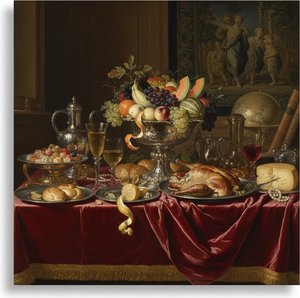
Abraham Hendricksz van Beyeren: Pioneering Dutch Still Life & the Banquet Tradition
Explore the captivating world of Dutch Golden Age still life with Abraham van Beyeren. Discover his innovative techniques, symbolic banquet scenes & lasting influence on art history. Learn about collecting these masterpieces.
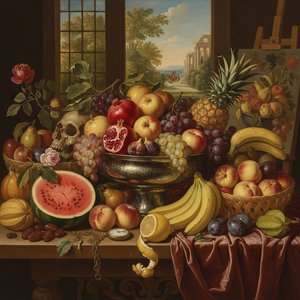
The Bountiful Still Life: Symbolism & Artistic Representation of Fruit Across Art History
Explore the rich history of still life painting & the symbolism of fruit across art movements. Discover masterpieces from Caravaggio to Cézanne with ArtsDot – expert guidance & museum-quality reproductions.
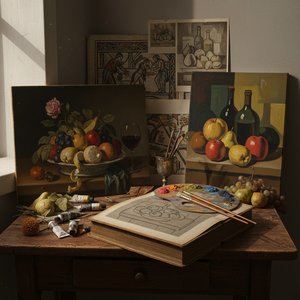
Silent Narratives: Exploring the Enduring Appeal of Still Life Painting Across Centuries
Explore the rich history of still life painting with ArtsDot. Discover Dutch Masters, decode vanitas symbolism & learn about collecting timeless art. Expert insights and museum-quality reproductions.
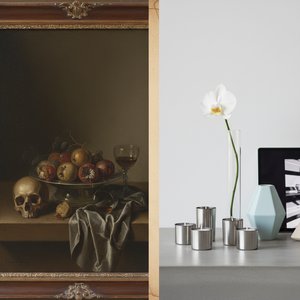
The Enduring Appeal of Still Life: A Historical & Contemporary Exploration
Explore the rich history & symbolism of still life painting with ArtsDot. Discover masterpieces from the Dutch Golden Age, learn about vanitas art, and find expert guidance for collecting timeless artworks.
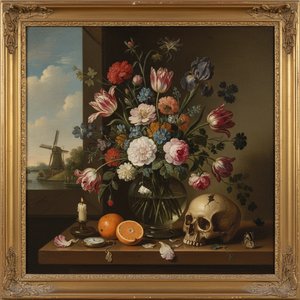
Jan Jansz Wijnants: A Study in Dutch Golden Age Still Life & Floral Transience
Explore the captivating world of Jan Wijnants and Dutch Golden Age still life painting. Discover symbolism, masterful techniques & lasting influence on floral art history. Learn more!