 Preview
 Send
Send Share
Share
 Details

 Download
 Similars
 X-Ray
X-Ray Diaporama
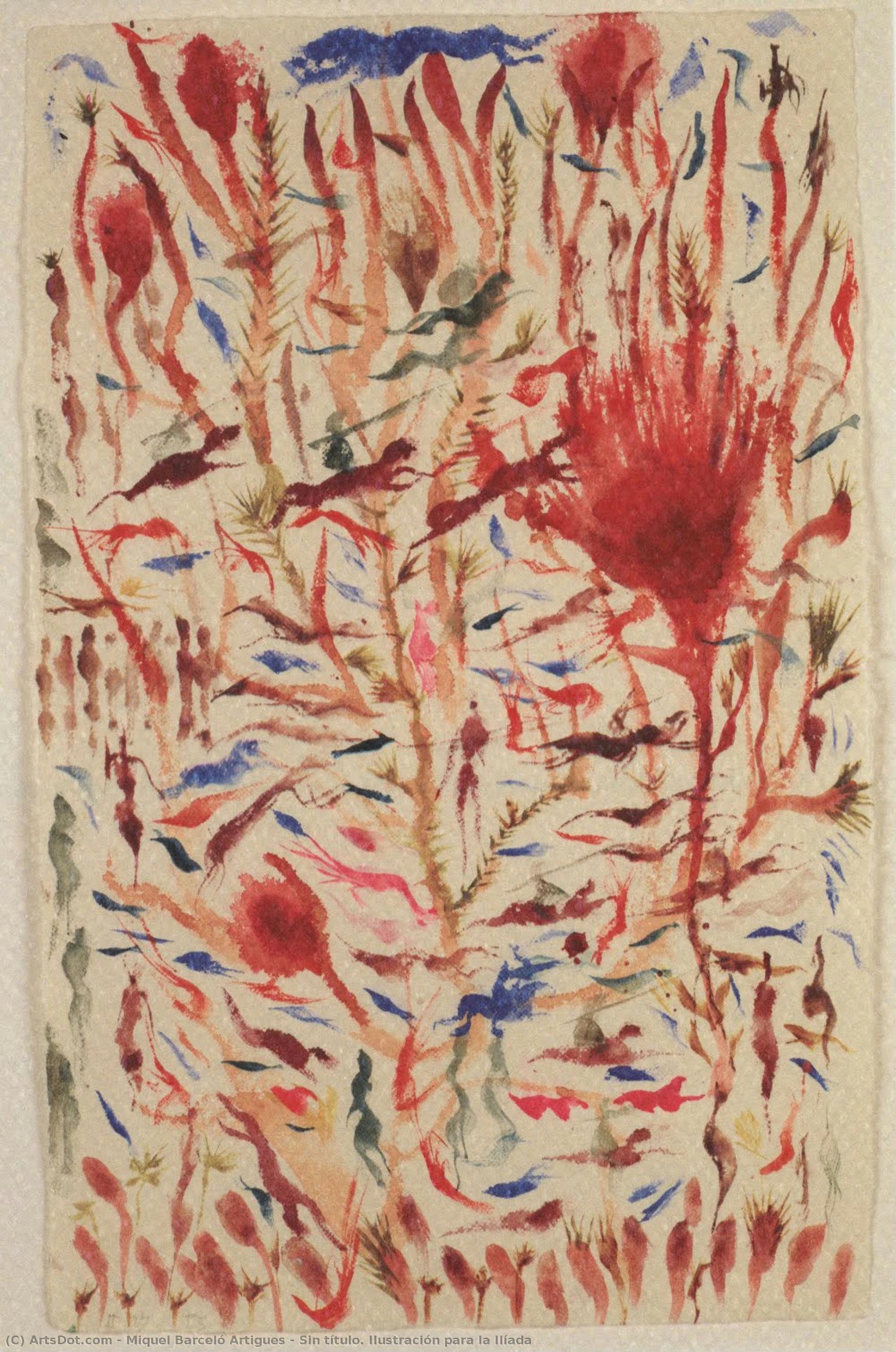
Sin título. Ilustración para la Ilíada


 Read More
Giclée / Art Print
Museum-quality giclée or canvas print with fast production and flexible finish options. ( Buy Hand Made Painting Buy Image)




































Pick from our preset sizes that match the artwork's original proportions.

You may enter your own dimensions to fit a specific frame or space. If your selected size does not match the original image's proportions, we will either crop the artwork or extend the image with a mirrored or solid-fill edge. A digital mockup will be sent for your approval before production begins.
Please note that the on-screen preview does not reflect the actual cropping or extension. Only the mockup will accurately show the final composition.
While custom sizes are available, we recommend selecting a dimension from the predefined list to preserve the original proportions.
Worldwide Delivery () in 2 weeks instead of standard 4/5 weeks. (28 August)

Free Worldwide Express Shipping

High-Quality Linen Canvas

Full Shipping Insurance

Customs Tax Refund Guarantee

True Color Matching Guarantee

60-Day Return Policy (Defects Only)

100% Money-Back Guarantee

Bulk Discount Offer
 Glass option is only available in size under 110 CM

Sin título. Ilustración para la Ilíada
Giclée / Art Print
Reproduction Size
-


Total Price
$ 63
Related Artworks


Artist Biography
A Life Forged in Earth and Sea: The World of Miguel Barceló
Miguel Barceló Artigues, born in 1957 in the sun-drenched island of Felanitx, Mallorca, is not simply a painter; he’s an alchemist of materials, a chronicler of nature's raw power, and a restless explorer of artistic boundaries. His journey began steeped in the traditional landscapes rendered by his mother, a painter herself, but quickly diverged into a passionate pursuit of avant-garde expression. The early 1970s saw a young Barceló captivated by the burgeoning art scene in Paris, where he encountered the radical freedom of Paul Klee, the visceral energy of Wols, and the untamed spirit of Jean Dubuffet’s Art Brut—influences that would lay the foundation for his unique visual language. This period was also marked by a rejection of formal artistic training; after brief studies at the Arts and Crafts School of Palma and the Fine Arts School of Barcelona, Barceló found himself drawn to the collaborative ferment of Mallorca's “Taller Llunàtic,” a conceptual group fueled by the newfound liberties following Franco’s death. Their experimental spirit, documented in their self-published periodical *Neon de Suro*, instilled in Barceló a deep skepticism towards established norms and a commitment to pushing creative limits.From Conceptual Roots to Gestural Abstraction
Barceló's early work was characterized by an almost defiant experimentation—wooden boxes containing decaying organic matter, actions challenging the very definition of art. However, his first solo exhibition at the Palma Museum in 1976 signaled a shift towards more traditional mediums, though still imbued with that rebellious energy. The influence of Abstract Expressionism, particularly Pollock’s dynamic action painting, became apparent, but Barceló never simply imitated; he absorbed these lessons and began to forge his own path. A fascination with the Baroque masters—Velázquez, Tintoretto, Rembrandt—emerged alongside a deep respect for Catalan painters like Antoni Tàpies and Joan Miró, whose earthy materiality resonated deeply with his growing obsession with texture and form. Throughout the 1980s, Barceló embarked on a period of intense travel, traversing Europe, the United States, and most significantly, West Africa. This nomadic existence proved transformative, exposing him to diverse cultures and landscapes that would become central themes in his work. Paris remained a constant anchor, serving as a second studio and a hub for artistic exchange.Capturing Nature’s Ephemeral Beauty
The international art world took notice of Barceló's burgeoning talent with his participation in Documenta 7 in Kassel, Germany, in 1982. This marked the beginning of his ascent as a major figure in contemporary Spanish art, often associated with the Neo-expressionist movement—though he resisted easy categorization. His paintings from this period are characterized by their large scale, gestural brushwork, and a palpable sense of urgency. But it’s not merely the *how* of Barceló's painting that captivates; it’s the *what*. He doesn’t simply depict nature; he attempts to capture its very essence—its constant flux, its inherent violence, its breathtaking beauty. This pursuit led him to experiment with unconventional materials: volcanic cinder in Naples in 1983, terracotta for a monumental chapel installation in Palma Cathedral in 2004, and even the manipulation of light itself. The chapel at Sant Pere is perhaps one of his most ambitious projects—an entire space transformed into a visceral representation of the miracle of the multiplication of bread and fish, a theme chosen to reflect the chapel’s dedication to the Last Supper.Beyond Painting: Sculpture, Ceramics, and Performance
Barceló's artistic curiosity extends far beyond the canvas. He is equally renowned for his ceramic installations—often monumental in scale—and his bronze sculptures, which possess a raw, organic quality that echoes his paintings. These explorations are not simply diversions; they represent a deeper desire to engage with materiality on a fundamental level. His work often blurs the boundaries between disciplines, incorporating elements of performance and installation art. In 1990, he designed the costumes and stage sets for Manuel de Falla’s opera *El retablo de maese Pedro* at the Opéra-Comique in Paris, demonstrating his ability to translate his visual language into a theatrical context. More recently, collaborations with choreographers like Joseph Nadj have further expanded his artistic horizons. In 2008, he completed an immense sculptural installation for the United Nations Palace of Nations in Geneva—a breathtaking ceiling composed of over 1500 square meters of multi-colored stalactite forms, a testament to his ability to create immersive and thought-provoking environments.A Lasting Legacy: The Artist as Explorer
Miguel Barceló’s significance lies not only in his technical mastery or innovative use of materials but also in his unwavering commitment to exploring the fundamental questions of existence—life, death, transformation, and our relationship with the natural world. He is an artist who embraces risk, challenges convention, and refuses to be confined by stylistic labels. His work resonates with a primal energy, evoking both awe and unease. He stands as a powerful example of an artist deeply rooted in tradition yet relentlessly forward-looking—a true explorer forging new paths in the landscape of contemporary art. He continues to live and work, constantly evolving and pushing the boundaries of his creative vision, leaving an indelible mark on the artistic landscape with each new endeavor. His influence can be seen in a generation of artists who seek to break down barriers between mediums and engage with the world in a more visceral and immediate way. Barceló’s art is not merely something to be looked at; it's an experience—a journey into the heart of creation itself.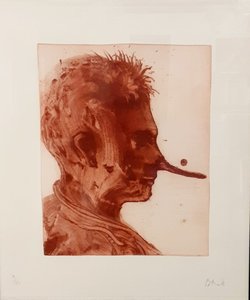
miquel barceló artigues
1957 - , Spain
Quick Facts
- Artistic Movement Or Style: Neo-expressionism
- Artists Who Influenced This Artist:
- Pollock
- Velázquez
- Dubuffet
- Miró
- Tapies
- Date Of Birth: 1957
- Full Name: Miquel Barceló Artigues
- Nationality: Spanish
- Notable Artworks:
- Sin título. Ilustración para la Ilíada
- L'ombra che trema
- Place Of Birth: Felanitx, Spain