 Preview
 Send
Send Share
Share
 Details

 Download
 Similars
 X-Ray
X-Ray Diaporama
The traditions of Saint James apostle in Galicia
 Oil On Canvas
- WallArt
- Late Gothic / Early Renaissance
 Renaissance
 The Catedral de Santiago Foundation
 Read More
Hand Made Oil Reproduction
Hand-painted oil on canvas in your size and frame, made to order by our artists. ( Buy Print Buy Image)




P118B $10

P118H $10

P118W $10

P438Z $10

P508JH $12

P508YH $12

P805H $10

P805Z $10

P919BZ $10

P919G $10

P919XJ $10

P959ZH $10

P968JZ $12

W106C $8

W218G $10

W218JH $8

W218Y $10

W307PJ $10

W316G $10

W316PJ $8

W316Y $10

W398PJ $8

W4111J $10

W500HY $15

W500JH $15

W692G $12

W849H $8

W940BG $15

W953PJ $8




Pick from our preset sizes that match the artwork's original proportions.

You may enter your own dimensions to fit a specific frame or space. If your selected size does not match the original image's proportions, we will either crop the artwork or extend the painting with additional hand-painted elements. A digital mockup will be sent for your approval before production begins.
Please note that the on-screen preview does not reflect the actual cropping or extension. Only the mockup will accurately show the final composition.
While custom sizes are available, we recommend selecting a dimension from the predefined list to preserve the original proportions.
After order, ArtsDot.com team will email client for instructions and provide a mockup preview
Worldwide Delivery () in 3/4 weeks instead of standard 5 weeks. (5 September). No compromise on quality.

Free Worldwide Express Shipping

High-Quality Linen Canvas

Full Shipping Insurance

Customs Tax Refund Guarantee

True Color Matching Guarantee

60-Day Return Policy (Defects Only)

100% Money-Back Guarantee

Bulk Discount Offer
 Glass option is only available in size under 110 CM

The traditions of Saint James apostle in Galicia
Reproduction Medium
Reproduction Size
-


Total Price
$ 438
A Glimpse into Faith and Galicia: Modesto Brocos’s Triptych
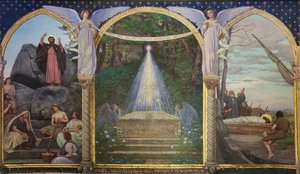
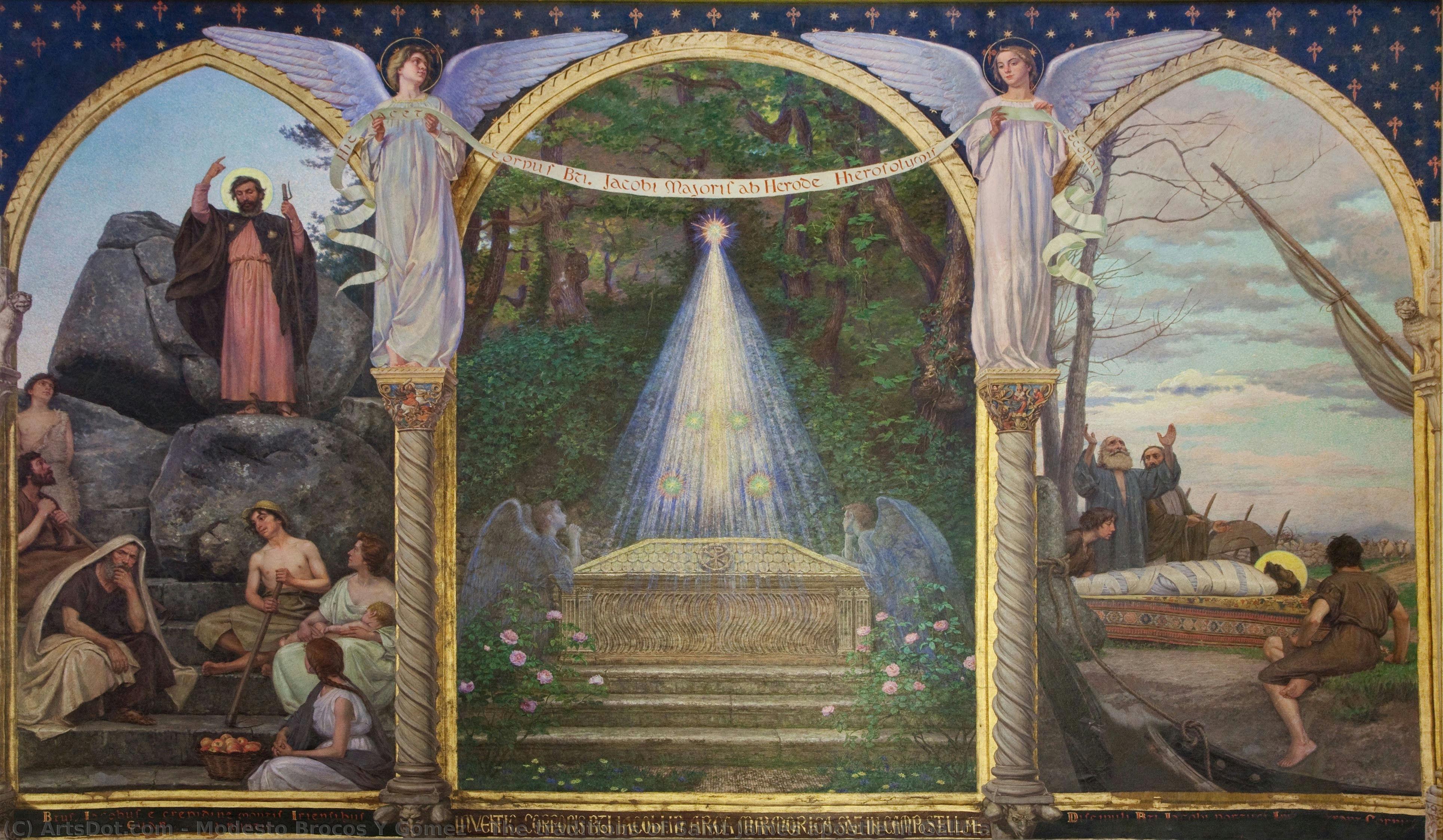
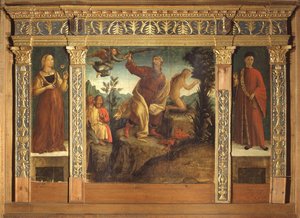
Modesto Brocos y Gómez's “The Traditions of Saint James Apostle in Galicia” is more than just a painting; it’s a vibrant window into the heart of 19th-century Spain and Brazil, a testament to artistic exchange, and a profound meditation on faith, pilgrimage, and regional identity. Completed in Rome in 1897, this monumental triptych immediately captivates with its rich colors, intricate detail, and a palpable sense of reverence. Brocos, born in Santiago de Compostela but later finding his home in Brazil, masterfully blends Gothic-Renaissance artistic influences with the burgeoning realism of his time, creating an artwork that feels both timeless and deeply rooted in its specific context.
The painting’s structure is immediately striking – a carefully orchestrated triptych divided by imposing arched frames. These architectural elements, adorned with historiated capitals depicting angelic figures, serve as a visual anchor for the three distinct scenes. The central panel dominates, portraying the pivotal moment of the *Inventio*, or unveiling of Saint James's remains in Iria Flavia (modern-day Padrón). Here, bathed in an ethereal glow emanating from a dramatic beam of light, we witness the discovery of the Apostle’s body – a scene imbued with both solemnity and spiritual significance. The surrounding figures—angels, two disciples, and local citizens—are rendered with meticulous detail, conveying a sense of awe and communal devotion.
The Scenes of Pilgrimage: Galicia and Rome
Flanking the central panel are two scenes that narrate key moments in the Apostle’s journey. To the left, we see “The Preaching of Saint James in Galicia,” depicting a vibrant gathering where the Apostle delivers his message amidst the rugged landscape of his homeland. The composition is dynamic, capturing the energy and fervor of the sermon, while subtly hinting at the challenges faced by the early Christian community. On the right, “The Translation of Saint James’s Remains” illustrates the arduous journey from Iria Flavia to Santiago de Compostela – a testament to the devotion that fueled the pilgrimage route. The depiction of the boat carrying the relics is particularly evocative, conveying both the physical effort and the spiritual weight of this sacred undertaking.
A Masterclass in Technique and Symbolism
Brocos’s technical skill is evident in every brushstroke. He employs a rich palette of colors – deep blues, reds, and golds—to create a visually arresting image. The use of *sfumato*, a technique borrowed from Renaissance masters, softens the edges and creates an atmospheric depth that draws the viewer into the scene. The painting’s composition is carefully balanced, utilizing linear perspective to guide the eye through the narrative. Geometric shapes – arches, columns, and squares—are strategically placed to create a sense of order and stability. Beyond its technical brilliance, “The Traditions of Saint James Apostle” is laden with symbolism. The radiant light represents divine grace, while the angels signify spiritual guidance. The inclusion of local elements—the landscape of Galicia, the figures representing the community—underscores the painting’s connection to its regional roots.
A Legacy of Artistic Exchange
Modesto Brocos y Gómez's journey from Santiago de Compostela to Rio de Janeiro and then to Rome exemplifies a fascinating transatlantic exchange of artistic ideas. His work reflects both his Spanish heritage – evident in the Gothic-Renaissance style—and his Brazilian experiences, particularly in his use of color and composition. “The Traditions of Saint James Apostle” stands as a powerful testament to this cultural synthesis, offering a glimpse into a pivotal moment in art history and a profound meditation on faith, pilgrimage, and the enduring legacy of Saint James.
Related Artworks
Artist Biography
A Transatlantic Journey: The Life and Art of Modesto Brocos y Gómez
Modesto Brocos y Gómez, a name resonating with the artistic currents of both Spain and Brazil, was an artist whose life mirrored a fascinating cultural exchange. Born in Santiago de Compostela, Galicia, on February 9th, 1852, into a family steeped in literary tradition – his grandfather and father were both writers, and his brother Isidoro pursued sculpture – Brocos’s artistic path began under the tutelage of his sibling at the Academia de Belas Artes in A Coruña. However, the young artist's ambitions soon led him beyond Spanish borders. An initial foray into Argentina proved unsuccessful, prompting a pivotal move to Brazil in 1874, a nation poised for republican transformation and burgeoning artistic expression. It was in Rio de Janeiro that Brocos truly found his footing, initially as an illustrator for the satirical magazine *O Mequetrefe*, a position that provided him with the financial stability to enroll at the Academia Imperial de Belas Artes, studying under luminaries like Victor Meirelles and João Zeferino da Costa.From European Academies to Brazilian Identity
Brocos’s dedication to honing his craft led him on a grand tour of Europe's artistic centers. After two years at the Academia Imperial de Belas Artes, he ventured to Paris, briefly attending the École des Beaux-Arts and receiving instruction from Henri Lehmann. Dissatisfied with the Parisian approach, he continued his studies in Madrid at the Real Academia de Bellas Artes de San Fernando before ultimately finding a more resonant artistic environment in Rome. A fellowship from the government of A Coruña enabled him to spend five years at the Accademia Chigi, working alongside fellow Spaniard Francisco Pradilla. This period was crucial in shaping Brocos’s style, blending academic precision with a growing sensitivity to light and atmosphere. By 1890, he felt confident enough to exhibit at the prestigious Salon in Paris, marking the culmination of his formal education. He then accepted an invitation from Rodolfo Bernardelli, director of the Escola Nacional de Belas Artes in Rio de Janeiro, to return to Brazil as a professor of figurative drawing – a position he held for the remainder of his life, becoming a naturalized Brazilian citizen and deeply embedding himself within the nation’s artistic fabric.A Multifaceted Artistic Legacy
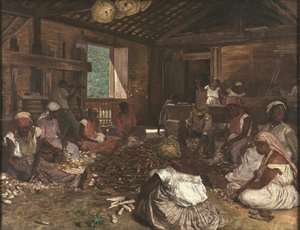
Modesto Brocos y Gómez was not confined by stylistic boundaries. His oeuvre encompassed portraits, landscapes, genre scenes, and historical subjects, demonstrating a remarkable versatility. He is particularly celebrated for his promotion of woodcut printmaking in Brazil, becoming one of the country’s first major practitioners of this art form during his time with *O Mequetrefe*. His paintings often depict scenes of everyday Brazilian life, imbued with a sense of realism and attention to detail. Engenho de Mandioca, housed at the Museu Nacional de Belas Artes in Rio de Janeiro, stands as a powerful example – a depiction of Black women laboring on a cassava plantation, rendered with thick impasto and capturing both the hardship and resilience of their existence. Beyond his visual art, Brocos was also a prolific writer, authoring several books on painting theory, including *A Questão do Ensino de Bellas Artes* (1915), *Viaje a Marte* (1930), and *Retórica dos Pintores* (1933). These writings reveal his deep engagement with artistic pedagogy and his commitment to fostering a vibrant art scene in Brazil.Influences, Style, and Historical Significance
Brocos’s style reflects the confluence of his diverse training and experiences. The influence of European academic painting is evident in his precise draftsmanship and compositional rigor, while his time in Rome instilled a sense of classical grandeur. However, he adapted these influences to suit the Brazilian context, embracing a more naturalistic palette and focusing on themes relevant to the nation’s social and cultural landscape. His work can be situated within the Realist movement, though it also displays elements of Romanticism in its emotional intensity and dramatic lighting. Modesto Brocos y Gómez died in Rio de Janeiro on November 28th, 1936, leaving behind a legacy that extends beyond his paintings and prints. He played a vital role in shaping the development of Brazilian art education, nurturing generations of artists and promoting a national artistic identity. His contributions to printmaking helped establish woodcut as a significant medium within the country’s visual culture, and his writings continue to offer valuable insights into the artistic debates of his time. He remains a pivotal figure in understanding the complex interplay between European tradition and Brazilian modernity.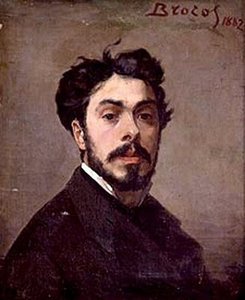
Modesto Brocos y Gómez
1852 - 1936 , Brazil
Quick Facts
- Artistic Movement Or Style: Realism, Engraving
- Artists Who Influenced This Artist:
- Victor Meirelles
- João Zeferino da Costa
- Henri Lehmann
- Francisco Pradilla
- Date Of Birth: February 9, 1852
- Date Of Death: November 28, 1936
- Full Name: Modesto Brocos y Gómez
- Nationality: Spanish-Brazilian
- Notable Artworks:
- Engenho de mandioca
- Traditions of Saint James
- Place Of Birth: Rio de Janeiro, Brazil
Related Articles

Goya's Masterpieces: Explore 25 Iconic Paintings & Art Prints | ArtsDot
Delve into the world of Francisco Goya with ArtsDot. Explore 25 iconic paintings – from 'The Third of May' to his haunting Black Paintings. Discover the stories, techniques & emotions behind these Spanish masterpieces. Find museum-quality art reproductions for your home at ArtsDot.com!

Whistler's Masterpieces: Explore 25 Iconic Paintings & Aesthetic Art for Your Home
Journey through 25 iconic James Abbott McNeill Whistler paintings! Explore his masterpieces of Aestheticism, from 'Nocturne in Black and Gold' to captivating portraits. Find museum-quality art reproductions & elevate your home decor with ArtsDot.com. Discover the full collection online.
Sir Alfred Munnings' Masterpieces: 25 Paintings That Define Equine Art | ArtsDot
Explore 25 iconic Sir Alfred Munnings paintings! Discover the beauty of British Impressionism, equine art & rural England. Find museum-quality reproductions and elevate your home decor with ArtsDot. Explore the full collection online.

James Stark: Evoking the Human Condition Through Contemporary Realism
Explore the captivating landscapes of James Stark (1794-1859), a leading Norwich School painter. Discover his Dutch Master influences, critical acclaim, and enduring legacy in contemporary realism. Art collecting insights & investment potential.

James Bard: Navigating Light & Landscape in American Impressionism
Explore the captivating world of James Bard (1815-1897), a meticulous chronicler of 19th-century American maritime life. Discover his detailed steamboat paintings and lasting legacy within the American Impressionism movement.