 Preview
 Send
Send Share
Share
 Details

 Download
 Similars
 X-Ray
X-Ray Diaporama
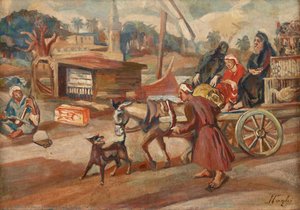
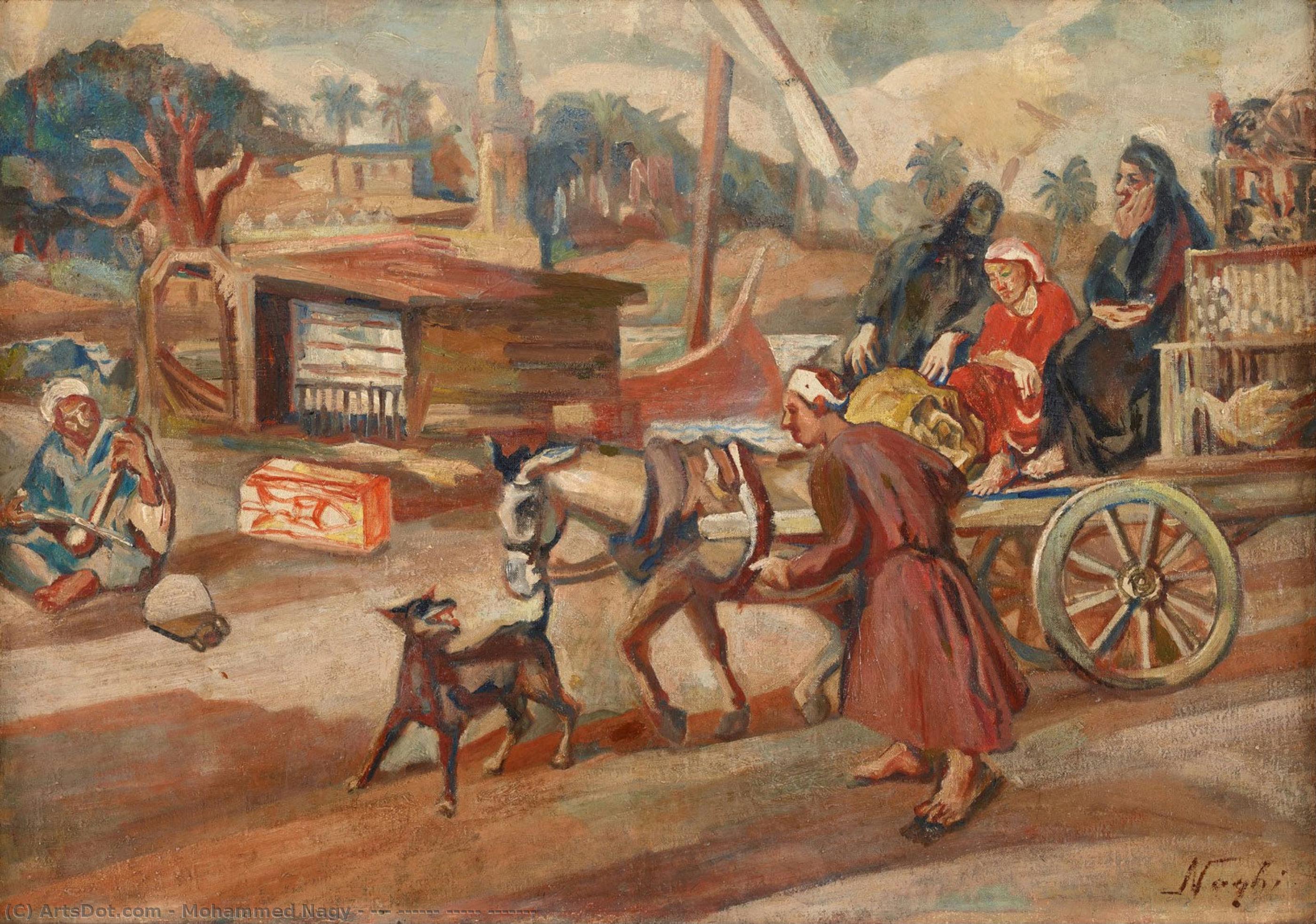
إلى السوق- بائعي الفراخ
 Orientalist Painting
 1931
1931 56.0 x 80.0 cm
 The Ramzi and Saeda Dalloul Art Foundation
 Read More
Hand Made Oil Reproduction
Hand-painted oil on canvas in your size and frame, made to order by our artists. ( Buy Print Buy Image)




































Pick from our preset sizes that match the artwork's original proportions.

You may enter your own dimensions to fit a specific frame or space. If your selected size does not match the original image's proportions, we will either crop the artwork or extend the painting with additional hand-painted elements. A digital mockup will be sent for your approval before production begins.
Please note that the on-screen preview does not reflect the actual cropping or extension. Only the mockup will accurately show the final composition.
While custom sizes are available, we recommend selecting a dimension from the predefined list to preserve the original proportions.
After order, ArtsDot.com team will email client for instructions and provide a mockup preview
Worldwide Delivery () in 3/4 weeks instead of standard 5 weeks. (17 August). No compromise on quality.

Free Worldwide Express Shipping

High-Quality Linen Canvas

Full Shipping Insurance

Customs Tax Refund Guarantee

True Color Matching Guarantee

60-Day Return Policy (Defects Only)

100% Money-Back Guarantee

Bulk Discount Offer
 Glass option is only available in size under 110 CM

إلى السوق- بائعي الفراخ
Reproduction Medium
Reproduction Size
-


Total Price
$ 363
Related Artworks

Artist Biography
Vincent van Gogh: A Life Painted in Color and Emotion
Vincent van Gogh (1853-1890) remains one of the most recognizable and profoundly influential figures in art history, a testament to the power of raw emotion channeled through brushstrokes. Born in Groot Zundert, Netherlands, into a family with a strong religious background, Van Gogh’s early life was marked by a sense of restlessness and a struggle to find his place in the world. Initially pursuing business ventures – first as an art dealer and later as an evangelical missionary – he found himself increasingly drawn to the visual arts, a passion ignited during a period of intense personal reflection. His artistic journey wasn’t one of immediate success; rather, it was a relentless pursuit fueled by an unwavering desire to capture the essence of his observations and internal experiences.
Van Gogh's early works, primarily produced between 1880 and 1885, reflect influences from Dutch Realism and Impressionism. Paintings like “The Potato Eaters” (1885) demonstrate a commitment to depicting the lives of working-class people with unflinching honesty, while his landscapes—often featuring windmills and rural scenes—show a nascent interest in capturing light and atmosphere. However, it was during his time in Paris in 1886 that Van Gogh’s artistic trajectory underwent a dramatic transformation. Immersed in the vibrant world of Impressionism and Post-Impressionism, he encountered artists like Claude Monet, Edgar Degas, and Paul Gauguin, absorbing their techniques and experimenting with new approaches to color and brushwork. The influence of these encounters is immediately apparent in works such as “Self-Portrait with Bandaged Ear” (1889), which reveals a growing intensity and psychological depth.
Following his Parisian sojourn, Van Gogh moved to Arles in the south of France in 1888, seeking a haven for artistic creation. This period proved to be extraordinarily productive, marked by an explosion of color and energy. He envisioned establishing an artist’s colony alongside Paul Gauguin, hoping to foster a community of like-minded creatives. However, this dream quickly dissolved into conflict when Gauguin's volatile temperament clashed with Van Gogh’s own. The infamous incident involving the severed ear remains shrouded in mystery, but it undoubtedly reflected the mounting psychological distress that plagued him. Despite his struggles, he continued to paint prolifically during this time, producing masterpieces such as “Sunflowers” (1888), “Bedroom in Arles” (1888), and numerous landscapes capturing the light and color of Provence. These works are characterized by bold colors, expressive brushstrokes, and a palpable sense of emotion—a hallmark of Van Gogh’s unique style.
The Development of a Distinctive Style
Van Gogh's artistic development wasn't linear; it was a dynamic process of experimentation and self-discovery. Initially influenced by the Impressionists’ focus on capturing fleeting moments of light, he gradually moved towards a more subjective and emotionally charged style. He began to manipulate color with unprecedented intensity, using it not merely to represent reality but to convey his inner feelings. His brushstrokes became increasingly visible and dynamic, creating a sense of movement and texture that animated the canvas. The swirling patterns in works like “Starry Night” (1889) are particularly striking examples of this expressive approach.
A key element of Van Gogh’s style was his exploration of color theory. He meticulously studied the relationships between colors, experimenting with complementary hues and contrasting tones to create visual effects of harmony and tension. His famous “Blue Period” (1880-1886), characterized by predominantly blue tones and melancholic subjects, demonstrates this early interest in color psychology. Later, during his time in Paris and Arles, he embraced a more vibrant palette, utilizing yellows, oranges, and greens to capture the warmth and vitality of the Provençal landscape. His use of impasto—applying paint thickly to create texture and dimension—further enhanced the tactile quality of his paintings.
Major Works and Lasting Influence
Among Van Gogh’s most celebrated works are “Sunflowers” (1888), a series of still lifes that capture the beauty and abundance of nature; “The Potato Eaters” (1885), a poignant depiction of peasant life; "Self-Portrait with Bandaged Ear" (1889); “Starry Night” (1889), an iconic image of swirling stars and a luminous moon; and “Wheatfield with Crows” (1890), a dramatic landscape imbued with a sense of foreboding. These paintings, along with countless others, reveal Van Gogh’s extraordinary talent for capturing the essence of his subjects—both external reality and internal emotion.
Despite producing only around 300 paintings during his lifetime, Van Gogh's impact on art is immeasurable. He is considered a pioneer of Expressionism, an artistic movement that sought to convey subjective emotions rather than objective reality. His bold use of color, expressive brushwork, and emotionally charged imagery paved the way for future generations of artists, including Henri Matisse, Edvard Munch, and Pablo Picasso. His legacy continues to inspire artists and captivate audiences worldwide.
Historical Context and Critical Reception
Van Gogh’s artistic career unfolded during a period of significant social and cultural change in Europe. The late 19th century witnessed the rise of industrialization, urbanization, and new scientific discoveries—all of which challenged traditional values and beliefs. The Impressionist movement, with its emphasis on capturing fleeting moments of light and atmosphere, represented a radical departure from academic painting traditions. Van Gogh’s work can be understood within this broader context as an attempt to express the anxieties and uncertainties of modern life.
During his lifetime, Van Gogh received little critical recognition for his art. His paintings were largely ignored by the established art world, and he struggled financially throughout much of his career. It wasn’t until after his death in 1890 that his work began to gain widespread acclaim. Today, Van Gogh is regarded as one of the greatest artists of all time, and his paintings are among the most valuable and beloved works of art in the world. His story serves as a poignant reminder of the transformative power of creativity and the enduring legacy of an artist who dared to paint from the depths of his soul.
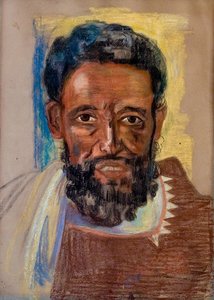
mohammed nagy
1888 - 1956 , Egypt
Quick Facts
- Artistic Movement Or Style: Abstract painting, Color theory
- Artists Or Movements Influenced By This Artist:
- Color Field painting
- Minimalism
- Artists Who Influenced This Artist:
- Paul Klee
- Wassily Kandinsky
- Date Of Birth: 1888
- Date Of Death: 1976
- Full Name: Josef Albers
- Nationality: German-American
- Notable Artworks:
- Homage to the Square
- Yellow Discs
- Magma Series
- Place Of Birth: Bottrop, Germany
Related Articles
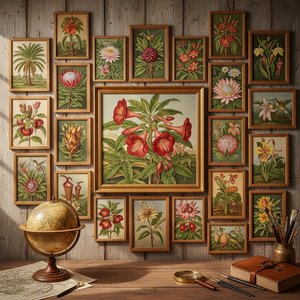
Marianne North's Masterpieces: 25 Botanical Paintings That Bloom With Adventure | ArtsDot
Journey through the vibrant world of Marianne North’s botanical paintings! Explore 25 iconic artworks from this Victorian artist, celebrating exotic flora & travel. Find museum-quality reproductions and curated decor ideas at ArtsDot.com.

The Enduring Legacy of Oil on Canvas: Technique, History & Aesthetic Impact
Explore the rich history & techniques of oil painting – from Renaissance masters to Impressionism. Discover pigments, layering methods, and why this timeless medium endures. Expert insights for artists & art enthusiasts.

Oil on Canvas: A Historical & Technical Exploration of a Timeless Artistic Medium
Explore the rich history & enduring techniques of oil painting on canvas. Discover the science behind its longevity, conservation practices, and contemporary relevance. Expert insights for art enthusiasts.

The Enduring Power of Painting: A Historical & Contemporary Exploration of Form and Emotion
Explore the rich history & enduring techniques of oil painting with ArtsDot. Discover masterpieces, learn about art collecting, and find authentic handmade reproductions crafted by skilled artists.

The Enduring Legacy of Oil on Canvas: Technique, History & Contemporary Practice
Explore the rich history & enduring techniques of oil painting on canvas. Discover the science behind its longevity, conservation practices, and contemporary relevance. Expert insights for art enthusiasts.