 Preview
 Send
Send Share
Share
 Details

 Download
 Similars
 X-Ray
X-Ray Diaporama
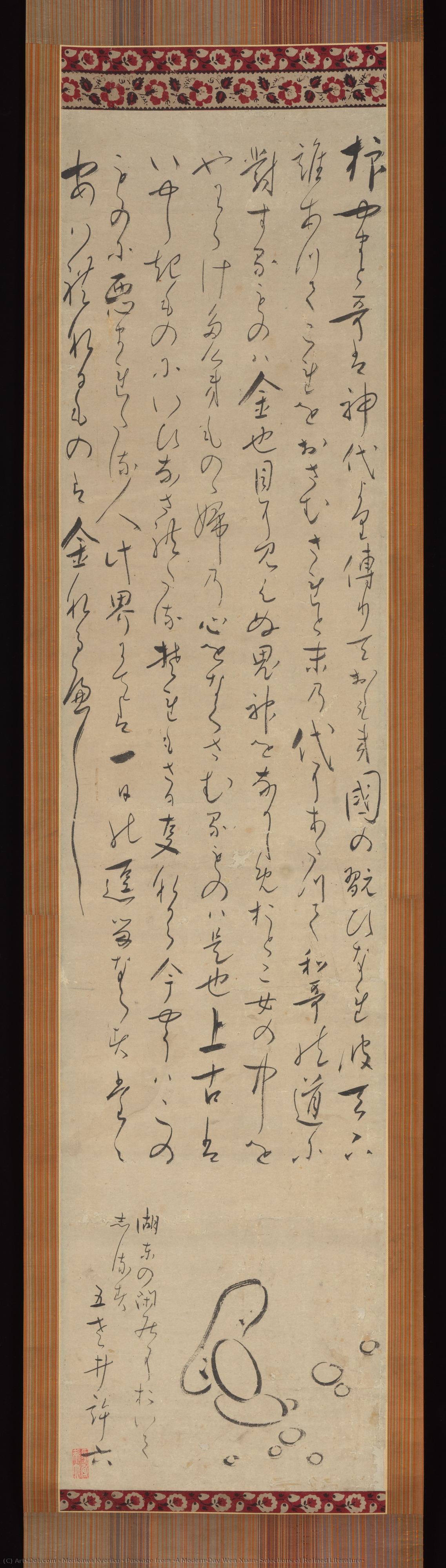
Passage from “A Modern-Day Wen Xuan: Selections of Refined Literature”
 1705
1705 119.0 x 28.0 cm
 Read More
Giclée / Art Print
Museum-quality giclée or canvas print with fast production and flexible finish options. ( Buy Hand Made Painting Buy Image)




































Pick from our preset sizes that match the artwork's original proportions.

You may enter your own dimensions to fit a specific frame or space. If your selected size does not match the original image's proportions, we will either crop the artwork or extend the image with a mirrored or solid-fill edge. A digital mockup will be sent for your approval before production begins.
Please note that the on-screen preview does not reflect the actual cropping or extension. Only the mockup will accurately show the final composition.
While custom sizes are available, we recommend selecting a dimension from the predefined list to preserve the original proportions.
Worldwide Delivery () in 2 weeks instead of standard 4/5 weeks. (7 September)

Free Worldwide Express Shipping

High-Quality Linen Canvas

Full Shipping Insurance

Customs Tax Refund Guarantee

True Color Matching Guarantee

100-Day Return Policy (Defects Only)

100% Money-Back Guarantee

Bulk Discount Offer
 Glass option is only available in size under 110 CM

Passage from “A Modern-Day Wen Xuan: Selections of Refined Literature”
Giclée / Art Print
Reproduction Size
-


Total Price
$ 63
Related Artworks









Artist Biography
life and artistic career
morikawa kyoriku, also known as kyoroku, was a prominent japanese painter, poet, and calligrapher born in edo, japan in 1656. he passed away in 1715, leaving behind a legacy in the literati school of painting, which emphasized the expression of personal feelings and ideas through art.artistic style and notable works
kyoriku's artistic style was characterized by his landscapes and figure paintings, often depicting scholars and literati in natural settings. his work passage from “a modern-day wen xuan: selections of refined literature” (119 x 28 cm, paper) is a notable example of his cursive, idiosyncratic yet legible characters, showcasing his mastery of kana and kanji.- morikawa kyoriku's use of monochromatic ink and emphasis on personal expression set him apart from traditional japanese painting styles.
- his work was highly regarded in his time, reflecting the influence of chinese literati painting and calligraphy.
- kyoriku's close friendship with the famous japanese artist hishikawa moronobu further solidified his position within the literati school.
museums and collections featuring morikawa kyoriku's work
- the menard art museum in komaki, japan, features a collection of western art that includes works by european artists from the 19th and 20th centuries.
- although not specifically focused on morikawa kyoriku's work, the hokkaido museum of modern art in japan showcases an impressive collection of modern and contemporary japanese art, reflecting the country's rich artistic heritage.
legacy and influence
morikawa kyoriku's contributions to the literati school of painting have had a lasting impact on japanese art. his emphasis on personal expression and fusion of art, calligraphy, and poetry continue to inspire modern japanese artists.- tomioka tessai, another notable artist, was influenced by kyoriku's style and went on to create his own masterpieces, such as summer and autumn grasses.
- kyoriku's work can be seen in various museums and private collections worldwide, including the freer gallery of art in washington d.c.
conclusion
morikawa kyoriku's life and artistic career serve as a testament to the enduring power of literati painting. his legacy continues to be celebrated through his works, which can be found in museums and private collections around the world.- view morikawa kyoriku's artwork on ArtsDot.com
- explore more literati artists and their works on ArtsDot.com

morikawa kyoriku
1656 - 1715 , Japan
Quick Facts
- Artistic Movement Or Style: Portrait painting
- Artists Or Movements Influenced By This Artist: ['Van Dyck']
- Artists Who Influenced This Artist:
- Antoine Goubeau
- Lely
- Date Of Birth: 1656
- Date Of Death: 1746
- Full Name: Nicolas de Largillière
- Nationality: French
- Notable Artworks:
- Belshazzar's Feast
- The Return of the Prodigal Son
- Syndics of the Drapers’ Guild
- Place Of Birth: Paris, France