

 Preview
 Send
Send Share
Share
 Details

 Download
 Similars
 X-Ray
X-Ray Diaporama
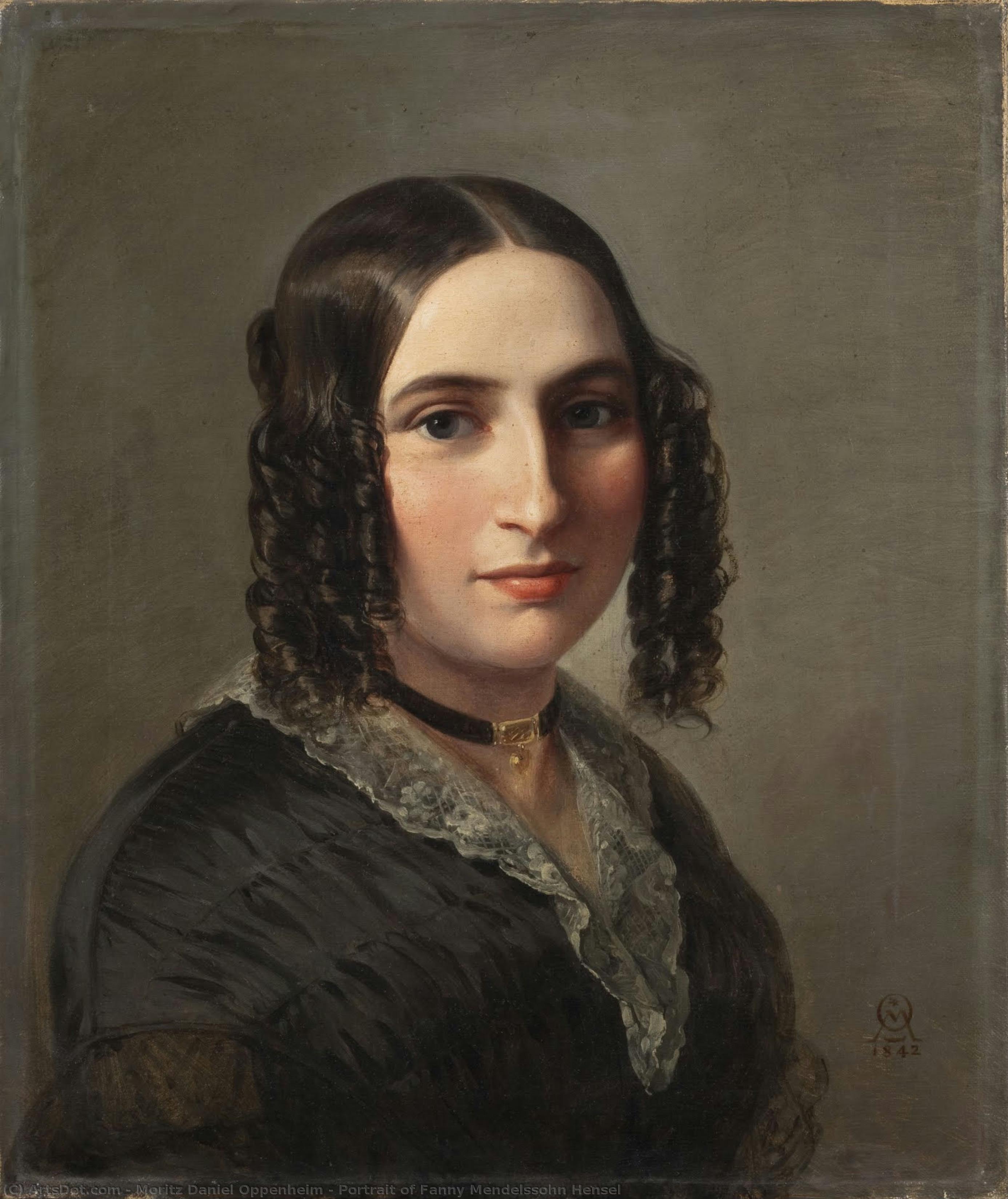
Portrait of Fanny Mendelssohn Hensel
 Oil On Canvas
- WallArt
- Romantic Painting
 1842
1842 43.0 x 36.0 cm
 The Jewish Museum
 Read More
Purchase a high-resolution, enhanced digital image, far superior to the online preview.
Each file is meticulously prepared by our in-house specialists using advanced tools and expert manual retouching. We ensure every image has exceptional clarity, precise color accuracy, and fine detail.
The final file is delivered via email within 72 hours, optimized for immediate use in professional, editorial, and print environments. This is the same quality trusted by top-tier design studios, publishers, and galleries.
Digital Image
Download a high-resolution file for personal display, printing, and creative projects. ( Buy Print Buy Hand Made Painting)
Included in Every Digital Image Order
Expert Digital Delivery, Guaranteed
When you choose ArtsDot.com, you're not just getting an image - you're receiving a professionally enhanced digital artwork, crafted with precision and backed by a satisfaction guarantee. Here's everything that comes with your order, automatically:

Fast Email Delivery
Your high-resolution digital image file will be emailed to you within 72 hours of ordering - ready for immediate use.

AI-Enhanced Digital File
Your artwork is professionally optimized using advanced AI tools and manual editing, ensuring maximum detail, clarity, and color accuracy.

Free Lifetime Re-Delivery
Accidentally deleted or lost your file? No worries - we'll resend it to you anytime, free of charge.

No Import Fees - Ever
Enjoy your artwork instantly with zero customs, duties, or delivery fees - digital downloads are always tax-free.

Color Accuracy Guarantee
We ensure your digital image reflects the original colors as closely as possible using professional tools and color management.

60-Day Satisfaction Guarantee
If you're not satisfied with your digital image, we'll revise it or refund 100% within 60 days - no questions asked.

100% Money-Back Guarantee
Not satisfied? Get a full refund within 60 days of receiving your digital file - no questions asked.

Bulk Order Discounts
Buy 3 images, save 10% - Buy 5, save 15% - Buy 10+, save 20%. Great for creative projects, galleries, and agencies.
A Window Into Victorian Jewish Life: Exploring Moritz Daniel Oppenheim’s Portrait of Fanny Mendelssohn Hensel
Moritz Daniel Oppenheim's "Portrait of Fanny Mendelssohn Hensel," completed in 1842, stands as a remarkable testament to the burgeoning artistic representation of Jewish culture during the Romantic era. More than just a likeness of a celebrated musician—Fanny Hensel (1805–1847)—was a pivotal figure in musical history, sister to Felix Mendelssohn-Bartholdy and granddaughter of Moses Mendelssohn, representing a crucial intersection between intellectual enlightenment and familial devotion. This painting transcends mere visual beauty; it’s imbued with symbolic significance reflecting the aspirations and realities of Jewish society striving for acceptance within Victorian Germany.The Artist's Vision: Oppenheim and His Roman Influences
Moritz Daniel Oppenheim (1800-1882) emerged as a singular voice in German art, recognized primarily for his dedication to documenting Jewish life—a mission driven by an unwavering belief in the power of visual art to communicate cultural identity. Trained initially under Conrad Westermayr in Hanau, Oppenheim absorbed foundational principles of Romantic painting, prioritizing emotional expression and dramatic lighting – techniques heavily influenced by his time spent in Rome during the early 1820s. The Roman landscape served as a catalyst for artistic innovation, fostering a stylistic preference for idealized forms and nuanced tonal gradations that are evident throughout his oeuvre. His collaboration with Wilhelm Hensel, Fanny’s husband—a fellow artist—further solidified Oppenheim's commitment to portraying domestic scenes with sensitivity and accuracy.A Detailed Examination of Technique and Composition
The painting itself is executed in oil on panel, employing a meticulous layering process characteristic of the period. Oppenheim skillfully utilized chiaroscuro – dramatic contrasts between light and dark – to sculpt Fanny’s figure and create an atmosphere of contemplative serenity. The muted palette—dominated by earthy browns and creams—reflects the understated elegance favored by Victorian artists and underscores the solemn dignity conveyed by Hensel's pose. Notice the careful attention to detail: the pearl necklace symbolizes purity and virtue, mirroring Fanny’s moral character; her gaze directs towards the viewer, establishing a connection that invites introspection – a subtle gesture of engagement with the audience beyond mere visual observation.Symbolism Within Domestic Harmony
Beyond its technical prowess, “Portrait of Fanny Mendelssohn Hensel” resonates deeply with symbolic meaning rooted in Jewish tradition and Victorian ideals. The domestic setting—a richly furnished room bathed in soft light—represents the sanctity of family life and underscores Fanny’s role as a devoted wife and mother. Oppenheim's depiction captures not only Fanny’s physical appearance but also her inner spirit – embodying the values of piety, intellect, and artistic accomplishment. This image speaks to the broader narrative of Jewish assimilation into European culture while simultaneously celebrating the enduring importance of familial bonds and personal integrity.Legacy and Display at The Jewish Museum
Currently housed at The Jewish Museum in New York, this painting continues to inspire admiration for its masterful execution and profound humanist message. Its presence within the museum’s collection serves as a poignant reminder of Oppenheim's pioneering role in elevating Jewish artistic representation—a contribution that cemented his place as one of Germany’s foremost portrait painters and ensured that Fanny Hensel’s legacy would endure through generations of art historians and collectors alike.Related Artworks


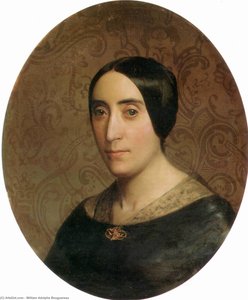
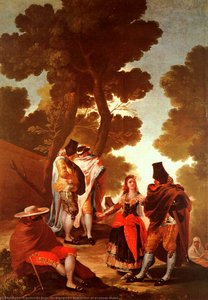
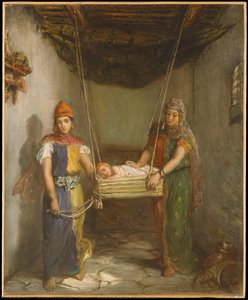
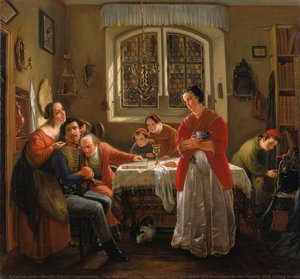
Artist Biography
A Visionary of Jewish Identity
Moritz Daniel Oppenheim (1800-1882) stands as a singular figure in the annals of German art history, serving as a profound pioneer of Jewish artistic representation. Born in Hanau, Germany, his life and work were deeply rooted in a commitment to documenting and celebrating the nuances of Jewish life and culture during the transformative nineteenth century. He was often hailed as the first Jewish painter to achieve widespread recognition within the mainstream artistic landscape, moving beyond mere biographical detail to create an oeuvre that embodies a vital visual record of a community navigating the complexities of modernization while striving to preserve its sacred traditions.
Oppenheim's artistic journey began with foundational training under Conrad Westermayr in his birthplace, where he first absorbed the principles of German Romantic painting. However, his true professional ascent was catalyzed by his enrollment at the Munich Academy of Arts at the age of seventeen. It was within these prestigious halls that he honed his technical mastery alongside contemporaries such as Wilhelm Leibl and Johann Baptist Eberhard Krauss. Seeking to expand his horizons, Oppenheim embarked on a transformative period of study abroad, traveling to Paris to study under Jean-Baptiste Regnault and later to Rome. In Italy, mentored by luminaries like Bertel Thorwaldsen and the Nazarene painter Johann Friedrich Overbeck, his style evolved into a sophisticated blend of meticulous observation and classical influence. This Roman period was particularly pivotal, as it infused his work with a sense of historical gravity that would later inform his depictions of Jewish rituals and daily life.
The Art of Intimacy and Tradition
The heart of Oppenheim’s contribution to art lies in his ability to transform the domestic sphere into a stage for profound cultural narrative. His paintings often focus on intimate scenes of Jewish family life, capturing the quiet dignity of ritual and the warmth of communal bonds. Through his brush, the mundane becomes monumental. In works such as The Conclusion of the Sabbath (Sabbath-Ausgang), he employs masterful realism and subtle symbolism to depict the poignant transition from the sacred rest of the Sabbath back into the temporal world, inviting the viewer to witness the sanctity of family ritual.
His ability to weave historical context with personal emotion is perhaps most evident in his genre paintings that document specific cultural milestones. For instance:
- The Wedding (Die Trauung): A breathtakingly detailed depiction of a 1866 Jewish wedding within the Frankfurt ghetto, where Oppenheim captures the splendor of traditional attire and the solemnity of the marriage canopy, offering a rare, preserved glimpse into a vanishing way of life.
- The Return of the Volunteer: In this stunning oil painting from 1834, he explores the intersection of Jewish heritage and broader European history, portraying a soldier returning from the Wars of Liberation to a family still living according to ancient customs, effectively illustrating the tension between Napoleonic-era political shifts and enduring religious identity.
Legacy and Historical Significance
Beyond his technical skill, Oppenheim’s work is inextricably linked to the Wissenschaft des Judentums movement—a scholarly effort to establish Jewish history and culture as a respected academic field. His paintings functioned as visual scholarship, providing a dignified and authentic representation of a community that was often marginalized in the broader European art canon. By portraying Jewish subjects with the same level of detail, dignity, and Romantic grandeur typically reserved for aristocratic or mythological themes, he challenged existing prejudices and asserted the importance of Jewish identity within the German cultural fabric.
Ultimately, the legacy of Moritz Daniel Oppenheim is one of resilience and visibility. He did not merely paint scenes; he constructed a visual language for an era of transition. His ability to capture the delicate balance between the old world and the new ensures that his work remains a vital touchstone for understanding the nineteenth-century Jewish experience, making him an indispensable figure in the history of both German Romanticism and the global narrative of Jewish art.
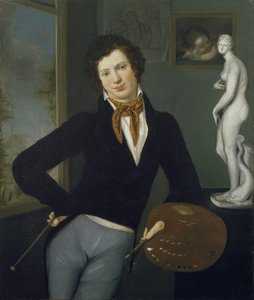
Moritz Daniel Oppenheim
1800 - 1882 , Germany
Quick Facts
- Artistic Movement Or Style: Romanticism
- Artists Who Influenced This Artist:
- Jean-Baptiste Regnault
- Bertel Thorwaldsen
- Barthold Georg Niebuhr
- Johann Friedrich Overbeck
- Date Of Birth: January 7, 1800
- Date Of Death: 1882
- Full Name: Moritz Daniel Oppenheim
- Nationality: German
- Notable Artworks:
- Return of the Volunteer
- Mignon and the Harper
- Italian Genre Scene
- Confirmation
- Sabbath Blessing
- Place Of Birth: Hanau, Germany

