 Preview
 Send
Send Share
Share
 Details

 Download
 Similars
 X-Ray
X-Ray Diaporama
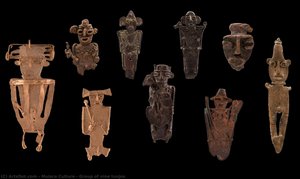
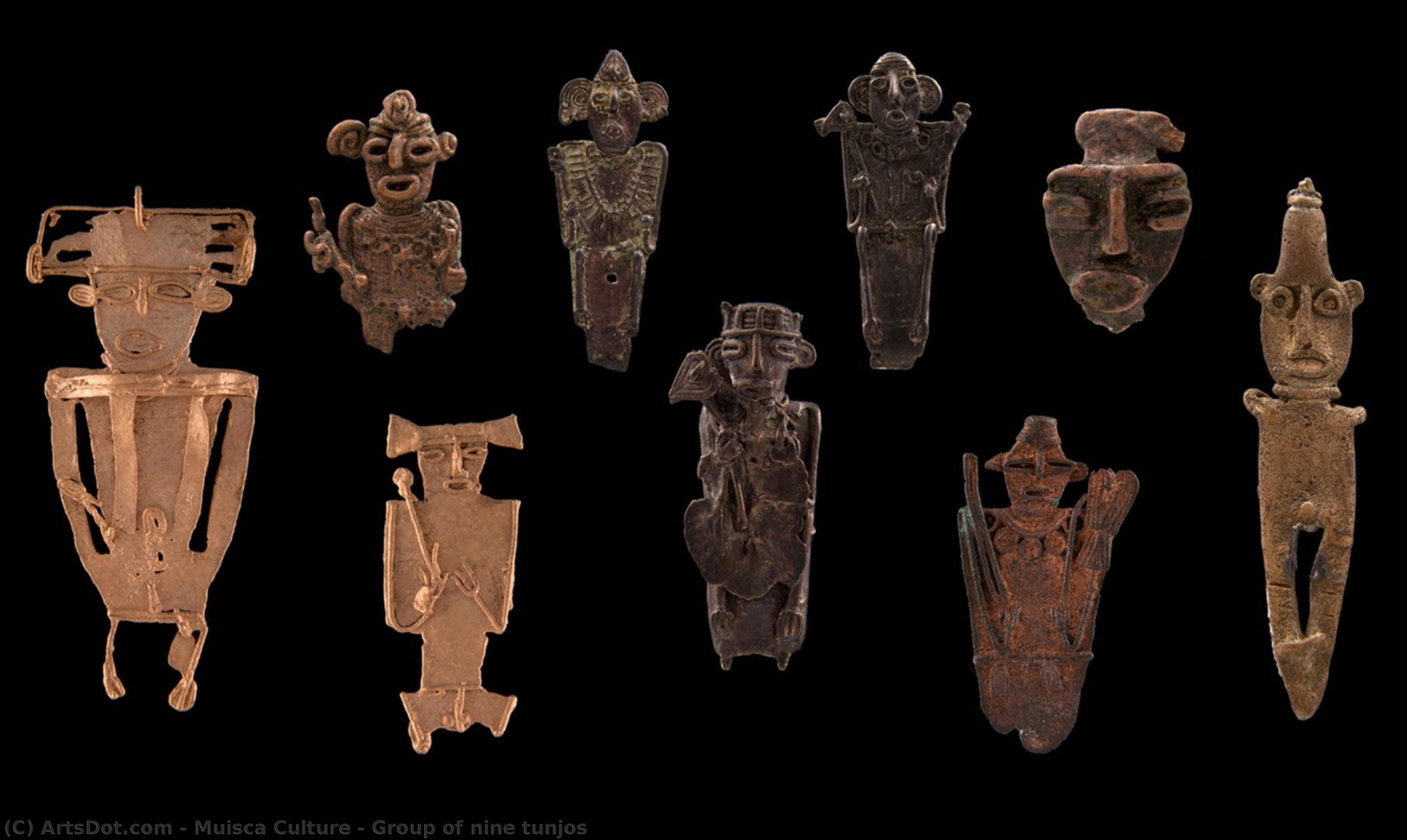
Group of nine tunjos
 5.0 x 2.0 cm
 National Museum of Colombia
 Read More
Giclée / Art Print
Museum-quality giclée or canvas print with fast production and flexible finish options. ( Buy Hand Made Painting Buy Image)




































Pick from our preset sizes that match the artwork's original proportions.

You may enter your own dimensions to fit a specific frame or space. If your selected size does not match the original image's proportions, we will either crop the artwork or extend the image with a mirrored or solid-fill edge. A digital mockup will be sent for your approval before production begins.
Please note that the on-screen preview does not reflect the actual cropping or extension. Only the mockup will accurately show the final composition.
While custom sizes are available, we recommend selecting a dimension from the predefined list to preserve the original proportions.
Worldwide Delivery () in 2 weeks instead of standard 4/5 weeks. (25 August)

Free Worldwide Express Shipping

High-Quality Linen Canvas

Full Shipping Insurance

Customs Tax Refund Guarantee

True Color Matching Guarantee

60-Day Return Policy (Defects Only)

100% Money-Back Guarantee

Bulk Discount Offer
 Glass option is only available in size under 110 CM

Group of nine tunjos
Giclée / Art Print
Reproduction Size
-


Total Price
$ 63
Related Artworks



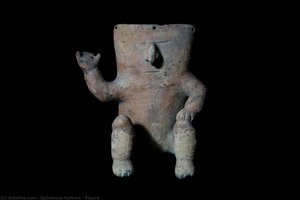
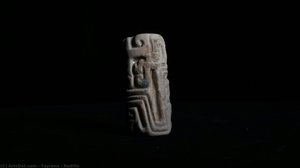


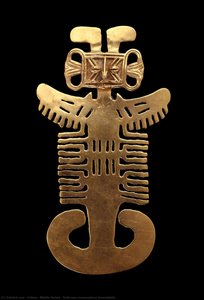
Artist Biography
The Golden Legacy of the Muisca
The Muisca culture, also known as Chibcha, represents one of Colombia’s most fascinating pre-Columbian civilizations—a testament to ingenuity and artistic prowess that continues to captivate historians and art enthusiasts alike. Flourishing in the misty altiplano cundiboyacense region from approximately 800 AD to 1537 AD, this confederation of independent tribes achieved remarkable advancements in metallurgy, agriculture, and social organization. Theirs was a world etched in gold, ceramics, and intricate iconography, where every crafted object whispered the sacred secrets of a complex spiritual cosmos.
Emerging from the high Andean highlands, the Muisca people developed a sophisticated societal hierarchy centered around powerful rulers—the Hoa, Psihipqua, and Iraca. These leaders were far more than political administrators; they functioned as divine intermediaries, embodying celestial forces and overseeing the religious rituals that anchored Muisca life. This governance fostered expansive trade networks that bridged diverse Andean communities, facilitating a rich exchange of goods and ideas. While their economy was rooted in the earth—cultivating staples like maize, quinoa, and potatoes—their true artistic soul was found in the mastery of metal, where they transformed raw elements into shimmering symbols of divinity.
A Symphony in Gold and Symbolism
The Muisca’s artistic achievements stand apart as some of the most remarkable feats of pre-Columbian art. Their skill in repoussé—the delicate process of hammering metal into relief—is unparalleled, resulting in exquisitely detailed golden figurines, masks, and jewelry that depict animals, deities, and human figures with astonishing precision. These artworks were not merely decorative; they served as vital conduits for spiritual communication. Through the creation of tunjos—small, votive figures—the Muisca offered pieces of their devotion to the gods, embedding their prayers into the very fabric of their craftsmanship.
Perhaps no object captures the mythic grandeur of this culture better than the Muisca Raft. This legendary piece of goldwork is believed by many scholars to represent the ritualistic origins of the El Dorado legend. It depicts a scene of profound ceremony, likely set within the sacred waters of Lake Guatavita, where a new ruler would be adorned in gold dust before descending into the lake as an offering. This single artifact encapsulates the Muisca's ability to blend high-level metallurgy with deep religious narrative, turning precious metal into a vessel for eternal myth.
Spiritual Cosmos and Lasting Significance
The artistry of the Muisca was inextricably linked to their profound understanding of the universe. Their religion was a complex tapestry of celestial worship, directed toward deities such as Chía, the goddess of the Moon, and Sué, the god of the Sun. This duality of light and shadow, husband and wife, reflected in their art, mirrored the natural rhythms of the Andean landscape. Beyond gold, their creative expression extended into pottery, textiles, and even body art, creating a multi-sensory cultural identity that was as much about texture and pattern as it was about form.
Though the Spanish conquest in the 16th century brought profound disruption to their way of life, the artistic spirit of the Muisca remains unextinguished. Today, the treasures of this civilization are preserved in institutions like the Museo del Oro in Bogotá, where their golden masterpieces continue to serve as a luminous gateway into Colombia’s ancestral soul. The legacy of the Muisca lives on not just in museum halls, but in the enduring cultural identity of the Andean people, reminding the world of a time when gold was not merely wealth, but a sacred language of the divine.
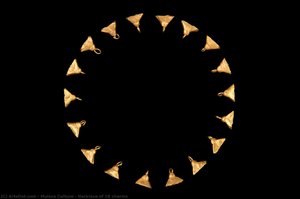
muisca culture
Colombia
Quick Facts
- Artistic Movement Or Style: Pre-Columbian
- Date Of Birth: (Unknown)
- Date Of Death: (Living)
- Full Name: Muisca Culture
- Nationality: Colombian
- Notable Artworks:
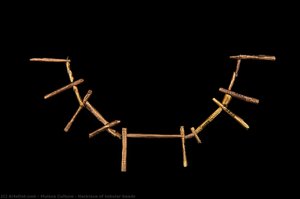
- Necklace of tubular beads
- Zoomorphic figure
- Máscara
- Place Of Birth: Cundinamarca, Colombia