 Preview
 Send
Send Share
Share
 Details

 Download
 Similars
 X-Ray
X-Ray Diaporama
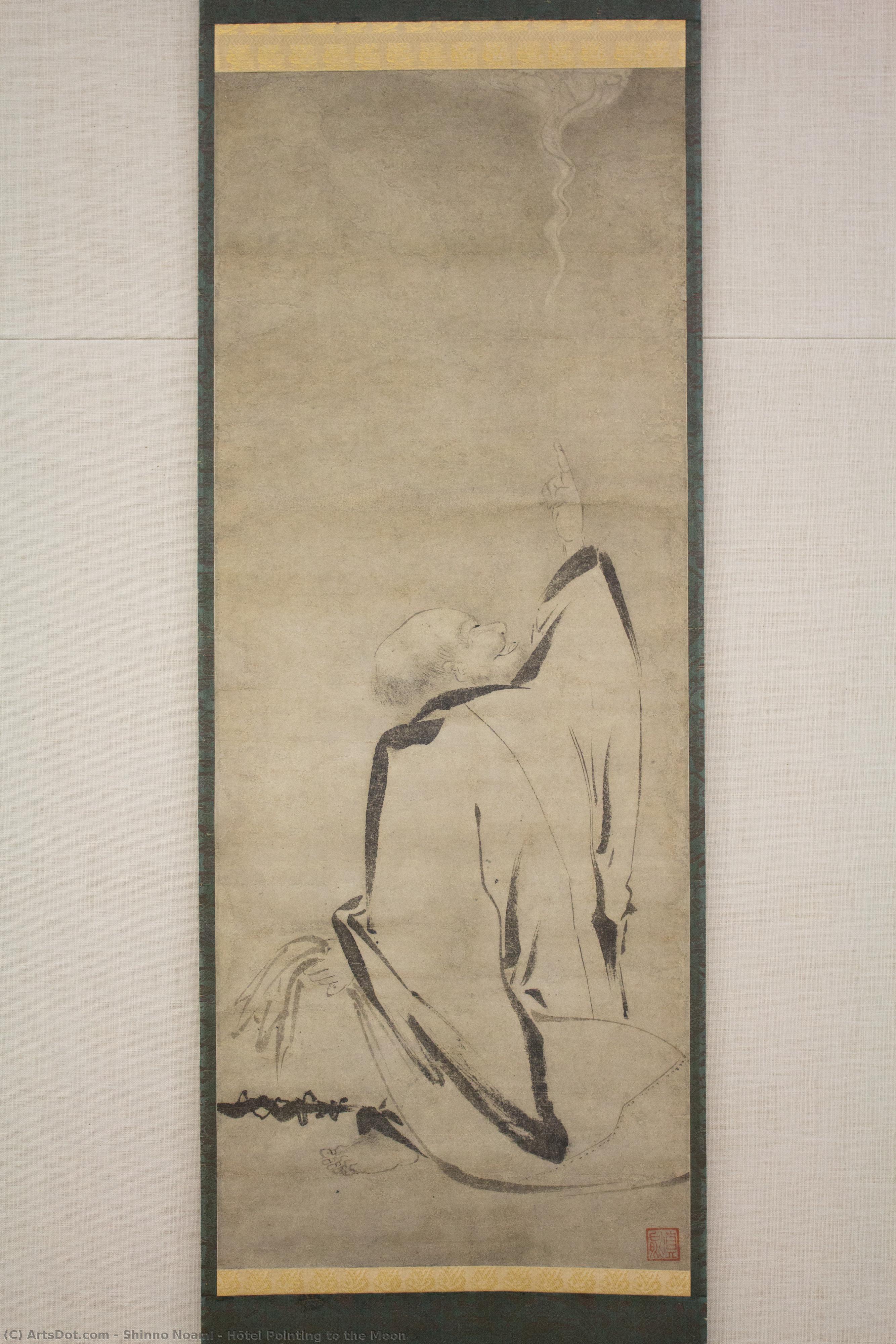
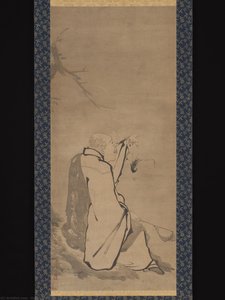
Hōtei Pointing to the Moon
 Ink On Paper
- Suiboku-ga
 401
401- Late Medieval
 80.0cm x 32.0cm
 Read More
Hand Made Oil Reproduction
Hand-painted oil on canvas in your size and frame, made to order by our artists. ( Buy Print Buy Image)




P118B $10

P118H $10

P118W $10

P438Z $10

P508JH $12

P508YH $12

P805H $10

P805Z $10

P919BZ $10

P919G $10

P919XJ $10

P959ZH $10

P968JZ $12

W106C $8

W218G $10

W218JH $8

W218Y $10

W307PJ $10

W316G $10

W316PJ $8

W316Y $10

W398PJ $8

W4111J $10

W500HY $15

W500JH $15

W692G $12

W849H $8

W940BG $15

W953PJ $8




Pick from our preset sizes that match the artwork's original proportions.

You may enter your own dimensions to fit a specific frame or space. If your selected size does not match the original image's proportions, we will either crop the artwork or extend the painting with additional hand-painted elements. A digital mockup will be sent for your approval before production begins.
Please note that the on-screen preview does not reflect the actual cropping or extension. Only the mockup will accurately show the final composition.
While custom sizes are available, we recommend selecting a dimension from the predefined list to preserve the original proportions.
After order, ArtsDot.com team will email client for instructions and provide a mockup preview
Worldwide Delivery () in 3/4 weeks instead of standard 5 weeks. (23 August). No compromise on quality.

Free Worldwide Express Shipping

High-Quality Linen Canvas

Full Shipping Insurance

Customs Tax Refund Guarantee

True Color Matching Guarantee

60-Day Return Policy (Defects Only)

100% Money-Back Guarantee

Bulk Discount Offer
 Glass option is only available in size under 110 CM

Hōtei Pointing to the Moon
Reproduction Medium
Reproduction Size
-


Total Price
$ 263
Artwork Description
The Essence of Enlightenment: A Masterpiece of Zen Ink
In the quiet, meditative realm of Muromachi period Japan, few images capture the profound simplicity of spiritual awakening as poignantly as Hōtei Pointing to the Moon. Created by the esteemed dōbōshū artist and connoisseur Nakao Shinnō, this exquisite monochrome ink painting serves as a window into the Zen Buddhist soul. The artwork depicts Hōtei, the legendary tenth-century monk known for his rotund figure and infectious joy, captured in a singular, transcendent moment. As he gestures toward the luminous moon, the viewer is invited to look beyond the physical form of the monk and contemplate the vast, unseen truths that lie just beyond the reach of material desire.
The composition is a masterclass in the suiboku style, where the deliberate use of black and grey ink washes on paper creates a sense of infinite depth within a minimalist framework. Shinnō employs fluid, expressive brushstrokes to define Hōte's iconic silhouette, allowing the organic shapes of his sack and rounded body to breathe within the sparse landscape. There is a rhythmic grace to the linework; it is both disciplined and spontaneous, mirroring the Zen ideal of effortless action. The subtle gradations of ink density provide a soft, diffused light that bathes the scene in a serene, ethereal atmosphere, making the paper itself feel like an extension of the misty, spiritual void.
Symbolism and the Path to Wisdom
Every element within this vertical scroll is steeped in deep philosophical significance. Hōtei, often regarded as an earthly incarnation of Maitreya, the Buddha of the Future, represents a state of pure, intuitive experience. His presence—earthy, eccentric, and unburdened—contrasts beautifully with the celestial symbol of the moon. In Buddhist iconography, the moon is a powerful metaphor for enlightenment, wisdom, and the clarity that arises when one detaches from worldly illusions. By pointing to the moon, Hōtei directs our attention away from his own physical abundance and toward the spiritual light that illuminates all existence.
For the discerning collector or interior designer, this painting offers more than mere decoration; it provides a focal point for contemplation and peace. The artwork’s limited palette of blacks, greys, and subtle browns allows it to integrate seamlessly into sophisticated, modern spaces, particularly those favoring minimalist or Zen-inspired aesthetics. It carries an emotional weight that is both grounding and uplifting, making it an ideal centerpiece for a study, a meditation room, or a gallery designed to evoke tranquility. To possess a reproduction of this work is to bring a piece of Japan's golden age of ink painting into the contemporary home, fostering an environment of mindfulness and timeless elegance.
Related Artworks

Artist Biography
The Architect of Aesthetic Taste and Landscape Harmony
Nakao Shinnō (1397–1471) stands as a towering figure in Japanese art history—a true embodiment of the dōbōshū ideal: artist, connoisseur, and scholar serving the Ashikaga shogunate. Born in Kyoto during the tumultuous Muromachi period, Shinnō's life coincided with an era of artistic flourishing yet also profound political instability, shaping his worldview and profoundly influencing his creative output. He was not merely a painter; he was instrumental in establishing standards for visual culture, leaving an indelible mark on Japanese aesthetics and design principles that continue to resonate today.
Shinnō's formative years were steeped in Buddhist scholarship and artistic tradition. His father, Nakao Yoshimitsu, was a renowned potter, providing Shinnō with an early connection to the tactile beauty of craft. He received extensive training under Shūbun, a celebrated landscape painter who championed the yosei aesthetic—a harmonious blend of beauty and intellect. This influence is immediately apparent in Shinnō's artistic style, characterized by meticulous observation of nature and imbued with subtle spiritual contemplation. Unlike many artists of his time focused solely on technique, Shinnō possessed an exceptional understanding of visual perception and the psychology of viewing art, skills honed through rigorous study and experience.
The Zenith of Ashikaga Patronage
Shinnō’s career ascended rapidly as he gained favor with successive Ashikaga shoguns—Yoshihiro and Yoshimasa—who recognized his unparalleled talent for both painting and artistic judgment. He served as a curator of the shogunate's collection, tasked with evaluating imported artworks and formulating guidelines for their display within shoin rooms—spaces designed to foster contemplation and aesthetic refinement. This role cemented Shinnō’s legacy as a pioneer in design; his contributions helped define how art interacted with architecture, creating an immersive environment where every object held spiritual weight.
His mastery of the suiboku (ink wash) technique allowed him to translate complex Zen philosophies into minimalist visual language. In works such as Hōtei Pointing to the Moon, Shinnō utilizes a monochrome palette of black and grey ink washes to evoke infinite depth. Through fluid, expressive brushstrokes, he captures the essence of enlightenment, using the contrast of ink density to create a soft, diffused light that bathes his subjects in serenity. This ability to balance disciplined linework with spontaneous, organic shapes mirrors the Zen ideal of effortless action.
Legacy and Historical Significance
Beyond his individual paintings, Shinnō's influence extended into the very fabric of Japanese lifestyle and ceremony. As an advisor on chanoyu (the tea ceremony) and a master of tate-bana (flower arrangements), he helped bridge the gap between fine art and daily ritual. His life’s work contributed to several enduring pillars of Japanese culture:
- The Development of Shōin Style: Establishing the visual vocabulary for the architectural spaces used by the elite.
- Zen Aesthetics in Painting: Refining the use of monochrome ink to represent profound spiritual truths and the concept of emptiness.
- Curatorial Excellence: Setting the standard for the evaluation and preservation of precious artworks within the shogunate.
- Integration of Arts: Blending painting, pottery, floral arrangement, and tea ceremony into a unified aesthetic experience.
Today, Nakao Shinnō is remembered not just as a creator of images, but as a visionary who shaped the eyes through which we view the world. His ability to find the infinite within the minimal remains a cornerstone of Japanese artistic identity.
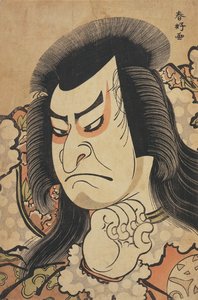
nakao shinnō
1397 - 1471 , Japan
Quick Facts
- Artistic Movement Or Style: Suiboku ink painting
- Artists Or Movements Influenced By This Artist: ['Murata Shukō']
- Artists Who Influenced This Artist: ['Shūbun']
- Date Of Birth: Kyoto, Japan (1397)
- Date Of Death: 1471
- Full Name: Nakao Shinnō
- Nationality: Japanese
- Notable Artworks: ['Hōtei Pointing to the Moon']
- Place Of Birth: Kyoto
Related Articles
Ephemeral Expressions: Exploring the Nuances of Ink on Paper Through History & Contemporary Art
Explore the captivating world of ink wash painting – from its ancient origins to contemporary masters. Discover techniques, symbolism & conservation insights with ArtsDot.com.

Ephemeral Lines: Exploring Emotional Resonance in Ink Sketching Traditions
Explore the profound art of ink sketching! Discover techniques to express emotion, master line work, and cultivate artistic sensitivity. Learn from historical masters & unlock your creative potential.
Xie Zhiliu: A Legacy of Ink Wash Painting & Modern Chinese Literati Tradition
Explore the legacy of Xie Zhiliu, a master of Chinese ink wash painting & prominent figure in modern art. Discover his techniques, influences, and contributions to literati tradition. A guide for discerning collectors.
The Subtleties of Shade: Exploring Monochrome's Enduring Power in Art History & Contemporary Practice
Explore the captivating world of monochrome painting! Discover its rich history, from Renaissance chiaroscuro to contemporary minimalism. Uncover the emotional power and artistic techniques behind this enduring art form.

Monochrome Visions: Exploring the Aesthetic & Historical Significance of Black & White Photography
Explore the rich history & artistic power of black and white photography. From early techniques to iconic masters like Ansel Adams, discover why monochrome continues to captivate art lovers today. Expert insights for collectors.