 Send
Send Share
Share
 Details

 Download
 Similars
 Diaporama
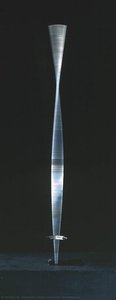
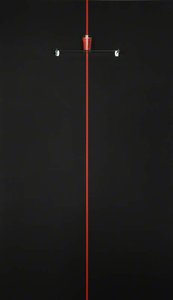
Kinetic Construction (Standing Wave)


 Read More
Giclée / Art Print
Museum-quality giclée or canvas print with fast production and flexible finish options. ( Buy Hand Made Painting Buy Image)




































Pick from our preset sizes that match the artwork's original proportions.

You may enter your own dimensions to fit a specific frame or space. If your selected size does not match the original image's proportions, we will either crop the artwork or extend the image with a mirrored or solid-fill edge. A digital mockup will be sent for your approval before production begins.
Please note that the on-screen preview does not reflect the actual cropping or extension. Only the mockup will accurately show the final composition.
While custom sizes are available, we recommend selecting a dimension from the predefined list to preserve the original proportions.
Worldwide Delivery () in 2 weeks instead of standard 4/5 weeks. (17 August)

Free Worldwide Express Shipping

High-Quality Linen Canvas

Full Shipping Insurance

Customs Tax Refund Guarantee

True Color Matching Guarantee

60-Day Return Policy (Defects Only)

100% Money-Back Guarantee

Bulk Discount Offer
 Glass option is only available in size under 110 CM

Kinetic Construction (Standing Wave)
Giclée / Art Print
Reproduction Size
-


Total Price
$ 63
Collectible Description
The Geometry of Motion: Exploring Gabo's Standing Wave
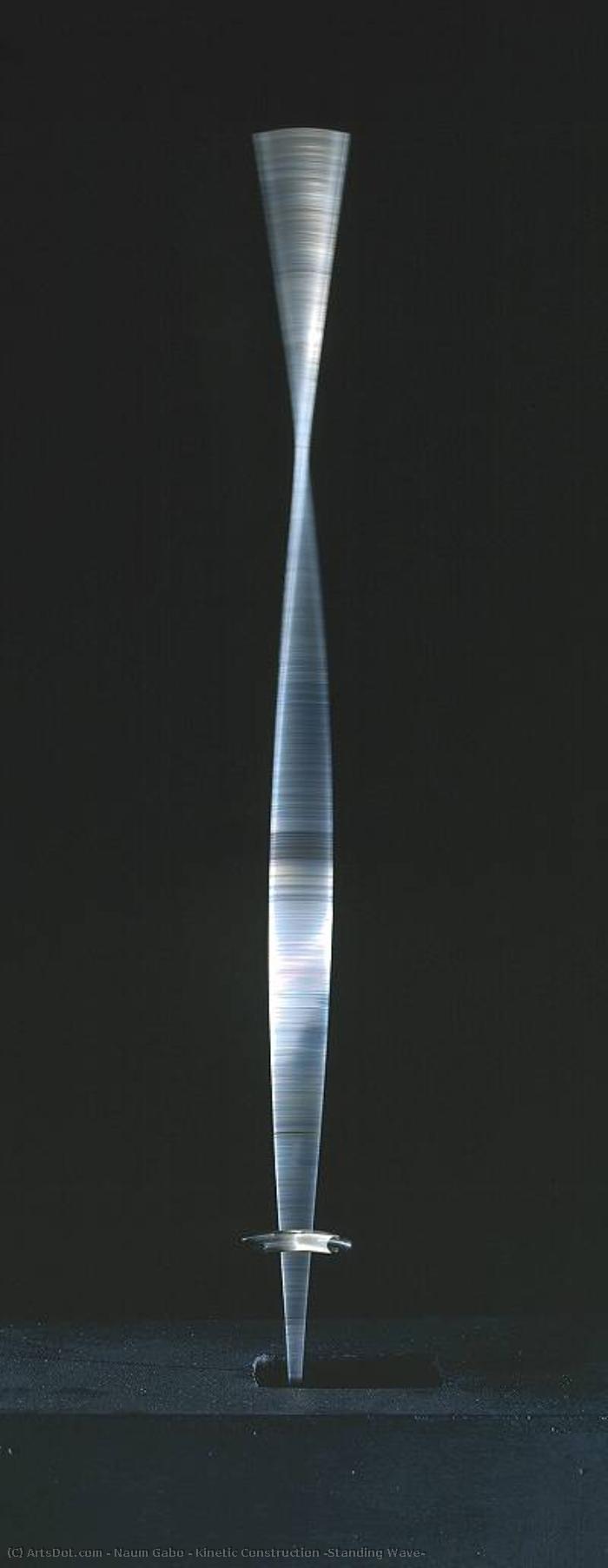
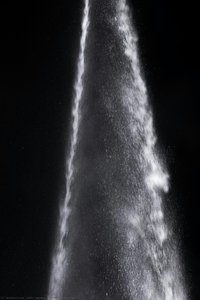
To stand before Naum Gabo’s Kinetic Construction (Standing Wave) is not merely to view an object; it is to witness the very concept of energy made tangible. This seminal work, born from the crucible of early twentieth-century modernism, arrests a moment of pure physical phenomenon—the standing wave—and elevates it into the realm of high art. The sculpture commands attention with its striking verticality, seeming to ascend against an abyss of near-black background. It speaks in a language understood by both the engineer and the philosopher: the elegant interplay between structure and void.
Constructivism and the Modern Spirit
This piece is deeply rooted in the ethos of Constructivism, an artistic movement that rejected the sentimentalism of past eras, championing instead the purity of industrial materials and geometric logic. Gabo, a pioneer whose vision spanned from Russian avant-garde to international modernism, sought art that reflected the dynamism of the machine age and the scientific understanding of the world. The polished metal—be it aluminum or stainless steel—is not just a material; it is a declaration. It embraces the industrial precision while simultaneously achieving an almost organic grace in its undulating curves. It suggests that true beauty can be found where mathematics meets metallurgy.
Light, Shadow, and Perceived Energy
Observe how the light interacts with the form. The dramatic, directional illumination is crucial to the piece's impact. Highlights catch on the polished surfaces, creating brilliant streaks of reflected energy, while deep shadows carve out the negative space around the structure. This interplay between what is seen and what is implied gives the sculpture its illusion of life. It appears to vibrate, a frozen resonance captured in solid metal. The form itself—a smooth, wave-like ascent—is a visual metaphor for forces at play: tension, rhythm, and perpetual motion.
Symbolism Beyond Sight
The Standing Wave is more than just an abstract shape; it is a profound meditation on invisible forces. It symbolizes the unseen energies that govern our lives—the currents of thought, the flow of time, or the underlying principles of physics itself. For the collector or designer, this piece offers a potent focal point for any space, suggesting intellectual rigor and forward-thinking design sensibilities. It invites contemplation, prompting the viewer to consider the invisible structures supporting their own reality.
Bringing the Concept Home
To reproduce such an iconic work is to capture not just metal, but an idea. A hand-painted reproduction allows one to engage with Gabo’s genius in a more intimate way, translating the sculpture's powerful geometry into a decorative element that retains its intellectual weight. Imagine this piece anchoring a modern living space or an executive office—it serves as a constant, silent reminder of art’s capacity to interpret the most complex scientific truths through breathtaking simplicity.
Related Artworks
Artist Biography
A Pioneer of Kineticism: The Life and Art of Naum Gabo
Naum Gabo, born Naum Neemia Pevsner in 1890 in the Russian town of Bryansk, stands as a monumental figure in the evolution of twentieth-century sculpture. His journey was one of constant exploration, driven by a profound belief in the power of abstract art to reflect the dynamism of the modern world and express fundamental human experiences. Gabo wasn’t merely sculpting forms; he was investigating space, time, and the very essence of perception. The son of an engineer, Boris Pevsner, his early life instilled within him a fascination with structure and mechanics – influences that would profoundly shape his artistic vision. He shared a close bond with his brother Antoine Pevsner, also a prominent Constructivist artist, leading him to adopt the name “Gabo” to distinguish their work. This familial connection fostered a lifelong dialogue about art’s potential, culminating in collaborative manifestos and exhibitions that challenged conventional artistic boundaries. His multilingualism – fluency in Russian, German, French, and English – facilitated his peripatetic life, allowing him to engage with avant-garde circles across Europe and eventually the United States.From Russia's Avant-Garde to Global Influence
Gabo’s artistic development was inextricably linked to the revolutionary fervor of early twentieth-century Russia. After initial studies in medicine and natural sciences at Munich University, followed by engineering training, he immersed himself in the Parisian art scene alongside his brother Antoine around 1913. The seeds of his future style were sown during this period, as he absorbed influences from Cubism and Futurism while simultaneously developing a unique approach rooted in geometric abstraction. Upon returning to Russia following the 1917 revolution, Gabo became deeply involved in the burgeoning Constructivist movement. He, alongside Antoine Pevsner, articulated their vision in the “Realistic Manifesto” of 1920 – a pivotal text that rejected the decorative aspects of earlier abstract movements and championed a new art focused on representing "kinetic rhythms," the fundamental forms of our perception of time and space. This manifesto wasn’t simply an aesthetic declaration; it was a philosophical statement about art's role in reflecting the scientific and social progress of the age. The brothers staged an open-air exhibition in Moscow to accompany its release, boldly presenting their ideas directly to the public. However, the increasingly restrictive political climate in Russia led Gabo to leave the country in 1922, embarking on a journey that would take him through Berlin, Paris, Oslo, and finally, London before settling in the United States.Sculpting Space and Time: A Revolutionary Approach
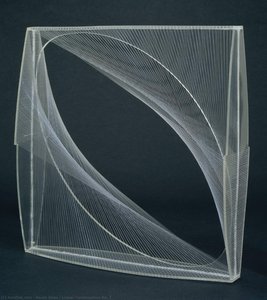
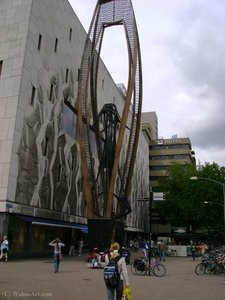
Gabo’s artistic innovations were characterized by a relentless exploration of new materials and techniques. He moved beyond traditional sculptural mediums like stone and bronze, embracing industrial materials such as nylon, wire, lucite, glass, and metal to create works that defied conventional notions of form and volume. A defining feature of his work was his interest in “negative space” – the voids and openings within a sculpture. He didn’t see these spaces as mere absences but as integral components of the artwork itself, possessing a concrete reality equal to that of solid mass. His *Linear Constructions* (1942-1971) exemplify this approach, utilizing nylon filament to create delicate, ethereal structures that define space rather than occupying it. Perhaps his most groundbreaking achievement was his pioneering work in kinetic sculpture. *Kinetic Sculpture (Standing Waves)* (1920), often considered the first true kinetic artwork, demonstrated Gabo’s fascination with movement and time as essential elements of artistic expression. He wasn't simply creating static objects; he was crafting experiences that unfolded over time, engaging the viewer in a dynamic interplay between form and perception.Legacy and Enduring Significance
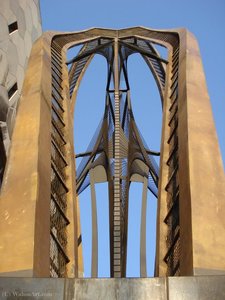
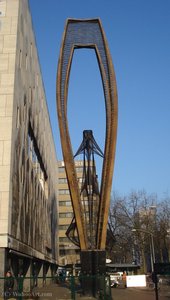
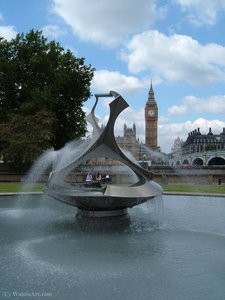
Throughout his career, Naum Gabo received significant recognition for his contributions to modern sculpture. Major retrospectives were held at the Tate Gallery in London (1966) and numerous institutions across Europe and America showcased his work. He completed several public commissions, including *Constructie* in Rotterdam and *Revolving Torsion* in London, though many ambitious projects remained unrealized due to logistical or financial constraints. His influence extended beyond sculpture, impacting architecture, design, and even dance. Gabo’s unwavering commitment to abstraction, his innovative use of materials, and his exploration of space and time continue to inspire artists today. He left behind a body of work that challenges us to reconsider the very nature of sculpture – not as a representation of reality, but as an embodiment of its underlying forces and rhythms. His legacy lies in his ability to transform abstract concepts into tangible experiences, inviting viewers to engage with art on a deeply intellectual and emotional level. He died in Connecticut in 1977, leaving behind a profound artistic inheritance that continues to resonate within the world of modern and contemporary art.Key Works & Collections
- Hommage à Naum Gabo (Homage to Naum Gabo) by Jankel Adler – A testament to Gabo’s influence on other artists.
- Untitled (416) – Demonstrates his mastery of abstract form and material exploration.
- Untitled, (1957) – An example of his urban sculpture and architectural studies.
- His works are prominently featured in the collections of:
- The Tate Gallery, London
- The Museum of Modern Art, New York
- The Guggenheim Museum, New York
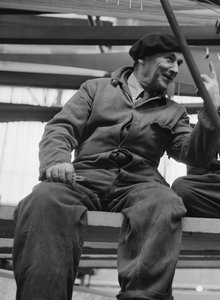
Naum Gabo
1890 - 1977 , Russia
Quick Facts
- Artistic Movement Or Style: Constructivism, Kinetic Art
- Artists Or Movements Influenced By This Artist:
- Antoine Pevsner
- Cubism
- Bauhaus
- De Stijl
- Artists Who Influenced This Artist: ['Wassily Kandinsky']
- Date Of Birth: 1890
- Date Of Death: 1977
- Full Name: Naum Gabo
- Nationality: Russian
- Notable Artworks:
- Hommage à Naum Gabo
- Untitled (416)
- Untitled (1957)
- Place Of Birth: Bryansk, Russia
Related Articles

Geometric Abstraction's 10 Defining Masterpieces | Art for Your Home - ArtsDot
Explore 10 defining masterpieces of Geometric Abstraction! Discover Kandinsky, Mondrian & Malevich’s iconic works. Find museum-quality art reproductions and curated decor ideas to elevate your home at ArtsDot.com.
Beyond Form & Color: Geometric Abstraction's Evolution in 20th/21st Century Art
Explore the evolution of geometric abstraction from Cubism to contemporary art. Discover key artists like Malevich & Mondrian, investment insights, and expert collecting advice at ArtsDot.

Bronze Sculptures That Defined Art History | ArtsDot
Journey through art history with our Top 10 bronze sculptures! Explore masterpieces by Rodin, Michelangelo & more. Discover stories behind iconic statues and find museum-quality reproductions for your home decor at ArtsDot.com.
Beyond Form & Color: Geometric Abstraction's Enduring Legacy in Art History
Explore the captivating world of geometric abstraction! Discover its origins, key artists like Malevich & Mondrian, and why this movement remains highly valued by art collectors today. Expert insights at ArtsDot.
Geometric Design in Art: A Historical Survey & Contemporary Appeal for Collectors
Explore the enduring legacy of geometric abstraction! Discover key artists, historical movements & investment insights for discerning art collectors. Expert guidance from ArtsDot.