

 Preview
 Send
Send Share
Share
 Details

 Download
 Similars
 X-Ray
X-Ray Diaporama
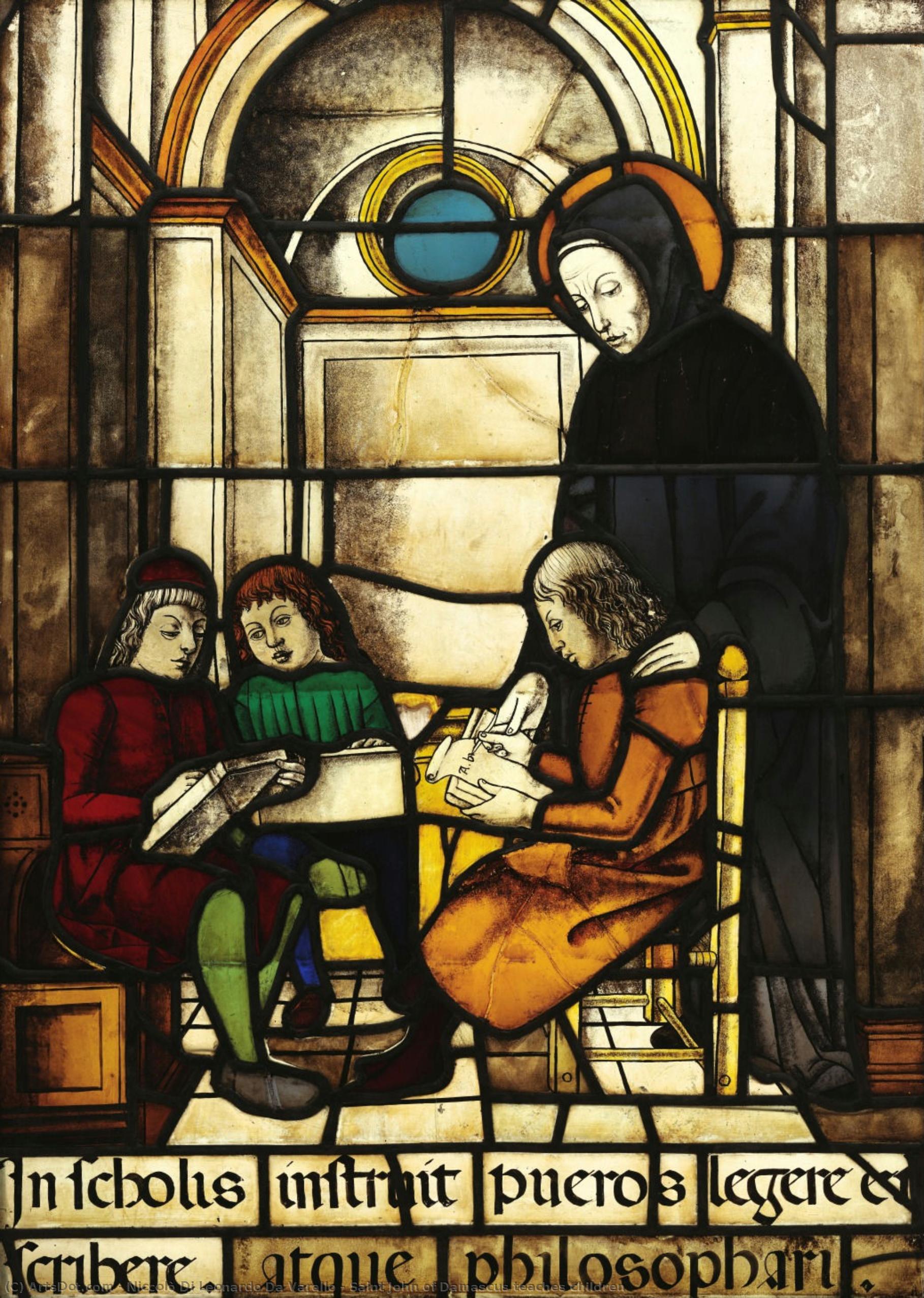
Saint John of Damascus teaches children


 Read More
Purchase a high-resolution, enhanced digital image, far superior to the online preview.
Each file is meticulously prepared by our in-house specialists using advanced tools and expert manual retouching. We ensure every image has exceptional clarity, precise color accuracy, and fine detail.
The final file is delivered via email within 72 hours, optimized for immediate use in professional, editorial, and print environments. This is the same quality trusted by top-tier design studios, publishers, and galleries.
Digital Image
Download a high-resolution file for personal display, printing, and creative projects. ( Buy Print Buy Hand Made Painting)
Included in Every Digital Image Order
Expert Digital Delivery, Guaranteed
When you choose ArtsDot.com, you're not just getting an image - you're receiving a professionally enhanced digital artwork, crafted with precision and backed by a satisfaction guarantee. Here's everything that comes with your order, automatically:

Fast Email Delivery
Your high-resolution digital image file will be emailed to you within 72 hours of ordering - ready for immediate use.

AI-Enhanced Digital File
Your artwork is professionally optimized using advanced AI tools and manual editing, ensuring maximum detail, clarity, and color accuracy.

Free Lifetime Re-Delivery
Accidentally deleted or lost your file? No worries - we'll resend it to you anytime, free of charge.

No Import Fees - Ever
Enjoy your artwork instantly with zero customs, duties, or delivery fees - digital downloads are always tax-free.

Color Accuracy Guarantee
We ensure your digital image reflects the original colors as closely as possible using professional tools and color management.

60-Day Satisfaction Guarantee
If you're not satisfied with your digital image, we'll revise it or refund 100% within 60 days - no questions asked.

100% Money-Back Guarantee
Not satisfied? Get a full refund within 60 days of receiving your digital file - no questions asked.

Bulk Order Discounts
Buy 3 images, save 10% - Buy 5, save 15% - Buy 10+, save 20%. Great for creative projects, galleries, and agencies.
Saint John of Damascus Teaches Children - A Window Into Byzantine Faith
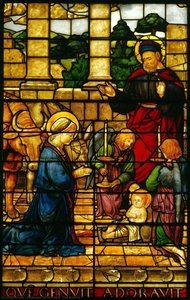
This magnificent panel originates from Stained Glass Window V25 of Milan Duomo, commissioned during the Renaissance and completed between 1479 and 1489 by Niccolò da Varallo. More than just a decorative element, this artwork embodies the spiritual heart of medieval Christendom—specifically, Byzantine theology—and offers a glimpse into the artistic sensibilities of its time. Its enduring appeal lies in its masterful blend of Gothic tradition with humanist ideals, resulting in an image that continues to resonate with viewers today.The Artist and His Craftsmanship
Niccolò da Varallo (1425–1490), born in Varallo della Val d'Oro, Lombardy, represents a pivotal figure within the Venetian Renaissance and Gothic art movements. While overshadowed by luminaries like Titian and Bellini, Varallo’s contribution to stained glass artistry is undeniable—he achieved renown for his ambitious projects adorning Milan Cathedral. His training likely involved studying the techniques of earlier masters, particularly Vincenzo Foppa, whose influence can be discerned in Varallo's stylistic choices. Primarily active in Milan from 1445 until his death in 1490, Varallo’s career coincided with a period marked by fervent artistic experimentation and cultural flourishing. He skillfully employed tempera paint on fruitwood panel—a technique favored for its luminosity and ability to capture intricate detail—to depict a scene brimming with symbolic significance.A Scene of Learning and Divine Inspiration
The depicted image portrays Saint John of Damascus instructing children in philosophy and literature. This choice is deliberate, reflecting the importance placed upon education within Byzantine society and symbolizing the transmission of faith from elder to younger generations. The panel’s composition—featuring a central figure of St. John surrounded by attentive pupils—creates an atmosphere of serene contemplation and intellectual engagement. Notice the careful positioning of the chairs and bench, reinforcing the sense of communal learning and fostering a contemplative environment.Symbolism and Artistic Style: Gothic Echoes in Renaissance Vision
The artwork’s style is unmistakably Gothic, albeit infused with humanist elements characteristic of the Renaissance. Varallo's meticulous attention to detail—evident in the depiction of St. John’s robes and the expressions on the faces of his students—demonstrates a mastery of traditional techniques while simultaneously embracing a more refined aesthetic sensibility. The inclusion of a moth symbolizes resurrection and transformation, aligning with broader theological themes prevalent during the period. Furthermore, the presence of Christ Child and Salome adds another layer of complexity to the narrative, representing the divine incarnation alongside human compassion.A Legacy Enduring Through Time
Despite undergoing renovations in the 19th century—primarily aimed at restoring its vibrancy—Window V25 retains its original splendor and continues to inspire admiration for its artistic merit and spiritual depth. Niccolò da Varallo’s masterpiece stands as a testament to the enduring power of art to convey profound ideas and emotions, securing its place within the annals of Venetian Renaissance Gothic Art.Related Artworks
Artist Biography
The Luminous Legacy of Niccolò da Varallo
In the heart of the Italian Renaissance, where light and shadow began to dance with newfound realism, the name Niccolò da Varallo emerges as a master of brilliance. Born around 1425 in the rugged beauty of Varallo della Val d'Oro, Lombardy, his very lineage was steeped in the alchemy of color. As the son of Leonardo da Varallo, a skilled glassmaker, Niccolò inherited more than just a family name; he inherited a profound understanding of how light interacts with medium, a gift that would later define his revolutionary approach to stained glass and frescoes.
While much of his early life remains veiled in the mists of history, his artistic trajectory was undoubtedly shaped by the vibrant cultural currents of Milan. It is believed that he refined his craft under the tutelage of Maestro Giovanni Battista Sant'Anna, a prominent figure in Milanese painting. This mentorship provided Niccolò with a bridge between the meticulous, ornamental traditions of the Gothic era and the burgeoning humanism of the Renaissance. Through this training, he mastered the ability to weave complex theological narratives into visual tapestries that were as much about spiritual transcendence as they were about technical precision.
A Master of Light and Glass
Niccolò’s most enduring contribution to the art world lies in his breathtaking stained-glass commissions for the Milan Cathedral. In these works, he transcended the traditional boundaries of the medium, moving away from static, flat designs toward a more dynamic and emotive storytelling style. His panels are not merely windows but portals into the divine, characterized by a fusion of Venetian color palettes and Gothic geometric intricacy.
His mastery is perhaps most evident in his depictions of the life of Saint John of Damascus. Through these glass narratives, Niccolò captured moments of profound spiritual weight with an almost cinematic quality:
- The Ordination of Saint John of Damascus: In this stunning panel, Varallo utilizes the interplay of light to depict a pivotal moment in Byzantine theology, using color to evoke the sanctity of the ritual.
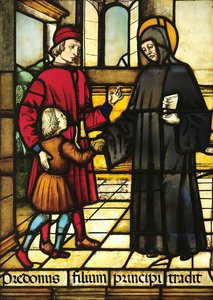
- Saint John of Damascus Receives the Prince: Here, the artist demonstrates his ability to render complex human interactions and regal dignity through the delicate manipulation of glass textures.
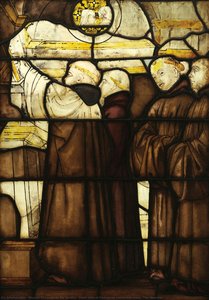
- The Miracle of the Reattached Hand: Perhaps one of his most captivating scenes, this panel depicts the miraculous reattachment of Saint John's hand, a feat of storytelling that uses vibrant hues to emphasize the divine intervention and the awe of the witnessing monks.
Historical Significance and Artistic Spirit
The work of Niccolò da Varallo represents a crucial evolutionary step in late medieval and early Renaissance art. He stood at the crossroads of two worlds, maintaining the decorative splendor of the Gothic tradition while embracing the emerging realism and emotional depth of the Renaissance. His ability to manipulate light—the very essence of stained glass—allowed him to create works that felt alive, breathing with the changing sunbeams that passed through the Milan Duomo.
Though his name may not carry the same immediate recognition as the giants of the High Renaissance, his influence on the decorative arts and ecclesiastical storytelling is immeasurable. He remains a testament to the power of craftsmanship, proving that when the precision of a glassmaker meets the soul of a painter, the result is an eternal glow that survives centuries of shadow.
niccolò di leonardo da varallo
1425 - 1490 , Italy
Quick Facts
- Artistic Movement Or Style: Renaissance
- Artists Or Movements Influenced By This Artist: ['Italian Renaissance']
- Artists Who Influenced This Artist:
- Andrea Mantegna
- Giovanni Battista Pontorno
- Date Of Birth: 1425
- Date Of Death: 1490
- Full Name: Niccolò di Leonardo da Varallo
- Nationality: Italian
- Notable Artworks:
- Saint John of Damascus celebrates mass. The deacons
- The ordination of Saint John of Damascus
- Place Of Birth: Varallo della Val d'Oro, Italy

