 Preview
 Send
Send Share
Share
 Details

 Download
 Similars
 X-Ray
X-Ray Diaporama
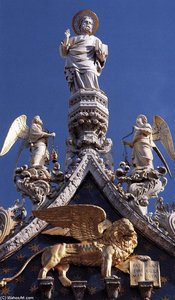
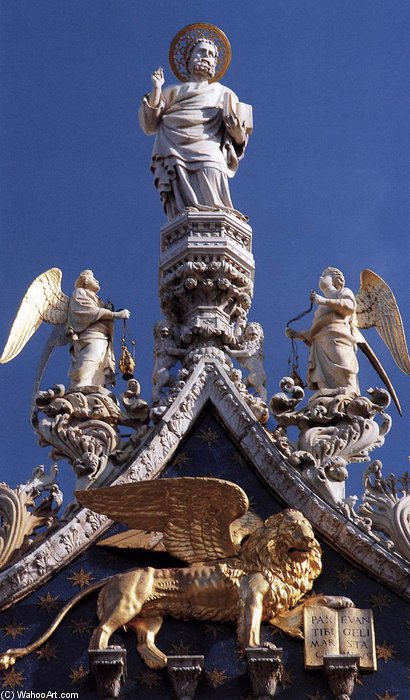
St Mark Blessing
 Read More
Giclée / Art Print
Museum-quality giclée or canvas print with fast production and flexible finish options. ( Buy Hand Made Painting Buy Image)




































Pick from our preset sizes that match the artwork's original proportions.

You may enter your own dimensions to fit a specific frame or space. If your selected size does not match the original image's proportions, we will either crop the artwork or extend the image with a mirrored or solid-fill edge. A digital mockup will be sent for your approval before production begins.
Please note that the on-screen preview does not reflect the actual cropping or extension. Only the mockup will accurately show the final composition.
While custom sizes are available, we recommend selecting a dimension from the predefined list to preserve the original proportions.
Worldwide Delivery () in 2 weeks instead of standard 4/5 weeks. (21 August)

Free Worldwide Express Shipping

High-Quality Linen Canvas

Full Shipping Insurance

Customs Tax Refund Guarantee

True Color Matching Guarantee

60-Day Return Policy (Defects Only)

100% Money-Back Guarantee

Bulk Discount Offer
 Glass option is only available in size under 110 CM

St Mark Blessing
Giclée / Art Print
Reproduction Size
-


Total Price
$ 63
Related Artworks

Artist Biography
The Sculptor of Venetian Grandeur: The Life of Niccolò di Piero Lamberti
In the vibrant, sun-drenched era of the early Italian Renaissance, few figures bridged the artistic worlds of Florence and Venice as effectively as Niccolò di Piero Lamberti. Known variously as Niccolò Aretino or il Pela, Lamberti was more than a mere craftsman; he was a pioneer of form and a vital conduit for the Tuscan sculptural tradition. Born around 1370 in Florence, a city then pulsating with the intellectual energy of humanism, Lamberti’s early years were steeped in the rigorous traditions of Florentine excellence. His formative period saw him engaging with the most significant architectural and sculptural challenges of his age, including work on the prestigious Porta della Mandorla of the Florence Cathedral. This early exposure to the monumental scale of Florentine sacred architecture instilled in him a profound understanding of how sculpture could breathe life into stone and transform the very atmosphere of a cathedral.
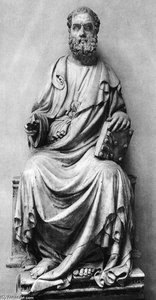
The trajectory of Lamberti’s career was marked by an extraordinary ability to blend anatomical precision with a burgeoning sense of narrative drama. While historical records suggest he participated in the legendary 1401 competition for the Florence Baptistery doors—a contest famously won by Lorenzo Ghiberti—it is his individual mastery of the human figure that truly defines his legacy. His work on the seated Evangelist, specifically the statue of Saint Mark for the Florence Cathedral, completed around 1415, remains a testament to his ability to imbately capture divine presence through physical grace. This period of his life was characterized by a deep commitment to the realistic portrayal of saints and biblical figures, moving away from the rigid stylization of the Gothic era toward a more fluid, human-centric Renaissance aesthetic.
A Bridge Between Two Republics
As the 15th century progressed, Lamberti’s artistic journey took a transformative turn when he relocated to Venice. This migration was not merely a change in geography but a profound expansion of his artistic vocabulary. Alongside his son, Piero di Niccolò Lamberti, he became instrumental in exporting the sophisticated Tuscan style to the Venetian lagoon. In Venice, Lamberti found a new kind of patronage and a different architectural language, one that demanded a marriage of Florentine structural clarity with the luminous, atmospheric qualities of Venetian light. His contributions to the upper storey of the Saint Mark's Basilica façade represent a pinnacle of this cross-cultural synthesis, where his sculptural reliefs helped define the majestic face of the most important religious site in Venice.
Lamberti’s influence extended deep into the civic and religious fabric of both cities through several monumental achievements:
- The Orsanmichele Tabernacle: His transformative work on the Orsanmichele in Florence, particularly the intricate reliefs for the guilds, showcased his ability to integrate complex storytelling into architectural ornamentation.
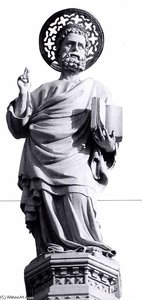
- The Sculptures of St. Mark and St. Theodore: These works, executed under the patronage of Tommaso Mocenigo, stand as enduring symbols of his mastery over expressive dynamism and religious devotion.
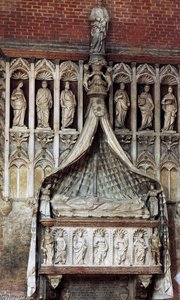
- Civic and Guild Commissions: From the Guild of Furriers and Skinners to the monumental Tomb of Giovanni Battista Soderini, Lamberti’s work served as a cornerstone for the visual identity of the Florentine merchant class.
Ultimately, the historical significance of Niccolò di Piero Lamberti lies in his role as an artistic diplomat. He did not merely move between cities; he moved ideas. By carrying the anatomical rigor and linear perspective learned in the workshops of Florence to the maritime splendor of Venice, he helped create a unified Renaissance language that transcended regional boundaries. His legacy survives in the silent, powerful stone figures that continue to command reverence in the museums and cathedrals of Italy, reminding us of a time when sculpture was the primary vessel for the soul's expression.
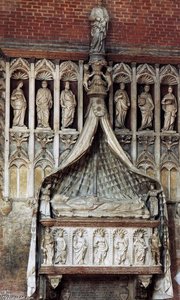
niccolò di piero lamberti (niccolo aretino)
1370 - 1451 , Italy
Quick Facts
- Artistic Movement Or Style: Renaissance
- Date Of Birth: Florence, Italy (1370)
- Date Of Death: 1451
- Full Name: Niccolò di Piero Lamberti
- Nationality: Italian
- Notable Artworks:
- St Mark Blessing
- St Mark
- Place Of Birth: Florence