 Preview
 Send
Send Share
Share
 Details

 Download
 Similars
 X-Ray
X-Ray Diaporama
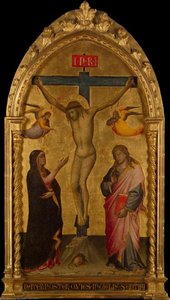
Crucifixion with the Virgin and St John
 Acrylic On Canvas
- WallArt
- Utrecht Caravaggism
 1390
1390 86.0 x 53.0 cm
 Hermitage Museum
 Read More
Hand Made Oil Reproduction
Hand-painted oil on canvas in your size and frame, made to order by our artists. ( Buy Print Buy Image)




P118B $10

P118H $10

P118W $10

P438Z $10

P508JH $12

P508YH $12

P805H $10

P805Z $10

P919BZ $10

P919G $10

P919XJ $10

P959ZH $10

P968JZ $12

W106C $8

W218G $10

W218JH $8

W218Y $10

W307PJ $10

W316G $10

W316PJ $8

W316Y $10

W398PJ $8

W4111J $10

W500HY $15

W500JH $15

W692G $12

W849H $8

W940BG $15

W953PJ $8




Pick from our preset sizes that match the artwork's original proportions.

You may enter your own dimensions to fit a specific frame or space. If your selected size does not match the original image's proportions, we will either crop the artwork or extend the painting with additional hand-painted elements. A digital mockup will be sent for your approval before production begins.
Please note that the on-screen preview does not reflect the actual cropping or extension. Only the mockup will accurately show the final composition.
While custom sizes are available, we recommend selecting a dimension from the predefined list to preserve the original proportions.
After order, ArtsDot.com team will email client for instructions and provide a mockup preview
Worldwide Delivery () in 3/4 weeks instead of standard 5 weeks. (16 August). No compromise on quality.

Free Worldwide Express Shipping

High-Quality Linen Canvas

Full Shipping Insurance

Customs Tax Refund Guarantee

True Color Matching Guarantee

60-Day Return Policy (Defects Only)

100% Money-Back Guarantee

Bulk Discount Offer
 Glass option is only available in size under 110 CM

Crucifixion with the Virgin and St John
Reproduction Medium
Reproduction Size
-


Total Price
$ 263
Artwork Description
A Lament in Shadow: Niccolò di Pietro Gerini’s Crucifixion with the Virgin and St John
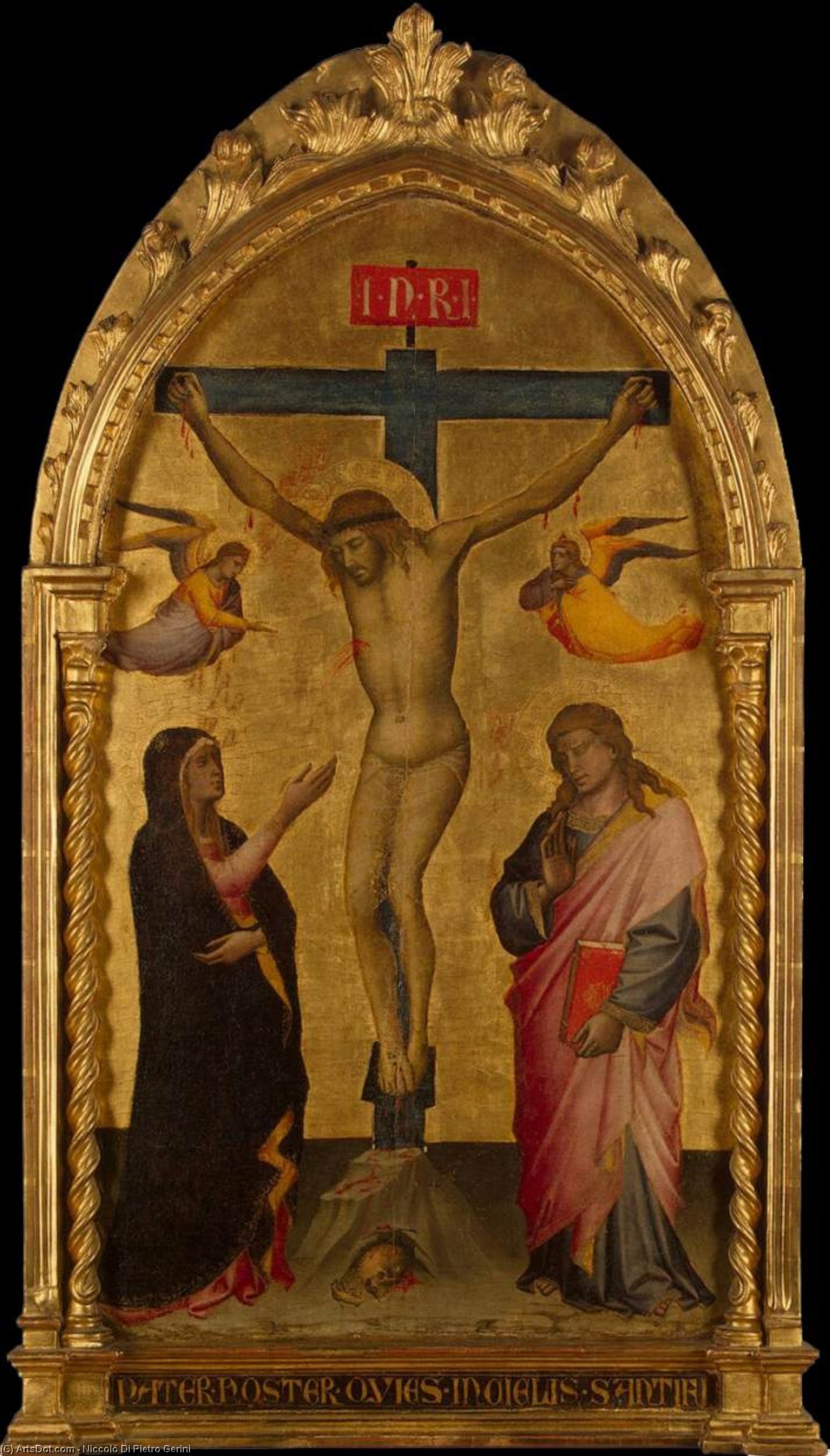
The year is 1390. Florence, a city poised on the cusp of the Renaissance, pulses with artistic fervor – a crucible where the echoes of Gothic grandeur mingle with nascent explorations of naturalism. Within this vibrant landscape emerges Niccolò di Pietro Gerini, a painter whose work offers a poignant glimpse into this transitional period. His “Crucifixion with the Virgin and St John,” now residing within the venerable halls of the Hermitage Museum in St. Petersburg, is not merely a depiction of a biblical scene; it’s an intimate meditation on sorrow, faith, and the enduring weight of human suffering. The painting, measuring 86 x 53 cm and executed in tempera on panel, immediately draws the viewer into its somber atmosphere – a carefully constructed space dominated by deep shadows and a restrained palette that speaks volumes without uttering a single word.
Gerini’s style is distinctly Gothic, yet subtly infused with elements foreshadowing the Renaissance. The figures—Jesus Christ, Mary, and John—are rendered with a deliberate stiffness, their bodies presented in a stylized manner reminiscent of earlier Italian masters like Giotto. However, there's a nascent sense of volume and weight within their forms, hinting at a growing awareness of three-dimensionality that would soon define the era. The composition itself is carefully balanced, guiding the eye through the scene with a measured grace. Note the deliberate positioning of Mary and John—not as passive observers but as active participants in the grief, their postures conveying profound sorrow and devotion.
The Weight of Sorrow: Symbolism and Emotional Resonance
Beyond its formal qualities, the painting is rich in symbolic meaning. The stark darkness enveloping the scene immediately establishes a mood of despair and impending doom. This isn’t simply a dramatic backdrop; it represents the spiritual void left by Christ's sacrifice—a visual metaphor for the loss of innocence and hope. The muted colors – predominantly deep blues, browns, and ochres – further amplify this sense of melancholy. The gold leaf used sparingly in the background, likely intended to represent the divine light, feels strangely subdued, almost hesitant, as if acknowledging the darkness that has descended upon the world.
Crucially, Gerini’s depiction of Christ on the cross is profoundly humanizing. He isn't idealized or glorified; he’s a vulnerable figure enduring unimaginable pain. The wounds are rendered with a stark realism—a deliberate departure from the more ethereal representations common in earlier religious art. The presence of the bones at the foot of the cross, traditionally identified as those of Adam, serves as a potent reminder of humanity's fallen state and the consequences of sin. Mary’s sorrow is palpable – her face etched with grief, her hands clasped in prayer—a testament to her unwavering faith and maternal love. John, positioned beside Christ, embodies loyalty and devotion, his gaze fixed upon his beloved master.
A Legacy Forged in Florence: Context and Influences
To understand Gerini’s work fully, it's essential to consider the artistic context of 14th-century Florence. The city was experiencing a period of intense cultural ferment, with artists like Giotto laying the groundwork for the Renaissance through their innovative use of perspective, naturalism, and emotional expression. Gerini, while not an innovator himself, was deeply influenced by these developments—particularly by Giotto’s emphasis on human emotion and his rejection of Byzantine conventions. He also benefited from a rich artistic tradition in Florence, working alongside masters like Jacopo di Cione and collaborating on significant projects such as the frescoes for the Guild Hall of the Judges and Notaries.
Furthermore, Gerini's family history—his father was a member of the Guild of Saint Luke—provided him with valuable training and access to artistic resources. His son, Bindo, continued the family’s legacy as a painter, demonstrating the enduring influence of Gerini’s artistic vision. The painting’s journey through time – from its creation in Florence to its eventual arrival at the Hermitage Museum – reflects the shifting cultural landscape of Italy and the evolving role of art within society.
Echoes Across Time: Reproduction and Appreciation
The “Crucifixion with the Virgin and St John” remains a powerful testament to the enduring appeal of religious art. Reproductions, meticulously crafted by ArtsDot, offer an opportunity to experience this masterpiece in your own space, bringing its profound beauty and emotional depth into your home or studio. When selecting a reproduction, consider the level of detail and accuracy—a high-quality print will faithfully capture the nuances of Gerini’s original work, allowing you to appreciate the artist's skill and vision. This painting is more than just an image; it’s a window into the soul of 14th-century Florence – a poignant reminder of human suffering, faith, and the enduring power of art.
Related Artworks
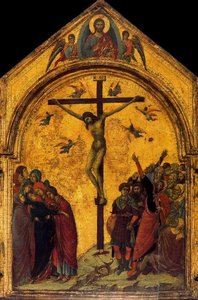
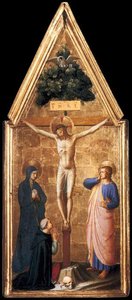
Artist Biography
A Florentine Bridging Worlds: The Life and Art of Niccolò di Pietro Gerini
The Florence of the late 14th and early 15th centuries was a crucible of artistic innovation, poised on the brink of the Renaissance. Within this vibrant milieu lived Niccolò di Pietro Gerini, a painter whose work embodies the transition from the elegant stylizations of the Gothic period to the burgeoning naturalism that would define the new era. Born around 1368 in Florence and passing away circa 1415, Gerini’s career unfolded against a backdrop of artistic ferment, where tradition and experimentation danced a delicate balance. His father, Pietro Geri, was himself a member of the Guild of Saint Luke, suggesting an upbringing steeped in artistic practice—a familial legacy that would continue with Niccolò's son, Bindo, also becoming a painter. Registered with the Arte dei Medici e Speziali in 1368, Gerini’s early involvement within Florentine guilds demonstrates his immediate integration into the city’s thriving art world.Echoes of Giants: Influences and Artistic Development
Gerini did not emerge from a vacuum; his artistic sensibility was deeply informed by the masters who preceded him. He is firmly rooted in the school of Giotto di Bondone, inheriting a commitment to expressive figures and a nascent naturalism that broke away from the rigid conventions of Byzantine art. However, Gerini’s style wasn't merely imitative. The influence of Andrea di Orcagna and Taddeo Gaddi are also readily apparent, contributing to a distinctive aesthetic characterized by dramatic movement and a certain monumentality. His figures often exhibit recognizable traits—large chins, sloping foreheads, sharp noses, and somewhat squat bodies—features typical of Gothic depictions that prioritized symbolic representation over strict anatomical accuracy. Yet, within these conventions, Gerini infused his compositions with a dynamic energy, hinting at the emotional intensity that would become a hallmark of Renaissance art. He wasn’t necessarily an innovator in the same vein as Masaccio or Donatello, but he skillfully synthesized existing traditions, creating works that resonated with contemporary audiences and paved the way for future developments.Collaborations and Commissions: A Career Defined by Partnership
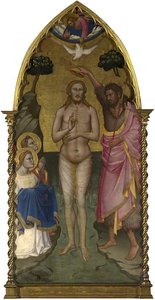
A significant aspect of Gerini's career was his frequent collaboration with Jacopo di Cione, a prominent Florentine artist in his own right. These partnerships were common practice during the period, reflecting both economic realities and the collaborative spirit within artistic workshops. Together, they undertook several important projects, including frescoes for the Guildhall of Judges and Notaries (circa 1366), now lost to time but documented through historical records. Their collaboration extended to multiple altarpieces dedicated to the *Coronation of the Virgin*—one for San Pier Maggiore (1370) where Gerini is credited with the design, while Jacopo executed it, and another for the Mint of Florence (1372). The fresco of the Annunciation in Volterra (1383) further exemplifies their working relationship, revealing a clear division of labor between the two artists. Beyond his work with Cione, Gerini received numerous independent commissions. He created a poignant fresco depicting orphans being handed over to adoptive parents on the façade of the Bigallo (1386), showcasing his narrative skill and sensitivity. Other notable works include the *Dossal of the Entombment of Christ* in the oratory of S. Carlino, and the *Triptych of the Baptism of Christ*, originally created for an altar in the Camaldolese monastery of S. Maria degli Angeli. He also left his mark on Palazzo Datini in Prato and frescoed capitals in the church of San Francesco in Pisa, demonstrating a widespread demand for his artistic services. Finally, he contributed frescoes to Santa Croce, depicting scenes from the life of Christ.Legacy and Historical Significance
Niccolò di Pietro Gerini occupies a crucial position in Florentine art history as a representative of the late Gothic style during a period of profound transformation. He embodies a pivotal moment—bridging the innovations of Giotto with the emerging aesthetic principles of the Renaissance. His frequent collaborations highlight the collaborative nature of artistic production during this era, while his role as a teacher—Lorenzo di Niccolò di Martino trained in his workshop—demonstrates his influence on subsequent generations of artists. Gerini’s commitment to preserving traditional Gothic techniques and compositional approaches ensured the continuity of artistic traditions in Florence, even as new ideas began to take hold. While perhaps not celebrated with the same fervor as some of his more revolutionary contemporaries, Niccolò di Pietro Gerini remains a vital figure for understanding the complex evolution of Florentine painting and the delicate interplay between tradition and innovation that defined one of history’s most remarkable artistic periods. His work offers a compelling glimpse into a world on the cusp of change—a world where the echoes of the past resonated with the promise of a new dawn.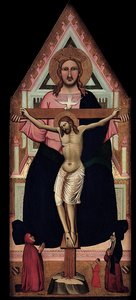
Niccolò di Pietro Gerini
1368 - 1415 , Italy
Quick Facts
- Artistic Movement Or Style: Late Gothic
- Artists Or Movements Influenced By This Artist: ['Lorenzo di Niccolò']
- Artists Who Influenced This Artist:
- Giotto di Bondone
- Andrea Orcagna
- Taddeo Gaddi
- Date Of Birth: c. 1368
- Date Of Death: c. 1415
- Full Name: Niccolò di Pietro Gerini
- Nationality: Italian
- Notable Artworks:
- Virgin of Humility
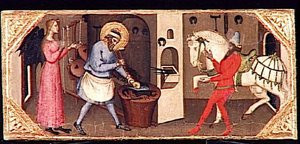
- Scenes from St Eloi's Legend
- Frame Roundel
- Entombment of Christ
- Baptism of Christ
- Place Of Birth: Florence, Italy
Related Articles

Fra Angelico's Masterpieces: 25 Renaissance Paintings for Your Home | ArtsDot
Explore 25 breathtaking masterpieces by Fra Angelico, a Renaissance master. Discover the stories behind his iconic frescoes, Annunciations & religious art. Find museum-quality reproductions and elevate your home decor with ArtsDot.com.
Uffizi's 25 Masterpieces: Renaissance Art & Timeless Decor Inspiration
Journey through the Uffizi Gallery's 25 most iconic Renaissance artworks! Explore Botticelli, Leonardo da Vinci & Michelangelo’s masterpieces. Find museum-quality art reproductions and curated decor ideas to bring timeless Italian beauty into your home. Discover all masterpieces on ArtsDot.com

El Greco's Masterpieces: Explore 25 Iconic Paintings & Spiritual Visions | ArtsDot
Journey through El Greco's 25 most iconic paintings! Explore the spiritual depth & dramatic beauty of this Spanish Renaissance master. Discover art history, techniques & find museum-quality reproductions for your home at ArtsDot.com.

Giotto's Masterpieces: 25 Renaissance Artworks for Your Home | ArtsDot
Explore 25 breathtaking artworks by Giotto di Bondone, a Renaissance master. Discover the stories behind iconic frescoes & paintings like the Scrovegni Chapel cycle. Find museum-quality Giotto reproductions and elevate your home decor with ArtsDot.com.
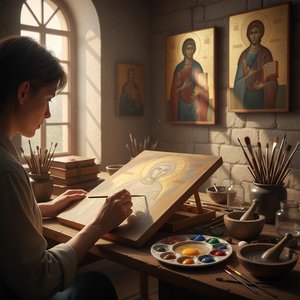
Illuminating Surfaces: A Comprehensive Exploration of Tempera on Panel Painting Techniques & Historical Significance
Explore the rich history & techniques of tempera painting! Discover Renaissance masters like Botticelli & Fra Angelico, conservation insights, and the enduring legacy of this captivating art form. Learn more now!