 Preview
 Send
Send Share
Share
 Details

 Download
 Similars
 X-Ray
X-Ray Diaporama
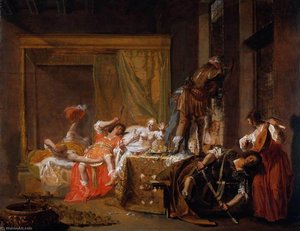
Brothel Scene
 Acrylic On Canvas
- WallArt
- Baroque
 1630
1630 60.0 x 74.0 cm
 Rijksmuseum
 Read More
Hand Made Oil Reproduction
Hand-painted oil on canvas in your size and frame, made to order by our artists. ( Buy Print Buy Image)




P118B $10

P118H $10

P118W $10

P438Z $10

P508JH $12

P508YH $12

P805H $10

P805Z $10

P919BZ $10

P919G $10

P919XJ $10

P959ZH $10

P968JZ $12

W106C $8

W218G $10

W218JH $8

W218Y $10

W307PJ $10

W316G $10

W316PJ $8

W316Y $10

W398PJ $8

W4111J $10

W500HY $15

W500JH $15

W692G $12

W849H $8

W940BG $15

W953PJ $8




Pick from our preset sizes that match the artwork's original proportions.

You may enter your own dimensions to fit a specific frame or space. If your selected size does not match the original image's proportions, we will either crop the artwork or extend the painting with additional hand-painted elements. A digital mockup will be sent for your approval before production begins.
Please note that the on-screen preview does not reflect the actual cropping or extension. Only the mockup will accurately show the final composition.
While custom sizes are available, we recommend selecting a dimension from the predefined list to preserve the original proportions.
After order, ArtsDot.com team will email client for instructions and provide a mockup preview
Worldwide Delivery () in 3/4 weeks instead of standard 5 weeks. (17 August). No compromise on quality.

Free Worldwide Express Shipping

High-Quality Linen Canvas

Full Shipping Insurance

Customs Tax Refund Guarantee

True Color Matching Guarantee

60-Day Return Policy (Defects Only)

100% Money-Back Guarantee

Bulk Discount Offer
 Glass option is only available in size under 110 CM

Brothel Scene
Reproduction Medium
Reproduction Size
-


Total Price
$ 263
Artwork Description
Nicolaes Knüpfer’s Brothel Scene: A Window Into Seventeenth Century Amsterdam
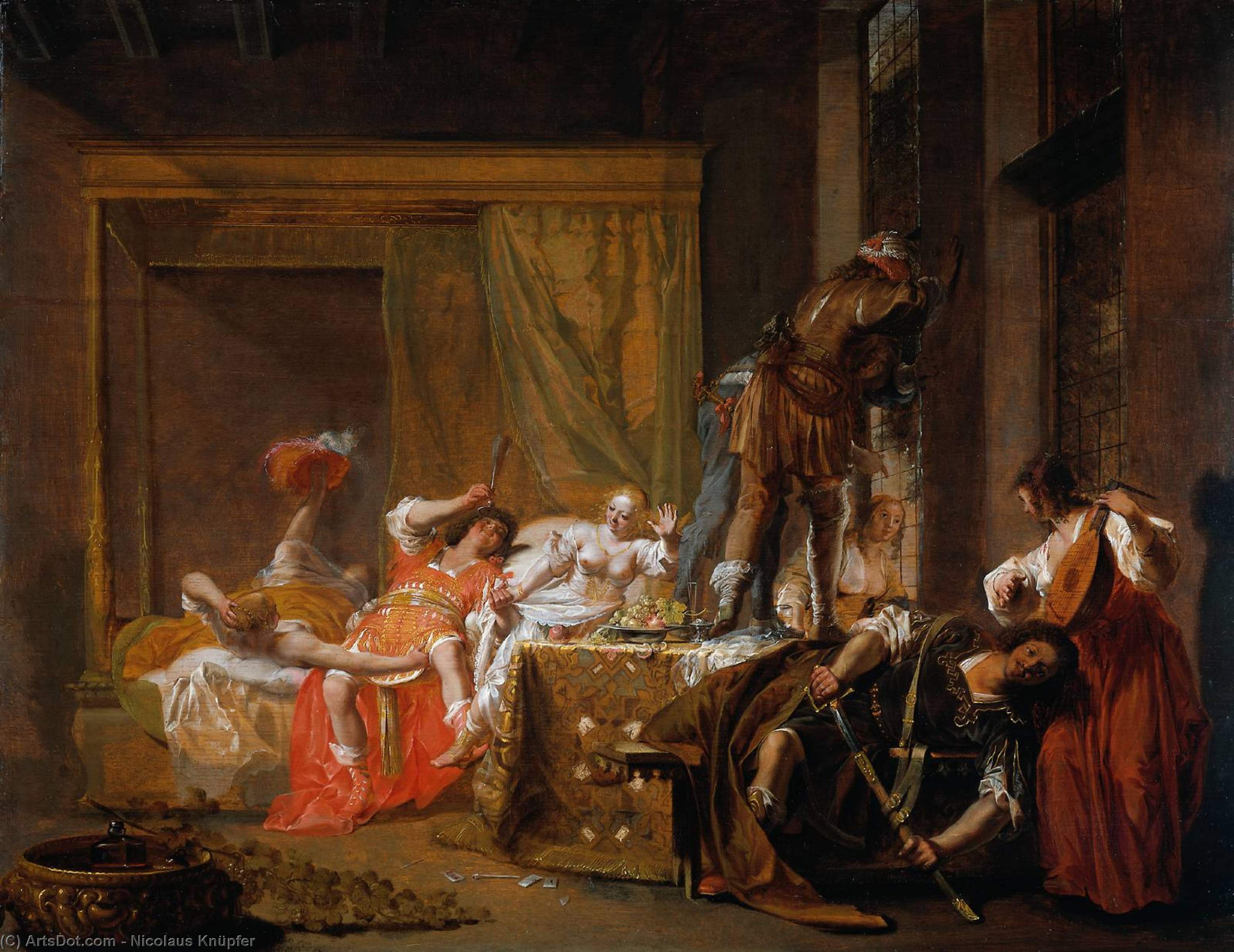
Nicolaes Knüpfer's “Brothel Scene,” painted circa 1630, stands as a remarkable testament to the Baroque artistic movement and offers a fascinating glimpse into the social landscape of seventeenth-century Amsterdam. More than just a depiction of a common profession—the brothel—it’s a meticulously crafted tableau brimming with detail and imbued with symbolic resonance that continues to intrigue art historians today.
Style & Technique: Knüpfer's mastery lies in his ability to capture the dynamism of everyday life through a highly stylized approach. Characteristic of Baroque painting, “Brothel Scene” employs dramatic chiaroscuro—the interplay of light and shadow—to heighten emotional impact and create an atmosphere of palpable tension. The artist’s brushstrokes are loose yet controlled, conveying movement and texture with impressive precision. He skillfully utilizes color palettes dominated by muted reds and browns, reflecting the somber mood of the interior space.
Historical Context: Amsterdam during Knüpfer's time was a burgeoning commercial hub and a center for artistic innovation. The painting emerged against the backdrop of a thriving whorehouse trade—a topic considered taboo by moralists—yet Knüpfer approached it with surprising candor, anticipating the satirical spirit of “’t Amsterdams Hoerdom,” published in 1684. This publication playfully mocked societal hypocrisy and celebrated hedonistic pleasures.
Symbolism & Composition: The scene itself is densely populated with figures engaged in various activities—eating, drinking, gesturing provocatively—creating a visually arresting composition. The two beds serve as focal points, emphasizing intimacy and desire. Notably, the men’s attire is deliberately flamboyant, highlighting their vanity and challenging conventional notions of masculinity. Knüpfer's depiction isn't merely observational; it aims to convey a psychological portrait of human behavior.
Emotional Impact: “Brothel Scene” transcends its subject matter to evoke a profound sense of unease and amusement simultaneously. The artist’s masterful use of light and shadow amplifies the drama, drawing viewers into the scene's unsettling atmosphere. Ultimately, Knüpfer compels us to confront uncomfortable truths about human nature—the allure of indulgence and the contradictions inherent in societal morality—leaving an indelible impression on anyone who contemplates its intricate details.
Additional Resources: Explore Nicolaes Knüpfer’s artistic legacy at Nicolaes Knüpfer and delve deeper into “Brothel Scene”'s history on WGA or WikiArt.
Related Artworks
Artist Biography
The Master of Baroque Precision: The Life and Legacy of Nicolaes Knüpfer
In the vibrant, bustling landscape of the Dutch Golden Age, few artists captured the dramatic tension of the Baroque era with as much meticulous care as Nicolaes Knüpfer. Born in Leipzig, Germany, in 1609, Knüpfer’s journey from a German apprentice to a celebrated figure in the Dutch artistic community is a testament to the fluid, interconnected nature of European art in the seventeenth century. His early years were defined by a rigorous pursuit of technical mastery, beginning with his training under the esteemed Emanuel Nysen. This foundational period instilled in him a profound respect for the structural elements of painting, but it was perhaps his unexpected tenure in Magdeburg that truly shaped his unique artistic DNA. While residing there, Knüpfer worked as a brushmaker, an intimate occupation that granted him an unparalleled understanding of the tools of his trade. This rare insight into the very fibers and textures of the brush allowed him to manipulate pigments with a precision that would later become his hallmark, blending the artisan's tactile knowledge with the painter's visionary spirit.
The trajectory of Knüpfer’s career reached a transformative milestone in 1630 when he relocated to Utrecht. This move placed him at the heart of a flourishing artistic hub, where he entered into a pivotal collaborative partnership with the legendary Abraham Bloemaert. Under the influence of Bloemaert’s sophisticated style, Knüpfer began to expand his repertoire beyond mere technical execution, embracing the grander, more emotive themes of biblical narratives and mythological legends. His ability to weave complex stories through flowing lines and unusual, expressive figures set him apart from his contemporaries. By 1637, his reputation was firmly established, earning him prestigious membership in the Guild of St. Luke. This period of professional maturity saw him undertaking monumental commissions that extended far beyond the borders of the Netherlands; notably, his work for the opulent Kronborg Castle in Denmark serves as a glittering reminder of his status as a premier decorative artist capable of enriching the most royal of interiors.
A Tapestry of Themes: From Sacred Narratives to Genre Scenes
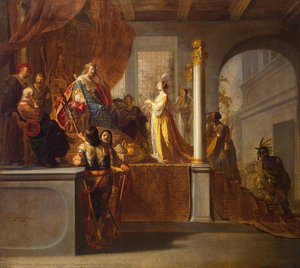
Knüpfer’s body of work is characterized by a remarkable versatility, allowing him to navigate seamlessly between the divine and the earthly. He possessed a singular talent for breathing life into historical and biblical figures, imbuing them with a sense of psychological depth and grandeur. In masterpieces such as Queen of Sheba before Solomon, one can witness his mastery of the Baroque aesthetic—a world of rich textures, dramatic lighting, and courtly splendor that transports the viewer to an era of ancient majesty. Yet, Knüpfer was equally adept at capturing the gritty, spirited atmosphere of everyday life. His genre paintings, such as the evocative Brothel Scene, reveal a different facet of his genius. In these works, the refined elegance of his mythological scenes gives way to exaggerated characters and expressive brushstrokes that capture the raw, often chaotic energy of an Amsterdam tavern, offering a poignant window into the societal attitudes and textures of the Dutch Golden Age.
Beyond his solo achievements, Knüpfer’s significance is deeply intertwined with the broader movement of landscape and collaborative painting. He frequently collaborated with masters such as Jan Both and Jan Baptist Weenix, skillfully integrating his intricate figures into their expansive, atmospheric landscapes. This synergy created a holistic viewing experience where human drama and natural beauty existed in perfect, dramatic harmony. His legacy is further cemented by his role as a mentor and an influence on the next generation of Dutch masters; the lineage of great painters like Jan Steen and Gabriel Metsu can trace stylistic threads back to the precision and narrative depth pioneered by Knüpfer. Through his blend of artisan craftsmanship and high-art storytelling, Nicolaes Knüpfer remains a vital figure in the history of European art, reminding us of a time when every brushstroke was an act of both devotion and discovery.
nicolaes knupfer
1609 - 1655 , Germany
Quick Facts
- Artistic Movement Or Style: Baroque
- Artists Or Movements Influenced By This Artist:
- Jan Steen
- Gabriel Metsu
- Artists Who Influenced This Artist: ['EMANUEL NYSEN']
- Date Of Birth: 1609 Leipzig Germany
- Date Of Death: 1655 Utrecht Netherlands
- Full Name: Nicolaes Knüpfer
- Nationality: Dutch
- Notable Artworks:
- The Kidnapping of Happiness
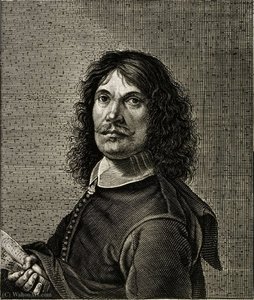
- Portrait of Nicolaes Knüpfer
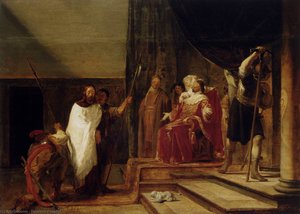
- Christ before Herod Antipas
- Place Of Birth: Leipzig Germany
Related Articles

Golden Age Reflections: Dutch Baroque Painting & Cultural Innovation
Explore the Dutch Golden Age of painting! Discover key artists like Vermeer & ter Borch, their innovative techniques, and the rich cultural context behind these Baroque masterpieces. Learn about collecting & appreciating this iconic art period.

Dutch Masters: 10 Golden Age Paintings That Still Inspire |
Journey into the Dutch Golden Age! Explore 10 iconic paintings by Rembrandt, Vermeer & Hals. Discover the stories behind these Baroque masterpieces and find museum-quality art reproductions to elevate your home decor on .

Dutch Baroque Masters: 10 Paintings That Shaped an Era | ArtsDot
Journey through the Golden Age with our guide to the Top 10 Dutch Baroque masterpieces! Explore iconic paintings by Rembrandt, Vermeer & Frans Hals. Find museum-quality art reproductions and elevate your home decor at ArtsDot.com.

Illuminating Innovation: Exploring the Dutch Golden Age of Painting
Explore the Dutch Golden Age of painting with ArtsDot. Discover Rembrandt, Vermeer & other Masters. Learn about key characteristics, iconic artworks, and lasting influence. Expert insights for collectors & enthusiasts.
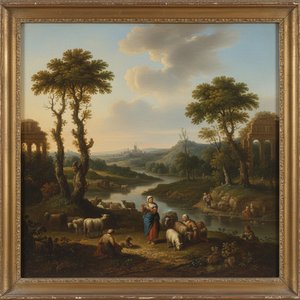
Nicolaes Berchem: Dutch Golden Age Pastoralism & the Evolution of Landscape Painting
Explore the captivating world of Nicolaes Berchem, a leading Dutch Golden Age painter. Discover his idyllic landscapes, masterful technique & lasting influence on art history. Learn more at ArtsDot.