 Preview
 Send
Send Share
Share
 Details

 Download
 Similars
 X-Ray
X-Ray Diaporama
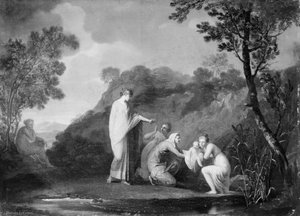
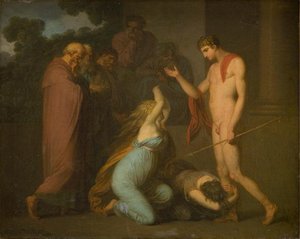
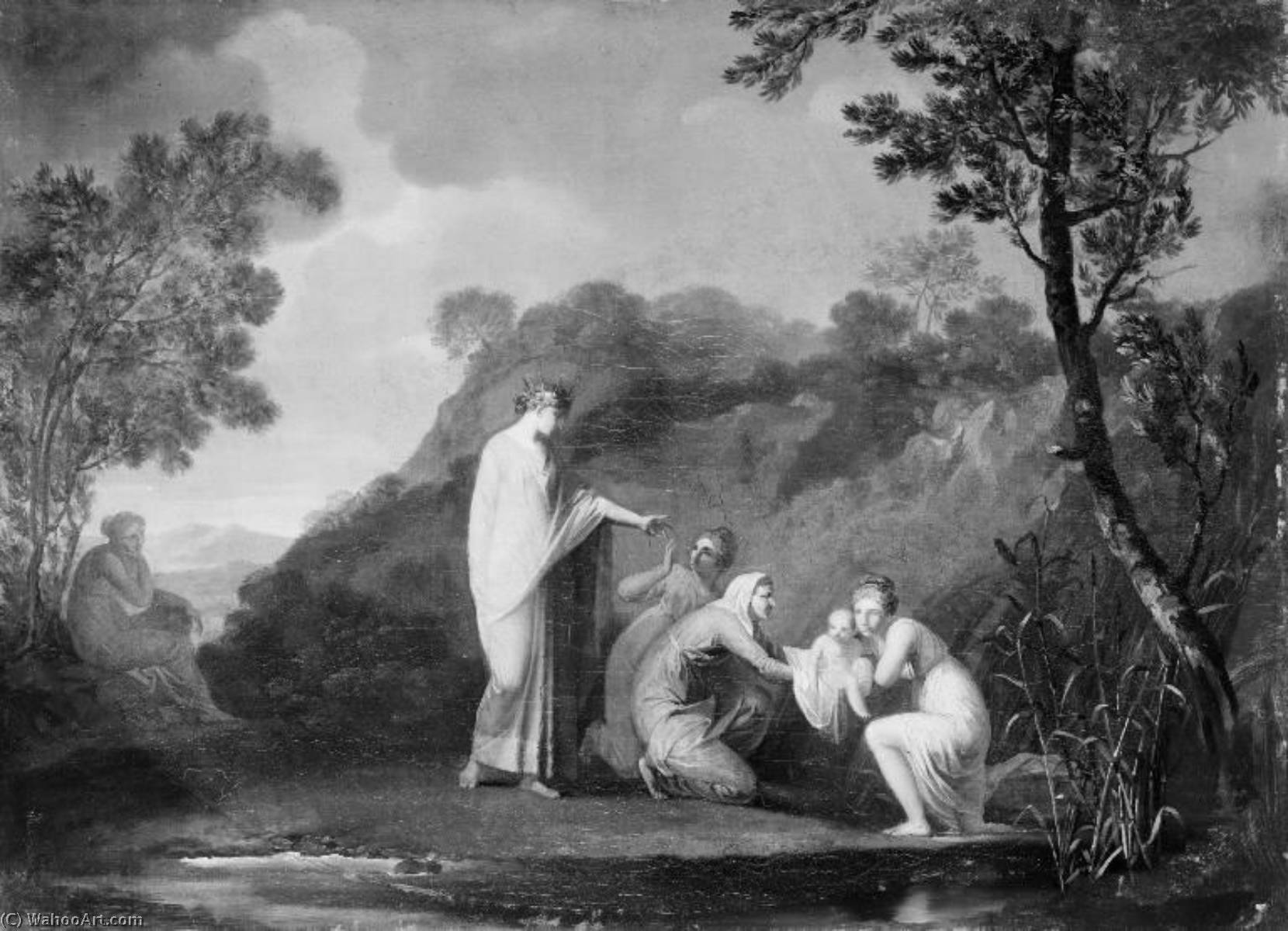
The Finding of the Infant Moses


 Read More
Hand Made Oil Reproduction
Hand-painted oil on canvas in your size and frame, made to order by our artists. ( Buy Print Buy Image)




P118B $10

P118H $10

P118W $10

P438Z $10

P508JH $12

P508YH $12

P805H $10

P805Z $10

P919BZ $10

P919G $10

P919XJ $10

P959ZH $10

P968JZ $12

W106C $8

W218G $10

W218JH $8

W218Y $10

W307PJ $10

W316G $10

W316PJ $8

W316Y $10

W398PJ $8

W4111J $10

W500HY $15

W500JH $15

W692G $12

W849H $8

W940BG $15

W953PJ $8




Pick from our preset sizes that match the artwork's original proportions.

You may enter your own dimensions to fit a specific frame or space. If your selected size does not match the original image's proportions, we will either crop the artwork or extend the painting with additional hand-painted elements. A digital mockup will be sent for your approval before production begins.
Please note that the on-screen preview does not reflect the actual cropping or extension. Only the mockup will accurately show the final composition.
While custom sizes are available, we recommend selecting a dimension from the predefined list to preserve the original proportions.
After order, ArtsDot.com team will email client for instructions and provide a mockup preview
Worldwide Delivery () in 3/4 weeks instead of standard 5 weeks. (27 August). No compromise on quality.

Free Worldwide Express Shipping

High-Quality Linen Canvas

Full Shipping Insurance

Customs Tax Refund Guarantee

True Color Matching Guarantee

60-Day Return Policy (Defects Only)

100% Money-Back Guarantee

Bulk Discount Offer
 Glass option is only available in size under 110 CM

The Finding of the Infant Moses
Reproduction Medium
Reproduction Size
-


Total Price
$ 363
A Moment of Divine Intervention: Nicolai Abildgaard’s “The Finding of the Infant Moses”
Nicolai Abraham Abildgaard's "The Finding of the Infant Moses" isn’t merely a depiction of a biblical narrative; it’s an immersive experience, a carefully constructed tableau brimming with classical restraint and subtle Romantic emotion. Painted in 1789, this monumental work transcends its subject matter to become a profound meditation on vulnerability, protection, and the quiet miracle at the heart of faith. Abildgaard, a pivotal figure bridging the Neoclassical and burgeoning Romantic movements in Denmark, masterfully employs a grayscale palette – a deliberate choice that elevates the scene beyond simple illustration, lending it an almost timeless quality.
The composition itself is meticulously balanced. At its core lies the discovery of Moses within a woven basket, nestled amongst the reeds by the riverbank. A woman, presumed to be his mother or caretaker, kneels in tender devotion, her gaze fixed on the infant. A second figure, likely presenting the child to Pharaoh’s daughter, adds a layer of formality and reverence. To the left, two older men observe from a seated position, their expressions hinting at both curiosity and solemn contemplation. The background is populated by a dense forest, rendered with an almost sculptural quality – trees reaching skyward, their branches intertwining to create a sense of depth and enclosure. This deliberate arrangement draws the viewer into the scene, fostering a feeling of intimacy and shared witness to this pivotal moment.
The Language of Line and Shadow: Technique and Materiality
Abildgaard’s technique is characterized by an extraordinary level of detail achieved through painstaking line work and subtle shading. The image is rendered in graphite, charcoal, or ink – media that allowed him to capture the textures of fabric, skin, and foliage with remarkable precision. Notice how the roughness of the tree bark contrasts sharply with the smoother surfaces of the figures’ clothing. The artist skillfully manipulates light and shadow to create a sense of volume and form, imbuing each element with a tangible presence. The grayscale palette isn't simply an aesthetic choice; it serves to heighten the drama and underscore the scene’s solemnity, forcing the viewer to focus on the nuances of line and texture.
The basket itself is a particularly noteworthy detail – its construction meticulously rendered, showcasing Abildgaard’s attention to architectural precision. The use of bitumen and pitch, as described in the biblical account, adds an element of realism and reinforces the narrative's sense of immediacy. The overall effect is one of controlled elegance, reflecting the artist’s commitment to classical principles while simultaneously hinting at a deeper emotional resonance.
Symbolism and Historical Context: A Bridge Between Worlds
“The Finding of the Infant Moses” resonates with layers of symbolic meaning. The scene speaks directly to themes of rescue, protection, and divine intervention – concepts central to both Jewish and Christian theology. The act of finding a child abandoned in the river can be interpreted as an allegory for vulnerability and the potential for grace. Furthermore, the image’s placement within the broader context of 18th-century Denmark reveals its connection to the burgeoning Romantic movement. Abildgaard's work reflects a shift away from the rigid formality of Neoclassicism towards a greater emphasis on emotion, imagination, and the sublime – qualities that would define much of European art in the following decades.
The choice of a grayscale palette also holds significance within this historical context. While influenced by classical traditions, Abildgaard’s use of monochrome aligns with the emerging Romantic interest in exploring darker, more introspective themes. The absence of vibrant color forces the viewer to engage with the scene on a purely emotional level, focusing on the figures' expressions and gestures.
A Timeless Masterpiece: Emotional Resonance and Artistic Legacy
Ultimately, “The Finding of the Infant Moses” is more than just a historical depiction; it’s a powerful meditation on humanity’s capacity for compassion and faith. The scene evokes a profound sense of tenderness, protection, and the quiet miracle at the heart of the biblical story. Abildgaard's masterful technique, combined with his nuanced understanding of symbolism and historical context, creates an artwork that continues to resonate with viewers centuries after its creation. Whether viewed as a stunning example of Neoclassical artistry or a poignant expression of Romantic emotion, this painting remains a testament to the enduring power of art to capture the complexities of human experience.
Related Artworks
Artist Biography
Early Life and Artistic Foundations
Nicolai Abraham Abildgaard, born in Copenhagen on September 11th, 1743, emerged from a family deeply immersed in the world of art and scholarship. His father, Søren Abildgaard, was a respected antiquarian draughtsman, instilling in young Nicolai an early appreciation for classical forms and meticulous observation. This familial influence proved foundational as Abildgaard embarked on his artistic journey, receiving initial training with a local painting master before formally enrolling at the New Royal Danish Academy of Art in 1764. His talent quickly became apparent; from 1764 to 1767, he consistently earned accolades and medallions recognizing his burgeoning skill. These early successes culminated in a travel stipend awarded in 1767 – a pivotal opportunity that would shape the course of his artistic development, though it was five years before he could finally utilize it. During these formative years at the Academy, Abildgaard benefited from the tutelage of Johan Edvard Mandelberg and Johannes Wiedewelt, absorbing their techniques and perspectives while simultaneously forging his own unique path.The Roman Awakening: A Shift in Perspective
In 1772, Nicolai Abildgaard finally realized his long-awaited dream of traveling to Rome. This five-year sojourn proved transformative, marking a crucial turning point in his artistic evolution. Immersed in the heart of classical antiquity, he dedicated himself to studying not only sculpture but also architecture, decoration, and the magnificent frescoes adorning Palazzo Farnese. A visit to Naples in 1776 with fellow artist Jens Juel further broadened his horizons. Rome wasn’t merely a place for technical study; it was an intellectual awakening. Abildgaard delved into history painting, seeking to master its complexities and narrative power. He drew inspiration from the masters – Annibale Carracci, Raphael, Titian, and Michelangelo – absorbing their compositional strategies, dramatic use of light, and profound understanding of human anatomy. However, his exposure wasn’t limited to strict classicism. The influence of artists like Johan Tobias Sergel and Johann Heinrich Füssli began to subtly shift his aesthetic sensibilities, introducing a nascent Romantic sensibility into his work. Simultaneously, Abildgaard cultivated a deep appreciation for literature, finding inspiration in the works of Shakespeare, Homer, and Ossian – narratives that would later permeate his canvases with layers of meaning and emotional resonance.Royal Commissions and National Narratives
Returning to Copenhagen in December 1777, Abildgaard was immediately recognized as a rising star. He swiftly secured a professorship at the Academy in 1778 and soon after, around 1780, ascended to the prestigious position of royal historical painter. This appointment brought with it a monumental commission from the Danish government: to create a series of paintings depicting the history of Denmark for the Knights' Room (Riddersal) at Christiansborg Palace. This project became the defining undertaking of his career. These weren’t simply historical illustrations; they were carefully constructed narratives designed to glorify the monarchy and instill a sense of national pride. Abildgaard masterfully combined accurate historical depictions with allegorical elements and mythological references, creating visually stunning and intellectually stimulating compositions. He also collaborated with Johan Edvard Mandelberg on decorative schemes for Fredensborg Palace, further solidifying his position as Denmark’s leading artistic figure.A Synthesis of Styles: Neoclassicism and Romanticism
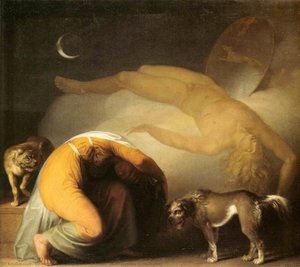
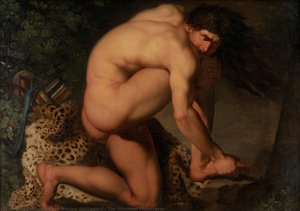
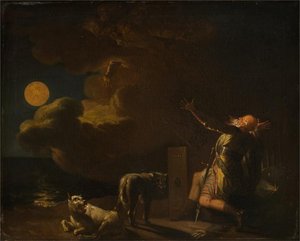
Nicolai Abildgaard's artistic style represents a fascinating synthesis of Neoclassical rigor and emerging Romantic sensibilities. While grounded in the principles of classical composition, clarity, and anatomical accuracy, his works are infused with dramatic lighting, rich color palettes, and meticulous attention to detail that hint at a deeper emotional undercurrent. Notable paintings such as “Christian I Elevates Holstein to a Duchy in 1474” exemplify this blend – a stately historical scene rendered with classical precision yet imbued with a sense of grandeur and theatricality. Other works, like the haunting “The Nightmare,” demonstrate his willingness to explore darker psychological themes, foreshadowing the full-blown Romanticism that would soon dominate European art. His exploration extended beyond history painting; "Culmin's Ghost Appears to his Mother" showcases his skill in portraying supernatural events with dramatic intensity, while pieces like “The Wounded Philoctetes” reveal a sensitivity to human suffering and vulnerability. He wasn’t merely replicating historical or mythological scenes; he was interpreting them through the lens of his own artistic vision, imbuing them with layers of symbolic meaning accessible to a refined audience. His pictorial allegory became a hallmark of his style, using symbols as visual shorthand for complex ideas and emotions.Legacy and Enduring Influence
Abildgaard served as director of the Academy during 1789–1791 and again from 1801 until his death in Copenhagen on November 14th, 1809. Throughout his career, he nurtured a generation of talented artists, including Asmus Jacob Carstens, Bertel Thorvaldsen, J. L. Lund, and perhaps most significantly, Christoffer Wilhelm Eckersberg. Eckersberg, often hailed as the “father of Danish painting,” would lay the foundation for the Golden Age of Danish Painting, building upon the principles Abildgaard had instilled in him. Abildgaard’s influence extended beyond his direct students; he fundamentally shaped the artistic landscape of Denmark, bridging the gap between Neoclassicism and Romanticism. His work not only reflected the cultural values of his time but also anticipated future artistic trends, contributing significantly to the development of Nordic Romanticism and leaving an indelible mark on Danish art history. He remains a pivotal figure in understanding the transition from Enlightenment ideals to the emotional intensity of the 19th century.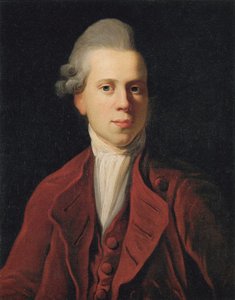
Nicolai Abraham Abildgaard
1743 - 1809 , Denmark
Quick Facts
- Artistic Movement Or Style: Neoclassical & Romanticism
- Artists Or Movements Influenced By This Artist:
- Asmus Carstens
- Bertel Thorvaldsen
- Nordic Romanticism
- Artists Who Influenced This Artist:
- Annibale Carracci
- Raphael
- Titian
- Michelangelo
- Date Of Birth: September 11, 1743
- Date Of Death: November 14, 1809
- Full Name: Nicolai Abraham Abildgaard
- Nationality: Danish
- Notable Artworks:
- Christian I...
- The Nightmare
- Culmin's Ghost
- Niels Klim scenes
- Wounded Philoctetes
- Place Of Birth: Copenhagen, Denmark
Related Articles
Neoclassical Art: 10 Masterpieces That Shaped History |
Explore 10 defining Neoclassical masterpieces by David, Ingres & Canova. Discover the history, symbolism & artistry behind these iconic paintings and sculptures. Find museum-quality art reproductions at – elevate your home with timeless beauty.
Illuminating Faith: Biblical Narrative & Artistic Expression Through the Ages
Explore the rich history of biblical art from Giotto to the Renaissance masters with ArtsDot. Discover symbolism, techniques & enduring legacies. Museum-quality reproductions & expert insights.
Illuminating Faith: Biblical Scenes & Their Enduring Legacy in Art History
Explore the profound history of biblical art! Discover Renaissance masterpieces by Giotto & more. Uncover symbolism, artistic techniques, and lasting influence. Expert insights at ArtsDot.

The Revival of Antiquity: Exploring Neoclassical Art's Ideals & Enduring Legacy
Explore the revival of classical ideals in Neoclassical art! Discover Jacques-Louis David & the movement's impact on painting, sculpture & architecture. Expert insights & high-quality reproductions at ArtsDot.
The Revival of Antiquity: Exploring the Neoclassical Movement & its Enduring Legacy
Explore the revival of classical art with our deep dive into Neoclassicism! Discover key artists like Jacques-Louis David, Enlightenment influences & lasting impact on art history. High-quality reproductions at ArtsDot.