

 Preview
 Send
Send Share
Share
 Details

 Download
 Similars
 X-Ray
X-Ray Diaporama
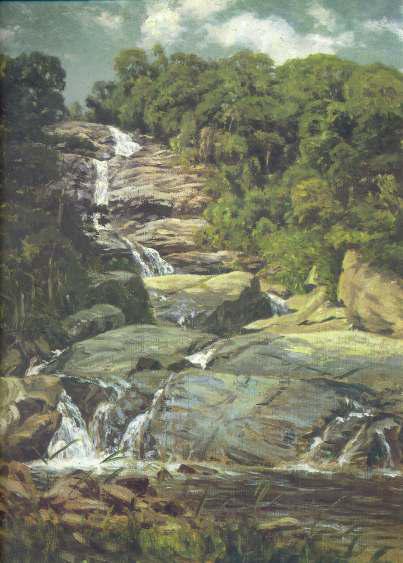
Small Cascade In Tijuca

 Read More
Purchase a high-resolution, enhanced digital image, far superior to the online preview.
Each file is meticulously prepared by our in-house specialists using advanced tools and expert manual retouching. We ensure every image has exceptional clarity, precise color accuracy, and fine detail.
The final file is delivered via email within 72 hours, optimized for immediate use in professional, editorial, and print environments. This is the same quality trusted by top-tier design studios, publishers, and galleries.
Digital Image
Download a high-resolution file for personal display, printing, and creative projects. ( Buy Print Buy Hand Made Painting)
Included in Every Digital Image Order
Expert Digital Delivery, Guaranteed
When you choose ArtsDot.com, you're not just getting an image - you're receiving a professionally enhanced digital artwork, crafted with precision and backed by a satisfaction guarantee. Here's everything that comes with your order, automatically:

Fast Email Delivery
Your high-resolution digital image file will be emailed to you within 72 hours of ordering - ready for immediate use.

AI-Enhanced Digital File
Your artwork is professionally optimized using advanced AI tools and manual editing, ensuring maximum detail, clarity, and color accuracy.

Free Lifetime Re-Delivery
Accidentally deleted or lost your file? No worries - we'll resend it to you anytime, free of charge.

No Import Fees - Ever
Enjoy your artwork instantly with zero customs, duties, or delivery fees - digital downloads are always tax-free.

Color Accuracy Guarantee
We ensure your digital image reflects the original colors as closely as possible using professional tools and color management.

60-Day Satisfaction Guarantee
If you're not satisfied with your digital image, we'll revise it or refund 100% within 60 days - no questions asked.

100% Money-Back Guarantee
Not satisfied? Get a full refund within 60 days of receiving your digital file - no questions asked.

Bulk Order Discounts
Buy 3 images, save 10% - Buy 5, save 15% - Buy 10+, save 20%. Great for creative projects, galleries, and agencies.
Related Artworks
Artist Biography
A Life Immersed in Light and Landscape
Nicolas-Antoine Taunay, born in Paris in 1755, emerged from an artistic lineage—his father, Pierre-Henri Taunay, was a skilled enamel painter. This early exposure to the visual arts laid a foundational stone for young Nicolas’s future path. He formally began his training at the age of fifteen, entering the studio of Nicolas-Bernard Lépicié, where he honed fundamental skills. Further studies under Nicolas-Guy Brenet and Francesco Giuseppe Casanova broadened his artistic horizons, with Casanova's landscapes and historical paintings proving particularly influential in shaping Taunay’s early direction. These formative years instilled within him a dedication to both technical precision and evocative storytelling through imagery. He quickly gained recognition exhibiting at the *Jeunesse* and the *Salon de la Correspondance*, establishing himself within the vibrant Parisian art scene of the late 18th century. In 1784, his talent was officially acknowledged with admission as an assistant at the Royal Academy of Painting and Sculpture, granting him access to exhibit at the prestigious official salons.From Neoclassical Roots to Napoleonic Visions
A pivotal moment in Taunay’s artistic development arrived with a three-year scholarship to study at the French Academy in Rome from 1784 to 1787. This sojourn within the heart of classical antiquity profoundly impacted his aesthetic sensibilities. While there, he encountered Jacques-Louis David, though the extent of their direct influence remains a subject of scholarly debate. Regardless, the prevailing Neoclassical principles—an emphasis on order, clarity, and idealized forms—became deeply ingrained in Taunay’s artistic vocabulary. Upon returning to Paris, he continued to exhibit regularly, solidifying his reputation as a skilled landscape painter who skillfully integrated historical, mythological, and religious narratives into expansive vistas. His style began to coalesce around a distinctive approach: placing small figures within dramatically rendered landscapes, creating a sense of scale and emphasizing the power of nature. This talent did not go unnoticed by the burgeoning Napoleonic regime. In 1805, Taunay received a significant commission to depict scenes from Napoleon’s campaigns in Germany, demonstrating his ability to capture both historical events and the grandeur of expansive terrains. These works showcased his skill at blending meticulous detail with atmospheric perspective, solidifying his position as one of the leading painters of the First French Empire.A Transatlantic Mission: Art and Enlightenment in Brazil
The political upheaval following Napoleon’s fall led Taunay to a new chapter—a transatlantic journey that would profoundly shape both his artistic output and his legacy. In 1816, he joined the *Missão Artística Francesa* (French Artistic Mission) to Brazil, an ambitious undertaking funded by King John VI of Portugal. The mission’s goal was nothing less than establishing an art academy and introducing European artistic standards to Brazilian culture. Arriving in Rio de Janeiro on March 25th alongside fellow artists like Jean-Baptiste Debret and his brother Auguste Marie Taunay, he assumed the role of professor of landscape painting at the Royal School of Sciences, Arts and Trades—later the Imperial Academy of Beaux-Arts. This position placed him at the forefront of artistic education in Brazil, tasked with nurturing a new generation of Brazilian artists steeped in European traditions. During his time there, Taunay produced a wealth of paintings depicting the breathtaking Brazilian landscapes, seamlessly integrating local architecture and flora into his compositions. He continued to explore biblical and mythological themes, but now situated them within distinctly Brazilian environments, creating a unique fusion of cultures and artistic styles.Return to France and Enduring Legacy
Despite his contributions, Taunay grew frustrated with political obstacles and delays in fully establishing the art academy. In 1821, he returned to France, having been bestowed with the honorary title of Baron of Taunay by the Portuguese king—a testament to his service and influence. He continued to paint until his death in Paris in 1830, widely regarded during his lifetime as one of the greatest painters of the First French Empire. Following his passing, however, a period of relative obscurity descended upon his work. It wasn’t until the 1870s that Taunay experienced a revival in popularity, championed by the discerning eyes of the Goncourt brothers, who recognized the unique qualities and historical significance of his art. His family continued to contribute to the artistic world; his son, Félix Taunay, also became a painter, and through him, he was grandfather to Alfredo d'Escragnolle Taunay, a prominent Brazilian author and engineer. Nicolas-Antoine Taunay’s enduring contribution lies in his masterful blend of Neoclassical principles with the expressive possibilities of landscape painting. He stands as a pivotal figure not only for introducing European artistic techniques and education to Brazil but also for providing invaluable visual documentation of both French and Brazilian landscapes and cultures during an era of profound historical transformation. His paintings remain compelling testaments to a life dedicated to capturing the beauty of the world around him, infused with a spirit of enlightenment and artistic innovation.Influences and Style
- Dutch Landscape Tradition: Taunay’s meticulous attention to detail and atmospheric rendering in his landscapes reflect the influence of Dutch masters like Jacob van Ruisdael and Aert van der Neer.
- Neoclassical Principles: The emphasis on order, clarity, and idealized forms, characteristic of Neoclassicism, is evident in his compositions and figure placement.
- Francesco Giuseppe Casanova: Casanova’s blend of landscape and historical painting significantly shaped Taunay's early artistic direction.
- Jacques-Louis David: Though the extent of direct influence is debated, exposure to David’s work during his time in Rome undoubtedly impacted Taunay’s aesthetic sensibilities.
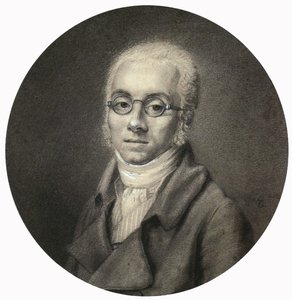
Nicolas-Antoine Taunay
1755 - 1830 , France
Quick Facts
- Artistic Movement Or Style: Neoclassical landscape
- Artists Or Movements Influenced By This Artist:
- Félix Taunay
- Brazilian art
- Artists Who Influenced This Artist: ['Francesco Casanova']
- Date Of Birth: February 10, 1755
- Date Of Death: March 20, 1830
- Full Name: Nicolas-Antoine Taunay
- Nationality: French
- Notable Artworks:
- Villagers Dancing
- Plaza of the Carioca
- Place Of Birth: Paris, France

