

 Preview
 Send
Send Share
Share
 Details

 Download
 Similars
 X-Ray
X-Ray Diaporama
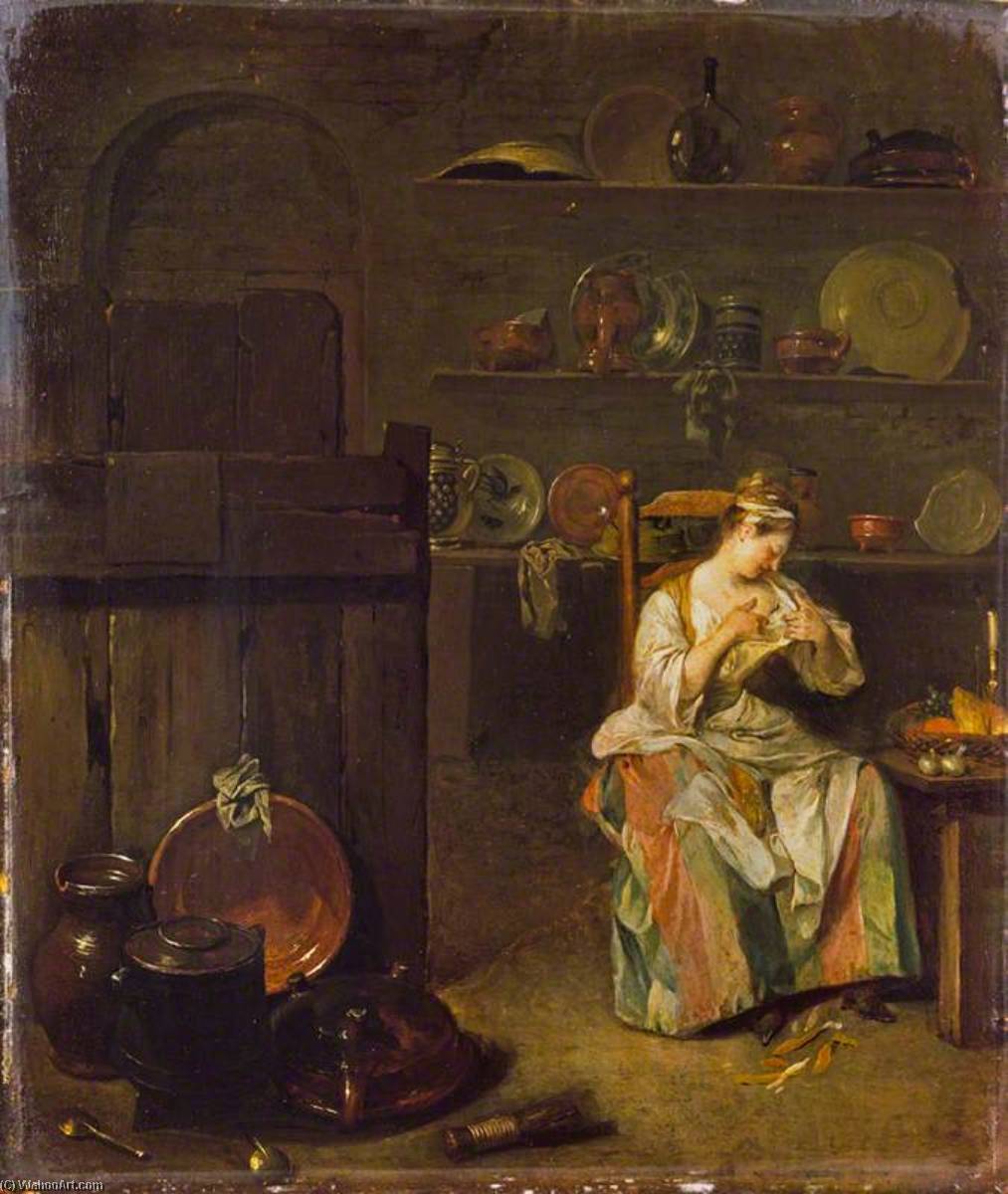
A Girl in a Kitchen
 Oil On Canvas
- WallArt
- Rococo Charm
 1730
1730 30.0 x 26.0 cm
 The Wallace Collection
 Read More
Purchase a high-resolution, enhanced digital image, far superior to the online preview.
Each file is meticulously prepared by our in-house specialists using advanced tools and expert manual retouching. We ensure every image has exceptional clarity, precise color accuracy, and fine detail.
The final file is delivered via email within 72 hours, optimized for immediate use in professional, editorial, and print environments. This is the same quality trusted by top-tier design studios, publishers, and galleries.
Digital Image
Download a high-resolution file for personal display, printing, and creative projects. ( Buy Print Buy Hand Made Painting)
Included in Every Digital Image Order
Expert Digital Delivery, Guaranteed
When you choose ArtsDot.com, you're not just getting an image - you're receiving a professionally enhanced digital artwork, crafted with precision and backed by a satisfaction guarantee. Here's everything that comes with your order, automatically:

Fast Email Delivery
Your high-resolution digital image file will be emailed to you within 72 hours of ordering - ready for immediate use.

AI-Enhanced Digital File
Your artwork is professionally optimized using advanced AI tools and manual editing, ensuring maximum detail, clarity, and color accuracy.

Free Lifetime Re-Delivery
Accidentally deleted or lost your file? No worries - we'll resend it to you anytime, free of charge.

No Import Fees - Ever
Enjoy your artwork instantly with zero customs, duties, or delivery fees - digital downloads are always tax-free.

Color Accuracy Guarantee
We ensure your digital image reflects the original colors as closely as possible using professional tools and color management.

60-Day Satisfaction Guarantee
If you're not satisfied with your digital image, we'll revise it or refund 100% within 60 days - no questions asked.

100% Money-Back Guarantee
Not satisfied? Get a full refund within 60 days of receiving your digital file - no questions asked.

Bulk Order Discounts
Buy 3 images, save 10% - Buy 5, save 15% - Buy 10+, save 20%. Great for creative projects, galleries, and agencies.
Collectible Description
A Glimpse into Domestic Grace: Analyzing "A Girl in a Kitchen"
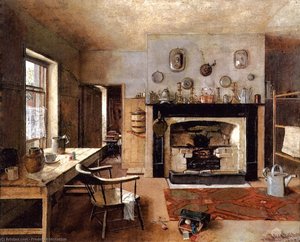
To stand before Nicolas Lancret's "A Girl in a Kitchen" is to be transported not merely to a room, but to a moment suspended in the warm, amber glow of Rococo domesticity. This painting, dating from 1730, offers us an intimate tableau vivant, far removed from grand mythological scenes or royal portraits. Instead, Lancret directs our gaze toward the quiet industry and gentle presence of daily life. The composition centers around a young woman seated at a sturdy table, surrounded by the tangible evidence of domestic activity—bowls brimming with untold ingredients, scattered cups hinting at shared conversation, and an elegant bottle resting near the edge.
The scene is rich with implied narrative. One can almost hear the gentle clinking of porcelain or smell the mingled scents of spices and baking bread. It speaks to a time when the domestic sphere was not merely functional but was itself a subject worthy of high art, capturing the subtle rhythms that underpin civilized existence.
The Allure of Rococo Intimacy
Lancret’s mastery is deeply rooted in the spirit of the Rococo era. While his training connected him to the grand gestures of history painting, his genius blossomed when he turned his brush toward the pleasures and quotidian moments of Parisian life. This work embodies that characteristic shift—a move from public spectacle to private grace. The palette itself contributes to this feeling; expect soft transitions, delicate highlights catching on glazed ceramics, and a general atmosphere imbued with lighthearted charm. It is art designed not for solemn contemplation alone, but for the gentle enjoyment of memory.
The arrangement of objects—the carefully placed cups and bowls—is almost meticulously composed, guiding the viewer's eye across the surface in a pleasing, meandering path. This attention to decorative detail elevates the mundane into something beautiful, a hallmark of the period’s aesthetic sensibility.
Technique and The Art of Still Life Integration
Examining the technique reveals Lancret’s skill as both portraitist and still-life painter. The handling of textures is particularly noteworthy; one can almost feel the smooth curve of the porcelain against the rougher grain of the wooden table. The way light interacts with these varied surfaces—the sheen on a liquid, the matte finish of linen—demonstrates a sophisticated understanding of optics. The inclusion of so many disparate objects means that the painting functions as a masterful study in arrangement, where every cup and bowl contributes to the overall harmony rather than existing as mere props.
For those considering a reproduction for an interior space, this technical finesse is key. A high-quality print allows one to bring this depth of texture and light into a modern setting, echoing the sophisticated taste of 18th-century Parisian drawing rooms.
Symbolism of Sustenance and Society
Beyond its immediate charm, "A Girl in a Kitchen" carries subtle symbolic weight. The kitchen, historically, was the heart of the home—the place where sustenance was prepared and community was nurtured. By painting this scene, Lancret celebrates not just food preparation, but the very act of caretaking and domestic connection. The woman herself, though perhaps engaged in an activity, embodies a quiet poise; she is both participant and subject. She represents the gentle backbone of society—the grace found within routine.
This painting invites us to pause our own hurried modern lives and appreciate the beauty inherent in simple acts: sharing a meal, preparing ingredients, or simply being present with one another around a well-used table. It is an enduring meditation on comfort.
Related Artworks




Artist Biography
Nicolas Lancret: A Life in Rococo Charm
- Born: Paris, France (January 22, 1690)
- Died: Paris, France (September 14, 1743)
Early Life and Training
Nicolas Lancret's artistic journey began in Paris, where he was born in 1690. While detailed records of his early life are scarce, it is known that he received initial training under Pierre d’Ulin, a respected history painter. A pivotal moment arrived when he encountered the work of Antoine Watteau, whose influence profoundly shaped Lancret's artistic direction. He subsequently studied with Jean-Baptiste Gillot, who himself had been a student of Watteau, further solidifying his connection to this influential artistic lineage. This period of training laid the foundation for Lancret’s distinctive style, characterized by its lighthearted depictions of Parisian society and celebrations of *fêtes galantes*.Artistic Style and Notable Works
Lancret became renowned as a brilliant portrayer of everyday life within French society during the Regency of the Duke of Orleans and the early reign of King Louis XV. His artistic style is marked by charming scenes of balls, fairs, village weddings, and other social gatherings, reflecting the tastes and manners of his time. He excelled at capturing the spirit of Rococo elegance and frivolity.- Notable Works:
- *Le Déjeuner de Jambon* (Chantilly, Musée Condé, 1735): A quintessential example of his genre scenes, depicting a convivial ham breakfast with lively figures.
- *La Servante Justifiée* (1735-1740): Showcases Lancret's ability to portray domestic scenes with wit and charm.
- *Le Jeu des Quatre-Coins*: A playful depiction of a popular game, capturing the energy and amusement of social interaction.
- *Marie-Anne de Camargo* (1730): A portrait demonstrating his skill in depicting fashionable figures.
Influences and Legacy
Lancret’s artistic style bears a clear resemblance to that of Watteau, often leading art historians to compare the two. While some critics have considered Lancret's work to be somewhat less profound than Watteau's, his ability to capture the essence of French society in the 18th century has secured him a significant place in art history. His paintings are celebrated for their lightheartedness and charm, offering valuable insights into the social customs and aesthetics of the Rococo period. Lancret’s influence can be seen in later artists like François Boucher. His works reside in prestigious collections worldwide, including the National Gallery and the Musée d'Orsay, ensuring his legacy continues to inspire appreciation for French Rococo art.Development and Historical Significance
Throughout his career, Lancret demonstrated a gradual evolution in his artistic approach. While initially heavily influenced by Watteau, he developed a more distinctive style characterized by livelier colors and a greater sense of harmony between figures and their surroundings. His later works, such as *Montreir de lanterne magique* and *Family in a Garden*, are considered to represent the peak of his artistic achievement, showcasing an increasing ability to create depth and intimacy within his compositions. Lancret’s historical significance lies in his contribution to the Rococo movement and his ability to document the social life and cultural values of 18th-century France through his charming and accessible paintings.
Nicolas Lancret
1690 - 1743 , France
Quick Facts
- Artistic Movement Or Style: Rococo
- Artists Or Movements Influenced By This Artist: ['François Boucher']
- Artists Who Influenced This Artist:
- Pierre d'Ulin
- Jean-Baptiste Gillot
- Antoine Watteau
- Date Of Birth: January 22, 1690
- Date Of Death: September 14, 1743
- Full Name: Nicolas Lancret
- Nationality: French
- Notable Artworks:
- Le déjeuner de jambon
- La servante justifiée
- Le jeu des quatre-coins
- Marie-anne de Camargo
- Place Of Birth: Paris, France

