 Send
Send Share
Share
 Details

 Download
 Similars
 Diaporama
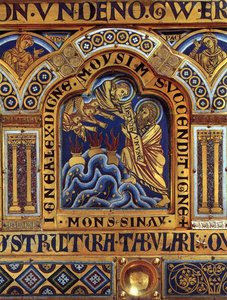
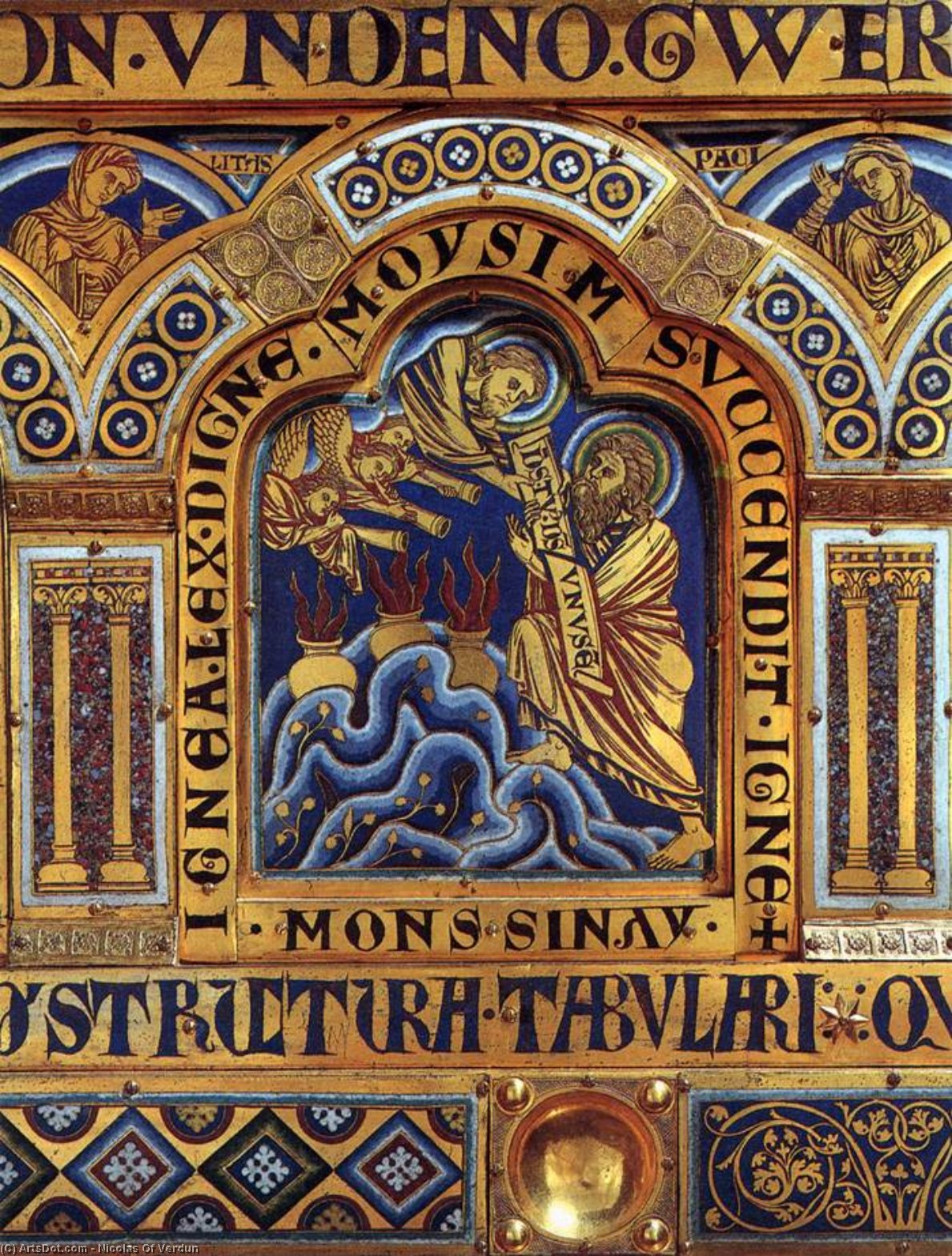
Moses on Mount Sinai
 Enamel
- Decor
- Romanesque
 1181
1181- High Medieval
 14.0 x 10.0 cm
 Augustiner Chorherrenstift
 Read More
Giclée / Art Print
Museum-quality giclée or canvas print with fast production and flexible finish options. ( Buy Hand Made Painting Buy Image)




































Pick from our preset sizes that match the artwork's original proportions.

You may enter your own dimensions to fit a specific frame or space. If your selected size does not match the original image's proportions, we will either crop the artwork or extend the image with a mirrored or solid-fill edge. A digital mockup will be sent for your approval before production begins.
Please note that the on-screen preview does not reflect the actual cropping or extension. Only the mockup will accurately show the final composition.
While custom sizes are available, we recommend selecting a dimension from the predefined list to preserve the original proportions.
Worldwide Delivery () in 2 weeks instead of standard 4/5 weeks. (22 August)

Free Worldwide Express Shipping

High-Quality Linen Canvas

Full Shipping Insurance

Customs Tax Refund Guarantee

True Color Matching Guarantee

60-Day Return Policy (Defects Only)

100% Money-Back Guarantee

Bulk Discount Offer
 Glass option is only available in size under 110 CM

Moses on Mount Sinai
Giclée / Art Print
Reproduction Size
-


Total Price
$ 63
Collectible Description
A Divine Encounter in Gold and Light
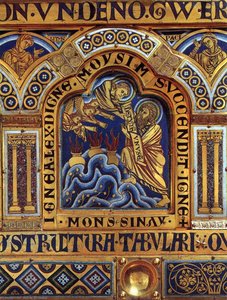
In the delicate expanse of this 12th-century masterpiece, Moses on Mount Sinai, we are transported to a moment of profound spiritual intersection. Created by the legendary goldsmith and master enamellist Nicolas of Verdun around 1181, the work captures the very instant the earthly and the divine collide. Moses stands atop the rugged peaks of Sinai, his arms uplifted in a gesture of both awe and reception, as he prepares to receive the Ten Commandments. The composition is not merely a depiction of a biblical event but a window into the medieval soul, where every cloud, mountain peak, and celestial figure serves to bridge the gap between the mortal realm and the heavens.
The artistry of Nicolas of Verdun is characterized by an extraordinary technical precision that reflects his background as one of the era's most skilled metalworkers. Though this piece presents as a painting, it carries the intricate, jewel-like detail typical of the Mosan style, where light and color are used to create a sense of sacred luminosity. The sky, a serene blue punctuated by drifting clouds, provides a breathtaking backdrop for the dramatic movement of the figures. One can almost feel the weight of the divine presence through the meticulous rendering of the landscape, which includes subtle, enigmatic elements like a distant boat—a detail that adds a layer of narrative complexity and historical depth to the scene.
Symbolism and the Medieval Vision
Beyond its visual splendor, the artwork is steeped in deep theological symbolism. The upward reach of Moses symbolizes the human aspiration toward God, while the surrounding figures—angels and members of the Israelite community—represent the communal aspect of faith and the witnessing of miracles. The ruggedness of Mount Sinai acts as a metaphor for the trials of the spiritual journey, yet the clarity of the sky suggests the ultimate enlightenment brought by the Law. For the discerning collector or interior designer, this piece offers more than just decoration; it provides a focal point of contemplation, inviting viewers to reflect on themes of leadership, revelation, and the enduring power of sacred history.
Integrating a high-quality reproduction of such a significant historical treasure into a contemporary space allows for a sophisticated dialogue between the past and the present. Whether placed in a grand library, a formal study, or an elegantly curated gallery wall, Moses on Mount Sinai commands attention through its rich textures and emotive power. It serves as an exquisite testament to the transition from Romanesque tradition to Gothic innovation, making it an invaluable addition for those who seek to surround themselves with art that possesses both historical gravity and timeless aesthetic beauty.
Related Artworks
Artist Biography
A Goldsmith of Transitions: The Life and Art of Nicolas of Verdun
The twelfth century, a period often characterized by both fervent religious devotion and burgeoning artistic innovation, witnessed the rise of remarkable craftsmen whose skills bridged the gap between the Romanesque past and the Gothic future. Among these figures stands Nicolas of Verdun, a metalworker, goldsmith, and enamellist whose name remains synonymous with exceptional artistry and technical mastery. Though biographical details remain elusive—a common fate for artisans of his era—the enduring power of his creations speaks volumes about his talent and influence. Born around 1130 in the city of Verdun, nestled within Upper Lorraine, Nicolas flourished during a time of significant cultural exchange and artistic ferment. The region surrounding the Rhine and Meuse rivers served as a vital hub for copperplate enameling, providing fertile ground for his early training and development.
Nicolas was not merely a craftsman; he was an itinerant artist, traveling extensively to fulfill commissions across northern Europe. This nomadic existence, dictated by the demands of patrons and projects, meant that much of what we know about his life is gleaned from his works themselves—a testament to the power of art as historical documentation. Unlike many artists of his time, Nicolas boldly signed his creations, establishing a precedent for artistic recognition and leaving an indelible mark on the tradition of craftsmanship. His signature, “NICOLAUS VIRDUNENSIS,” appears on several key pieces, offering a rare glimpse into the identity of this remarkable figure.
The Mastery of Champlevé and the Klosterneuburg Altar
Nicolas’s reputation rests primarily upon his exceptional skill in champlevé enameling—a complex technique involving carving recesses into metal surfaces, filling them with vibrant vitreous enamel, and then polishing to reveal a stunning interplay of color and form. This demanding process required not only technical precision but also an acute artistic sensibility. His most celebrated achievement is undoubtedly the altarpiece created for Klosterneuburg Monastery near Vienna around 1180-1181. This monumental work, comprising 51 biblical scenes rendered in exquisite detail, stands as a pinnacle of medieval enamelwork. The altar’s ambitious program—depicting narratives from the lives of Adam, Noah, David, and Jesus—reflects the theological concerns of the period and showcases Nicolas's ability to translate complex religious concepts into visually compelling imagery.
The Klosterneuburg Altar is not simply a collection of beautiful images; it represents a deliberate stylistic shift. The earlier panels exhibit a mature Romanesque aesthetic, characterized by robust forms and expressive figures. However, as the work progressed, Nicolas increasingly embraced classical influences, evident in the more refined drapery, dynamic poses, and naturalistic rendering of anatomy. This transition foreshadows the emergence of early Gothic art, marking Nicolas as a pivotal figure in this stylistic evolution.
The Shrine of the Three Kings: A Proto-Renaissance Vision
Around 1205, Nicolas turned his attention to Cologne Cathedral, undertaking the creation of the Shrine of the Three Kings—a reliquary intended to house the bones of the biblical Magi. This colossal project, though largely executed by assistants under his direction, bears the unmistakable imprint of his artistic vision. The shrine’s general design and the figures of the prophets are widely attributed to Nicolas, showcasing his mastery of metal sculpture and his growing interest in classical forms.
The Shrine of the Three Kings is remarkable for its expressive power and dynamic composition. The figures of the prophets, with their supple drapery and individualized features, represent a significant departure from earlier Romanesque conventions. This work embodies what art historians have termed a “proto-Renaissance” style—a brief but influential period characterized by a renewed interest in classical antiquity and a more naturalistic approach to figural representation. The influence of Byzantine art is also apparent, particularly in the rich colors and opulent detailing.
Legacy and Historical Significance
Nicolas of Verdun’s impact on medieval art extends far beyond his individual creations. He not only elevated the technical standards of metalwork and enameling but also played a crucial role in shaping the aesthetic sensibilities of his time. His embrace of classical influences, combined with his innovative use of champlevé enamel, paved the way for the development of early Gothic art. The tradition of artists signing their work—a practice Nicolas pioneered—further contributed to the growing recognition of artistic individuality and skill.
While documentary evidence regarding his life remains scarce, the enduring beauty and historical significance of his works ensure that Nicolas of Verdun will continue to be celebrated as a master goldsmith, an innovator, and a pivotal figure in the transition from Romanesque to Gothic art. His creations—testaments to human ingenuity and artistic vision—offer a captivating glimpse into the cultural landscape of twelfth-century Europe.
nicolas of verdun
1130 - 1205
Quick Facts
- Artistic Movement Or Style: [Gothic art](https://www.britannica.com/art/Gothic-art)[Romanesque art](https://www.britannica.com/art/Romanesque-art)[Mosan school](https://www.britannica.com/topic/Mosan-school)
- Artists Or Movements Influenced By This Artist: ['Byzantine art']
- Artists Who Influenced This Artist: ['Theophilus']
- Date Of Death: 1205
- Full Name: Nicholas Of Verdun
- Nationality: Flemish
- Notable Artworks:
- The Verdun Altar
- Shrine of the Three Kings
- Place Of Birth: Verdun, Upper Lorraine
Related Articles
High Medieval Art: 10 Masterpieces That Shaped an Era | ArtsDot
Journey through High Medieval Art! Explore 10 iconic masterpieces – from Giotto's frescoes to stunning Gothic cathedrals. Discover the stories behind these timeless paintings, sculptures & illuminated manuscripts. Find museum-quality art reproductions at ArtsDot.com.
Late Medieval Masterpieces: 10 Artworks That Defined an Era | ArtsDot
Journey through 10 defining Late Medieval masterpieces – from Giotto's frescoes to Jan van Eyck’s realism. Explore the stories, techniques & vibrant colors of Gothic art. Find museum-quality reproductions and elevate your home decor with ArtsDot.com! Discover all masterpieces on ArtsDot.com
Early Medieval Art: 10 Masterpieces That Shaped a New World | ArtsDot
Journey through 10 stunning Early Medieval masterpieces – from the Book of Kells to Carolingian mosaics. Explore art history, symbolism & find museum-quality reproductions for your home at ArtsDot.com. Discover all masterpieces online!
Illuminating Faith & Power: A Journey Through Medieval Art (c. 500 – c. 1500)
Explore the rich history of Medieval Art (c. 500 – c. 1500) with ArtsDot. Discover Byzantine mosaics, Gothic cathedrals & Renaissance masterpieces. Expert insights & museum-quality reproductions.
Nicolaes Berchem: Dutch Golden Age Pastoralism & the Evolution of Landscape Painting
Explore the captivating world of Nicolaes Berchem, a leading Dutch Golden Age painter. Discover his idyllic landscapes, masterful technique & lasting influence on art history. Learn more at ArtsDot.