 Preview
 Send
Send Share
Share
 Details

 Download
 Similars
 X-Ray
X-Ray Diaporama
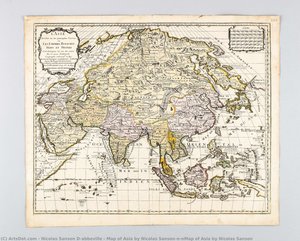
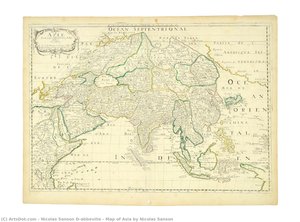
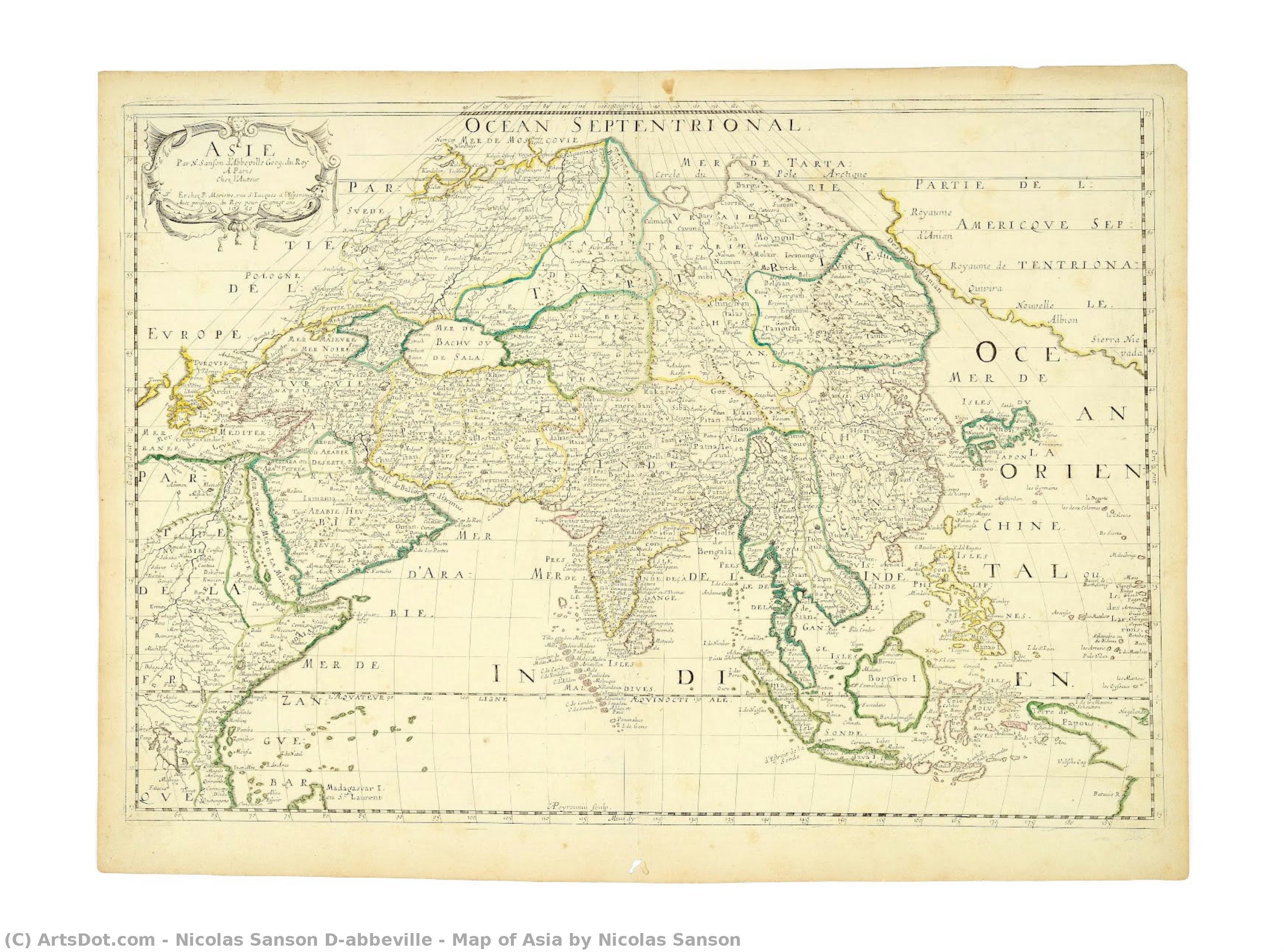
Map of Asia by Nicolas Sanson


 Read More
Hand Made Oil Reproduction
Hand-painted oil on canvas in your size and frame, made to order by our artists. ( Buy Print Buy Image)




































Pick from our preset sizes that match the artwork's original proportions.

You may enter your own dimensions to fit a specific frame or space. If your selected size does not match the original image's proportions, we will either crop the artwork or extend the painting with additional hand-painted elements. A digital mockup will be sent for your approval before production begins.
Please note that the on-screen preview does not reflect the actual cropping or extension. Only the mockup will accurately show the final composition.
While custom sizes are available, we recommend selecting a dimension from the predefined list to preserve the original proportions.
After order, ArtsDot.com team will email client for instructions and provide a mockup preview
Worldwide Delivery () in 3/4 weeks instead of standard 5 weeks. (23 August). No compromise on quality.

Free Worldwide Express Shipping

High-Quality Linen Canvas

Full Shipping Insurance

Customs Tax Refund Guarantee

True Color Matching Guarantee

60-Day Return Policy (Defects Only)

100% Money-Back Guarantee

Bulk Discount Offer
 Glass option is only available in size under 110 CM

Map of Asia by Nicolas Sanson
Reproduction Medium
Reproduction Size
-


Total Price
$ 263
Related Artworks
Artist Biography
The Shadowed Genius: Caravaggio and the Dawn of Baroque
Michelangelo Merisi da Caravaggio, a name synonymous with drama, darkness, and revolutionary technique, remains one of the most compelling figures in art history. Born in Milan in 1571, his life was tragically short – he died at the young age of thirty-eight – yet within those brief years, he irrevocably altered the course of painting, ushering in the Baroque era with a style that continues to captivate and challenge viewers centuries later. Caravaggio’s legacy isn't simply about masterful brushwork; it’s about a profound shift in how artists approached light, emotion, and the very relationship between subject and viewer. Caravaggio’s early life remains shrouded in some mystery, though we know he was apprenticed to Simone Petero, a Lombard painter in Milan. He likely spent his formative years there, honing his skills before moving to Rome around 1592. It was in the Eternal City that he truly exploded onto the scene, quickly establishing himself as a sought-after portraitist and religious painter. His early commissions were largely for private clients – wealthy merchants and nobles eager to adorn their homes with striking depictions of biblical scenes and mythological subjects. However, it wasn’t until his dramatic use of *tenebrism*—a stark contrast between light and dark—that he truly distinguished himself. Caravaggio didn't simply paint a scene; he sculpted it with light, creating an intense theatricality that drew viewers directly into the heart of the narrative.- Tenebrism: The defining characteristic of his style, utilizing dramatic contrasts between illuminated areas and deep shadows to heighten emotional impact.
- Naturalism: Caravaggio rejected idealized representations in favor of portraying figures with a remarkable degree of realism – flaws, wrinkles, and imperfections were all embraced, lending an unparalleled sense of immediacy and humanity to his subjects.
- Direct Observation: He famously worked *alla prima*, directly on the canvas without preliminary sketches, capturing fleeting moments and intense emotions with astonishing speed and precision.
Key Works and Their Significance
Caravaggio’s output was relatively small but extraordinarily impactful. His paintings are not merely beautiful images; they are powerful statements about faith, humanity, and the human condition.- The Calling of St Matthew (1599-1600): This seminal work exemplifies Caravaggio's mastery of *tenebrism*, with a single beam of light illuminating the astonished apostle Matthew as Christ calls him to follow him.
- Supper at Emmaus (1601): A deeply moving depiction of the resurrected Christ sharing bread with two disciples, showcasing his ability to convey profound emotion through subtle gestures and expressions.
- David and Goliath (1609-1610): This brutal yet compelling scene captures the moment after David defeats Goliath, revealing both the victor’s triumph and the vanquished’s despair.
- The Death of the Virgin (c. 1604-1606): A profoundly moving portrayal of Mary mourning her son's death, rendered with an unprecedented level of realism and emotional intensity.
A Lasting Legacy: The Enduring Power of Darkness
Michelangelo Merisi da Caravaggio’s brief but brilliant career left an indelible mark on art history. His revolutionary use of *tenebrism*, his commitment to naturalism, and his ability to infuse his paintings with profound emotion continue to resonate with viewers today. He didn't just paint; he created experiences—intense, dramatic encounters that force us to confront the complexities of faith, humanity, and mortality. Caravaggio’s legacy is not simply one of artistic innovation but also a testament to the power of a single artist to transform an entire era. His work remains a potent reminder that even in darkness, there can be extraordinary beauty and profound truth.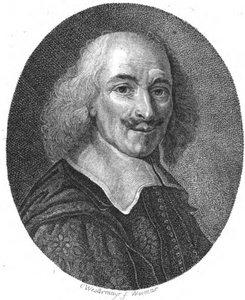
nicolas sanson d'abbeville
1600 - 1667 , France
Quick Facts
- Artistic Movement Or Style: Baroque
- Artists Or Movements Influenced By This Artist: ['Caravaggisti']
- Artists Who Influenced This Artist:
- Michelangelo
- Leonardo da Vinci
- Date Of Death: 1610
- Full Name: Caravaggio
- Nationality: Italian
- Notable Artworks:
- The Calling of St Matthew
- David and Goliath
- Place Of Birth: Milan, Italy