 Preview
 Send
Send Share
Share
 Details

 Download
 Similars
 X-Ray
X-Ray Diaporama
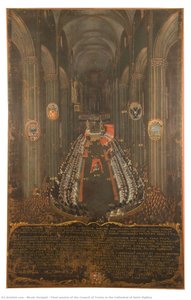
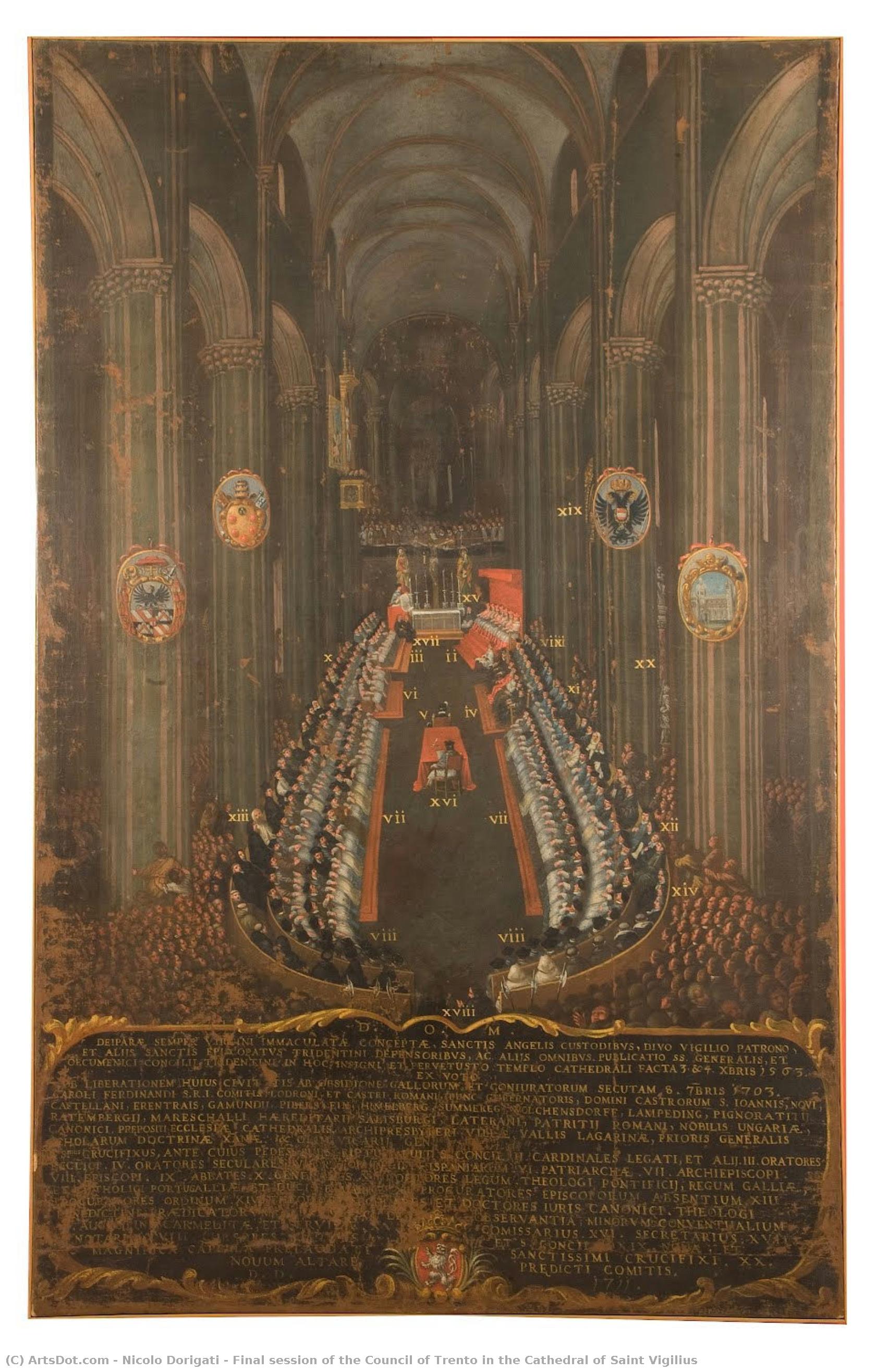
Final session of the Council of Trento in the Cathedral of Saint Vigilius


 Read More
Hand Made Oil Reproduction
Hand-painted oil on canvas in your size and frame, made to order by our artists. ( Buy Print Buy Image)




P118B $10

P118H $10

P118W $10

P438Z $10

P508JH $12

P508YH $12

P805H $10

P805Z $10

P919BZ $10

P919G $10

P919XJ $10

P959ZH $10

P968JZ $12

W106C $8

W218G $10

W218JH $8

W218Y $10

W307PJ $10

W316G $10

W316PJ $8

W316Y $10

W398PJ $8

W4111J $10

W500HY $15

W500JH $15

W692G $12

W849H $8

W940BG $15

W953PJ $8




Pick from our preset sizes that match the artwork's original proportions.

You may enter your own dimensions to fit a specific frame or space. If your selected size does not match the original image's proportions, we will either crop the artwork or extend the painting with additional hand-painted elements. A digital mockup will be sent for your approval before production begins.
Please note that the on-screen preview does not reflect the actual cropping or extension. Only the mockup will accurately show the final composition.
While custom sizes are available, we recommend selecting a dimension from the predefined list to preserve the original proportions.
After order, ArtsDot.com team will email client for instructions and provide a mockup preview
Worldwide Delivery () in 3/4 weeks instead of standard 5 weeks. (6 September). No compromise on quality.

Free Worldwide Express Shipping

High-Quality Linen Canvas

Full Shipping Insurance

Customs Tax Refund Guarantee

True Color Matching Guarantee

100-Day Return Policy (Defects Only)

100% Money-Back Guarantee

Bulk Discount Offer
 Glass option is only available in size under 110 CM

Final session of the Council of Trento in the Cathedral of Saint Vigilius
Reproduction Medium
Reproduction Size
-


Total Price
$ 263
A Grand Assembly Captured in Light and Devotion
In the heart of the Cathedral of Saint Vigilius, a profound moment of ecclesiastical history is frozen in time through the masterful brushwork of Nicolò Dorigati. The painting, Final session of the Council of Trento in the Cathedral of Emilian Saint Vigilius, serves as more than just a mere historical record; it is a breathtaking window into a pivotal era of religious transformation. As the eye wanders across the vast, atmospheric expanse of the cathedral interior, one is immediately struck by the sheer scale of the gathering. Dorigati captures a multitude of figures—at least fourteen distinct individuals—each rendered with a sense of individual purpose and quiet intensity. Some lean forward in rapt attention, while others engage in the hushed, consequential whispers that define the gravity of such a monumental assembly. The composition breathes with the weight of decision-making, inviting the viewer to step into the sacred space and feel the palpable tension of the Council's closing moments.
The artistry of Dorigati is deeply rooted in the elegant traditions of the Bolognese school, a legacy inherited from his mentor, the celebrated Carlo Cignani. This influence is evident in the way light dances across the heavy fabrics of the participants' garments and how the shadows retreat into the architectural recesses of the cathedral. Through a sophisticated use of chiaroscuro, Dorigati creates a sense of three-dimensional depth that pulls the observer into the scene. The technique of sfumato softens the edges of the distant figures, lending an ethereal, almost dreamlike quality to the background, which contrasts beautifully with the sharp, detailed features of those in the foreground. This mastery of light and shadow does not merely illuminate the room; it directs the emotional flow of the piece, guiding our gaze from the human drama of the assembly toward the soaring, historic architecture above.
A Votive Offering and Architectural Time Capsule
Beyond its aesthetic splendor, this work carries a deeply moving historical narrative. Commissioned as a votive offering in 1711 by the canon Carlo Ferdinando Lodron, the painting was born from a profound act of faith. It was intended to fulfill a vow made years earlier to protect the city of Trento from the invading French troops during the Spanish succession war. This layer of spiritual protection imbues the canvas with an aura of sanctity and gratitude. The painting acts as a bridge between two centuries, serving as a vital architectural time capsule. Because it was painted over a hundred years after the actual Council event, Dorigative’s work offers us a reconstructed vision of the cathedral's ancient layout before the transformative renovations of the 1740s. We see the Romanesque presbytery rising above the arches and the outlines of the ancient organ, providing historians and art lovers alike with a rare glimpse into a lost architectural era.
For the discerning collector or interior designer, this reproduction offers an unparalleled opportunity to introduce a sense of historical gravitas and classical elegance into a space. The painting’s rich palette and complex narrative make it a commanding centerpiece, capable of anchoring a room with its sophisticated interplay of light and shadow. Whether placed in a formal study, a grand library, or a curated gallery wall, the work evokes a sense of timelessness and intellectual depth. It is not merely a decoration but an invitation to contemplate the intersection of human history, religious devotion, and the enduring power of fine art. Owning such a piece means preserving a fragment of the Baroque spirit, bringing the solemn beauty of the Council of Trento into the modern home.
Related Artworks

Artist Biography
The Soul of the Trentino Baroque: The Life and Legacy of Nicolò Dorigati
In the heart of the Italian Alps, where the rugged landscapes of Trento meet the refined elegance of classical tradition, the life of Nicolò Dorigati (1662–1750) unfolded as a bridge between regional devotion and the grand stylistic currents of Europe. Born in 1662, Dorigati emerged during a period when the Baroque era was reaching its most sophisticated maturity. While his roots were firmly planted in the soil of Trentino, his artistic spirit was nourished by the prestigious Bolognese school, a movement that prioritized emotional resonance and technical perfection. Though much of his personal biography remains shrouded in the mists of time, the brushstrokes he left behind speak volumes of a man deeply attuned to the spiritual and social fabric of his era.
The trajectory of Dorigati’s development was profoundly shaped by his connection to Carlo Cignani, one of the most influential masters of the Bolognese tradition. Under Cignani’s tutelage, Dorigantly mastered the delicate interplay of light and shadow known as chiaroscuro and the soft, smoky transitions of sfumato. These were not merely technical exercises but tools used to breathe life into the divine. By absorbing these methods, Dorigati learned to move beyond simple representation, seeking instead to capture the psychological depth of his subjects. His work became a testament to the ability of paint to convey the weight of sorrow, the warmth of grace, and the solemnity of sacred history.
A Canvas of Devotion and History
Dorigati’s oeuvre is a rich tapestry of religious fervor and historical commemoration, much of which was destined for the most sacred spaces in Northern Italy. His ability to blend naturalism with the supernatural allowed him to create works that felt both intimately human and transcendently divine. One of his most poignant achievements is the Madonna Addolorata, a piece that once graced the Cathedral of Trento. In this work, the viewer is confronted with the raw, palpable grief of a mother, rendered with a sensitivity that reflects the profound influence of his Bolognese training.
Beyond individual devotional icons, Dorigati was a master of large-scale historical narratives and commemorative art. His talent for capturing grand, complex scenes is perhaps best exemplified by his 1711 masterpiece, Opening session of Council of Trent in 1545. This painting serves as a monumental reconstruction of one of the most significant ecclesiastical events in history, utilizing a dramatic composition to evoke the solemnity and gravity of the assembly. His skill extended also to the creation of gonfaloncini (ceremonial banners) and altarpieces that adorned various churches, including works for the Reformed Fathers of Trent and the Capuchin Fathers. Through these varied commissions, Dorigati became a visual chronicler of both faith and local prestige.
Artistic Significance and Enduring Presence
The historical significance of Nicolò Dorigati lies in his role as a cultural conduit. He successfully translated the sophisticated, high-style aesthetics of Bologna into the local vernacular of the Trentino region, enriching the local artistic landscape with a sense of cosmopolitan grandeur. His work represents a crucial moment in the late Baroque period, where the intense drama of the early 17th century began to soften into a more graceful, elegant, and poised expression of beauty.
Today, the legacy of Dorigati is preserved within the hallowed halls of museums and cathedrals, where his portraits and religious scenes continue to inspire awe. His contributions can be summarized through several key artistic pillars:
- Mastery of Light: The seamless application of chiaroscuro to create depth and emotional intensity.
- Spiritual Naturalism: A unique ability to render sacred figures with a human vulnerability that invites personal connection.
- Historical Documentation: The use of grand-scale painting to preserve the memory of pivotal religious and civic events, such as the Council of Trent.
- Regional Synthesis: The successful blending of the prestigious Bolognese academic style with the specific devotional needs of the Trentino community.
As we look back upon the life of this remarkable painter, we see more than just a craftsman; we see an artist who captured the very essence of an age—a period defined by its search for beauty within the divine and its reverence for the enduring power of history.

nicolo dorigati
1662 - 1750 , Italy
Quick Facts
- Artistic Movement Or Style: Bolognese School
- Artists Or Movements Influenced By This Artist:
- Giotto Di Bondone
- Duccio Di Buoninsegna
- Artists Who Influenced This Artist: ['Carlo Cignani']
- Date Of Birth: Trento, Italy (1662)
- Date Of Death: 1750
- Full Name: Nicolo Dorigati
- Nationality: Italian
- Notable Artworks:
- Madonna Addolorata
- Gonfaloncini of the Mysteries
- St Catherine of Bologna
- San Bernardino Maria and San Felice
- Place Of Birth: Trento
Related Articles

Baroque Drama: Bringing Opulence & Emotion into Contemporary Interiors
Explore the opulent world of Baroque interior design! Discover key elements, modern applications & how to bring dramatic elegance into your home with 's authentic reproductions.

The Dramatic Flourish: Exploring the Baroque Movement's Enduring Legacy in Art History
Explore the dramatic world of Baroque art! Discover iconic artists like Caravaggio & Rubens, defining techniques, and its lasting impact on art history. Expert insights for collectors & enthusiasts at ArtsDot.

Baroque Masterpieces: 10 Paintings That Defined an Era |
Journey through the drama & grandeur of Baroque art! Explore 10 masterpieces by Caravaggio, Rembrandt, Rubens & more. Discover stunning oil paintings, rich colors & timeless stories. Find museum-quality reproductions at .

The Visceral Stage: Exploring Dramatic Narratives & Emotional Intensity in Baroque Art
Explore the dramatic world of Baroque art! Discover iconic masters like Caravaggio & Rembrandt, their techniques, and the movement's lasting impact. Expert insights for collectors & enthusiasts at ArtsDot.
Theatricality & Triumph: Baroque Drama in Painting & Sculpture
Explore the dramatic world of Baroque art! Discover its history, defining characteristics, & lasting influence on painting & sculpture. Expert insights into Caravaggio, Zurbarán, and Bernini – plus high-quality reproductions at ArtsDot.