 Preview
 Send
Send Share
Share
 Details

 Download
 Similars
 X-Ray
X-Ray Diaporama
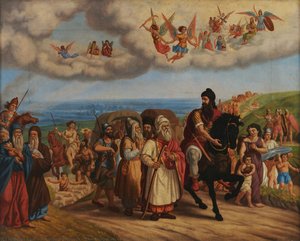
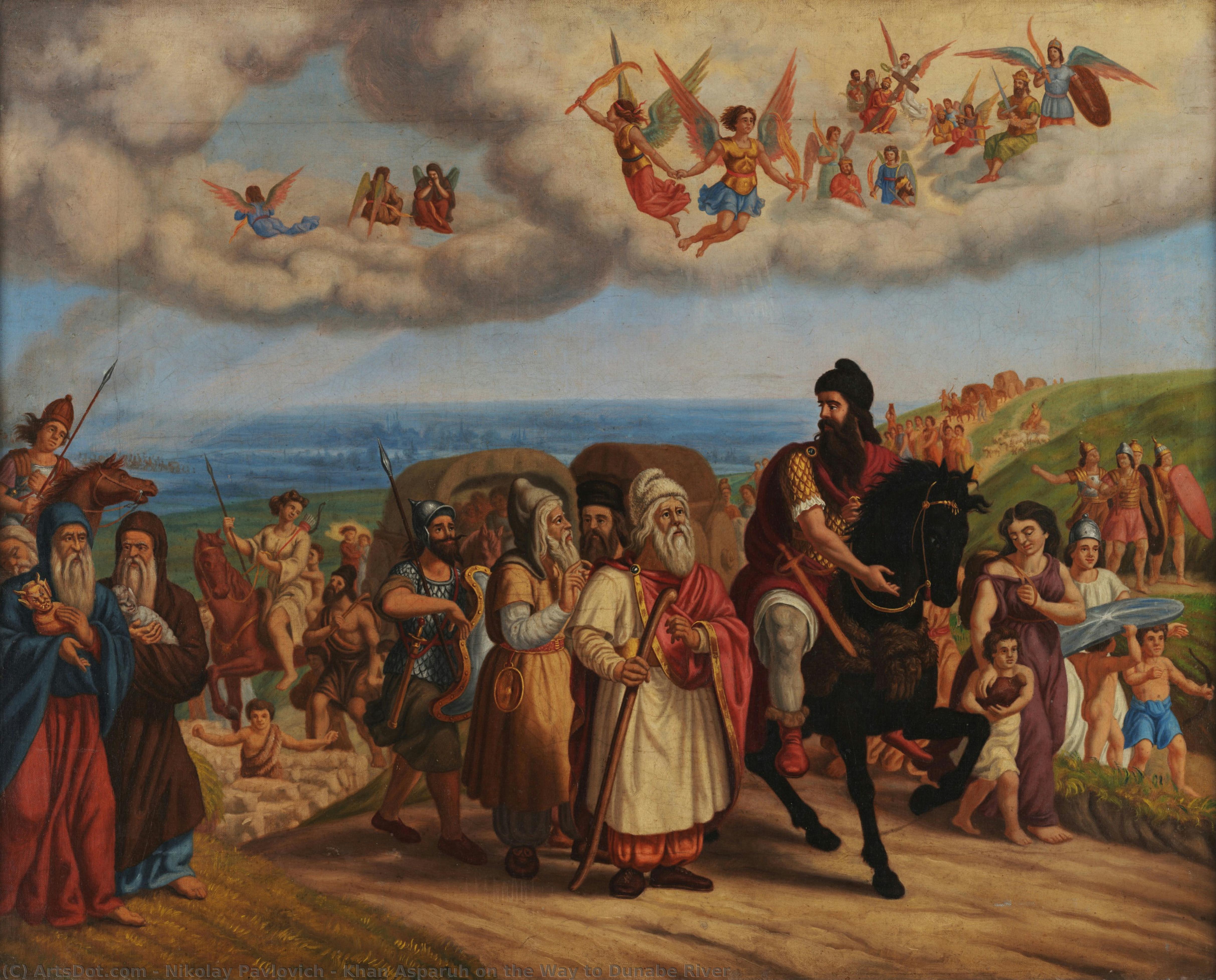
Khan Asparuh on the Way to Dunabe River
 Oil
Oil- WallArt
- National Revival
 1870
1870- 19th Century
 68.0 x 84.0 cm
 National Gallery of Bulgaria
 Read More
Hand Made Oil Reproduction
Hand-painted oil on canvas in your size and frame, made to order by our artists. ( Buy Print Buy Image)




P118B $10

P118H $10

P118W $10

P438Z $10

P508JH $12

P508YH $12

P805H $10

P805Z $10

P919BZ $10

P919G $10

P919XJ $10

P959ZH $10

P968JZ $12

W106C $8

W218G $10

W218JH $8

W218Y $10

W307PJ $10

W316G $10

W316PJ $8

W316Y $10

W398PJ $8

W4111J $10

W500HY $15

W500JH $15

W692G $12

W849H $8

W940BG $15

W953PJ $8




Pick from our preset sizes that match the artwork's original proportions.

You may enter your own dimensions to fit a specific frame or space. If your selected size does not match the original image's proportions, we will either crop the artwork or extend the painting with additional hand-painted elements. A digital mockup will be sent for your approval before production begins.
Please note that the on-screen preview does not reflect the actual cropping or extension. Only the mockup will accurately show the final composition.
While custom sizes are available, we recommend selecting a dimension from the predefined list to preserve the original proportions.
After order, ArtsDot.com team will email client for instructions and provide a mockup preview
Worldwide Delivery () in 3/4 weeks instead of standard 5 weeks. (26 August). No compromise on quality.

Free Worldwide Express Shipping

High-Quality Linen Canvas

Full Shipping Insurance

Customs Tax Refund Guarantee

True Color Matching Guarantee

60-Day Return Policy (Defects Only)

100% Money-Back Guarantee

Bulk Discount Offer
 Glass option is only available in size under 110 CM

Khan Asparuh on the Way to Dunabe River
Reproduction Medium
Reproduction Size
-


Total Price
$ 263
Artwork Description
A Journey Through Bulgarian Heritage
In the sweeping canvas of Khan Asparuh on the Way to Dunabe River, created in 1870, we are transported to a pivotal moment in the soul of a nation. The artist, Nikolay Pavlovich, masterfully orchestrates a historical tableau that captures more than just a movement of people; it captures the very heartbeat of the Bulgarian National Revival. At the center of this epic composition sits Khan Asparuh, a figure of profound leadership and destiny, mounted upon his horse as he leads his followers toward the banks of the Danube. The scene is teeming with life, featuring at least thirteen distinct figures whose expressions and postures weave a complex tapestry of anticipation, determination, and shared purpose. Through Pavlovich’s lens, we do not merely observe history; we feel the weight of the swords, the dust of the trail, and the collective breath of a people on the precipice of a new era.
The technique employed by Pavlovich reflects his rigorous training and his deep-seated commitment to lithographic precision and painterly depth. Every detail is rendered with an exacting hand, from the glint of steel on a warrior's blade to the subtle, atmospheric presence of birds soaring in the sky above the group. This meticulous attention to detail serves a greater narrative purpose, grounding the legendary event in a tangible, visceral reality. The interplay of light and shadow across the landscape creates a sense of movement, as if the viewer is traveling alongside the Khan’s procession. For the discerning collector or interior designer, this piece offers a profound sense of depth and texture, making it a commanding focal point that invites prolonged contemplation and storytelling.
Symbolism and the Spirit of National Identity
Beyond its surface beauty, the painting serves as a powerful symbol of resilience and the enduring spirit of Bulgarian identity. Pavlovich, a pioneer of nationalism through art, utilizes this historical scene to evoke a sense of ancestral pride. The presence of the followers surrounding the Khan represents the unity required for survival and the shared destiny of the Bulgar tribes. Even the natural elements—the vastness of the landscape and the watchful birds in the sky—act as silent witnesses to this monumental migration, suggesting a divine or natural sanctioning of the journey. It is an artwork that speaks to the concept of "home" and the arduous, heroic struggle to establish it.
For those looking to adorn a space with art that possesses both historical gravity and aesthetic elegance, this reproduction offers an unparalleled opportunity. Whether placed in a formal study, a grand hallway, or a curated gallery collection, Khan Asparuh on the Way to Dunabe River brings an atmosphere of intellectual depth and cultural richness. It is not merely a decoration; it is a window into a transformative epoch, offering an emotional resonance that connects the modern viewer to the timeless themes of leadership, courage, and the pursuit of freedom.
Related Artworks

Artist Biography
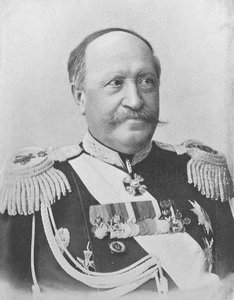
The Soul of a Nation: The Life and Legacy of Nikolai Pavlovich
In the tapestry of the Bulgarian National Revival, few threads shine with as much intellectual and artistic brilliance as that of Nikolai Pavlovich. Born on December 9th, 1835, in the riverside town of Svishtov, Pavlovich entered a world teetering on the edge of profound transformation. He was not merely an observer of history but a participant in the cultural awakening of his people. His very lineage served as a foundation for his nationalist fervor; as the son of Hristaki Pavlovich, a renowned teacher and writer, Nikolai was raised in an environment where the preservation of Bulgarian identity through literature and education was a sacred duty. This early immersion in the struggle for cultural autonomy would later manifest in every stroke of his brush and every line of his lithographs.
Pavlovich’s journey toward artistic mastery was marked by a remarkable blend of technical precision and cosmopolitan exposure. His initial foray into the professional art world began with the delicate task of illustrating scientific works, specifically the ambitious Cosmobiographique and Atlas Meteorologique for Dr. Petar Beron. These Parisian-published atlases served as more than just scientific records; they were a testament to Pavlovich’s burgeoning skill as a lithographer, proving that a Bulgarian artist could command the attention of the European scientific community. This early success provided the vital momentum and financial means required for his transformative travels to the great art capitals of Europe. In 1858, he sought formal refinement at the prestigious academies in Vienna and Munich, where he studied under masters of the era. It was here that his technique transitioned from mere illustration to a sophisticated command of light, shadow, and anatomical accuracy, earning him honors that solidified his reputation as a rising star.
A Versatile Visionary: From Iconography to History Painting
Upon returning to his homeland, Pavlovich did not restrict himself to the confines of a single medium; instead, he embraced a multidisciplinary approach that mirrored the multifaceted needs of a nation in rebirth. His artistic output became a vital pillar of both the secular and the sacred. In the realm of the spiritual, his devotion to the Bulgarian Orthodox tradition was profoundly expressed through his creation of seventy-three intricate icons for the Church of the Holy Trinity. These works were far more than religious artifacts; they were vessels of cultural continuity, designed to bolster the faith and communal identity of a people seeking liberation from Ottoman rule.
Beyond the altar, Pavlovich’s creativity flowed into the theatrical and the decorative, designing sets that brought Bulgarian stories to life on stage. However, it was in his role as a pioneer of modern-style history painting that he truly left an indelible mark on the art historical canon. His ability to weave historical narrative with meticulous detail allowed him to document the triumphs and struggles of the Bulgarian spirit. His work bridged the gap between traditional craftsmanship and the emerging European academic style, making him a central figure in the transition toward a modern national aesthetic. Through his portraits and historical scenes, Pavlovich captured the dignity of his subjects and the gravity of their era, ensuring that the essence of the National Revival would be preserved for generations to come.
nikolay pavlovich
1835 - 1894 , Bulgaria
Quick Facts
- Artistic Movement Or Style: National Revival
- Artists Or Movements Influenced By This Artist: ['Bulgarian Art']
- Artists Who Influenced This Artist: ['Georgi']
- Date Of Birth: December 9, 1835
- Date Of Death: February 13, 1894
- Full Name: Nikolai Pavlovich
- Nationality: Bulgarian
- Notable Artworks:
- Khan Asparuh on the Way to Dunabe River
- Portrait of Dimitar Pavlovich
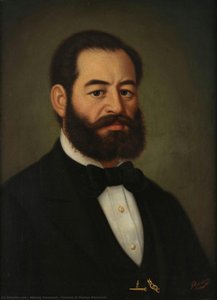
- Portrait of Petar Beron
- Place Of Birth: Svishtov, Bulgaria
Related Articles
National Gallery London's Masterpieces: 25 Iconic Paintings for Your Home Decor
Journey through the National Gallery London's 25 most iconic paintings! Explore Van Gogh, Monet, Rembrandt & more. Discover art history, techniques & find museum-quality reproductions for your home decor on ArtsDot.com.
National Gallery of Art's Masterpieces: 25 Iconic Paintings for Your Home Decor
Explore 25 iconic artworks from Washington DC's National Gallery of Art! Discover masterpieces by Cézanne, Matisse & Picasso. Find museum-quality art reproductions and elevate your home decor with timeless paintings. Explore the full collection online at ArtsDot.com.
Victor Vasnetsov: Myth, Nationalism & the Revival of Russian Fairy Tale Painting
Explore the captivating world of Victor Vasnetsov, a co-founder of Russian folklorist painting. Discover his iconic works, influence on national identity, and lasting legacy in this expert guide.
Akseli Gallen-Kallela: Shaping Finnish Identity Through National Romanticism & Symbolism
Explore the captivating world of Akseli Gallen-Kallela, Finland's iconic National Romantic painter. Discover his symbolic landscapes, Kalevala illustrations & lasting impact on Finnish identity. Expert analysis & high-quality reproductions at ArtsDot.
Jan Matejko: Historical Narrative & National Identity in 19th-Century Polish Painting
Explore the powerful historical paintings of Jan Matejko, Poland's national artist. Discover his iconic works & learn how he shaped Polish identity in the 19th century. High-quality reproductions available.