

 Preview
 Send
Send Share
Share
 Details

 Download
 Similars
 X-Ray
X-Ray Diaporama
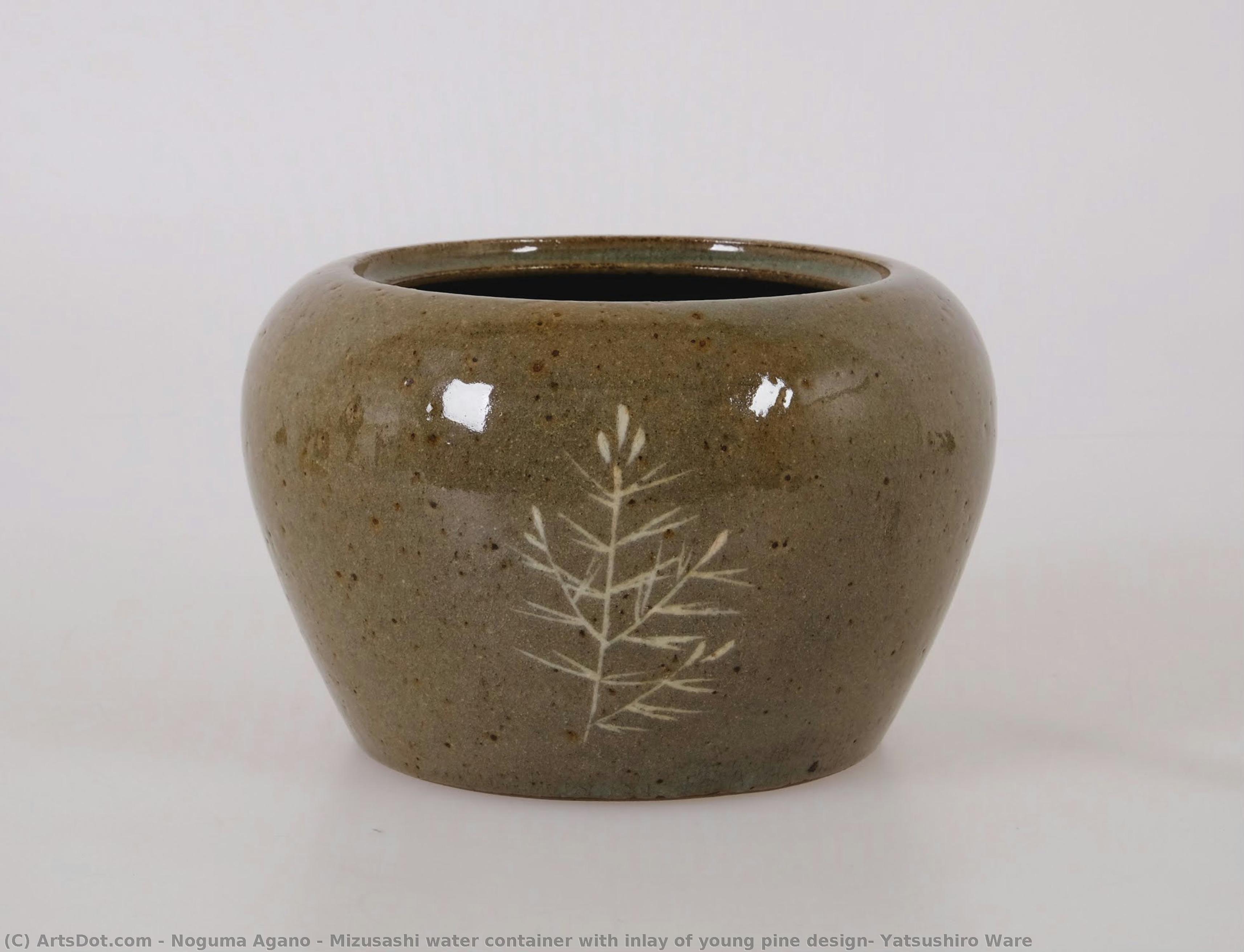
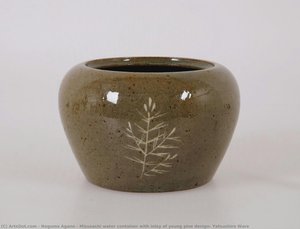
Mizusashi water container with inlay of young pine design, Yatsushiro Ware

 Read More
Giclée / Art Print
Museum-quality giclée or canvas print with fast production and flexible finish options. ( Buy Hand Made Painting Buy Image)




































Pick from our preset sizes that match the artwork's original proportions.

You may enter your own dimensions to fit a specific frame or space. If your selected size does not match the original image's proportions, we will either crop the artwork or extend the image with a mirrored or solid-fill edge. A digital mockup will be sent for your approval before production begins.
Please note that the on-screen preview does not reflect the actual cropping or extension. Only the mockup will accurately show the final composition.
While custom sizes are available, we recommend selecting a dimension from the predefined list to preserve the original proportions.
Worldwide Delivery () in 2 weeks instead of standard 4/5 weeks. (27 August)

Free Worldwide Express Shipping

High-Quality Linen Canvas

Full Shipping Insurance

Customs Tax Refund Guarantee

True Color Matching Guarantee

60-Day Return Policy (Defects Only)

100% Money-Back Guarantee

Bulk Discount Offer
 Glass option is only available in size under 110 CM

Mizusashi water container with inlay of young pine design, Yatsushiro Ware
Giclée / Art Print
Reproduction Size
-


Total Price
$ 63
Related Artworks






Artist Biography
The Silent Master of Yatsushiro Ware
In the quiet annals of Japanese ceramic history, few names evoke as much reverence and mystery as Noguma Agano. Born in 1795 in the historic region of Yatsushiro, Hyogo Prefecture, Agano lived through one of the most transformative eras in Japanese history. As the nation transitioned from the isolation of the Edo period into the rapid modernization of the Meiji Restoration, Agano remained a steadfast guardian of tradition. While his contemporaries often sought fame through grander, more ostentatious displays, Agano found his voice in the subtle, the understated, and the profound. He emerged not merely as a craftsman, but as a poet of clay, whose work captured the very essence of Japanese aesthetic philosophy.
Though the precise details of his early training remain veiled by time, it is known that Agano apprenticed under the most esteemed ceramicists of his era. From these masters, he inherited a rigorous discipline and a deep-seated understanding of the delicate balance between form and function. This foundational period was crucial in shaping his approach to Yatsushiro ware, a style that would eventually become synonymous with refinement and elegance. He learned to listen to the clay, understanding how temperature, moisture, and mineral composition could be manipulated to produce surfaces that seemed almost alive with light.
The Artistry of Mizusashi and Symbolic Elegance
The true brilliance of Agano’s oeuvre is most vibrantly expressed in his masterful execution of mizusashi, or water containers. These vessels were never intended to be mere utilitarian objects; rather, they served as meditative focal points within the tea ceremony. Agano’s work is characterized by an exquisite simplicity that belies the immense technical difficulty required to achieve it. He possessed a singular ability to transform a humble ceramic surface into a canvas for storytelling through his use of intricate inlay designs.
One of his most enduring motifs was the depiction of young pine branches, meticulously inlaid with such precision that they appeared to emerge naturally from the vessel's body. In Japanese culture, the pine is a potent symbol of longevity, virtue, and resilience, capable of withstanding the harshest winters. By integrating this motif into his ceramics, Agano infused his work with a spiritual depth, inviting the viewer to contemplate themes of endurance and the eternal cycles of nature. This marriage of technical skill and Zen-inspired symbolism elevated his pottery from mere craft to high art.
A Legacy of Refinement and Technical Innovation
Beyond his individual creations, Agano’s historical significance lies in his role as a pioneer of technique within the Yatsushiro tradition. He was instrumental in moving the medium away from the coarser, more rugged methods favored by earlier kilns toward a much more sophisticated aesthetic. Through a mastery of controlled firing processes, he achieved subtle tonal variations and a luminous, almost pearlescent quality in his glazes. These innovations allowed for a remarkable level of textural detail, capturing the soft gradients of light and shadow found in the natural world.
His influence was not confined to his own hands; Agano was a dedicated mentor who shaped the trajectory of Japanese ceramics for generations to come. By teaching younger artisans the importance of precision, patience, and the preservation of classical motifs, he ensured that the soul of Yatsushiro ware would survive the encroaching tides of Westernization. Today, the works of Noguma Agano stand as a testament to a period of profound artistic transition, representing a perfect harmony between the enduring strength of tradition and the delicate beauty of the natural world.
noguma agano
1795 - 1871 , Japan
Quick Facts
- Artistic Movement Or Style: Ceramics
- Date Of Birth: Yatsushiro, Japan (1795)
- Date Of Death: 1871
- Full Name: Noguma Agano
- Nationality: Japanese
- Notable Artworks: ['Mizusashi water container with inlay of young pine design, Yatsushiro Ware']
- Place Of Birth: Yatsushiro, Japan

