 Preview
 Send
Send Share
Share
 Details

 Download
 Similars
 X-Ray
X-Ray Diaporama
Pipe and Bowl sign Painter


 Read More
Giclée / Art Print
Museum-quality giclée or canvas print with fast production and flexible finish options. ( Buy Hand Made Painting Buy Image)




P118B $10

P118H $10

P118W $10

P438Z $10

P508JH $12

P508YH $12

P805H $10

P805Z $10

P919BZ $10

P919G $10

P919XJ $10

P959ZH $10

P968JZ $12

W106C $8

W218G $10

W218JH $8

W218Y $10

W307PJ $10

W316G $10

W316PJ $8

W316Y $10

W398PJ $8

W4111J $10

W500HY $15

W500JH $15

W692G $12

W849H $8

W940BG $15

W953PJ $8




Pick from our preset sizes that match the artwork's original proportions.

You may enter your own dimensions to fit a specific frame or space. If your selected size does not match the original image's proportions, we will either crop the artwork or extend the image with a mirrored or solid-fill edge. A digital mockup will be sent for your approval before production begins.
Please note that the on-screen preview does not reflect the actual cropping or extension. Only the mockup will accurately show the final composition.
While custom sizes are available, we recommend selecting a dimension from the predefined list to preserve the original proportions.
Worldwide Delivery () in 2 weeks instead of standard 4/5 weeks. (17 August)

Free Worldwide Express Shipping

High-Quality Linen Canvas

Full Shipping Insurance

Customs Tax Refund Guarantee

True Color Matching Guarantee

60-Day Return Policy (Defects Only)

100% Money-Back Guarantee

Bulk Discount Offer
 Glass option is only available in size under 110 CM

Pipe and Bowl sign Painter
Giclée / Art Print
Reproduction Size
-


Total Price
$ 63
Collectible Description
A Glimpse into Americana: The Craftsmanship of Norman Rockwell
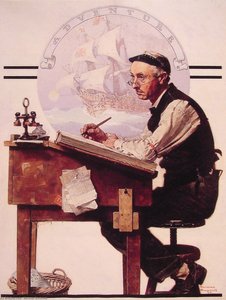
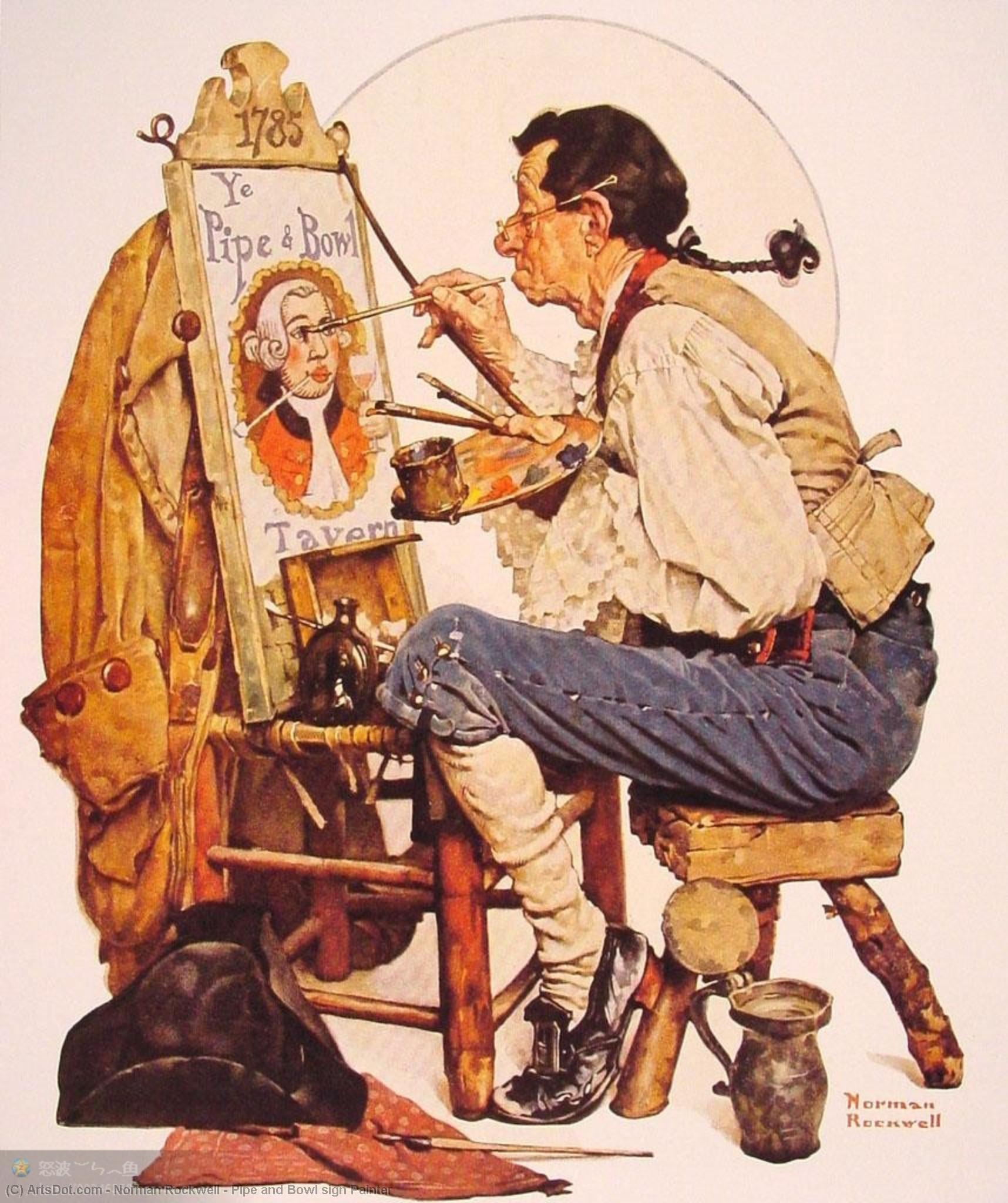
To stand before a depiction like Norman Rockwell's "Pipe & Bowl Sign Painter" is to step directly into the warm, nostalgic heart of early 20th-century American life. This painting is far more than a mere snapshot of a craftsman at work; it is a meticulously composed meditation on labor, tradition, and the enduring spirit of small-town enterprise. Rockwell, the master chronicler of the everyday American soul, has gifted us a scene rich with palpable texture—the grain of the wood, the slight sheen on the tools, and the focused intensity in the painter's posture.
The composition centers around the man seated at his table, surrounded by the paraphernalia of his trade. The very act of painting signs, inscribing words like "Bowl & Pipe," speaks to a time when commerce was often displayed with tangible artistry. Rockwell captures not just the object being painted, but the entire ritual surrounding its creation—the careful arrangement of materials, from the bowl on the left perhaps holding pigments or brushes, to the bottles standing sentinel on the right.
The Artistry of Everyday Life: Style and Technique
Rockwell’s style is instantly recognizable for its narrative clarity and profound humanism. While his technique often emulates the immediacy of illustration, in this painting, one senses a dedication to realism that borders on the photographic, yet it remains imbued with painterly warmth. The light seems to fall naturally across the scene, illuminating the man's concentration while allowing the background elements—the chairs and the distant bench—to settle into a comfortable, lived-in atmosphere. For those considering a reproduction for your home or studio, understanding this balance is key: it offers the detail of realism without sacrificing the emotional resonance that defines Rockwell’s genius.
The careful placement of every item suggests an almost anthropological study of a working man's domain. It invites the viewer to lean in, to examine the tools and imagine the scent of fresh paint mingling with sawdust—a sensory immersion that elevates the painting beyond mere decoration into a piece of evocative storytelling.
Symbolism of Craft and Community
The "Pipe & Bowl" sign itself carries symbolic weight. It represents connection, utility, and the simple exchange that forms the backbone of community life. In an age of mass production, Rockwell elevates the hand-painted sign to an object of art, suggesting that true value resides in human touch and skilled labor. The man himself becomes a symbol of American resilience—a steady presence rooted in tangible skill. His quiet focus suggests a deep satisfaction drawn from mastery over one's craft.
This piece resonates deeply with collectors who appreciate Americana or those whose interiors seek to evoke a sense of history, permanence, and authentic character. It is an antidote to the ephemeral; it celebrates things built to last, both literally and figuratively.
Bringing Nostalgia Home: Decorating with Rockwell
Incorporating "Pipe & Bowl Sign Painter" into your space is an act of curatorial storytelling. Whether displayed above a rustic mantelpiece, nestled in a study filled with leather-bound books, or used as a focal point in a dining area meant for gathering, the painting introduces an immediate layer of warm narrative depth. It suggests conversations held over shared meals and the quiet dignity of work well done. A high-quality reproduction allows you to capture this entire emotional tableau—the light, the labor, the enduring spirit—making it a centerpiece that speaks volumes about appreciation for history and human endeavor.
Related Artworks
![Indian Tobacco Shop Sign [reverse, Indian Facing Right] — Winslow Homer, Contemporary Realism](/media/artworks/images/thumbnails/64/50/64503c03f780433687607891aba35c23.jpg)
Artist Biography
A Mirror to the American Soul: The Life and Legacy of Norman Rockwell
Norman Percevel Rockwell, born in New York City in 1894, wasn’t merely an illustrator; he was a visual chronicler of the American experience. From his earliest ambitions as a young boy sketching in notebooks to his decades-long association with *The Saturday Evening Post*, Rockwell possessed an uncanny ability to capture the essence of everyday life, transforming seemingly mundane moments into iconic representations of national identity. His lineage traced back to John Rockwell, who arrived in colonial North America in 1635, suggesting a deep-rooted connection to the nation’s formative years—a connection that would profoundly influence his artistic vision. Rockwell's formal training began at the age of fourteen with enrollment at the Chase Art School, followed by studies at the National Academy of Design and the Art Students League, where he honed his skills under the tutelage of masters like Thomas Fogarty and Frank Vincent Dumond. These foundational years instilled in him a mastery of technique that would serve as the bedrock for his narrative storytelling.Illustrating an Ideal: Rockwell’s Artistic Development
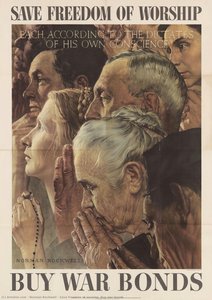
Rockwell's career blossomed with his first *Saturday Evening Post* cover in 1916, marking the beginning of a remarkable partnership that spanned nearly half a century and yielded over 300 covers. These weren’t simply illustrations; they were windows into an idealized America—a world of wholesome families, charming small towns, and enduring values. His early work often featured lighthearted scenes, imbued with a gentle humor and warmth that resonated deeply with the American public. However, Rockwell's artistic scope extended far beyond idyllic depictions. As the nation navigated turbulent times – two World Wars, the Great Depression, and the Civil Rights Movement – his art began to reflect these complexities. The *Willie Gillis* series, for example, offered a poignant portrayal of an ordinary soldier’s experiences during World War II, humanizing the conflict and capturing the anxieties and hopes of a generation. His wartime contributions weren't limited to character studies; the *Four Freedoms* paintings—Freedom of Speech, Freedom of Worship, Freedom from Want, and Freedom from Fear—became powerful symbols of American ideals, raising over $130 million for war relief through their widespread exhibition and reproduction.Beyond Sentimentality: Confronting Social Realities
While often celebrated for his nostalgic depictions of Americana, Rockwell was not immune to criticism. Some dismissed his work as overly sentimental or lacking in artistic depth. However, a closer examination reveals a willingness to confront difficult social issues, particularly in the later stages of his career. *The Problem We All Live With*, painted in 1964, stands as a powerful testament to this evolution. The painting depicts Ruby Bridges, a six-year-old African American girl, being escorted to school by federal marshals amidst a backdrop of racial hatred and prejudice. This work, displayed in the White House during President Obama’s administration, transcended its initial context to become an enduring symbol of the struggle for civil rights. Rockwell's willingness to tackle such sensitive subjects demonstrated a growing commitment to using his art as a vehicle for social commentary, challenging viewers to confront uncomfortable truths about their society. His illustrations for *Look* magazine during this period further solidified his reputation as an artist willing to engage with contemporary issues.A Lasting Cultural Impact
Norman Rockwell’s influence extends far beyond the realm of illustration. He became synonymous with a particular vision of America—one rooted in community, family values, and a sense of optimism. His work has permeated popular culture, inspiring countless artists, writers, and filmmakers. The term “Rockwellesque” itself has entered the lexicon, used to describe images that evoke a nostalgic or idealized portrayal of American life. Despite initial skepticism from some art critics, Rockwell’s legacy has endured, with his paintings now commanding significant prices in the art market and adorning the walls of museums across the country, most notably at the Norman Rockwell Museum in Stockbridge, Massachusetts—a testament to his enduring appeal. He received the Presidential Medal of Freedom in 1977, a fitting recognition of his profound contribution to American culture. Rockwell’s art continues to resonate with audiences today, reminding us of our shared history, our aspirations, and the enduring power of storytelling. His ability to capture the human spirit—with all its complexities and contradictions—ensures that his work will remain a vital part of the American cultural landscape for generations to come.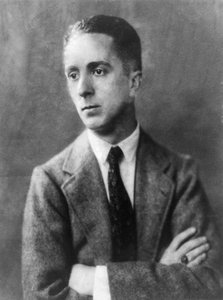
Norman Rockwell
1894 - 1978 , United States of America
Quick Facts
- Artistic Movement Or Style: Realism, Illustration
- Artists Who Influenced This Artist:
- Thomas Fogarty
- George Bridgman
- Frank Dumond
- Date Of Birth: February 3, 1894
- Date Of Death: November 8, 1978
- Full Name: Norman Percevel Rockwell
- Nationality: American
- Notable Artworks:
- Willie Gillis series
- Rosie the Riveter
- Four Freedoms
- Saying Grace
- The Problem We All Live With
- Place Of Birth: New York City, USA
Related Articles
American Realism's Defining Works: 10 Masterpieces for Your Home
Explore 10 defining American Realism masterpieces – Hopper, Homer & more. Discover the stories behind these iconic paintings and bring timeless art to your home with ArtsDot's museum-quality reproductions. Explore the full collection online.
American Realism: Social Commentary & Artistic Representation in Early 20th-Century Painting
Explore the powerful social commentary & artistic representation of American Realism. Discover key artists like Bellows & Sloan, and understand the movement's lasting impact on 20th-century art history.
Norman Rockwell: Illuminating American Life Through Narrative Realism
Explore the life & art of Norman Rockwell, America's beloved illustrator. Discover his iconic paintings, social commentary, signature style, and enduring legacy. Learn about collecting Rockwell’s work at ArtsDot.
Grant Wood & American Regionalism: Identity, Myth & the Rural Landscape
Explore the world of Grant Wood & American Regionalism with ArtsDot. Discover the symbolism behind 'American Gothic', recurring themes, and the movement's lasting impact on art history. High-quality reproductions available.
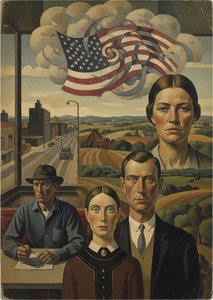
Echoes of Place: Regionalism & American Identity in Interwar Art
Explore the rise of American Regionalism in interwar art! Discover Grant Wood, Thomas Hart Benton & the movement's impact on American identity. Expert analysis & historical context.