 Preview
 Send
Send Share
Share
 Details

 Download
 Similars
 X-Ray
X-Ray Diaporama
Trumpet Practice


 Read More
Giclée / Art Print
Museum-quality giclée or canvas print with fast production and flexible finish options. ( Buy Hand Made Painting Buy Image)




P118B $10

P118H $10

P118W $10

P438Z $10

P508JH $12

P508YH $12

P805H $10

P805Z $10

P919BZ $10

P919G $10

P919XJ $10

P959ZH $10

P968JZ $12

W106C $8

W218G $10

W218JH $8

W218Y $10

W307PJ $10

W316G $10

W316PJ $8

W316Y $10

W398PJ $8

W4111J $10

W500HY $15

W500JH $15

W692G $12

W849H $8

W940BG $15

W953PJ $8




Pick from our preset sizes that match the artwork's original proportions.

You may enter your own dimensions to fit a specific frame or space. If your selected size does not match the original image's proportions, we will either crop the artwork or extend the image with a mirrored or solid-fill edge. A digital mockup will be sent for your approval before production begins.
Please note that the on-screen preview does not reflect the actual cropping or extension. Only the mockup will accurately show the final composition.
While custom sizes are available, we recommend selecting a dimension from the predefined list to preserve the original proportions.
Worldwide Delivery () in 2 weeks instead of standard 4/5 weeks. (17 August)

Free Worldwide Express Shipping

High-Quality Linen Canvas

Full Shipping Insurance

Customs Tax Refund Guarantee

True Color Matching Guarantee

60-Day Return Policy (Defects Only)

100% Money-Back Guarantee

Bulk Discount Offer
 Glass option is only available in size under 110 CM

Trumpet Practice
Giclée / Art Print
Reproduction Size
-


Total Price
$ 63
Collectible Description
Norman Rockwell's Trumpet Practice: A Portrait of American Idealism
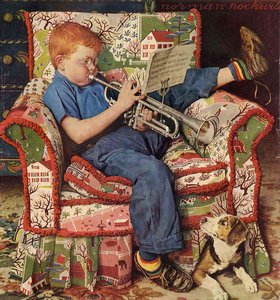
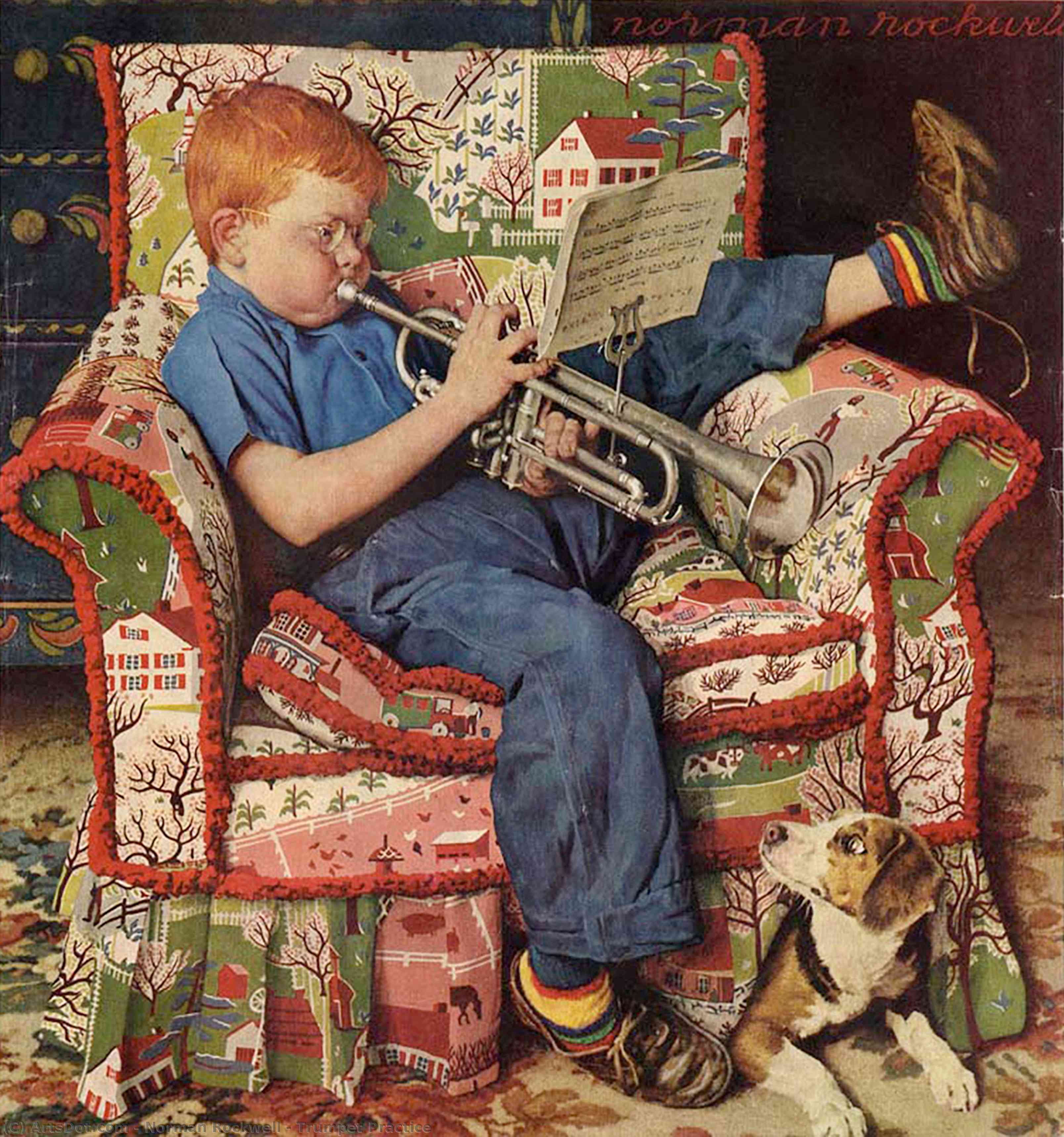
Norman Rockwell’s “Trumpet Practice,” completed in 1950, is more than just a charming depiction of a boy learning to play the trumpet; it’s a carefully constructed window into the heart of mid-20th century America. This iconic Regionalist painting, deeply rooted in the style's focus on everyday life and rural values, captures a moment of quiet dedication within a comfortable domestic setting. Rockwell masterfully utilizes light and shadow to create a sense of warmth and realism, drawing the viewer into the scene with an almost palpable intimacy.
- Subject Matter: The painting centers around a young boy absorbed in his musical practice, accompanied by two attentive dogs. This seemingly simple subject matter belies its significance as a representation of youthful ambition, perseverance, and the pursuit of personal goals – values deeply ingrained in the American psyche.
- Style & Technique: Rockwell’s signature oil painting technique is on full display here. The rich textures, achieved through meticulous layering and brushwork, lend a remarkable depth to the scene. His attention to detail—from the intricate patterns of the floral couch to the boy's worn clothing—is characteristic of his approach, elevating a commonplace activity into something profoundly evocative.
Regionalism and the American Narrative
“Trumpet Practice” firmly belongs to the Regionalist movement, a reaction against European Modernism that sought to celebrate distinctly American themes and subjects. Rockwell’s work, like that of other Regionalists, aimed to portray the authentic experiences of ordinary Americans – in this case, a young boy practicing his instrument in a typical rural setting. This focus on the familiar resonated deeply with audiences during a period of significant social and economic change in the United States, offering a nostalgic glimpse into a simpler time.
The painting’s composition—the boy seated squarely in the center, the dogs observing attentively—reinforces this sense of stability and traditional values. It's a deliberate choice that speaks to Rockwell’s desire to capture a quintessential American moment, one that embodies the nation’s spirit of hard work and quiet determination.
Symbolism and Emotional Resonance
Beyond its technical brilliance, “Trumpet Practice” is laden with symbolism. The trumpet itself represents aspiration, skill development, and the pursuit of excellence – qualities highly valued in American culture. The dogs, often interpreted as symbols of loyalty and companionship, further enhance the painting’s heartwarming narrative. The book lying nearby suggests a broader intellectual curiosity alongside the boy's musical endeavors.
Rockwell’s ability to evoke such strong emotional responses is a testament to his skill as a storyteller. “Trumpet Practice” taps into our collective memories of childhood, innocence, and the importance of dedication – themes that continue to resonate with viewers today. It’s a painting that invites contemplation and offers a poignant reminder of the values that have shaped American identity.
Collecting and Appreciating this Masterpiece
A hand-painted reproduction of “Trumpet Practice” by Norman Rockwell is more than just an artwork; it's an investment in a piece of American art history. Its enduring appeal ensures its place as a treasured addition to any collection or interior space. ArtsDot offers meticulously crafted reproductions that faithfully capture the original’s beauty and detail, allowing you to experience the power of Rockwell’s vision firsthand.
Related Artworks

Artist Biography
A Mirror to the American Soul: The Life and Legacy of Norman Rockwell
Norman Percevel Rockwell, born in New York City in 1894, wasn’t merely an illustrator; he was a visual chronicler of the American experience. From his earliest ambitions as a young boy sketching in notebooks to his decades-long association with *The Saturday Evening Post*, Rockwell possessed an uncanny ability to capture the essence of everyday life, transforming seemingly mundane moments into iconic representations of national identity. His lineage traced back to John Rockwell, who arrived in colonial North America in 1635, suggesting a deep-rooted connection to the nation’s formative years—a connection that would profoundly influence his artistic vision. Rockwell's formal training began at the age of fourteen with enrollment at the Chase Art School, followed by studies at the National Academy of Design and the Art Students League, where he honed his skills under the tutelage of masters like Thomas Fogarty and Frank Vincent Dumond. These foundational years instilled in him a mastery of technique that would serve as the bedrock for his narrative storytelling.Illustrating an Ideal: Rockwell’s Artistic Development
Rockwell's career blossomed with his first *Saturday Evening Post* cover in 1916, marking the beginning of a remarkable partnership that spanned nearly half a century and yielded over 300 covers. These weren’t simply illustrations; they were windows into an idealized America—a world of wholesome families, charming small towns, and enduring values. His early work often featured lighthearted scenes, imbued with a gentle humor and warmth that resonated deeply with the American public. However, Rockwell's artistic scope extended far beyond idyllic depictions. As the nation navigated turbulent times – two World Wars, the Great Depression, and the Civil Rights Movement – his art began to reflect these complexities. The *Willie Gillis* series, for example, offered a poignant portrayal of an ordinary soldier’s experiences during World War II, humanizing the conflict and capturing the anxieties and hopes of a generation. His wartime contributions weren't limited to character studies; the *Four Freedoms* paintings—Freedom of Speech, Freedom of Worship, Freedom from Want, and Freedom from Fear—became powerful symbols of American ideals, raising over $130 million for war relief through their widespread exhibition and reproduction.Beyond Sentimentality: Confronting Social Realities
While often celebrated for his nostalgic depictions of Americana, Rockwell was not immune to criticism. Some dismissed his work as overly sentimental or lacking in artistic depth. However, a closer examination reveals a willingness to confront difficult social issues, particularly in the later stages of his career. *The Problem We All Live With*, painted in 1964, stands as a powerful testament to this evolution. The painting depicts Ruby Bridges, a six-year-old African American girl, being escorted to school by federal marshals amidst a backdrop of racial hatred and prejudice. This work, displayed in the White House during President Obama’s administration, transcended its initial context to become an enduring symbol of the struggle for civil rights. Rockwell's willingness to tackle such sensitive subjects demonstrated a growing commitment to using his art as a vehicle for social commentary, challenging viewers to confront uncomfortable truths about their society. His illustrations for *Look* magazine during this period further solidified his reputation as an artist willing to engage with contemporary issues.A Lasting Cultural Impact
Norman Rockwell’s influence extends far beyond the realm of illustration. He became synonymous with a particular vision of America—one rooted in community, family values, and a sense of optimism. His work has permeated popular culture, inspiring countless artists, writers, and filmmakers. The term “Rockwellesque” itself has entered the lexicon, used to describe images that evoke a nostalgic or idealized portrayal of American life. Despite initial skepticism from some art critics, Rockwell’s legacy has endured, with his paintings now commanding significant prices in the art market and adorning the walls of museums across the country, most notably at the Norman Rockwell Museum in Stockbridge, Massachusetts—a testament to his enduring appeal. He received the Presidential Medal of Freedom in 1977, a fitting recognition of his profound contribution to American culture. Rockwell’s art continues to resonate with audiences today, reminding us of our shared history, our aspirations, and the enduring power of storytelling. His ability to capture the human spirit—with all its complexities and contradictions—ensures that his work will remain a vital part of the American cultural landscape for generations to come.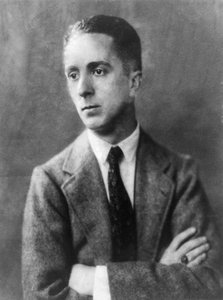
Norman Rockwell
1894 - 1978 , United States of America
Quick Facts
- Artistic Movement Or Style: Realism, Illustration
- Artists Who Influenced This Artist:
- Thomas Fogarty
- George Bridgman
- Frank Dumond
- Date Of Birth: February 3, 1894
- Date Of Death: November 8, 1978
- Full Name: Norman Percevel Rockwell
- Nationality: American
- Notable Artworks:
- Willie Gillis series
- Rosie the Riveter
- Four Freedoms
- Saying Grace
- The Problem We All Live With
- Place Of Birth: New York City, USA
Related Articles
Grant Wood & American Regionalism: Identity, Myth & the Rural Landscape
Explore the world of Grant Wood & American Regionalism with ArtsDot. Discover the symbolism behind 'American Gothic', recurring themes, and the movement's lasting impact on art history. High-quality reproductions available.
Echoes of Place: Regionalism & American Identity in Interwar Art
Explore the rise of American Regionalism in interwar art! Discover Grant Wood, Thomas Hart Benton & the movement's impact on American identity. Expert analysis & historical context.
American Regionalism: A Crucible of Identity – Exploring Themes of Place, Labor & Social Commentary
Explore American Regionalism's powerful depiction of the American heartland during the Great Depression. Discover Grant Wood, Thomas Hart Benton & more. Expert analysis & high-quality art reproductions at ArtsDot.
Norman Rockwell: Illuminating American Life Through Narrative Realism
Explore the life & art of Norman Rockwell, America's beloved illustrator. Discover his iconic paintings, social commentary, signature style, and enduring legacy. Learn about collecting Rockwell’s work at ArtsDot.

Giclée Prints: Archival Quality & Aesthetic Nuances for the Discerning Collector
Explore the world of giclée prints with ArtsDot. Learn about archival quality, aesthetic nuances & investment potential. Expert guidance for discerning art collectors seeking museum-quality reproductions and lasting value.